




Gjør som tusenvis av andre bokelskere
Abonner på vårt nyhetsbrev og få rabatter og inspirasjon til din neste leseopplevelse.
Ved å abonnere godtar du vår personvernerklæring.Du kan når som helst melde deg av våre nyhetsbrev.

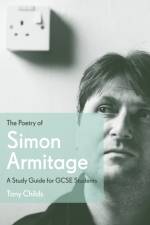
Simon Armitage is one of the leading poets of his generation. Since his first collection, Zoom, in 1989 he has published ten full-length collections of poetry, while also writing and presenting numerous works for radio, television and film. He is now one of the poets most widely studied at GCSE examination level. This study guide to Simon Armitage's poetry will be essential reading and preparation for GCSE students and their teachers, to whose needs it has been expertly tailored. The book examines Armitage's work in just the ways that students need to think about it - in respect of how the poems are crafted in language and form, and the kinds of themes, ideas and attitudes that they reflect. It also includes sections on studying individual poems for the examination, an illuminating biography with questions and answers and sample essays.
We Come Unseen, first published in 2001, follows the careers of six Royal Navy submariners from their graduation from Dartmouth's Britannia Royal Naval College in 1963, just after the Cuban Missile Crisis, to the fall of the Berlin Wall in 1989. Between these dates, it seemed that nuclear war was never far away - and Jim Ring explains not only the nuclear threat and its beginnings in the last days of the Second World War, but why the Polaris and Trident submarines ('capable of inflicting the damage of the bombs that fell on Hiroshima and Nagasaki many times over'), and their accompanying attack submarines, were critical to avoiding war. Alongside a gripping narrative of the Cold War game of hide-and-seek played out under the waves of the northern seas, Ring gives an account of the history of submarine warfare from its earliest, pre-nuclear days to the 1982 combat in the Falklands.'A welcome acknowledgement of one of the Cold War's little-known aspects.' Alan Judd, Sunday Telegraph'An extraordinary story . . . one of the most significant naval books of the year.' Ship's Telegraph'A remarkable story.' Navy News
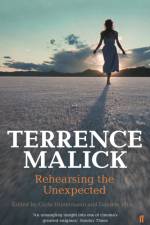
Terrence Malick's debut film, Badlands, announced the arrival of a unique talent. In the 40 years since that debut, Malick has only made 5 films, but they are distinctive in their beauty.This book is not meant to be a biography of Terrence Malick. The purpose behind the book is to introduce readers to the extraordinary universe of his film-making and to aid them in understanding his work. And to do this through the words of his closest collaborators - cinematographers, set designers, costumers, cameramen, directors, producers, and actors such as Sean Penn, Martin Sheen, Sissy Spacek and Jessica Chastain. As their words flow from one to another, they form a fascinating, kaleidoscopic vision of American film and specifically Malick's artistic world. who make up a film.This book is the fruit of a journey began years ago when Luciano Baracaroli, Carlo Hintermann, Gerardo Panichi and Daniele Villa made a documentary on the work of Terrence Malick, which led to the making of this book as well.
The Great Cellists is a comprehensive and authoritative history of the lives and work of the cello's great performers and teachers, from the emergence of the solo instrument in the seventeenth century to the present day.In its early history, the cello was a genuine 'bass' violin that came in three sizes and from the thirteenth century was played side by side with viols and later violins. The instrument we know today came into general use by the time the great makers of the seventeenth and eighteenth centuries - such as Amati, Stradivari and Guarneri - brought their craft to perfection and made numerous of the instruments most sought after by today's virtuosi.Many of the earliest known professional cellists were employed as court musicians, but their names have not been widely known. The most familiar names belong to those early cellists who were also composers: Boccherini, Romberg, Piatti and Popper. In more recent times, the great Europeans Becker, Klengel and Salmond led to Feuermann, Piatogorsky, Fournier, Rostropovich, and above all to Casals; and they, in turn, have greatly influenced contemporary musicians such as the late Jacqueline du Pr, and the manifold brilliant players from Russia, Japan and the USA. The Great Cellists reveals a splendid range of personalities from the conventional to the eccentric. Included also are the numerous less well-known cellists who were important as founders of the various national 'schools'.Margaret Campbell has interviewed many eminent musicians and had rich access to letters and private documents in her coverage of the last hundred years. Her absorbing book presents to the reader a rich vision of skills and traditions that have been handed down nationally through the generations, and developed internationally since the twentieth century. It is a book for string players, students, concertgoers and CD buffs - indeed, anyone who enjoys the sound of the cello.
Jonathan Lynn's credits include creating and co-writing the long-running comedy series Yes, Minister and Yes, Prime Minister, as well as hit films Clue, My Cousin Vinny, Nuns on the Run and The Whole Nine Yards. With experience as a comedy actor, writer and director, here Jonathan Lynn shares valuable and hilarious lessons in all aspects of creating great comedy, all illustrated with brilliantly insightful and revealing anecdotes about his work and the legedary actors, writers and comedians he's worked alongside.
What on earth is happening to our planet? And who knows what to do? Certainties are few: every living thing is related to every other living thing; our actions have consequences; change is continual and inevitable. The National Theatre asked four of the country's most exciting writers to investigate. The team spent six months interviewing key individuals from the worlds of science, politics, business and philosophy to create a fast-paced and provocative new play. Greenland premiered at the National Theatre, London, in February 2011.
Eileen Battersby is the chief literature critic of The Irish Times and is, in the words of John Banville, 'the finest fiction critic we have'. But her first full-length book is not about international literature or the state of the novel. It is about dogs. Two dogs in particular, with the unlikely names of Bilbo and Frodo. She adopted the first from a horrible dog pound, and the second decided he liked her and moved in to join the family. She was in her very early twenties, an intensely serious student and runner who had just moved to Ireland from California. The dogs became her most loyal companions for over twenty years, witnesses to an often difficult human life and more important to her than most other humans.This book is about two animals with personalities, emotions and prejudices. It is unlike any other book ever written about dogs. It is not sentimental or twee. Battersby became intimately involved in the lives of these intelligent, shrewd creatures, and brings them to life with rare passion and insight. She writes honestly and movingly about the reasons why, for certain people - especially women - there is more integrity in the mysterious relationship with a mammal who cannot speak than there is in most of the relationships that human society has to offer.
In 1942, Lieutenant-Commander Ian Fleming was personal assistant to the Director of Naval Intelligence - the dynamic figure behind James Bond's fictional chief, 'M'. Here, Fleming had a brilliant idea: why not set up a unit of authorised looters, men who would go in hard with the front-line troops and steal enemy intelligence?Known as '30 Assault Unit', they took part in the major campaigns of the Second World War, landing on the Normandy beaches and helping to liberate Paris. 30AU's final amazing coup was to seize the entire archives of the German Navy - thirty tons of documents. Ian Fleming flew out in person to get the loot back to Britain, where it was combed for evidence to use in the Nuremburg trials. In this gripping and highly enjoyable book, Nicholas Rankin, author of the best-selling Churchill's Wizards, puts 30 Assault Unit's fascinating story in a strategic and intelligence context. He also argues that Ian Fleming's Second World War service was one of the most significant periods of his life - without this, the most popular spy fiction of the twentieth century would not have been written.
Stella Benson sets off for Hilltop, a tiny Sussex village housing a family that is somewhat larger than life. Her hopes for the Maddens may be high, but her station among them, as au pair to their irascible son Martin - is undeniably low. What could possibly have driven her to leave her home, job and life in London for such rural ignominy? Why has she severed all contact with her parents? Why is she so reluctant to talk about her past?The Country Life, Rachel Cusk's third novel, is a rich and subtle story about embarrassment, awkwardness and being alone; about families, or the lack of them; and about love in some peculiar guises.
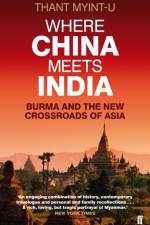
China and India have always been seperated not only by the Himalayas, but also by the impenetrable jungle and remote areas that once stretched across Burma. Now this last great frontier will likely vanish - forests cut down, dirt roads replaced by superhighways, insurgencies ended - leaving China and India exposed to each other as never before. This basic shift in geography is as profound as the opening of the Suez Canal and is taking place just as the centre of the world's economy moves to the East. Thant Myint-U has travelled extensively across this vast territory, where high-speed trains and gleaming shopping malls now sit alongside the last remaining forests and impoverished mountain communities. In Where China Meets India he explores the new strategic centrality of Burma, the country of his ancestry, where Asia's two rising giant powers - China and India - appear to be vying for supremacy. Part travelogue, part history, part investigation, Where China Meets India takes us across the fast-changing Asian frontier, giving us a masterful account of the region's long and rich history and its sudden significance for the rest of the world. Thant Myint-U is the author of The River of Lost Footsteps and has written articles for the New York Times, the Washington Post and the New Statesman. He has worked alongside Kofi Annan at the UN's Department of Political Affairs and currently works as a special consultant to the Burmese government.
Between 1856 and 1876, five explorers, all British, took on the seemingly impossible task of discovering the source of the White Nile. Showing exceptional courage and extraordinary resilience, Richard Burton, John Hanning Speke, Samuel Baker, David Livingstone and Henry Morton Stanley risked their lives and their reputations in the name of this quest. They journeyed through East and Central Africa into unmapped territory, discovered the great lakesTanganyika and Victoria, navigated the upper Nile and the Congo, and suffered the ravages of flesh-eating ulcers, malaria and deep spear wounds. Using new research, Tim Jeal tells the story of these great expeditions, while also examining the tragic consequences which the Nile search has had on Uganda and Sudan to this day.Explorers of the Nile is a gripping adventure story with an arresting analysis of Britain's imperial past and the Scramble for Africa.
Hear what I have to say about the cherry orchard, because it is mine. I say bring it down, tear it down. Smash it down and tear it down. Watch, watch. Just you watch. I will build holiday villas, as far as the eye can see. I will build a place for everyone to come and enjoy. For the future. And this will be the future. A new life. A new way of life. Here! Come now and play. Play. Play! Get the band to play.Ranyevskaya returns more or less bankrupt after ten years abroad. Luxuriating in her fading moneyed world and regardless of the increasingly hostile forces outside, she and her brother snub the lucrative scheme of Lopakhin, a peasant turned entrepreneur, to save the family estate. In so doing, they put up their lives to auction and seal the fate of the beloved orchard. Set at the very start of the twentieth century, The Cherry Orchard captures a poignant moment in Russia's history as the country rolls inexorably towards 1917. The Cherry Orchard by Anton Chekhov in a version by Andrew Upton, premiered at the National Theatre, London, in May 2011.
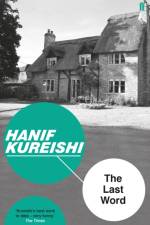
Shortlisted for the Bollinger Everyman Wodehouse PrizeMamoon is an eminent Indian-born writer who has made a career in England - but now, in his early 70s, his reputation is fading, sales have dried up, and his new wife has expensive taste.Harry, a young writer, is commissioned to write a biography to revitalise both Mamoon's career and his bank balance. Harry greatly admires Mamoon's work and wants to uncover the truth of the artist's life. Harry's publisher seeks a more naked truth, a salacious tale of sex and scandal that will generate headlines. Meanwhile Mamoon himself is mining a different vein of truth altogether.Harry and Mamoon find themselves in a battle of wills, but which of them will have the last word?The ensuing struggle for dominance raises issues of love and desire, loyalty and betrayal, and the frailties of age versus the recklessness of youth.Hanif Kureishi has created a tale brimming with youthful exuberance, as hilarious as it is touching, where words have the power to forge a world.
This carefully researched and definitive book recreates the magic of the greatest violinists in history. In three centuries, the solo performer progressed from downtrodden private servant to revered public idol. The supreme artists Corelli, Vivaldi, Viotti, Paganini, Vieuxtemps, Joachim and Auer were pivotal figures in the history of violin playing, while more recent times have seen Sarasate, Ysaye and the virtuosi of the modern recording era. The Great Violinists reveals a range of personalities from the conventional to the eccentric. In her coverage of the last hundred years, Margaret Campbell has interviewed many eminent musicians and had rich access to letters and private documents. Her book offers a vivid portrait of skills and traditions that have been handed down through generations. It is a book for string players, students, concert goers and music buffs - indeed, anyone who enjoys the sound of the violin.
Norman Gash's magnificent two-volume life of Sir Robert Peel - Mr Secretary Peel (1961) and Sir Robert Peel (1972) - is the standard work on the great statesman, and is widely considered one of the great biographies of 19th-century prime ministers. Faber Finds is delighted to return both to print, beginning with Mr Secretary Peel.As Gash puts it memorably, 'Peel, born in 1788 in the world of Gibbon and Joshua Reynolds, of stage-coaches, highwaymen and the judicial burning of women, died in 1850 in the age of Faraday and Darwin, of Punch, railway excursions, trade unions and income tax...' Over the course of Peel's life Britain was remodeled, and it may be argued that Peel himself did more than any other political figure in reconciling the new forces in society with its older institutions. But as a politician Peel could be a controversial figure, his pragmatism pressing him into unpopular decisions. The son of an industrial millionaire, his instincts were for the cause of good government over narrow party interest. Norman Gash interpreted Peel as the intellectual founder of the modern Conservative Party - an aristocratic administrator and natural consensus politician who believed in courting the urban middle class as well as landowners and farmers.Mr Secretary Peel carries its subject's story from birth through his entry into politics in Ireland, his early positions in Tory governments, his tenure as Home Secretary from 1822 (which included his establishing of the Metropolitan Police Force) and up to the struggles over the issue of Catholic Emancipation.'A rich and perceptive portrait of a statesman in the making,' Philip Ziegler, Telegraph.
After an undistinguished career at Oxford, Stanley Windrush wanders from one escapade to another in the world of paid employment. The unwitting cause of an international furore in his indefinable role at the Foreign Office, he soon loses more jobs in the world of industry. He swiftly decides to take up a post as an unskilled worker - to be 'one of the chaps that reap the benefit', as his uncle advises - where his na,ve dealings with the trade unions only cause more trouble for everyone.Originally released in 1958 as Private Life, the follow-up to Private's Progress, the novel was swiftly made into a popular film, I'm All Right Jack.'Funny, critical and good-tempered, all at the same time and apparently without the slightest effort.' The Times'Wonderfully funny.' Sunday Express'Brilliantly funny.' Manchester Evening News'Extremely funny.' Manchester Guardian
Last year Stephen Pile attempted to deliver a daring blow to the success ethic that so pervades Western culture. To his dismay, The Ultimate Book of Heroic Failures sold many copies and even became the Sunday Times 'Humour Book of the Year.'Nothing daunted, Stephen returns with a new selection which brings together the very best of his original classic titles - The Book of Heroic Failures and The Return of Heroic Failures.The heartwarming news that stays news is that there really is no limit to what humanity can achieve, as we move onwards and downwards to ever more immortal and breathtaking feats of incompetence. The Not Terribly Good Book of Heroic Failures lovingly chronicles the all-time heroes who have been so bad at things that they shine as beacons for future generations.It is hard not to feel boundless admiration, for example, for the fifty Mexican convicts who dug an escape tunnel out of their jail and came up in the courtroom where many of them had been sentenced. Or for the world's worst tourist, who spent three days in New York believing he was in Rome.
It was so simple . . . just a few little bits in his diary, files that he kept in longhand with all his thoughts and wishes and dreams . . .Bobby thinks he's simply lending his sister a hand with clearing out her cottage in the forest. But it's a dark and stormy night and his sister has a secret.I know it can't be that bad, whatever was the reason this guy left here in such a hurry . . .In a Forest, Dark and Deep by Neil LaBute premiered at the Vaudeville Theatre, London, in March 2011.
Judy's my mom. It's an understatement to say she's a bit of a hippy. I mean who else but a New Ager calls their baby 'Philosophy Rainbow'? I try to go by 'Sophie'.Sophie and Calliope have never been to school. Their mum ran away from home when she was seventeen to join the New Age movement and the girls were raised in a series of ashrams, communes and impromptu raves.When Sophie gets ill, they return to Birmingham - a strange new world where meditation and tree-hugging are replaced with maths homework and TV and the grandmother they have never met. And it's against this bewildering new backdrop - the normality she's always longed for - that Sophie must come to terms with her mortality.Lucy Caldwell's Notes to Future Self opened at the Birmingham Repertory Theatre in February 2011.
Being a teacher means weekends. It means thirteen weeks holiday. It means a secure job in uncertain times.But Zoe doesn't want to have to rescue her students. She doesn't want to be called a slag. She doesn't want to sleep with the Head of Science. And she doesn't want to teach a group of kids how to do life. Because that's something Zoe's not sure she knows how to do herself.Examining what happens when a young teacher goes off the rails in a failing school, The Knowledge by John Donnelly premiered at the Bush Theatre, London, in January 2011.
This is a daring, deeply affecting novel about the secrets buried in the past of an Argentine family; a story of fathers and sons, corruption and responsibility, memory and history, with a mystery at its heart.A young writer, living abroad, returns home to his native Argentina to say goodbye to his dying father. In his parents' house, he finds a cache of documents - articles, maps, photographs - and unwittingly begins to unearth his father's obsession with the disappearance of a local man. Suddenly he comes face to face with the ghosts of Argentina's dark political past and with the long-hidden memories of his family's underground resistance against an oppressive military regime. As the fragments of the narrator's investigation fall into place - revealing not only a part of his father's life he had tried to forget, but also the legacy of an entire generation - My Father's Ghost Is Climbing in the Rain tells a completely original story of family and remembrance. It is an audacious accomplishment by an internationally acclaimed voice.
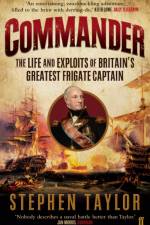
Edward Pellew, captain of the legendary Indefatigable, was quite simply the greatest frigate captain in the age of sail. An incomparable seaman, ferociously combative yet chivalrous, a master of the quarterdeck and an athlete of the tops, he was as quick to welcome a gallant foe into his cabin as to dive to the rescue of a man overboard. He is the likely model for the heroic but all-too-human Jack Aubrey in Patrick O'Brian's novels.Pellew was orphaned at eight, but fought his way from the very bottom of the Navy to fleet command and a viscountcy. Victories and eye-catching feats won him a public following. Yet as an outsider with a gift for antagonizing his better-born peers, he made powerful enemies. Redemption came with his last command, when he set off to do battle with the Barbary States and free thousands of European slaves. Contemporary opinion held this to be an impossible mission, and Pellew himself, in leading from the front in the style of his direct contemporary Nelson, did not expect to survive.Pellew's humanity as much as his gallantry, fondness for subordinates and blind love for his family, and the warmth and intimacy of his letters, make him a hugely engaging and sympathetic figure. In Stephen Taylor's magnificent new life he at last has the biography he deserves.
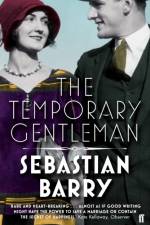
Jack McNulty is a 'temporary gentleman', an Irishman whose commission in the British army in the Second World War was never permanent. In 1957, sitting in his lodgings in Accra, he urgently sets out to write his story. He feels he cannot take one step further, or even hardly a breath, without looking back at all that has befallen him.He is an ordinary man, both petty and heroic, but he has seen extraordinary things. He has worked and wandered around the world - as a soldier, an engineer, a UN observer - trying to follow his childhood ambition to better himself. And he has had a strange and tumultuous marriage. Mai Kirwan was a great beauty of Sligo in the 1920s, a vivid mind, but an elusive and mysterious figure too. Jack married her, and shared his life with her, but in time she slipped from his grasp.A heart-breaking portrait of one man's life - of his demons and his lost love - The Temporary Gentleman is, ultimately, a novel about Jack's last bid for freedom, from the savage realities of the past and from himself.
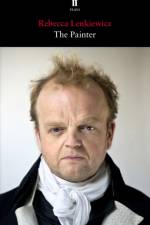
The fashionables, they tell me their artistic opinion. They just want to know if a painting is hot. Whether it will gain. And then they criticise anyone who is different, anyone who's not on the 'direct route' to taste. Fuck 'em.Turner, the English romantic landscape artist and 'painter of light', was a man obsessed. Intensely prolific he was heavily reliant on his father, deeply affected by his mother's rejections and isolated from the usual breed of artists.English painting is dead. It's dealers making fortunes out of sentimental dross. Dogs. Cherubs.The Painter by Rebecca Lenkiewicz premiered at the Arcola Theatre, London, in January 2011 in the production which marked the opening of its new premises on Ashton Street.
Ever since the Second World War and the Holocaust, historians, psychologists and theologians alike have attempted to explain how a single personality could bring about some of the greatest horrors of the modern era. Ron Rosenbaum's Explaining Hitler investigates the meanings and motivations people have attached to Hitler and his disturbing policies - and whether or not he believed his own doctrines - and explores the continuing fascination with the nature of evil. The book also documents the story of the earliest critic of Hitler, the Munich Post in the 1920s and 1930s, and its violent demise.First published in 1998, and using interviews of leading experts such as Hugh Trevor-Roper, Alan Bullock and Daniel Goldhagen, and discussing the work of many more, Exploring Hitler is a balanced overview of a dark subject.
Immortalized as the author of The Riddle of the Sands, Erskine Childers led a life quite as enigmatic and adventurous as his classic novel.Childers was orphaned at an early age. Though he was brought up in County Wicklow, he received an English education that culminated in a clerkship to the House of Commons, voluntary service in the Boer War, and the writing of his great novel. Thus far he appeared patriotic, imperialist and largely conformist. But marriage to a strong-willed Bostonian and an increasing interest in the affairs of Ireland led to his questioning the imperial Zeitgeist. At first this took constitutional forms, but such was Childers' frustration with progress towards any manner of Irish independence from British rule, that on the eve of the First World War he instigated gun-running to supporters of the Home Rule movement.Nonetheless, he still regarded it as his duty to serve England, and during the war he distinguished himself as an observer in the early seaplanes and torpedo boats. Traumatized, however, by the Easter Rising of 1916, he finished the war profoundly divided in his loyalties. With the Irish question now critical, Childers settled his fate by becoming the official propagandist for the Republican movement. He opposed the treaty that established the Irish Free State, regarding the compromise as anathema, and joined the IRA. Hunted by the Free State authorities, he was eventually captured and executed in November 1922.Set against the backdrop of Britain's imperial zenith, the great naval arms race and the First World War, Jim Ring's acclaimed biography of Childers does full justice to this dramatic and intriguing story. 'Jim Ring has written a fine and fluent biography of an extraordinary man, navigating the angry waters [of Irish politics] with a sure hand but dodging none of the difficulties.' Independent on Sunday
For English read British which is not to quibble with the title but, as Jim Ring himself explains, 'During the period on which this book focuses, it was the custom - in the words of a Scot - ''to let the part - the larger part - speak for the whole.'' Those countries which received them - France, Italy, Austria, Germany, and above all Switzerland - all talked of the English, and the presence of the English in the Alps was precisely so described. To use the term British would thus have been an anachronism.'The nineteenth century will forever be associated with the growth of the British Empire, but nearer home there was a quieter conquest taking place. Gradually the English were taking over the Alps, scaling their peaks, driving railways through them, and introducing both winter sports and those quintessential English institutions - tea, baths, lawn tennis and churches - to remote mountain villages.Jim Ring tells the remarkable story of the English love affair with the Alps, from its beginnings with the Romantic movement, when poets such as Byron and Shelly wrote of the mountains with awed delight, through the great days of the 1850s and 1860s and the formation of the Alpine Club, to the inter-war years when the English assured the future prosperity of the alpine resorts by virtually inventing and then popularizing downhill-skiing.Part history, part biography, How the English made the Alps brings the characters - the artists, the scientists, the gentleman-adventurers, the invalids, the aristocrats, eccentrics and mountain-scramblers - vividly to life.'Jim Rings's book cannot be bettered.' Daily Mail'Fascinating' Stephen Venables, Daily Telegraph 'Evocative and entertaining' Financial Times'A comprehensive, well-written account of a fascinating subject' Guardian
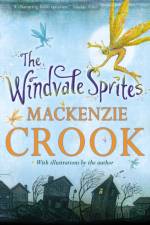
When a storm sweeps through the country, Asa wakes up the next day to find that his town is almost unrecognisable - trees have fallen down, roofs have collapsed and debris lies everywhere. But amongst the debris in his back garden Asa makes an astounding discovery - the body of a small winged creature. A creature that looks very like a fairy. Do fairies really exist? Asa embarks on a mission to find out. A mission that leads him to the lost journals of local eccentric Benjamin Tooth who, two hundred years earlier, claimed to have discovered the existence of fairies. What Asa reads in those journals takes him on a secret trip to Windvale Moor, where he discovers much more than he'd hoped to . . .Charming and utterly unforgettable, The Windvale Sprites is Mackenzie Crook's debut children's novel, containing his own exquisite illustrations.
Thomas Bernhard, one of the most distinct, celebrated, and perverse of 20th century writers, took his own life in 1989. Perhaps the greatest Austrian writer of the 20th century, Bernhard's vision in novels like Cutting Timber was relentlessly bleak and comically nihilistic. His prose is torrential and his stlye unmistakable. Bernhard is the missing link between Kafka, Beckett, Michel Houellebecq and Lars von Trier; without Bernhard the literature of alienation and self-contempt would be bereft of its great practitioner. Cutting Timber: An Irritation is widely recognised as his masterpiece. Over the course of a few hours, following a performance of Ibsen's The Wild Duck, we are in the company of the Auersbergers, and our narrator, who never once leaves the relative comfort of his 'wing-backed chair' where he sips at a glass of champagne. As they anticpate the arrival of the star actor, and the commencement of dinner, the narrator of Cutting Timber dismantles the hollow pretentiousness at the heart of the Austrian bourgeoisie. The effect is devastating; the horror only redeemed by the humour.
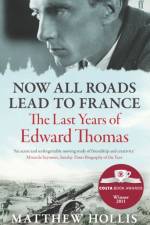
Edward Thomas was perhaps the most beguiling and influential of First World War poets. Now All Roads Lead to France is an account of his final five years, centred on his extraordinary friendship with Robert Frost and Thomas's fatal decision to fight in the war.The book also evokes an astonishingly creative moment in English literature, when London was a battleground for new, ambitious kinds of writing. A generation that included W. B. Yeats, Ezra Pound, Robert Frost and Rupert Brooke were 'making it new' - vehemently and pugnaciously. These larger-than-life characters surround a central figure, tormented by his work and his marriage. But as his friendship with Frost blossomed, Thomas wrote poem after poem, and his emotional affliction began to lift. In 1914 the two friends formed the ideas that would produce some of the most remarkable verse of the twentieth century. Their writing was far more than just war poetry, but it was World War I that put an ocean between them. Frost returned to the safety of New England while Thomas stayed to fight for the Old.It is these roads taken - and those not taken - that are at the heart of this remarkable book, which culminates in Thomas's tragic death on Easter Monday 1917.
Abonner på vårt nyhetsbrev og få rabatter og inspirasjon til din neste leseopplevelse.
Ved å abonnere godtar du vår personvernerklæring.