





Gjør som tusenvis av andre bokelskere
Abonner på vårt nyhetsbrev og få rabatter og inspirasjon til din neste leseopplevelse.
Ved å abonnere godtar du vår personvernerklæring.Du kan når som helst melde deg av våre nyhetsbrev.

'The best book on football ever written.' Franz Beckenbauer, winner of the World Cup as both player and manager.In Football Memories, Brian Glanville himself writes, 'The central character, Garry, was a Scottish inside-forward based on Danny Blanchflower. This, largely because the footballer had to be untypically intelligent and aware, as well as an accomplished performer. Danny, so fluent, so original, and in certain ways so flawed, seemed an ideal model. Yet he, or his surrogate, could not carry the whole book. I used various voices. His wife's. My own.'Ever since J. B. Priestley's pre-publication endorsement - 'I enjoyed this highly original novel' - praise has been constant:'This is a brilliant novel. Any footballer can see a little of himself in Gerry Logan, as I did when I first read it. The book tells what the pressures are like in the game, the temptations to which successful players are exposed and yet the human qualities tell us much about society and human nature in general.' Derek Dougan'The best novel on soccer I have ever read.' Daily Herald'Soars into first-class fiction.' The Spectator'An acid fable of our age, solid with expertise about football and its seamier secrets.' Daily Mail 'The whole world of big time soccer, with its glamour and bitter feuds, made very real.' Sunday Telegraph
To Horace Walpole's house at Strawberry Hill, in Twickenham, came a remarkable assortment of poets and writers, artists and antiquaries, politicians and society figures. Among them were Thomas Gray, whose great 'Elegy' might never have been published without Walpole's encouragement; that 'laughter-loving dame' Kitty Clive, the greatest comic actress of her day; Lady Suffolk who entertained Walpole with stories of the days when she was George II's mistress; the epicene John Chute, whose architectural knowledge and enthusiasm helped to inspire Strawberry Hill; the gentle Berry sisters, who comforted Walpole's old age; George Selwyn, celebrated for his wit, languor, and necrophilia. 'If Mr Selwyn calls', said Mr Fox on his death-bed, 'show him up. If I'm still alive I'll be glad to see him and if I'm dead he'll be glad to see me.' The most fascinating member of this circle was Horace Walpole himself. Son of Sir Robert, Member of Parliament for many years, author of the first Gothic romance, The Castle of Otranto, passionate collector, influential amateur of architecture and, above all, prince of English letter-writers, he emerges gradually but clearly through the eyes of his friends. Brian Fothergill, always an accomplished biographer, perhaps found his most congenial subject in this book: the result is a work as entertaining as it is informative.
A compassionate portrait of an elderly - and frustrated - woman adjusting to new town life and finding a new purpose in living.Illness forces Sylvia Calvert to live with her son Harold, a headmaster in Carshall New Town. At first, Sylvia cannot adjust to the jungle of supermarkets, 10-pin bowling alleys and recreation areas; to the committees and purposeful entertaining involved in the creation of a new society.Above all, Sylvia can't understand Harold's odd, thrusting idealism and the strange behaviour of her grandchildren.But a chance meeting and a family crisis give her the chance to fulfil herself ...
In one of his Independent pieces Miles Kington once referred to a volume of Edward Lear's limericks translated into French. Not an easy task, you might think, and in translating Alphonse Allais into English, Miles Kington set himself a similar challenge. He carried it off with panache. As Max Harrison said in The Times, '... has done a difficult job well, even preserving some of Allais's puns'.Alphonse Allais has been described as the greatest humorous writer ever. In the words of Lisa Appignanesi, 'Allais was a consummate absurdist. From an ordinary phenomenon, simple sentiment or situation, he would logically deduce the looniest, most macabre and most unexpected result ... His humour kept all Paris, high and low, waiting breathlessly for the paper which would carry his next tale ...'On first publication, in 1976, Clive James in the Observer said 'Allais has been dead 70 years but his mocking tone ensures him a permanently relevant after-life'. And John Sturrock in the New Statesman, 'Allais stands, along with Jarry, at the head of the most dazzling and highly educated tradition of French humour, as witty as it is whimsical'. Faber Finds offers this rare book as a tribute not only to Alphonse Allais but also Miles Kington, two great humorists in tandem.
The Wind in the Willows needs no introduction - children have enjoyed the exploits of its characters for generations. Few would guess that its author, Kenneth Grahame, was a tortured soul. Marriage to the predatory Elspeth Thomson, when both seemed destined for the single life, was a shared fantasy of invented truth. Out of that union came a catastrophically spoiled son, 'Mouse', for whom that greatest of children's stories was written. It was the child's tragedy that he was sucked into the unreality of his parents' lives and did not survive it, ending his life in suicide.Alison Prince brings her own highly acclaimed expertise as a children's writer to this remarkably perceptive biography of Kenneth Grahame. Drawing on hitherto unpublished material she uncovers layer upon layer of Grahame's personality to reveal the truth behind the myth of this intriguing man, 'the tortured soul of Mr Toad'.'Alison Prince describes the grim story of Grahame's marriage and fatherhood squarely and sensitively.' Independent'A meaty, well-constructed biography.' Allan Massie Daily Telegraph
Does the habit of taking drugs make authors write better, or worse, or differently? Does it alter the quality of their consciousness, shape their imagery, influence their technique? For the Romantic writers of the nineteenth century, many of whom experimented with opium and some of whom were addicted to it, this was an important question, but it has never been fully answered. In this study Alethea Hayter examines the work of five writers - Crabbe, Coleridge, De Quincey, Wilkie Collins and Francis Thompson - who were opium addicts for many years, and of several other writers - notably Keats, Edgar Allan Poe and Baudelaire, but also Walter Scott, Dickens, Mrs Browning, James Thomson and others - who are known to have taken opium at times. The work of these writers is discussed in the context of nineteenth-century opinion about the uses and dangers of opium, and of Romantic ideas on the creative imagination, on dreams and hypnagogic visions, and on imagery, so that the idiosyncrasies of opium-influenced writing can be isolated from their general literary background. The examination reveals a strange and miserable region of the mind in which some of the greatest poetic imaginations of the nineteenth century were imprisoned.
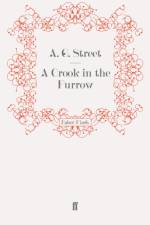
First published by Faber & Faber in 1940, A Crook in the Furrow was described by the Manchester Evening News as 'like no other detective story. Mr Street's plots and stratagems, his devices are well up to the most exacting professional standards. As a background for it there is Mr Street's great love and knowledge of the English countryside'. Detective Inspector 'Coincidence' Charles Jenks has been investigating a hunch that Dr Larne of 223 Harley Street has been committing crimes. What these crimes are, however, he isn't sure, but Dr Larne's name has occurred too frequently in reference accounts of suspicious circumstances for 'Coincidence' Charles to think that he is perfectly innocent. As ever, 'Coincidence' Charles is right. Dr Larne has been supplying drugs using his Harley Street practice and two unknown accomplices, Peggy and Frank Young. Believing that 'Coincidence' Charles is onto their scheme, Larne persuades the couple to move to the country and set up as 'honest' farmers in order to continue their growing business away from the prying eyes of 'Coincidence' Charles. Can Charles discover what is really going on, or will the country straighten them out? After all, 'Wiltshire won't have crooks in her furrows'.
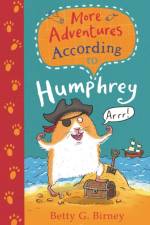
Ahoy, maties!I've had my share of adventures as the beloved pet hamster of Room 26. But when I heard about the sailing competition on Potter's Pond, I longed for a BIG-BIG-BIGGER adventure of my own. Believe me, I got it ...but it wasn't all smooth sailing. I helped out my classmates Gail, Richie and Kirk, took an unsqueakably dangerous (but thrilling) voyage of my own, and even came face-to-face with a pirate! To top it all off, I just had to tell you about all the extra adventures that happened along the way: I got to know even more of my friends from Longfellow School, and faced a BIG-BIG-BIGGER surprise than ever!Would I do it again? Aye-aye, you bet I would! It's all in a day's work for me!Your extra-adventurous pal,Humphrey
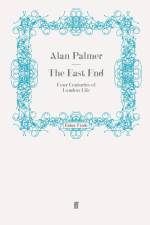
The East End as an idea is known to every Londoner, and to many others, though its boundaries are vague. Alan Palmer's historical overview of the area (first published in 1989 and revised in 2000) takes its extent to be the traditional limits of Hackney and Tower Hamlets, Hoxton and Shoreditch, the docklands and their overflow into West Ham and East Ham. And at the heart of the East End lies Spitalfields, home to a transient, often radical and hard-working population. Though it is often seen as London's centre of industry and poverty, in comparison to the well-to-do West End, the East End has always been a diverse place: in the seventeenth century, Hackney was a pleasant country retreat; Stepney and the docklands a bustling world of sailors and merchants. The book traces the development of the area from these roots, through the nineteenth century - when the East End became notorious as the home of radicals, exiled revolutionaries and the very poor, its crowded streets the scene of murder, riot and cholera -to the bombing of the first and second world war; and the subsequent decline and regeneration of the twentieth century.
As Alan Palmer himself writes in his preface, 'Alexander 1, ruler of Russia for the first quarter of the nineteenth century, is remembered today mainly on three counts: as the Tsar who refused to make peace with the French when Moscow fell in 1812; as the idealist who sought to bind Europe's sovereigns in a Holy Alliance in 1815; and as the Emperor who died - or gave the impression of having died - at the remote southern seaport of Taganrog in the winter of 1825. Recent interest has concentrated , perhaps excessively, on the third of these dramatic episodes akthough it is natural that the epic years of the struggle with Napoleon should continue to excite the historical imagination.'He has been dubbed 'The Enigmatic Tsar'. There are many contrasting opinions of him. Thomas Jefferson declared 'A more virtuous man, I believe, does no exist, nor one who is more enthusiastically devoted to better the condition of mankind. Castlereagh thought well of him, too, but both Metternich and Napoleon considered him inconsistent and untrustworthy. And Pushkin famously described him as 'a Sphinx who carried his riddle with him to the tomb.' an assessment even more piquant if it is true, as some maintain, his tomb in empty.With his customary blend of meticulous scholarship and agreeable writing, Alan Palmer provides the most balanced and engaging portrait imaginable.'A pleasure to read and unlikely to be replaced for many years' Philip Ziegler, The Times'Excellent . . . a major biographical achievement, a notable contribution to our understanding of this still enigmatic monarch' Robert Blake, Spectator
In the author's own words this is a book about 'chaps and maps'. More formally. The Chancelleries of Europe is a study of traditional diplomacy at its peak of influence in the nineteenth-century and the first years of the twentieth. At the Congress of Vienna in 1814-15 the five Great Powers - Austria, Britain, France, Prussia and Russia - established a system of international intercourse that safeguarded the world from major war for exactly a hundred years. The successive crises that challenged this supranational system - the unification of Italy and Germany, the scramble for colonies in Africa, and for trade concessions in Asia, the decline of the Ottoman Empire and the emergence of Japan - are well-known. Less attention has been given to the way the system functioned and to changes imposed on its character by the spread of speedier communications. It is these gaps in our understanding of the international politics of the century that the author seeks to fill.The book therefore studies the clashes of personality between crowned heads of the old empires and between rival statesmen and ambassadors seeking advancement. It compares the growth of personnel and specialist departments in the various foreign ministries, assesses the impact of domestic politics on external affairs, the power of the pressure groups like the (British) China Association and the (Russian) Far Eastern Committee, the proto-spin fed to favoured newspapers and, in contrast, the growing unease of press and public at 'hidden' negotiations and the concealment of diplomatic expedients and alliances. But the book also notes changes in the way diplomacy was conducted in the wake of technological inventions such as the semaphore towers of the early years and the electric telegraph and undersea cables of the second half of the century. Moments of high drama, skullduggery and bathos prove that the reading of diplomatic history is not the dull, dreary drudge many abhorred in their schooldays.
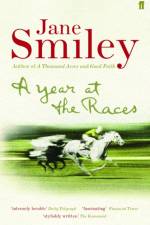
Pulitzer Prize-winning author Jane Smiley draws upon her first-hand knowledge to examine the horse on all levels - practical, theoretical and emotional. Drawing on the wisdom of trainers, vets, jockeys and a real-life horse whisperer, Smiley adds an element of drama and suspense as two of her own horses begin their careers at the racetrack. As the horses get closer to the winner's circle, we are enchanted, enthralled and informed about what it's really like to own, train and root for a racehorse.
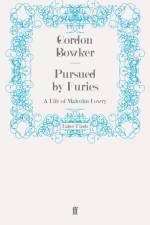
Malcolm Lowry was the troubled author of Under the Volcano (1947), a brilliant novel about the last day of an alcoholic former British consul on the Mexican Day of the Dead, the manuscript of which Lowry rescued from the flames when his fisherman's shack burned down in 1944. Lowry's other books were not always so lucky: his first novel, Ultramarine (1930), was stolen after four years' composition and resurrected from a carbon copy; another manuscript, In Ballast to the White Sea, was destroyed in the 1944 fire. An early draft of In Ballast was discovered this century and published in 2014. Lowry's life, like his work, was often lost to chaos; Gordon Bowker's 1994 biography is a masterful account of a life spent adrift.
First published in English in 1980, this important early memoir of Gustav Mahler is by Natalie Bauer-Lechner (1858-1921), a viola player and close and devoted friend of Mahler until his marriage to Alma Schindler in 1902. She visited him in Hamburg and frequented his circle in Vienna, also accompanying him and his family on a number of the summer vacations during which the Second, Third and Fourth Symphonies came into being, together with many of the Wunderhorn songs. Compiled from Bauer-Lechner's private journal, these Recollections are a vital, invaluable record of Mahler's personal, professional and creative life during the last decade of the nineteenth century. A large part of the book recounts, at first hand, conversations with Mahler concerning his works and his ideas about performance (both in the opera-house and on the concert platform.)
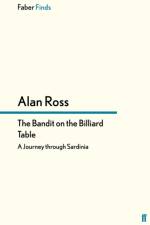
First published in 1954 as South to Sardinia, this account of a summer journey in the early 1950s sees Alan Ross alternating the past and present of a strange island whose interior, especially, had been only rarely visited at that point. His descriptions of the landscape and local customs and mores (including billiards, 'one of the great Sardinian occupations') are interspersed with tales of a cast of characters who might have come out of Boccaccio, adding up to a memorable evocation.'An alert and sensitive travel book... Alan Ross has an exceptional descriptive gift.' Listener'So closely packed with good writing that it requires to be read slowly, as Mr Ross travelled.' Time and Tide'He is a specialist in the vin triste... a delightful offbeat.' Cyril Connolly, Sunday Times'An exceptionally good book by any standard.' TLS'A work of art and imagination.' Times
Set in the world of a large advertising company Storyboard focuses on the decision by the agency's clients, Hoppness, Silch & Co. ('the soap people') to destroy one of their competitor's products. Into this scheme are thrust copyeditor Sophia Last and her boss Hugh Grover, as well as over-conscientious Account Executive Keith Bates, his wife Sylvia and their son Stephen. Also caught up in these events is Ralph Cavell, a young research graduate turned journalist. Storyboard is not primarily a novel about advertising. It is an exploration of how people can be corrupted, and ultimately destroyed, by their desire for money and power and how even those people who start out with good intentions can be misled from their original purpose. It is also a critique of powerful corporations that are controlled and organised by the greed of those who operate them.An absorbing and adult novel, Storyboard cemented John Bowen's reputation as a mature and intelligent novelist when it was first published in 1960.
First published in 1959 The Centre of the Green is John Bowen's third novel. The story centres around the Baker family: the father Justin is a retired Colonel; the mother, Teresa, is over-possessive and refuses to admit that her sons have grown-up; the sons Julian and Charles - one is a married advertising copywriter with a penchant for extra-marital affairs while the other is withdrawn and suicidal, desperately looking for human contact in the vast anonymity of London.It is Julian's involvement with a seventeen-year-old girl that sparks the chain of events that eventually encompasses the whole family. The scene shifts between Devonshire, London and Majorca as each member of the family searches for a resolution to the impasse into which they have drifted and struggle to regain the family ties that they once had. A subtle, intelligent and compassionate novel The Centre of the Green was commended by the Observer for its 'admirable vitality', while the Spectator described it as 'a series of expertly managed shocks'.
In John Bowen's The Birdcage Peter Ash and Norah Palmer have been living together for nine years. Having never seen the point in getting married they are the epitome of a modern successful career-oriented couple; Peter is the compere for a series of 'art' films and Norah is the Script Editor for the Drama Department of a commercial television company. Why then when holidaying in Venice does Peter decide to break up their long-lasting relationship? What happens to their order and sense of self when he succeeds? By turns wildly funny and frightening The Birdcage is a novel about the end of a love affair, the repercussions and the emotional fallout. A host of brilliantly created characters people the book, including Bunty Bates the policewoman, and Edward Laverick, a playwright who finds himself the object of a hunt. Bowen creates a world that his readers can relate to and analyses the social and psychological end of a relationship. At times comical and tragic The Birdcage remains an original and exciting novel 44 years after its first publication in 1964.
First published in 1958 After the Rain was described by Angus Wilson as a 'cataclysmic novel . . . as exciting as any deluge you can hope to find; but if you think deluges are too trivial, John Bowen has a surprise for you: his novel turns out to be satire of the first order.'Beginning in the basement of Foyle's bookshop in the Charing Cross Road in London and moving to rainmaking in Texas, love in Chew Magna, a camp in the Mendips, a storm at sea, sharks, sunstroke, a giant squid and a fight to the death on a raft, After the Rain is an adventure story that will keep you gripped to the very last page.An exhilarating, brilliantly conceived, sharply intelligent and often-funny story, it is a compassionate and well-imagined fable that makes a serious comment on the human situation and established John Bowen as a novelist of depth and skill, drawing comparisons with George Orwell and William Golding.
In this indispensable guide to digital film-making, leading film-maker Mike Figgis offers the reader a step-by-step tutorial in how to use digital technology so as to get the best from it.Mike Figgis, with experience from films such as Miss Julie and Leaving Las Vegas - for which he received two Oscar nominations - is an authoritative and insightful guide through the details of film-making. He outlines the equipment and its uses, and provides an authoritative guide to the shooting process - from working with actors to lighting, framing, and camera movement. He further dispenses wisdom on the editing process and the use of sound and music, all the while establishing a sound aesthetic basis for the digital format.This handbook is essential whether your goal is to make no-budget movies, or simply to put your video camera to more use than just holidays and weddings.
'King Ludwig has fascinated me ever since I was a child, yet fascination is not quite the right word. Fellow-feeling would be the proper phrase...' David Stacton, 1957With his fourth published novel - and his first on historical themes and personages - David Stacton's writing career took a decisive turn. Remember Me, over which he laboured for four years, is an extraordinarily vivid and felt portrait of the infamous Ludwig II of Bavaria, evoking with assurance the strange and poetic landscape that shaped him. Stacton described the book in genesis to his editor as 'a study in madness, of the regal temperament and its reflexes, pushed to that point when it has nothing but the past to govern.' 'A tour de force...An extraordinary feat of dreamlike identification. The compression is masterly.' Observer'[Stacton's] prose, alternating... between stabbing vigour and florid ornament, powerfully suggests the frustrations of that unhappy spirit.' Times Literary Supplement
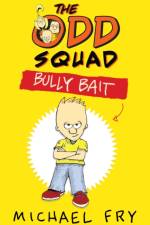
Nick is stuffed in his locker. Again.It's not so bad. Lockers are roomier than you'd think.Especially when you're the shortest kid on the planet, which is exactly why Bully-Boy Roy stuffed him in there in the first place: he fits.The school counselor says Roy has issues. The only issue Nick can see is that Roy is a mutant troll.Nick's friends Molly and Karl think the troll needs to be defeated.Together, they are THE ODD SQUAD.If you want to laugh out loud, watch them beat the bullies and see some cool pictures, READ THIS BOOK!
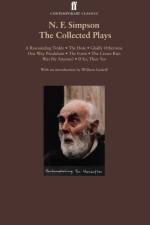
N. F. Simpson was one of the leading exponents of the theatre of the absurd, and is best known for his play A Resounding Tinkle, made famous by its premiere at the Royal Court in 1957, and later to star Peter Cook. But beyond that he was a major force in the satire boom of the sixties, and wrote much exceptional comedy for film and TV for the likes of John Cleese, Beryl Reid, Hattie Jacques and Eric Sykes, as well as a number of brilliantly funny plays for theatre, which starred big names such as Harold Pinter and Kenneth Williams. His influence on everyone from Peter Cook's much-loved character E. L. Wisty to Monty Python's Flying Circus helped spawn a generation of incredible comic talent.Plays included in the collection are A Resounding Tinkle, The Hole, Gladly Otherwise, One Way Pendulum, The Cresta Run, Was He Anyone? and his final work, If So, Then Yes, first performed in 2010.This collection celebrates the work of this lost comic genius, and seeks to put his reputation back at the heart of British - and world - comedy.
The Man Who Went Down with His Ship (1988) finds Hugh Fleetwood moving from Manhattan and Paris to winter-bound London, from Tuscany and Sardinia to Mexico and Egypt. Yet wherever his characters roam, their fate awaits them like the proverbial appointment in Samarra. In the title story, poet Alfred Albers attempts to confront with honesty an event from his past that has always haunted him, only to learn anew that no good deed goes unpunished. In 'The Nature of Angels' Maria longs for deliverance from a life made moribund, but is finally forced to ponder exactly what kind of power would answer our prayersThis edition includes two later Fleetwood stories: 'L & I' and 'Why Are You Wearing My Daughter's Earrings?''[Fleetwood] reaches down and stirs with venomous delight the nameless, faceless things swimming far below the level of consciousness.' Scotsman
Lieutenant Fred O'Connor of the NYPD Narcotics Bureau has a secret: an apartment on Central Park West, jointly purchased with ill-gotten gains by Fred and a corrupt fellow officer. The place is a refuge for Fred from a society he finds repellently ill-ordered. But his own equilibrium is disturbed, first by a series of brutal murders of his colleagues, then by the appearance at the apartment's door of wan Leo Smith, who claims to be the cop-killer...'Fleetwood is a compulsive pattern-maker, and a master of the ambiguous thread which finally pulls all together. It is a rich, gruesome, irresistibly readable book.' Times'Fleetwood can write like a dream... and really get into your head. He reaches down and stirs with venomous delight the nameless, faceless things swimming far below the level of consciousness.' Scotsman
In an isolated Roman villa, widowed English dancer Barbara Michaels serves as paid companion and tutor to twenty year-old Catherine, whose rich American mother thinks her 'mad.' In Barbara's eyes it's simply the case that Catherine is not 'all there', and dwells too much in the dysfunctional part of her own head. Barbara's sense of what is and is not 'normal', however, is about to be overturned.First published in 1973, The Girl Who Passed for Normal was Hugh Fleetwood's second novel and the winner of the John Llewellyn Rhys Prize for its year. 'Guaranteed to keep you on the edge of your chair.' New York Times'Shocking... Horridly memorable.' San Francisco Chronicle
In this 1980 collection Hugh Fleetwood links four tales by a red thread of theme. Author Tina Courtland, having retired to the Italian countryside, is lured back to London to write the life of the only man she has ever admired. Andrew Stairs, who has spent his life refusing to set foot on foreign soil, is tempted by romance to try the risky unknown of 'abroad.' Walter Drake, a novelist cursed by a sense of the failure of his life's work, resolves bitterly to write his autobiography. And Fran Niebauer, a well-heeled patron of writers, is forced to reconsider her motives for this patronage.'Fleetwood can write like a dream... and really get into your head. He reaches down and stirs with venomous delight the nameless, faceless things swimming far below the level of consciousness.' Scotsman
Mrs Vidozza elects to suffer for her gifted, unhinged son; Charles is consumed by the habit of voyeurism; Antonietta succumbs to fascination with a murder she believes she has witnessed; sexuagenarian Daisy suborns herself for the sake of a young girl she imagines as a flower in an otherwise filthy world...In this 1978 collection Hugh Fleetwood gives a name to a theme running through his fictional oeuvreand the fates of his characters: that 'innocence' must as soon as possible be supplanted by awareness of the human capacity for horror, so that Beauty and the Beast are reconciled in our consciousness.'Fleetwood can write like a dream... and really get into your head. He reaches down and stirs with venomous delight the nameless, faceless things swimming far below the level of consciousness.' Scotsman
'Black comedy at its most lurid, refined, and raffish... Wilbur George has made court-jester parasitism into an art form: four creepy but wealthy fellow expatriates (who hate each other) contribute to the upkeep of his Roman villa and matchless dinner parties. And when ancient, horrid Pam decides to stop contributing, she dies - moments after taking tea with Wilbur... the three surviving patrons congratulate him on a good clean kill, praise which vain Wilbur can't quite bring himself to deny...' Kirkus Reviews'It is Hugh Fleetwood's great ability as a novelist to analyse the world of the rich, to test it with violence and to subtly probe its corruption.' Peter Ackroyd, Spectator'Artistically successful and enthralling... It shimmers for a long time in the memory's eye.' Glasgow Herald'Extremely readable and suitably chilling.' Jeremy Lewis, Times
Nancy meets Marcus at a party. He is untidy, nervous, shy: women have never paid him any attention. But here is virgin clay from which Nancy can mould her Adam. She marries him, and on their wedding night Marcus realises he is as much her protege in sex as in other fields. But soon he is confident that, under her guiding hands, he had been transformed into a consummate lover; and he begins to feel the urge to slip his leash.'Elegant, funny and erotic... a good showcase for [Brophy's] perceptions on life and art, her wit and her dazzling prose.' Telegraph'Sly and sophisticated and written in a deceptively simple manner.' Kirkus Reviews'Brophy has the enviable knack of combining precision with suggestiveness.' Saturday Review
Abonner på vårt nyhetsbrev og få rabatter og inspirasjon til din neste leseopplevelse.
Ved å abonnere godtar du vår personvernerklæring.