



Gjør som tusenvis av andre bokelskere
Abonner på vårt nyhetsbrev og få rabatter og inspirasjon til din neste leseopplevelse.
Ved å abonnere godtar du vår personvernerklæring.Du kan når som helst melde deg av våre nyhetsbrev.

Mr Bensington and Professor Redwood were amongst that new breed of men - or 'scientists' as they had become known. They discover Herakleophorbia IV, a chemical foodstuff that accelerates growth, and, after a series of experiments, the countryside is overrun with giant chickens, rats, wasps and worms. Havoc ensues, but Benson and Redwood are undeterred and begin to use 'the food of the gods' on humans. Soon, children are growing up to 40 feet high. But where will the experiments end?H. G. Wells was responsible for an entirely new genre of writing. It was his bold, daring and hugely innovative books that first introduced readers to the concept of time travel, invisibility, genetic experimentation and interstellar invasion - ideas that have gone on to inspire future generations and given rise to the entire science fiction industry.
Mr Hoopdriver is an expert in his field - a perfect gentleman with more than a little flair behind the drapers' counter. Yet Mr Hoopdriver is growing tired of measuring out yards of gingham and selling endless reels of threads. He yearns for new discoveries, new adventures and above all, a change of scenery. Determined to leave the humdrum behind him, he mounts his bicycle and embarks on a journey across England. Liberation, excitement and friendship with a pretty young girl await him - but what will happen when the real world catches up with him? First published in 1896, during the bicycle's golden age, The Wheels of Chance is a delightful comic novel, capturing a period of momentous social change.
After My Fashion has an unusual publishing history. Although it was John Cowper Powys' third novel and written in 1920, it wasn't published until 1980. It seems that when his US publisher turned it down Powys made no effort to place it elsewhere. Indeed, when Powys had finished a book he tended to be oddly indifferent to its fate. The novel has two other unusual features: its locations (Sussex and Greenwich Village); and Isadora Duncan being the inspiration for Elise, the dancer and mistress of the protagonist, Richard Storm (based quite largely on Powys himself).As one would expect from Powys the writing is vivid, not least in the descriptions of the Sussex landscape and the bohemian milieu of Greenwich Village.
'There is an old saying, 'Murder will out.' I am really unable to see why this should be so...' Israel Rank: The Autobiography of a Criminal (1907) inspired the classic Ealing film Kind Hearts and Coronets. But though both works are comedies about a serial murderer, they are different creatures. The eponymous narrator of Roy Horniman's novel, son of a Jewish commercial traveller, offers his memoirs from the condemned cell, having murdered six people who stood between him and an earldom he hoped to inherit. Through Israel's story Horniman explores and parodies the anti-Semitic attitudes of Edwardian England. "e;A superb thriller, but also a disturbing study in human nature. The narrative pace never slackens, thanks to the spareness and elegance of Horniman's prose ...it is a book of its time, quite faithful to it, and (despite its 400 pages) over all too quickly"e;. (Simon Heffer, in his Preface).
Still Life: Sketches from a Tunbridge Wells Childhood (the sub-title is important) was first published in 1984. It won the J.R. Ackerley Prize for Literary Biography in that year. It is a classic among middle-class memoirs. In twenty-one short chapters the town is vividly anatomized. So too are its residents: meet Dr Ranking and, best of all, meet the Limbury-Buses living a life of contented ossification.'Cobb remembers, and that, as well as his redeeming freedom from all conventional standards of dignity and relevance, is what makes this offbeat, capricious book a rare treasure'. John Carey, Sunday Times 'A remarkable feat of making purest autobiography part of a general, social history... Cobb has broken one of the strangest silences in English social commentary; on the missing history of the English bourgeoisie'. Michael Neve, Times Literary Supplement
This is a classic war book by one of the finest poets of the Second World War. Keith Douglas was posted to Palestine in 1941 with a cavalry regiment. When fighting broke out at El Alamein in 1942, he was instructed to stay behind as a staff officer. But he wanted to fight, and so, completely disobeying orders, he drove a truck to the sight of the battle and participated as a tank commander. "e;Alamein to Zem Zem"e; is a vivid and unforgettable description of his experiences on the desert battlefield, seen through the eyes of a poet-soldier. 'Highly charged, violent descriptive prose ...conveys the humour, the pathos and the literal beauty of that dead world of tanks, sand, scrub and human corpses ...Comparable in descriptive power and intelligence to the books of Remarque, Sassoon and Blunden which spoke in similar terms of 1914-1918' - "e;Spectator"e;.
The Cherry Tree was first published in 1932 and is the final volume in Adrian Bell's classic rural trilogy. The first two volumes are Corduroy and Silver Ley. In The Cherry Tree the author describes further farming experiences, his marriage, and becoming habituated to country life.Taken together these three volumes have been described 'as the classic account of a twentieth-century Englishman's conversion to rural life'.
Silver Ley, first published in 1931, is the second volume in Adrian Bell's classic rural trilogy (the other volumes being Corduroy and The Cherry Tree). In Silver Ley the author moves from being a farm apprentice to a farm owner.
Corduroy was first published in 1930. It was followed by Silver Ley in 1931 and The Cherry Tree in 1932. Together they form a trilogy that has been described as 'the classic account of a twentieth-century Englishman's conversion to rural life'. In Corduroy the author's experiences as a farm apprentice in Suffolk are described. The tone is affectionate, humourous and not in the least patronizing. At times there is an elegiac strain not dissimilar to Edward Thomas. The three books constitute a threnody for, what was then, a vanishing, pre-mechanized way, of farming and rural life.
Small Town, Fife. Andy and Vicky were meant to be getting married tomorrow.The trouble is, Andy's stag weekend was so epic, so legendary, that he didn't survive it. The finest pleasures that Amsterdam and Hamburg have to offer, together with a mile-high fling with a budget-airline stewardess, brought him down to earth with a bump. Now it's time for the post-mortem. A black comedy about waking up to find the party's over, Gregory Burke's Hoors premiered at the Traverse Theatre, Edinburgh, in May 2009.
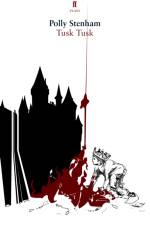
Come on troops. Let's take check: Finn Bar, slightly ruffled but still in fighting form. Maggie, could do with a full night's sleep but otherwise all in order... Stay here. Don't answer the door. I'll go out and get some proper food.In a new flat, three children play hide and seek. Eliot wears a crown, little Finn, King of the Wild Thing's, draws on the walls. Maggie climbs them. Hiding from the world, needing to be found, their one shared focus a mobile phone. Will it ring? Who will call? And what are they waiting for?Tusk Tusk is a tale of family loyalty as an uncertain future circles. Polly Stenham's second play premiered at the Royal Court Theatre, London, in March 2009.
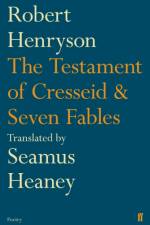
The greatest of the late medieval Scottish makars, Robert Henryson wrote in Lowland Scots, a distinctive northern version of English. He was profoundly influenced by Chaucer's vision of the frailty and pathos of human life. His greatest poem, and one of the rhetorical masterpieces of the literature of these islands, is the narrative Testament of Cresseid, set in the aftermath of the Trojan War, which completes the story of Chaucer's Troilus and Criseyde, offering a grim and tragic account of its faithless heroine's rejection by her lover Diomede, and her decline into prostitution and leprosy. A work of unreconciled Shakespearean intensity, the Testament has been translated by Seamus Heaney into a confident and yet faithful modern English idiom which honours the poem's unique blend of detachment and compassion.A master of narrative, Henryson was also a comic master of the verse fable; his burlesques of human weakness in the guise of animal wisdom are traced with delicate comedy and irony. Seven of the Fables are here sparklingly translated; their burlesque freshness rendered to the last claw and feather. Seven Fables and The Testament of Cresseid is an extraordinarily rich and wide-ranging encounter between two poets across six centuries.
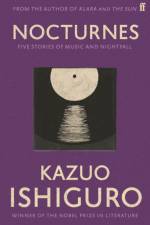
From the Nobel Prize-winning author of The Remains of the Day and Never Let Me GoIn Nocturnes, Kazuo Ishiguro explores the ideas of love, music and the passing of time. From the piazzas of Italy to the 'hush-hush floor' of an exclusive Hollywood hotel, the characters we encounter range from young dreamers to cafe musicians to faded stars, all of them at some moment of reckoning. Gentle, intimate and witty, this quintet is marked by a haunting theme: the struggle to keep alive a sense of life's romance, even as one gets older, relationships founder and youthful hope recedes.
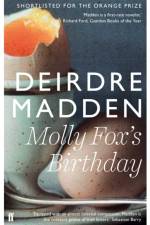
Dublin. Midsummer. While absent in New York, the celebrated actor Molly Fox has loaned her house to a playwright friend, who is struggling to write a new work. Over the course of this, the longest day of the year, the playwright reflects upon her own life, Molly's, and that of their mutual friend Andrew, whom she has known since university. Why does Molly never celebrate her own birthday, which falls upon this day? What does it mean to be a playwright or an actor? How have their relationships evolved over the course of many years? Molly Fox's Birthday calls into question the ideas that we hold about who we are; and shows how the past informs the present in ways we might never have imagined.
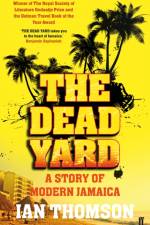
Jamaica used to be the source of much of Britain's wealth, an island where slaves grew sugar and the money flowed in vast quantities. It was a tropical paradise for the planters, a Babylonian exile for the Africans shipped to the Caribbean. It became independent in 1962.Jamaica is now a country in despair. It has become a cockpit of gang warfare, drug crime and poverty. Haunted by the legacy of imperialism, its social and racial divisions seem entrenched. Its extraordinary musical tradition and physical beauty are shadowed by casual murder, police brutality and political corruption.Ian Thomson shows a side of Jamaica that tourists rarely see in their gated enclaves. He travelled country roads in buses and met ordinary Jamaicans in their homes and workplaces; and his encounters with the white elite, who still own most of Jamaica's businesses and newspapers, are unforgettable. Thomson brings alive the country's unique racial and ethnic mix; the all-pervading influence of the USA; and the increasing disillusionment felt by its people, who can't rely on the state for their most basic security. At the heart of the book is Jamaica's tense, uneasy relationship with Britain, to whom it remains politically and culturally bound.
They're ex-special forces, CIA spooks or Foreign Legionnaires.They're fighting insurgents in Baghdad and patrolling government buildings in Afghanistan. And now they're spying on environmental protestors and policing the 2012 Olympics.They are above the law and independent from government. They are the privatised armies of mercenaries. Meet the private security contractors - a stock-market-listed corporate version of the mercenary. These private soldiers operate their million-dollar contracts from executive boardrooms in London, Washington, Paris and Oslo. With democracies unwilling to see their children die for strategic reasons in foreign lands, these corporate soldiers are part of the last great outsourcing - the privatisation of war. 'With an estimated 48,000 private security contractors at work in Iraq alone, corporate warfare is one of the fastest growing industries in the world. Journalist Armstrong's excellent book looks into how these companies operate.' GQ'Frightening . . . He has collected some chilling anecdotes about the corners cut by companies who are only interested in profit.' Metro
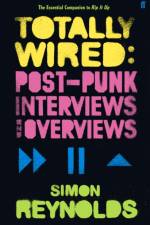
From the author of the bestselling postpunk history Rip It Up and Start Again comes Totally Wired, a companion book of conversations with the brilliant minds who made the late seventies and early eighties such a creative era for radical music and alternative culture. Totally Wired features thirty-two interviews with postpunk's most innovative musicians and colourful personalities - Ari Up, Jah Wobble, David Byrne, Green Gartside, Lydia Lunch, Edwyn Collins - as well as other movers and shakers of the period: label bosses and managers like Anthony H. Wilson and Bill Drummond, record producers such as Trevor Horn and Martin Rushent, and influential DJs and journalists like John Peel and Paul Morley. Crackling with argument and anecdote, the conversations in Totally Wired bring a rich human dimension to the postpunk story chronicled in the critically acclaimed Rip It Up. We get to follow these exceptional (and often eccentric) characters from their earliest days through the glory and sometimes disaster of their musical adventures to what they went on to do after postpunk. We gain a vivid sense of individuals struggling against the odds to make their world as interesting as possible, in the process leaving a legacy of artistic ambition and provocation that reverberates to this day. Along with the interviews, Totally Wired also includes a bonus 'overviews' section: further reflections by Simon Reynolds on postpunk's key icons and crucial scenes, including John Lydon and Public Image Ltd, Ian Curtis and Joy Division, art school conceptualists and proto-postpunkers Brian Eno and Malcolm McLaren, and the lineage of glam grotesquerie running from Siouxsie & The Banshees to the New Romantics to Leigh Bowery. Buzzing with ideas and insights, Totally Wired is an absolute mind rush.
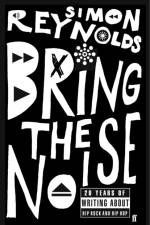
An anthology of writings spanning Simon Reynolds's extraordinary career as a music writer, Bring the Noise weaves together interviews, reviews, essays, and features to create a critical history of the last twenty years of pop culture. Bring the Noise juxtaposes the voices of many of rock and rap's most provocative artists - Morrissey, Public Enemy, Beastie Boys, The Stone Roses, PJ Harvey, Radiohead, The Streets - with Reynolds's own passionate analysis. With all the energy and insight you would expect from the author of Rip It Up And Start Again, Bring the Noise tracks the alternately fraught and fertile relationship between white bohemia and black street music. The selections transmit the immediacy of their moment while offering a running commentary on the broader enduring questions of race and resistance, multiculturalism and division. From grunge to grime, from Madchester to the Dirty South, Bring the Noise chronicles hip hop and alternative rock's competing claims to be the cutting edge of innovation and the voice of opposition in an era of conservative backlash. Alert to both the vivid detail and the big picture, Simon Reynolds has shaped a compelling narrative that cuts across a thrillingly turbulent two-decade period of pop music.
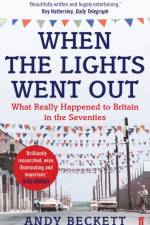
The seventies are probably the most important and fascinating period in modern British political history. They encompass strikes that brought down governments, shock general election results, the rise of Margaret Thatcher and the fall of Edward Heath, the IMF crisis, the Winter of Discontent and the three-day week.But the seventies have also been frequently misunderstood, oversimplified and misrepresented. When the Lights Went Out goes in search of what really happened, what it felt like at the time, and where it was all leading. It includes vivid interviews with many of the leading participants, many of them now dead, from Heath to Jack Jones to Arthur Scargill, and it travels from the once-famous factories where the great industrial confrontations took place to the suburbs where Thatcherism was created and to remote North Sea oil rigs.The book also unearths the stories of the forgotten political actors away from Westminster who gave the decade so much of its volatility and excitement, from the Gay Liberation Front to the hippie anarchists of the free festival movement. Over five years in the making, this book is not an academic history but something for the general reader, written with the vividness of a novel or the best works of American New Journalism, bringing the decade back to life in all its drama and complexity.
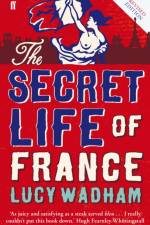
At the age of eighteen Lucy Wadham ran away from English boys and into the arms of a Frenchman. Twenty-five years later, having married in a French Catholic Church, put her children through the French educational system and divorced in a French court of law, Wadham is perfectly placed to explore the differences between Britain and France.Using both her personal experiences and the lessons of French history and culture, she examines every aspect of French life - from sex and adultery to money, happiness, race and politics - in this funny and engrossing account of our most intriguing neighbour.
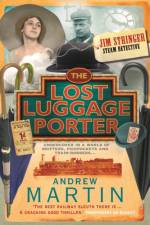
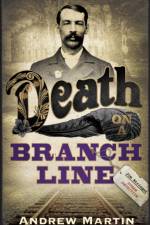
'Unerringly sharp and pioneeringly original, it locks the reader in from start to finish.' Andrew Barrow, SpectatorWinter, 1906. It's Jim Stringer's first day as an official railway detective, but he's not a happy man.As the rain falls incessantly on the city's ancient streets, the local paper carries a story highly unusual by York standards: two brothers have been shot to death. Soon Jim enters the orbit of a dangerous, disturbed villain - and discovers that the two murders are barely the start of his plans . . .'A cracking good thriller.' Independent on Sunday'Crime narratives dispatched with a Dickensian relish . . . Delectable stuff.' Daily Express'Has the charm of Alexander McCall Smith's simple-is-good philosophising and its addictive quality.' Metro
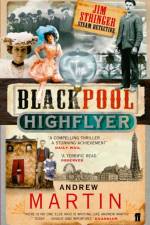
'A steamy whodunnit . . . This may well be the best fiction about the railways since Dickens.' Independent on Sunday'Genuinely gripping . . . The sort of thing D. H. Lawrence might have written had he been less verbose or been blessed with a sense of humour.' Peter Parker, Evening Standard (Books of the Year)A superbly atmospheric thriller of sabotage, suspicion and steam, The Blackpool Highflyer brings a new twist to tales of Edwardian England and amateur sleuthing. Assigned to drive holidaymakers to the seaside resort of Blackpool in the hot summer of 1905, Jim Stringer is happy to have left behind the grime and danger of life in London. But his dreams of beer and pretty women are soon shattered - when his high-speed train meets a huge millstone on the line . . .'A clear winner in literary crime writing . . . Dazzling attention to detail and quality writing from one of our best contemporary male novelists.' Daily Express
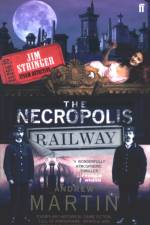
'A brilliant murder mystery set in Edwardian London about a railway line that runs only to a massive cemetery.' Daily MirrorWhen railwayman Jim Stringer moves to the garish and tawdry London of 1903, he finds his duties are confined to a mysterious graveyard line. The men he works alongside have formed an instant loathing for him - and his predecessor has disappeared under suspicious circumstances. Can Jim work out what is going on before he too is travelling on a one-way coffin ticket aboard the Necropolis Railway? 'Guaranteed to make the flesh creep and the skin crawl, a masterful novel about a mad, clanking, fog-bound world.' Simon Winchester'A murderous conspiracy of a plot graced with style, wit and the sharp, true taste of a time gone by ... So beautifully nuanced and so effortlessly pleasurable to read that you almost want to keep it a personal secret.' Independent on Sunday
It is the summer of 1911 and as Britain is gripped by paranoia about German spies and secret preparations for war, railway detective Jim Stringer decides to set out for a much-needed holiday.But before he can leave he finds himself escorting a young aristocrat, Hugh Lambert, who is on his way to be executed for the murder of his father. When Hugh warns that a second murder is imminent in his isolated village, Jim sees a chance to kill two birds with one stone. And so, as he visits the village with his wife Lydia on the pretext of holidaying, Jim finds he has one weekend in which to stop another murder and unravel a conspiracy of international dimensions . . .'Enough historical details and rural oddbods for a BBC serial, a baffling plot and - most importantly - good writing.' Scotland on Sunday'Fascinating . . . Altogether an entertaining read.' Crimesquad.com'An eccentric and engaging novel.' Sunday Times'The period detail is wonderful . . . The story builds up a good head of steam early on and rattles along nicely to a satisfying conclusion.' Guardian
The latest in Andrew Martin's much-loved 'Jim Stringer, Steam Detective' series. 'Andrew Martin has recreated an extraordinarily convincing world . . . Terrific.' Daily TelegraphDecember, 1909. A train hits a snowdrift in the frozen Cleveland Hills. In the process of clearing the line a body is discovered, and so begins a dangerous case for struggling railway detective Jim Stringer, a case which will take him from the Highlands to Fleet Street to the mighty blast furnaces of Ironopolis.Jim's faltering career hangs on whether he can solve the murder, but before long Jim finds himself fighting not just for his job, but also for his life . . .'A wonderful evocation of Edwardian Britain . . . Tough, scary and funny, this is a novel for anyone who loves a page-turning detective story.' Independent on Sunday'Stringer is at the heart of a series of historical crime novels that shows no sign of running out of steam.' Sunday Times
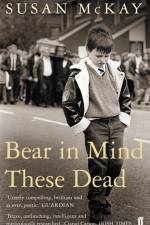
'A moving and timely work, which captures the lasting pain and grief of those who lost loved ones during the Troubles.' Eoin McHugh, Sunday IndependentNearly 4,000 people were killed during the Troubles. Susan McKay's book explores the difficult aftermath of the violence for families, friends and communities. By interviewing those who loved the missing and the dead, as well as some who narrowly survived, McKay gives a voice to those who are too often overlooked in the political histories. She has found grief and rage, as well as forgiveness. This book is a powerful and important contribution to the Northern Ireland power-sharing process. Only by confronting the brutality of the past can there be any hope that the dead may finally be laid to rest. 'An exemplary undertaking . . . a necessary book, which restores humanity to those among the dead who tend to be remembered in terms of statistics alone. Susan McKay has gone about her difficult task with bravery and finesse.' Patricia Craig, Independent'Peace can only endure if the dead can finally be laid to rest. Bear in Mind These Dead is a moving and important contribution to that process.' Derry Journal'Tremendously moving . . . Anyone who wants to understand the sectarian conflict of Northern Ireland must examine the individual tragedies that go to make up the broader narrative. This is the grim task to which McKay so admirably applies herself.' Andrew Anthony, Observer
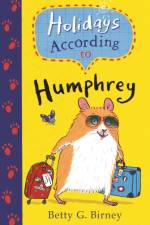
Britain's best-loved, best-selling hamster is back! But not for long as this time he's off on holiday and he wants to tell you all about the FUN-FUN-FUN times there are to be had along the way!So far Humphrey has won the Richard and Judy Children's Bookclub, been a World Book Day selection, and sold over half a million copies of his adventures in the UK alone.
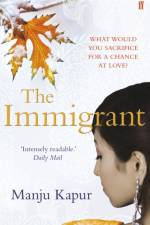
An engrossing portrait of an arranged marriage, from the prize-winning author of Home and Difficult Daughters.Nina is a thirty-year-old English lecturer in New Delhi, living with her widowed mother and frustrated by how little life has to offer. Ananda has recently emigrated to Halifax, Canada; having spent his twenties painstakingly building his career, he searches for something to complete his new life. When an arranged marriage is proposed, Nina is uncertain: can she really give up her home and her country to build a new life with a husband she barely knows? The consequences of change are far greater than she could have imagined. As the two of them struggle to adapt to married life, Nina's whole world is thrown into question. And as certain truths threaten the marriage, her fragile new life in Canada begins to unravel. Poignant and intimate, The Immigrant is an honest exploration of a marriage, what it costs to start again - and what we can never leave behind.
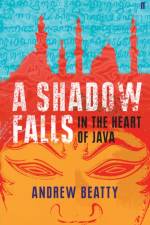
This is a unique report from deep inside the largest Muslim country in the world. It is not another work of journalism; instead it is a picture of how Islamic fundamentalism can displace older and more easygoing forms of belief, inside families and small communities. The author lived with his family for two and a half years in a village in Eastern Java, and gives us an intimate experience of a process that is taking place all over the Islamic world, a microcosm of threatening change. Andrew Beatty has also written an unforgettably human story set in a beautiful place.When he first visited this idyllic-seeming village in Java, he was entranced by its strange and sensual way of life. Javan mysticism, Hinduism and Islam coexisted without competing with each other; and the ancient traditions of the shadow and dragon plays, of celebratory feasting, of communion with the spirits of the dead and belief in werewolves seemed set to endure as they had always done. Public tolerance of transvestism and of short-lived affairs gave the village a most unpuritanical atmosphere. But the village was shadowed by a dark past, like the rest of Indonesia: in 1965 local people suspected of communism were murdered in huge numbers. And in the present, the chill wind of Islamism was driving apparently modern young women to take the veil, and young men to announce that they would no longer participate in the old rituals. The loudspeakers fixed on the local mosques grew more intrusive and strident, blaring intolerance at all hours of the day. Violent incidents multiplied, and boundaries sharpened: Beatty and his family began to feel like vulnerable outsiders. And out in the countryside a hysterical fit of killings began, a kind of witch-craze.This is a story of how one of the biggest issues of our time plays out in ordinary lives.
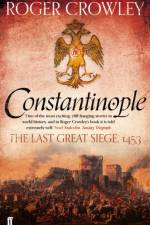
'Engagingly fresh and vivid . . . The 21-year-old Mehmet [the Ottoman Sultan] emerges from this book as ruthless but innovative, irascible but versatile and, above all, indefatigable - a worthy successor to Alexander and the Roman emperors he admired as much as any Muslim hero.' Malise Ruthven, Sunday TimesIn the spring of 1453, the Ottoman Turks advanced on Constantinople in pursuit of an ancient Islamic dream: capturing the thousand-year-old capital of Christian Byzantium. During the siege that followed, a small band of defenders, outnumbered ten to one, confronted the might of the Ottoman army in an epic contest fought on land, sea and underground.'In this account of the 1453 siege, written in crackling prose by former Istanbul resident Roger Crowley - his first book and not, I hope, his last - we are treated to narrative history at its most enthralling.' Christopher Silvester, Daily Express'A vivid and readable account of the siege . . . [And] an excellent traveller's guide to how and why Istanbul became a Muslim city.' Philip Mansel, Guardian
Abonner på vårt nyhetsbrev og få rabatter og inspirasjon til din neste leseopplevelse.
Ved å abonnere godtar du vår personvernerklæring.