







Gjør som tusenvis av andre bokelskere
Abonner på vårt nyhetsbrev og få rabatter og inspirasjon til din neste leseopplevelse.
Ved å abonnere godtar du vår personvernerklæring.Du kan når som helst melde deg av våre nyhetsbrev.

Auden often said that metre and rhyme led him down unexpected paths to thoughts he wouldn't otherwise have had, and in this respect versification and fornication are not so different. Benjamin Britten, sailing uncomfortably close to the wind with his new opera, Death in Venice, seeks advice from his former collaborator and friend, W H Auden. During this imagined meeting, their first for twenty-five years, they are observed and interrupted by amongst others their future biographer and a young man from the local bus station.You are a rent boy. I am a poet. Over the wall lives the Dean of Christ Church. We all have our parts to play.Alan Bennett's new play is as much about the theatre as it is about poetry or music. It looks at the unsettling desires of two difficult men, and at the ethics of biography. It reflects on growing old, on creativity and inspiration, and on persisting when all passion's spent: ultimately, on the habit of art. 'In the end,' said Auden, 'art is small beer. The really serious things in life are earning one's living and loving one's neighbour.'
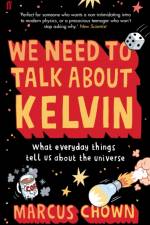
Look around you. The reflection of your face in a window tells you that the universe is orchestrated by chance. The iron in a spot of blood on your finger tells you that somewhere out in space there is furnace at a temperature of 4.5 billion degrees. Your TV tells you that the universe had a beginning. In fact, your very existence tells you that this may not be the only universe but merely one among an infinity of others, stacked like the pages of a never-ending book.Marcus Chown, author of Quantum Theory Cannot Hurt You, What a Wonderful World and The Solar System, takes familiar features of the world we know and shows how they can be used to explain profound truths about the ultimate nature of reality. His new book will change the way you see the universe: with Chown as your guide, cutting-edge science is made clear and meaningful by a falling leaf, or a rose, or a starry night sky... We Need To Talk About Kelvin: What Everyday Things Tell Us About The Universe is a hugely accessible exploration of quantum theory, relativity, cosmology, biology and chemistry. Taking our everyday experiences, Marcus Chown quickly and painlessly explains the unltimate truths of reality.
Charles II was thirty when he crossed the Channel in fine May weather in 1660. His Restoration was greeted with maypoles and bonfires, like spring after long years of Cromwell's rule. But there was no going back, no way he could 'restore' the old. Certainty had vanished. The divinity of kingship fled with his father's beheading. 'Honour' was now a word tossed around in duels. 'Providence' could no longer be trusted. As the country was rocked by plague, fire and war, people searched for new ideas by which to live. Exactly ten years later Charles II would stand again on the shore at Dover, laying the greatest bet of his life in a secret deal with his cousin, Louis XIV.The Restoration decade was one of experiment: from the science of the Royal Society to the startling role of credit and risk, from the shocking licence of the court to the failed attempts at toleration of different beliefs. Negotiating all these, Charles II, the 'slippery sovereign', played odds and took chances, dissembling and manipulating his followers. The theatres were restored, but the king was the supreme actor. Yet while his grandeur, his court and his colourful sex life were on display, his true intentions lay hidden.A Gambling Man is a portrait of Charles II, exploring his elusive nature through the lens of these ten vital years - and a portrait of a vibrant, violent, pulsing world, racked with plague, fire and war, in which the risks the king took forged the fate of the nation, on the brink of the modern world.
Since leaving his job to look after Alexa, his eight year old daughter, Thomas Bradshaw has found the structure of his daily piano practice and the study of musical form brings a nourishment to these difficult middle years. His pursuit of a more artistic way of life shocks and irritates his parents and his in-laws. Why has he swapped roles with Tonie Swann, his intense, intellectual wife who has accepted a demanding full-time University job? How can this be good for Alexa and for the family as a whole?Tonie tunes herself out of domestic life, into the harder, headier world of work where long-since forgotten memories of herself are awakened. She soon finds herself outside their tight family circle and alive to previously unimaginable possibilities.Over the course of a year full of crisis and revelation, we follow the fortunes of Thomas, Tonie, his brothers and their families: Howard, the older, more successful brother and his gregarious wife Claudia; and Leo, lacking confidence, propped up by Susie, his sharp-tongued, heavy-drinking wife. At the head of the family, the ageing Bradshaw parents continue their marital dynamic of bickering and petty undermining.The Bradshaw Variations is a powerful novel about how our choices and our loves and the family life we build will always be an echo - a variation - of a theme played out in our own childhood. The novel, Cusk's sixth , shows a prize-winning writer at the height of her powers.
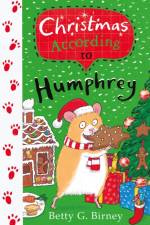
Dear FriendsJingle bells and dancing snowflakes, Christmas was coming and suddenly my life as a classroom hamster became unsqueakably exciting!The music teacher, Miss Lark, spent a lot of time in Room 26, preparing our class for Longfellow School's Winter Wonderland show so there was plenty of FUN-FUN-FUN. But my classmates were also having some BIG-BIG-BIG problems. Could one small hamster solve them on his own?Luckily, the spirit of the season managed to shine through and in the end it was definitely a Christmas to remember. Season's squeaking to all, Humphrey
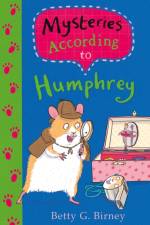
Dear Friends, I LOVE-LOVE-LOVE my job as the classroom hamster of Room 26. But when our teacher, Mrs Brisbane, didn't show up for school, I was unsqueakably worried about what had happened to her. Then a supply teacher, the mysterious Mr E, arrived and everything changed. Class was fun, but were my classmates learning anything? And what had happened to our wonderful teacher? I had my paws full as I gathered clues to solve the mystery and also tried to help my friends deal with their problems. At last, on Halloween, everything was revealed . . . but in a frightful and delightful way! Your furry friend, Humphrey
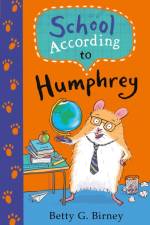
Join much-loved Humphrey the hamster for a new adventure! After a fur-raising holiday at Camp Happy Hollow, Humphrey returns to Room 26, eager to see his old friends. He is shocked to find the classroom full of strangers, like Rolling Rosie, Hurry-Up-Harry and Forgetful Phoebe. Where have all his old classmates gone? But the charming Humphrey soon learns that these new students could really use a helping paw from their classroom pet. In the end, even a small hamster can never have too many friends!
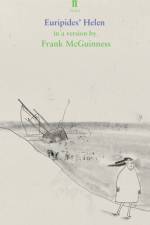
Seven years have passed since the end of the Trojan War and Menelaus, King of Sparta and husband to Helen, is making his slow and painful way home. When his ship is wrecked on the coast of Egypt he stumbles upon what seems to be his wife lingering outside the royal palace. But if this is the real Helen, who was the beautiful woman stolen by Paris, for whom all Greece took up arms? Did Troy fall for nothing? Has it all been some god's idea of a joke?Frank McGuinness's version of Euripides' Helen premiered at Shakespeare's Globe, London, in August, 2009.
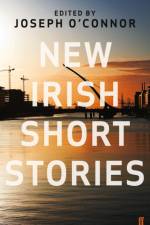
Edited by Joseph O'Connor (author of Star of the Sea and Ghost Light) New Irish Short Stories is a stunning collection from a fascinating variety of writers, both new and established. Featuring, among many others, William Trevor and Roddy Doyle, Rebecca Miller and Richard Ford, Christine Dwyer Hickey and Colm Toibin, it shows the short story to be a vibrant, thriving form and one that should continue to be celebrated and encouraged. This collection follows the two acclaimed editions David Marcus edited for Faber in 2004-5 and 2006-7.
'In my dreams the house itself has sinister intentions. In reality, the people who lived there did the damage...'Tim Ellison is lucky to find a cheap room in the city's best location. There's a hitch, though - he must run errands for the reclusive owner, beautiful Anna London. Anna is secretive, but it's obvious something is haunting her...When terrifying things start happening in the house, Tim is forced to think about leaving. But he's fallen for Anna, and when her past comes back with a vengeance Tim is caught right in the middle.
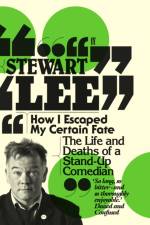
Experience how it feels to be the subject of a blasphemy prosecution! Find out why 'wool' is a funny word! See how jokes work, their inner mechanisms revealed, before your astonished face! In 2001, after over a decade in the business, Stewart Lee quit stand-up, disillusioned and drained, and went off to direct a loss-making musical, Jerry Springer: The Opera. Nine years later, How I Escaped My Certain Fate details his return to live performance, and the journey that took him from an early retirement to his position as the most critically acclaimed stand-up in Britain, the winner of BAFTAs and British Comedy Awards, and the affirmation of being rated the 41st best stand up ever. Here is Stewart Lee's own account of his remarkable comeback, told through transcripts of the three legendary full-length shows that sealed his reputation. Astonishingly frank and detailed in-depth notes reveal the inspiration and inner workings of his act. With unprecedented access to a leading comedian's creative process, this book tells us just what it was like to write these shows, develop the performance and take them on tour. How I Escaped My Certain Fate is everything we have come to expect from Stewart Lee: fiercely intelligent, unsparingly honest and very, very funny.
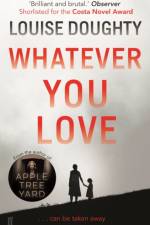
Whatever You Love, from Louise Doughty - the bestselling author of Apple Tree Yard, now a major BBC 1 series - is a heart-wrenching psychological thriller about bereavement and revenge, desire and infidelity.Shortlisted for the Costa Novel AwardLonglisted for the Orange PrizeWhen two police officers knock on Laura's door, her life changes forever.Her nine-year-old daughter Betty has been killed in a hit-and-run car accident. When the death is ruled an accident, Laura takes revenge into her own hands. But will her daughter's killer be brought to justice?Laura's loss and bereavement re-open old wounds and she is thrown back to the story of her passionate love affair with Betty's father David, their marriage, and his subsequent love affair with another woman.Haunted by Laura's past and desire for revenge, Whatever You Love is a riveting psychological thriller that explores the lengths one mother is willing to go to for love.If you've enjoyed Whatever You Love, you might also like Apple Tree Yard by Louise Doughty.
Ian Bostridge is one of the outstanding singers of our time, celebrated for the quality of his voice but also for the exceptional intelligence he brings to bear on the interpretation of the repertoire of the past and present alike. Yet his early career was that of a professional historian, and A Singer's Notebook takes a look at the multifaceted world of classical music through the eyes of someone whose career as a singer has followed a unique trajectory. Consisting of short essays and reviews written since 1997, some in diary form, it ranges widely over issues serious (music and transcendence) and not so serious (the singer's battles with phlegm), while inevitably discussing many of the composers with whom Bostridge has become identified, such as Benjamin Britten, Henze, Janacek, Weill, Wolf, and Schubert, composer of the Winterreise with which Bostridge has become so associated.Ultimately it returns to the theme of his earlier work on seventeenth century witchcraft - what place can there be for the ineffable in a world defined by an iron cage of rationality?Including a foreword by the eminent sociologist, Richard Sennett, A Singer's Notebook is an intriguing glimpse into the mind and motivation of one of Britain's best loved musicians.
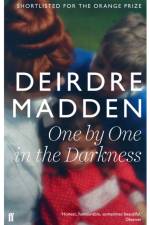
One by One in the Darkness is an account of a week in the lives of three sisters shortly before the start of the IRA ceasefire in 1994, undercut with the story of their childhood in Northern Ireland of the 1960s and 1970s. The history of both a family and a society, One by One in the Darkness confirms Deirdre Madden's reputation as one of Irish fiction's most outstanding talents.'Her authority when writing on her native Northern Ireland is supreme . . . beautifully written . . . an author with a rare talent . . . haunting and beautiful.' Literary Review'No other book has left me with such a lasting impression of the hurt of Northern Ireland.' Sunday Tribune'Ambitious and wide-ranging . . . skilfully constructed . . . particularly good at the way in which the past constructs the present, how intense memories transfigure current experience . . . A quiet and effective psychological realism.' Independent on Sunday
His foremost interpreter revisits more than forty years of listening to Dylan - weaving individual moods and moments into a brilliant history of their changing times.The book begins in Berkeley in 1968, and ends with a piece on Dylan's show at the University of Minnesota on election night 2008. In between are moments of euphoric discovery: from Marcus' sleeve notes for the 1967 Basement Tapesto his exploration of Dylan's reimagining of the American experience in 1997's Time Out of Mind. And rejection; Marcus's Rolling Stonepiece on Dylan's album Self Portrait-- often referred to as the most famous record review ever written -- began with 'What is this shit?' and led to his departure from the magazine for five years. Marcus follows not only recordings but performances. books, movies, and all manner of highways and byways in which Bob Dylan has made himself felt in our culture.Together, the dozens of pieces collected here comprise a portrait of how, throughout his career, Bob Dylan has drawn upon and reinvented the landscape of American song, its myths and choruses, heroes and villains. They are the result of more than forty years' engagement between an unparalleled artist and a uniquely acute listener.
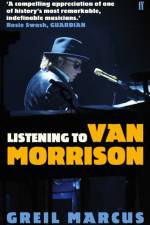
'Van Morrison,' says Greil Marcus, 'remains a singer who can be compared to no other in the history of modern popular music.' When Astral Weeks was released in 1968, it was largely ignored. When it was re-released as a live album in 2009 it reached the top of the Billboard charts, a first for any Van Morrison recording. The wild swings in the music, mirroring the swings in Morrison's success and in people's appreciation (or lack of it) of his music, make Van Morrison one of the most perplexing and mysterious figures in popular modern music, and a perfect subject for the wise and insightful scrutiny of Greil Marcus, one of America's most dedicated cultural critics. This book is Marcus's quest to understand Van Morrison's particular genius through the extraordinary and unclassifiable moments in his long career, beginning in 1965 and continuing in full force to this day. In these dislocations Marcus finds the singer on his own artistic quest precisely to reach some extreme musical threshold, the moments that are not enclosed by the will or the intention of the performer but which somehow emerge at the limits of the musician and his song.
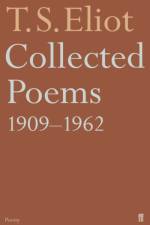
'Each year Eliot's presence reasserts itself at a deeper level, to an audience that is surprised to find itself more chastened, more astonished, more humble.' Ted HughesPoet, dramatist, critic and editor, T. S. Eliot was one of the defining figures of twentieth-century poetry. This edition of Collected Poems 1909-1962 includes his verse from Prufrock and Other Observations (1917) to Four Quartets (1943), and includes such literary landmarks as The Waste Land and Old Possum's Book of Practical Cats.
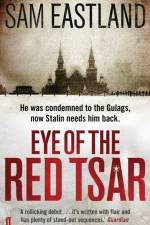
It is the time of the Great Terror. Inspector Pekkala - known as the Emerald Eye - was the most famous detective in all Russia. He was the favourite of the Tsar. Now he is the prisoner of the men he once hunted.Like millions of others, he has been sent to the gulags in Siberia and, as far as the rest of the world is concerned, he is as good as dead. But a reprieve comes when he is summoned by Stalin himself to investigate a crime. His mission - to uncover the men who really killed the Tsar and his family, and to locate the Tsar's treasure. The reward for success will be his freedom and the chance to re-unite with a woman he would have married if the Revolution had not torn them apart. The price of failure - death. Set against the backdrop of the paranoid and brutal country that Russia became under the rule of Stalin, Eye of the Red Tsar introduces a compelling new figure to readers of crime fiction
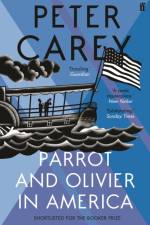
Olivier is an aristocrat, the traumatized child of survivors of the French Revolution. Parrot the son of an itinerant printer who always wanted to be an artist but has ended up a servant. Born on different sides of history, their lives will be brought together by their travels in America.When Olivier sets sail for America, ostensibly to study its prisons but in reality to save his neck from one more revolution - Parrot is sent with him, as spy, protector, foe and foil. As the narrative shifts between the perspectives of Parrot and Olivier, and their picaresque travels together and apart - in love and politics, prisons and the world of art - Peter Carey explores the adventure of American democracy, in theory and in practice, with dazzling wit and inventiveness.
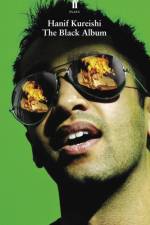
Religion is for the benefit of the masses, not for brain-box types like you. Those simpletons require strict rules for living, otherwise they would still think the earth sits on three fishes. But you mind-wallahs must know it's a lot of balls.An Asian kid from Kent goes to college in London and teams up with a sympathetic group of anti-racists. But it's 1989, the year of the fatwa, and as Shahid begins a hedonistic affair with his lecturer, his radical Muslim friends want to steer him away from the decadence of the West.We're not blasted Christians. We don't turn the other buttock. We will fight for our people who are being tortured anywhere - in Palestine, Afghanistan, Kashmir, East End!Hanif Kureishi's witty stage adaptation of his strikingly prescient and acclaimed novel, The Black Album, humorously considers how the events of 1989 have shaped today's world, where fundamentalism battles liberalism.A co-production with Tara Arts, The Black Album premiered at the National Theatre, London, in July 2009.
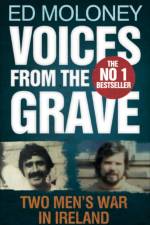
Ed Moloney's Voices from the Grave follows his highly acclaimed A Secret History of the IRA, the best-informed account yet written of the IRA's evolution from ruthless guerilla army into governmental party. But reconciliation between political figures who until very recently wished each other dead or in jail has not been accompanied by very much truth-telling about the past. Men who have been to the White House and fraternized with Tony Blair deny that they ever fired a shot in anger, or caused a bomb to be planted.Now, in Voices from the Grave, a truly ground-breaking piece of historical evidence is unearthed. Two former paramilitary leaders - one republican, one loyalist - speak with unprecedented frankness about their role in some of the most appalling violence of the Troubles. The openness of Brendan Hughes of the IRA and David Ervine of the UVF results in a book of shocking and irresistible testimony, their voices set in the context of a narrative by Ed Moloney of their lives and of the society they grew up in.
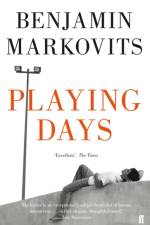
Fresh out of college and uncertain how to proceed with life, the narrator of Ben Markovits' Playing Days finds himself drifting towards a career that once obsessed his father - professional basketball. Gaining a place on a minor league German team, he leaves Texas and lands in the small rather desolate town of Landshut, playing basketball with an eclectic group of teammates, training for most of the day and then trying to find ways to fill the rest of it. It's an odd, isolated existence, punctuated by the intense excitement - and often intense disappointment - of the game. But then he meets Anke, a young single mother who happens to be the former wife of one of his teammates; and their tentative, burgeoning relationship becomes as significant and as life changing as the game itself. Beautifully written, Playing Days is entirely recognisable in its depiction of the first long summer after university. Tinged with the melancholy and nostalgia of early steps into adulthood, it's the story of a young man's first experience of adult love, and of the discovery of his own limitations.
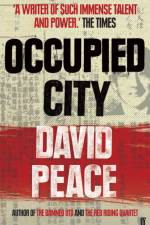
'We all know what this could be: we know it could be dysentery, we know it could be typhoid. In the Occupied City, we all know what this could mean -'Tokyo, January 26th, 1948. As the third year of the US Occupation of Japan begins, a man enters a downtown bank. He speaks of an outbreak of dysentery and says he is a doctor, sent by the Occupation authorities, to treat anyone who might have been exposed. Clear liquid is poured into sixteen teacups. Sixteen employees of the bank drink this liquid according to strict instructions. Within minutes twelve of them are dead, the other four unconscious. The man disappears along with some, but not all, of the bank's money. And so begins the biggest manhunt in Japanese history.In Occupied City, David Peace dramatises and explores the rumours of complicity, conspiracy and cover-up that surround the chilling case of the Teikoku Bank Massacre: of the man who was convicted of the crime, of the legacy of biological warfare programmes, and of the victims and survivors themselves. The second part of his acclaimed Tokyo Trilogy - and an extraordinary picture of a city in mourning - Occupied City is further evidence of a singular and formidable novelist.
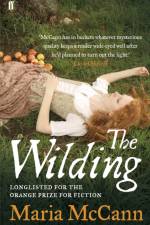
A novel of secrets and revenge within a 17th century English family. Longlisted for the Orange Prize1672. A generation after the Civil War, Jonathan Dymond, a cider maker, has so far enjoyed a quiet life. But when he discovers a letter from his dying uncle, hinting an inheritance and revenge, he is determined to unravel the mystery in his family. Under the pretence of his cider business, Jonathan visits his newly widowed aunt and there meets her unruly servant girl, Tamar, who soon reveals that she has secrets of her own...
'Everyone's touched! Don't be taken in by appearances here. Believe me, the old world has gone, but its shell remains in place. One day soon, there will come a breath of wind, a new messiah, the shell will crumple, and the kids will run, screaming, barefoot in the head, through lush new imaginary meadows. What a time to be young!'Barefoot in the Head is a tale of a future world recovering from a holocaust of hallucinogenic chemical weapons. For the victims, reality is a fluid mixture of the real, the imaginary and the nightmarish, the past, present and future. Colin Charteris, the hero and anti-hero on this continually disintegrating stage, has not himself survived the cataclysm unscathed, and his gradual descent into fantastic and paranoid visions will have drastic consequences for civilization.Brian Aldiss, in a psychedelic tour de force of inventive, playful narrative, owing as much to the methods of James Joyce and the experimentalism of William S. Burroughs as to H. G. Wells, goes light-years beyond the conventions of the genre to tell his story.
'The human consciousness had now widened so alarmingly, was so busy transforming everything on Earth into its own peculiar tones, that no art could exist that did not take proper cognisance of the fact. Something entirely new had to be forged.'The time traveller Bush's adventure takes him through 1930, 1851, the Jurassic and 2093, on the way exploring a modern crisis that remains our own.In Brian Aldiss's tale of time travel, the fiction is once again as psychologically imaginative as it is scientific, an idiosyncrasy of Aldiss's future visions that, over time, have proven remarkably prescient.
'No way of solving these problems exists any more. The conventions collapsed like old bridges. On the one side of the gulf is the mind, eternal and untouched - on the other, the body, running, jumping, bleeding ... The mind can take care of itself, as it has had to from the very beginning; it's not as smart as the body, but it can survive.'The future Earth of Brian Aldiss's Earthworks is a moribund ecological disaster, ruined by poisons, greed, unsustainable development and overpopulation. Mankind is broken, starving, wracked with disease and divided by bitter social injustice. Our window into this terrible world is the dangerous, crazed Knowle Noland, whose destructive impulses threaten to upturn the wreckage of civilization, either to redemption or final catastrophe.Rarely do Science Fiction works stand well the test of time as their suppositions are out-dated and superseded; Brian Aldiss's vision is remarkable for having come closer to reality decades after he conceived of this terrible future.
Written in the 1950s, the eight stories collected here are brilliantly of their time: the decade of rubber plants, espresso bars and skiffle, of Suez, Teddy Boys and Angry Young Men.With compassion and deadly accuracy, Angus Wilson charts the scandals and secrets of the respectable middle classes - Kennie, the Borstal Boy mascot of an intellectual clique; June Raven, an SW3 hostess who gets over-involved with one of her publisher-husband's authors; Lord Peacehaven, retired megalomaniac; Maurice Liebig, teenage pawn in a family feud; and the mad old man who finds the justice of God in a hen roost.
Angus Wilson's first volume of short stories, The Wrong Set was first published in 1949 to immense critical acclaim. The collection is a brilliantly funny exposure of the protective devices with which people seek to mask deep-laid egotism. There is the wallowing in self-adulation on the part of the 'crazy Cockshott family', as they delight to dub themselves. There is the search for really nice standards on the part of Vi, singer at the 'Passion Fruit' nightclub - as hopelessly bemused a spirit as ever lived in sin at Earl's Court and attempted to lecture a young Communist nephew with untidy hair and spectacles. There is the humbug of the bullying new curator at the provincial Art Gallery. And the staff dance at the South Kensington hotel, where lives the lady who spends her life trying to achieve 'a Knightsbridge appearance on a Kensington purse', and where, as the evening progresses and the drinks begin to tell, the lady-like fa,ades and gentlemanly courtesy of the clientele crack up with a vengeance.
Revenge was all Leadford could think of as he set out to find the unfaithful Nettie and her adulterous lover. But this was all to change when a new comet entered the earth's orbit and totally reversed the natural order of things. The Great Change had occurred and any previous emotions, thoughts, ambitions, hopes and fears had all been removed. Free love, pacifism and equality were now the name of the game. But how will Leadford fare in this most utopian of societies ...?H. G. Wells was responsible for an entirely new genre of writing. It was his bold, daring and hugely innovative books that first introduced readers to the concept of time travel, invisibility, genetic experimentation and interstellar invasion - ideas that have gone on to inspire future generations and given rise to the entire science fiction industry.
Abonner på vårt nyhetsbrev og få rabatter og inspirasjon til din neste leseopplevelse.
Ved å abonnere godtar du vår personvernerklæring.