



Gjør som tusenvis av andre bokelskere
Abonner på vårt nyhetsbrev og få rabatter og inspirasjon til din neste leseopplevelse.
Ved å abonnere godtar du vår personvernerklæring.Du kan når som helst melde deg av våre nyhetsbrev.

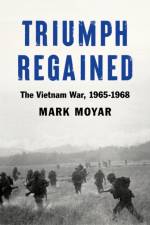
Triumph Regained: The Vietnam War, 1965â¿1968 is the long-awaited sequel to the immensely influential Triumph Forsaken: The Vietnam War, 1954â¿1965. Like its predecessor, this book overturns the conventional wisdom using a treasure trove of new sources, many of them from the North Vietnamese side. Rejecting the standard depiction of U.S. military intervention as a hopeless folly, it shows Americaâ¿s war to have been a strategic necessity that could have ended victoriously had President Lyndon Johnson heeded the advice of his generals. In light of Johnsonâ¿s refusal to use American ground forces beyond South Vietnam, General William Westmoreland employed the best military strategy available. Once the White House loosened the restraints on Operation Rolling Thunder, American bombing inflicted far greater damage on the North Vietnamese supply system than has been previously understood, and it nearly compelled North Vietnam to capitulate. The book demonstrates that American military operations enabled the South Vietnamese government to recover from the massive instability that followed the assassination of President Ngo Dinh Diem. American culture sustained public support for the war through the end of 1968, giving South Vietnam realistic hopes for long-term survival. Americaâ¿s defense of South Vietnam averted the imminent fall of key Asian nations to Communism and sowed strife inside the Communist camp, to the long-term detriment of Americaâ¿s great-power rivals, China and the Soviet Union.
In his newest book, Charles Murray fearlessly states two controversial truths about the American population: American whites, blacks, Hispanics, and Asians have different violent crime rates and different means and distributions of cognitive ability. If we aim to navigate public policy with wisdom and realism, these realities must be brought into the light. âFacing Reality provides a powerful overview of one perspective that those who allege sweeping forms of systemic or institutional racism find it all to convenient to ignoreâ¿or cancel without due consideration.â?â¿Wilfred Reilly, CommentaryâFacing Reality is a bold, important book which should be widely read and discussed.â? â¿Amy L. Wax, Professor of Law at the University of Pennsylvania Law School, for the Claremont Review of BooksThe charges of white privilege and systemic racism that are tearing the country apart float free of reality. Two known facts, long since documented beyond reasonable doubt, need to be brought into the open and incorporated into the way we think about public policy: American whites, blacks, Hispanics, and Asians have different violent crime rates and different means and distributions of cognitive ability. The allegations of racism in policing, college admissions, segregation in housing, and hiring and promotions in the workplace ignore the ways in which the problems that prompt the allegations of systemic racism are driven by these two realities. What good can come of bringing them into the open? Americaâ¿s most precious ideal is what used to be known as the American Creed: People are not to be judged by where they came from, what social class they come from, or by race, color, or creed. They must be judged as individuals. The prevailing Progressive ideology repudiates that ideal, demanding instead that the state should judge people by their race, social origins, religion, sex, and sexual orientation. We on the center left and center right who are the American Creedâ¿s natural defenders have painted ourselves into a corner. We have been unwilling to say openly that different groups have significant group differences. Since we have not been willing to say that, we have been left defenseless against the claims that racism is to blame. What else could it be? We have been afraid to answer. We must. Facing Reality is a step in that direction.
"When it comes to predicting how technology changes our near future, there are two camps. One says we live at a time of a "new normal" where we've netted all the low-hanging fruit and ordering a ride or food on a smartphone is as good as it's going to get. The other camp sees lots of changes but mainly in destroying jobs and traditional businesses. They're both wrong, predicts Mark P. Mills, whose earlier book "The Bottomless Well" debunked the bleak consensus view that the world had reached "peak oil" production in the early 2000s. History will record the 2020s as one of the episodic pivots in human progress where technology-driven prosperity goes into high gear. And it doesn't come from any single 'big' invention, but from the convergence of radical advances in technologies in three domains: the "Cloud," history's biggest and newest infrastructure, built from next-generation microprocessors and democratizing artificial intelligence; new kinds of machines used for making and moving everything; and the emergence of unprecedented and novel materials from which everything is built. We've seen this pattern before. The structure of the technological revolution that drove the last long-run expansion can be traced to the 1920s. It too came from the same kind of convergence: a new information infrastructure (telephony), new machines (cars and power plants), and new materials (plastics and pharmaceuticals). It's true that we've wrung all the magic out of the last boom. But the next one starts now. The U.S. is again at the epicenter of these innovations, one that promise to upend the status quo in manufacturing, transportation, healthcare, education, energy and entertainment"--
President Obama has declared that the standard by which all policies and policy outcomes are judged is fairness. He declared in 2011 that "we've sought to ensure that every citizen can count on some basic measure of security. We do this because we recognize that no matter how responsibly we live our lives, any one of us, at any moment, might face hard times, might face bad luck, might face a crippling illness or a layoff." And that, he says, is why we have a social safety net. He says that returning to a standard of fairness where anyone can get ahead through hard work is the "issue of our time." And perhaps it is.This book explores what it means for our economic system and our economic results to be "fair." Does it mean that everyone has a fair shot? Does it mean that everyone gets the same amount? Does it mean the government can assert the authority to forcibly take from the successful and give to the poor? Is government supposed to be Robin Hood determining who gets what? Or should the market decide that? The surprising answer: nations with free market systems that allow people to get ahead based on their own merit and achievement are the fairest of them all.
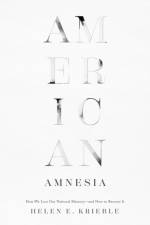
People are who they are because of what they have been through, where they came from, who they learned from, and all the things that have happened to them. The same is true not just for individuals, but also for families, communities, and nations. America, too, has its own unique character, also formed by its memories, history, things it has been through, and what it has learned. If people, communities, or even nations lose their memory, they lose their character. That is why cultures throughout the world work at maintaining their identity and passing traditions along to future generations. But what if a nation purposely decides it no longer wants to remember its history? What if a country imposes amnesia on itself?Helen Krieble argues persuasively that this is precisely what has happened to America. It has lost the memory of its own founding principles, and the sacrifices made over the past 250 years to preserve them. The nation is losing its character. She writes that America cannot be preserved as âthe last best hope of Earthâ? if its own people no longer understand why that is true and are no longer willing to do what it takes to preserve it. âThe duties of citizenship are vitally important,â? Krieble writes, âbut they are not complicated. It is our duty, as the owners, to defend our freedom against all threats, and to pass it along to future generations undiminished.â?Americans are failing in that duty, but Krieble says there is still time to cure our national amnesia. It begins with rebuilding our understanding of, and commitment to, those founding principles, regaining our national memory.
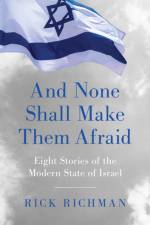
This is the story of how Zionism, supported by Americanism, created a modern miracle—told through the little-known stories of eight individuals who collectively changed history.And None Shall Make Them Afraid presents eight historic figures—four from Europe (Theodor Herzl, Chaim Weizmann, Vladimir Jabotinsky, and Abba Eban) and four from America (Louis D. Brandeis, Golda Meir, Ben Hecht, and Ron Dermer)—who reflect the intellectual and social revolutions that Zionism and Americanism brought to the world.In some cases, the stories have been forgotten; in other cases, misrepresented; in still others, not yet given their full due. But they are central to the miraculous recovery of the Jewish people in the twentieth century. Taken together, they recount both a people’s return to its place among the nations and the impact on history that a single individual can make.More than a century ago, after studying the early Zionist texts, Brandeis concluded that Jews were the “trustees” of their history, charged to “carry forward what others, in the past, have borne so well.” The stories in this book—recording the extraordinary efforts of extraordinary individuals that created the modern state of Israel and then sustained it—reinforce Brandeis’s observation for our own time. The story of Zionism, and its interaction with Americanism, is a continuing one. This book is not only about the past, but the present and future as well.
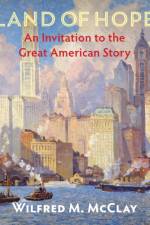
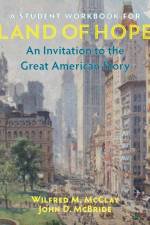
The Student Workbook is intended to be used with the Teacher's Guide. Both provide chapter summaries which teachers may use in teaching students to read for the main idea. The Student Workbook contains reading questions for each chapter of the LAND OF HOPE text; the Teacher's Guide has the same questions with answers. Primary documents accompany each chapter, broken into shorter segments to help with reading comprehension. These documents also have reading questions; the Teacher's Guide provides the answers. Documents are often the text of speeches, but may include diary entries and song lyrics. There are about two dozen map exercises; the Teacher's Guide has the keys. There are synthetical essay questions for each chapter and for final exams. Learning strategies and study "tricks" are also given. The purpose of the Student Workbook is to assist students in working through the LAND OF HOPE text with a close reading, and also to add some depth through the supplementary documents. The map exercises are "hands-on" and should help students master the crucially important geographic knowledge that the subject requires.
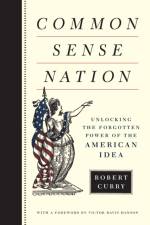
""We hold these Truths to be self-evident, that all men are created equal, that they are endowed by their Creator with certain unalienable Rights, that among these are Life, Liberty and the pursuit of Happiness." We have heard and read this sentence all our lives. It is perfectly familiar. But if we pause long enough to ask ourselves why Jefferson wrote it in exactly this way, questions quickly arise. Jefferson chose to use rather special and very precise terms. He did not simply claim that we have these rights; he claimed they are unalienable. Why "unalienable"? Unalienable, of course, means not alienable. Why was the distinction between alienable and unalienable rights so important to the Founders that it made its way into the Declaration? For that matter, where did it come from? You might almost get the impression that the Founders' examination of our rights had focused on alienable versus unalienable rights-and you would be correct. In addition, the Declaration does not simply claim that these are truths; it claims they are self-evident truths. Why "self-evident"? The Declaration's special claim about its truths, it turns out, is the result of those same deliberations as a result of which, in the words of George Washington, "the rights of mankind were better understood and more clearly defined than at any former period." If a friendly visitor from another country sat you down and asked you with sincere interest why the Declaration highlights these very special terms, could you answer them clearly and accurately and with confidence? Would you like to be able to? "--
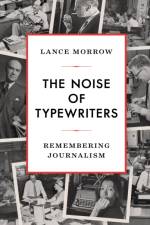
W.H. Auden famously wrote: “Poetry makes nothing happen.” Journalism is a different matter. In a brilliant study that is, in part, a memoir of his 40 years as an essayist and critic at TIME magazine, Lance Morrow returns to the Age of Typewriters and to the 20th century’s extraordinary cast of characters—statesmen and dictators, saints and heroes, liars and monsters, and the reporters, editors, and publishers who interpreted their deeds. He shows how journalism has touched the history of the last 100 years, has shaped it, distorted it, and often proved decisive in its outcomes.Lord Beaverbrook called journalism “the black art.” Morrow considers the case of Walter Duranty, the New York Times’ Moscow correspondent who published a Pulitzer Prize-winning series praising Stalin just at the moment when Stalin imposed mass starvation upon the people of Ukraine and the North Caucasus in order to enforce the collectivization of Soviet agriculture. Millions died.John Hersey’s Hiroshima, on the other hand, has been all but sanctified—called the 20th century’s greatest piece of journalism. Was it? Morrow examines the complex moral politics of Hersey’s reporting, which the New Yorker first published in 1946.The Noise of Typewriters is, among other things, an intensely personal study of an age that has all but vanished. Morrow is the son of two journalists who got their start covering Roosevelt and Truman. When Morrow and Carl Bernstein were young, they worked together as dictation typists at the Washington Star (a newspaper now extinct). Bernstein had dedicated Chasing History, his memoir of those days, to Morrow. It was Morrow’s friend and editor Walter Isaacson—biographer of Leonardo Da Vinci, Albert Einstein, and Steve Jobs—who taught Morrow how to use a computer when the machines were first introduced at TIME.Here are striking profiles of Henry Luce, TIME’s founder, and of Dorothy Thompson, Claud Cockburn, Edgar Snow, Joseph and Stewart Alsop, Joan Didion, Norman Mailer, Otto Friedrich, Michael Herr, and other notable figures in a golden age of print journalism that ended with the coming of television, computers, and social media. The Noise of Typewriters is the vivid portrait of an era.
David Pryce-Jones weaves a vivid life story through vignettes of the many famous authors-friends, acquaintances, interview subjects-who gave him personally inscribed books. In Signatures he offers a window onto the lives and work of these extraordinary people.As a child, Pryce-Jones spent time at Isaiah Berlin's house. As a teenager, lunching with Bernard Berenson at I Tatti, he prompted an outburst about Parisian anti-Semitism. W. H. Auden found him at Oxford to praise his competition poem, and he later visited Auden in his loft studio in Austria. Svetlana Alliluyeva reminisced about her father, Joseph Stalin, while staying at the Pryce-Jones house in Wales.A highbrow salon gathered in the home of Arthur Koestler, who strove to be an English gentleman and who was with Pryce-Jones in Reykjavik covering the Fischer-Spassky chess match. Saul Bellow spoke of an old friend, now a capo famiglia, promising to deal with student rioters in 1968 Chicago. After swapping houses with Pryce-Jones one summer, Jessica Mitford insisted that he would have been a Communist in the 1930s. Robert Graves challenged a quotation from Virgil, and told the Queen that she was a descendant of Muhammad.We meet V. S. Naipaul, a free spirit who understood that "the world is what it is." Muriel Spark would come round for lunch with the Pryce-Joneses in Florence, enjoying conspiratorial stories about Italian politics. At his sepulchral home in Heidelberg, Albert Speer demonstrated his way of "admitting a little to deny a great deal." In Isaac Singer we see generosity, candor, and mischievous humor.This is only a small sampling of the remarkable personalities who have left their signatures on a fascinating life.
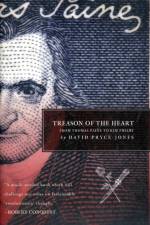
"Treason of the Heart" is an account of British people who took up foreign causes. Not mercenaries, then, but ideologues. Almost all were what today we would call radicals or activists, who thought they knew better than whichever bunch of backward or oppressed people it was that they had come to save. Usually they were applying to others what they saw as the benefits of their culture, and so obviously meritorious was their culture that they were prepared to be violent in imposing it. Some genuinely hated their own country, however, and saw themselves promoting abroad the values their own retrograde government was blocking. The book deals with those like Thomas Paine who saw American independence as the surest means to hurt England; the many who hoped to spread the French revolution and then have Napoleon conquer England; historic characters like Lord Byron and Lawrence of Arabia who fought for the causes that brought them glory; finally those who took up Communism or Nazism. "Treason of the Heart" is nothing less than the tale of intellectuals deluded about the effect of what they are doing - and therefore with immediate reference to today's world.
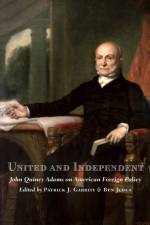
John Quincy Adams is widely recognized as Americaâ¿s most distinguished diplomat, taking into account the length and breadth of his public service and his influence on American foreign policy. In the course of this remarkable journey, John Quincy documented his ideas and actions through his writings, speeches, letters, diary entries, and state papers. To aid those interested specifically in learning more about the man and his views on foreign policy, the editors have compiled a collection of the most important and often-cited works, such as his famous July 4, 1821 Oration: âshe goes not abroad in search of monsters to destroy.â?The selections in this volume provide insights into Adams's diplomatic practices and the critical issues that marked the young American nation. To give the readers context, the editors have provided introductions for both particular periods in John Quincy's life as well as individual documents. Wherever possible, the editors have included the full text but, given the immensity of the available material and John Quincy Adamsâ¿s style of writing, they have used discretion to abridge certain documents.
Did the Covid virus jump naturally from an animal species to humans, or did it escape from a laboratory experiment? In this essay, science writer Nicholas Wade explores the two scenarios and argues that, on present evidence, lab escape is the more likely explanation. His inference is based on specific research being conducted at the Wuhan Institute of Virology and the Institute's lack of adequate safety precautions, together with the continuing absence of any direct evidence to support natural emergence.The essay discusses the failure of the mainstream media to penetrate the self-interested assurance of virologists that lab escape was a dismissible conspiracy theory. It also notes how the politicization of discussion impeded consideration of the scientific facts.
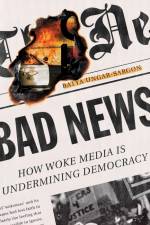
Something is wrong with American journalism. Long before "fake news" became the calling card of the Right, Americans had lost faith in their news media. But lately, the feeling that something is off has become impossible to ignore. That's because the majority of our mainstream news is no longer just liberal; it's woke. Today's newsrooms are propagating radical ideas that were fringe as recently as a decade ago, including "antiracism," intersectionality, open borders, and critical race theory. How did this come to be?It all has to do with who our news media is written by-and who it is written for. In Bad News: How Woke Media Is Undermining Democracy, Batya Ungar-Sargon reveals how American journalism underwent a status revolution over the twentieth century-from a blue-collar trade to an elite profession. As a result, journalists shifted their focus away from the working class and toward the concerns of their affluent, highly educated peers. With the rise of the Internet and the implosion of local news, America's elite news media became nationalized and its journalists affluent and ideological. And where once business concerns provided a countervailing force to push back against journalists' worst tendencies, the pressures of the digital media landscape now align corporate incentives with newsroom crusades.The truth is, the moral panic around race, encouraged by today's elite newsrooms, does little more than consolidate the power of liberal elites and protect their economic interests. And in abandoning the working class by creating a culture war around identity, our national media is undermining American democracy. Bad News explains how this happened, why it happened, and the dangers posed by this development if it continues unchecked.
The publication of The Once and Future Worker in November 2018 triggered a "vigorous intra-conservative debate" (Ross Douthat, New York Times), widening the schism between the right-of-center establishment and reformers eager to forge a new post-Trump consensus. Author Oren Cass, "one of the sharpest policy minds in this new vanguard" (Sam Tanenhaus, Time), presents "an unflinching indictment of the mistakes that Washington has made for a generation" (Senator Marco Rubio), laying the groundwork for a rethinking of economic policy "meant to be a dagger thrust into the heart of the traditional center-right consensus" (Senator Pat Toomey).Cass's argument can be stated simply: work matters. The implications of this idea yield a groundbreaking reevaluation of American society, economics, and public policy that challenges our basic assumptions about what prosperity means and whence it comes. American policy makers have focused exclusively on consumption, pursuing an agenda that guaranteed everyone more and cheaper and better stuff without concern for who would make it. But more important than the size of our televisions is the ability to support our families and contribute productively to our communities. When people lose those things, ultra-high-definition flat-screens are no substitute.The traditional emphasis on economic growth is important, Cass agrees, but whose growth matters. America must turn its attention to its long-neglected workers and pursue public policies that recognize and reinforce their vital role as the foundation of a thriving, self-sufficient society that offers opportunity for all. This is "the essential policy book for our time" (Yuval Levin, American Enterprise Institute), retracing the steps that led us astray and showing the path forward to the new way of thinking and the new ideas that the nation needs today.
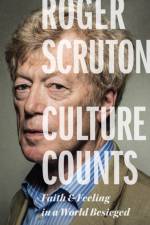
What is culture? Why should we preserve it, and how? This book defends Western culture against its internal critics and external enemies, and argues that rumours of its death are seriously exaggerated. It shows our culture to be a continuing source of moral knowledge.
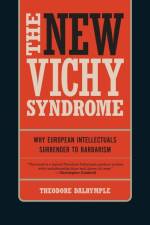
Explains how European intelligentsia turned on Western civilization and paved the way for hedonism and Islamism to run roughshod over a once proud European culture.
Abonner på vårt nyhetsbrev og få rabatter og inspirasjon til din neste leseopplevelse.
Ved å abonnere godtar du vår personvernerklæring.