



















Gjør som tusenvis av andre bokelskere
Abonner på vårt nyhetsbrev og få rabatter og inspirasjon til din neste leseopplevelse.
Ved å abonnere godtar du vår personvernerklæring.Du kan når som helst melde deg av våre nyhetsbrev.

There is no shortage of books on qualitative research methods, but none effectively equips researchers and practitioners for the interdisciplinary and increasingly complex, interconnected, and contested field of global development research. How can we choose the best method to answer our research question? How can we align disciplinary expectations of what good qualitative research is? How do we avoid pitfalls of extractive research practices amidst calls to decolonise global development? Interdisciplinary Qualitative Research in Global Development provides this sorely needed practical introduction, and it does so in a concise format that can easily be taken into the field. Drawing on over a decade of experience in interdisciplinary education, research, and policy-relevant work, Marco J. Haenssgen fills these chapters with examples and exercises that feature real-life material from current interdisciplinary global development research projects. In the process, he addresses the common concerns of practitioners and students and primes readers for the discussions that are likely to arise when the social and natural sciences meet.For its practical approach, its wealth of real-world examples, and its unique focus on interdisciplinary work, this book is a must-have for anyone who is engaging in interdisciplinary qualitative research, and especially for those doing so for the first time.
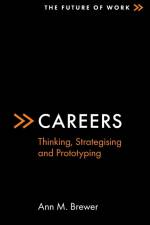
Considering career development in the current and future work landscape, this book explores a leading-edge framework for careers, drawing on design thinking to apply career planning to a wide range of individual contexts.The book encompasses diverse stakeholders at various stages of the career process, including career seekers, employers, trainers and educators to demonstrate the creation and flow of value for effective careers in a fast-moving and dynamically altering labour market.Using a design thinking framework, Ann M. Brewer presents compelling evidence of the need for career strategising to assist all workers in achieving their career aspirations and goals. This hands-on approach addresses the emotional and cognitive investment of career thinking and planning from an early career stage to a late career stage perspective, while the key emphasis on prototyping provides an opportunity to change the way careers are created.This far-reaching, well-rounded, highly creative, solutions-oriented framework is a useful resource for professionals and students considering future career progression within any work context, and researchers of employability, career management and career thinking.
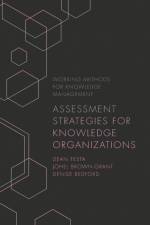
Assessment models and methods are taught in business schools, routinely published, conducted at all organizational levels and widely understood. Yet as organizations transform from an industrial to knowledge-based economy, assessments are rarely adapted to the new environment. Simply applying existing assessment models and methods to knowledge does not address the challenge. Knowledge assets, knowledge transactions and knowledge capabilities have unique properties and behaviors that may render traditional methods as unreliable or invalid. Expert authors Dean Testa, Johel Brown-Grant and Denise Bedford draw from their practical and theoretical experience in designing assessments for knowledge organizations, from observing successes and failures in a variety of organizations. Synthesizing their experience, their discussions here help knowledge management professionals gain a deeper understanding of maturity models and determine how best to create an assessment strategy for their organization. Offering an enhanced understanding of how to engage organisations in assessments, describing maturity factors and offering tools to communicate the results of these maturity assessments, this is an unmissable book for knowledge management professionals and researchers.
Providing safe and clean water for all without damaging the environment is one of the biggest challenges of the SDGs. SDG6 is an ambitious goal which seeks to establish the framework through which environmentally responsible water resource management, sanitation and security can be achieved. Bridging academic discussion and real-world case studies, this book considers the challenge of balancing the provision of the basic human right of access to water whilst not eroding our capacity to live sustainably in a rapidly changing world. It considers the impact of climate change on the water cycle and discusses how this will increase the vulnerability of communities, including those in regions that already experience acute water challenges. The book also highlights the need for more urgent action on increasing the resilience and quality of freshwater ecosystems and how this links to sanitation practices. The book concludes with a discussion of some of the key challenges and possible solutions to meeting SDG6.Concise Guides to the United Nations Sustainable Development Goals comprises 17 short books, each examining one of the UN Sustainable Development Goals. The series provides an integrated assessment of the SDGs from economic, legal, social, environmental and cultural perspectives.
Conventional development planning lacks sensitivity to the female experience. Tackling gendered discrimination and the exclusion of women, SDG5 aims to 'achieve gender equality and empower all women and girls.' This book considers the current state of play and identifies the trends, drivers and impact of gender equality. Taking a comprehensive and global approach, the book addresses the multifaceted concerns of women within the overall paradigm of the post-2015 development agenda. The authors analyse the patterns of gender inequality in different socioeconomic regions across developing, middle income and developed countries. The book will examine how the gap between policy and implementation might be tackled and contemplate how effective policy action might provide a solution. Offering best practice and posing key challenges for achieving the goal, this is the only book which comprehensively deals with all the key aspects of SDG5 based on the latest credible research.Concise Guides to the United Nations Sustainable Development Goals comprises 17 short books, each examining one of the UN Sustainable Development Goals. The series provides an integrated assessment of the SDGs from economic, legal, social, environmental and cultural perspectives.
While there are many books on logistics which understand the concept of service and supply, none understand the important role of transportation in synchronizing logistics. Delivering Victory: The History of U.S. Military Transportation covers the evolution of military transportation in the U.S. Armed Forces from the Spanish American War until the recent humanitarian missions to Haiti and West Africa to show how military transportation both synchronizes and creates logistics operations and therefore shapes the conduct of contingency and combat operations. Based on a rich selection of both primary and secondary sources, this book explores how the role of military transportation in the U.S has evolved, from disparate organizations to a synchronized logistics approach which connects dots from end to end, from fort and factory, and to the foxhole. Chronicling the birth of a separate branch of the Army during the Second World War and the creation of a strategic logistics technique headed by a single organization, the author demonstrates how transportation created logistics operations due to its inherent moving nature which allowed military operations to change in scale and magnitude. To this end, this book demonstrates how the ability to deploy and sustain mass around the globe became the hallmark of American military transportation capability, and an essential part of delivering victory.
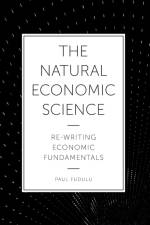
Economics is widely regarded as a social science. In this ground-breaking new study, Paul Fudulu crosses the divide between natural and social science to introduce a new theory of natural economic science, based on one of the most important causal laws of physics: the entropic degradation of the universe.
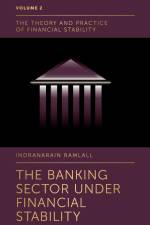
The Banking Sector Under Financial Stability recognises the critical importance of the banking sector with respect to financial stability risks, and considers the unique position of banks which by nature assume higher risks, existing within a low equity to total assets ratio.
The world is presently buffeted by many challenges, some of which manifest in new forms, such as Fintech and cryptocurrencies, while some challenges prevail out of the legacy trailed behind by the 2007 global financial crisis. Financial stability represents a highly complex and multi-dimensional concept. This being so, a sound and holistic financial stability assessment requires a focus not only on the distinct sectors which make up an economy but also on certain key economic areas. Economic Areas Under Financial Stability examines several core areas which interact directly with financial stability. A comprehensive consideration is given to local and international developments, the payment and settlements system, reserves, derivatives,and exchange rates. The book examines critical developments on both the local and international fronts, the systematic risks which characterise the payment and settlements system, different instruments of derivatives, and the significance of fiscal and monetary policy in relation to exchange rates. This book will prove valuable to central bankers, economists, and policy-makers who are involved in the field of financial stability, as well as researchers studying the field.
Since the outbreak of the US subprime crisis in 2007, financial stability has become a pressing item in the agenda of governments and policy-makers worldwide. However, to date, there are no books that provide a comprehensive analysis of financial stability in all of its dimensions. Understanding Financial Stability undertakes an in-depth analysis of all the concepts and issues related to financial stability. It establishes a general framework for a holistic assessment of financial stability, provides a comprehensive analysis pertaining to the genesis of financial crises, and offers key terms and elements embodied in financial stability. Posing the question of whether financial stability should rely only on resilience or predictability issues when it comes to handling crises, the book provides: Extensive coverage of all key issues involved in the field of financial stability. A consideration of the political economy. A complete and in-depth assessment of crises in the world based on full historical coverage; including a definition of crises, various theories of crises, costs related to crises, types of crises and policy responses to crises.This book will prove valuable to central bankers, economists, and policy-makers who are involved in the field of financial stability, as well as researchers studying the field.
Written and edited by a wide selection of leading specialists, this title delivers an authoritative and comprehensive reference providing the core geotechnical engineering principles, practical techniques, and the major questions engineers should keep in mind when dealing with real-world engineering challenges.
The structural engineer's essential practical guide to the computational design of concrete structures.
This guide interprets and assists in the use of EN 1995-1-1 structural timber. Showing typical material properties and dimensions; modifiers, and structural responses, it presents concise worked examples.
Can you have a transformative experience as a result of falling through a programming error in the latest triple-A title? Does looking out across a vast virtual vista of undulating mountains and tumultuous seas edge you closer to the sublime? In an effort to answer these sorts of questions, Gaming and the Virtual Sublime considers the 'virtual sublime' as a conceptual toolbox for understanding our affective engagement with contemporary interactive entertainment. Through a detailed examination of the history of the sublime, from pseudo-Longinus' jigsaw puzzle of the sublime in rhetoric, through the eighteenth-century obsession with beauty and terror, past the Kantian mathematical and dynamical sublime, all the way to Lyotard's 'unpresentable event' and Deleuze's work on chaos and rhythm, this book road-tests these differing components in a far-reaching exploration of how video games - as virtual spaces of affect - might reshape our opportunities for sublime experience. Using playthroughs, developer diaries, forums discussions and contemporaneous reviews, and games ranging from the heartbreak of That Dragon: Cancer through to the abject body-horror of Outlast (with a dash of Tetris in-between) are discussed in terms the experience(s) of play, their design and their co-creation with gamers with a specific focus on rhetoric and narrative; awe; fear and terror; death and boredom. Written in an engaging and accessible style, this book is a must-read for philosophers, scholars, and those interested in games and popular culture more broadly.
This book is for those who desire to gain insight into the leader/follower dynamic in order to serve others by unmasking the dangers of toxic followership, provide prevention suggestions, and reveal followers' power, even in desperate situations.
The aim of the EU Directive 2014/95/EU, requiring the mandatory disclosure of non-financial information (NFI) by large undertakings and groups, is to rebuild trust with stakeholders. This book aims to summarize the relevant literature about company information with particular reference to the voluntary vis a vis mandatory NFI, addressing the main research question: how mandated NFI affects companies' key performance indicators and how markets use NFI in assessing the company's value? To this end, the book provides an empirical analysis of Italian listed joint-stock companies subjected to the new law requirements. Findings provide evidence of a negative relationship between new mandatory NFI and the key performance indicators and the market value of the company. However, there is a positive correlation between the size and structure of governance and NFI, and a negative correlation between the non-manufacturing companies and NFI. These results could help managers and investors to follow the best practices in adopting an approach that could be able to face the trade-off between being transparent or secretive. As depicting the first-year adoption of the new rules, results are also relevant for policymakers aiming to improve the convergence between European policies and the global approach to NFI.
It is widely accepted that interactions between adults and infants change over time and babies play a dynamic role in their interactions with those who care for them. Acknowledging that their sense of self is moulded by these experiences, and reflected in their own behaviours later in life, this book focuses on the development of an infant's sense of self from the moment of birth, into school, and beyond. In the first part of the monograph, the author weaves together both theoretical speculation and empirical research on the topic. Studies from across the last century are tracked and reinforced with 21st century contemporary research. Moving on from this foundation, the second section presents an observation study of four three-year old children in their homes and first term in school, providing a real-life practical illustration of the theoretical background.Drawing on analysis of children in their home environments and in school, including transcripts of conversations engaged in at home, and notes based on classroom observations, the author presents a cutting-edge insight into the adjustment and adaptation of the study participants' first experience of school, reflected against the background of their home lives.
In the contemporary automotive manufacturing industry, service providers are continuously working to improve system optimization in order to remain competitive in the market and deliver quality products to satisfy their customers. With this comes the possibility of failure, rejection and reworking of the components or services in the system, which can incur high costs and impact the reputation of an organization. This book uses Failure Mode and Effect Analysis (FMEA) to assess, investigate and predict the Risk Priority Number (RPN) of potential failures for three companies within the manufacturing industry:A metal component supplier in the automotive sectorPart manufacturer for the automobile and engineering industriesManufacturer of suspension components for commercial vehiclesIntegrating human expertise and artificial intelligence on a single platform, the authors use fuzzy logic as a tool to overcome the vagueness associated with traditional methods of assessing potential failures. The book also details the procedure and scales of how to conduct FMEA, offering guidance on how to input and rank each risk within manufacturing processes across a range of sectors's. Each of the three real-world cases offer suggested improvements for the companies themselves, alongside takeaways for researchers and professionals within the fields of manufacturing and supply chain management.
Exposing hidden trends and systemic flaws and debunking myths, The Digital Renminbi's Disruption contributes to revealing China's digital disruption and leads to a better understanding of upcoming potential volatility in the wake of the unfolding digital revolution.
Operational Risk Management in Banks and Idiosyncratic Loss Theory: A Leadership Perspective offers consensus considerations that could bolster effective risk management practices in enterprise-wide risk, thereby helping to control fraud and go beyond the minimum risk assessment requirements set forth by the banking regulators.
The ebook edition of this title is Open Access and freely available to read online. The era of team science has long since dawned. However, in order for the individual members of a team to work well, research organizations need to provide a productive and naturally non-discriminatory working environment. Bringing together and integrating researchers and their diverse backgrounds in effective teams does not happen on its own. To harness the positive effects of diversity, it must be understood and managed proactively. The edited collection Diversity and Discrimination in Research Organizations provides researchers with empirical studies on the question of whether and to what extent the social identity of the academic workforce affects their individual integration in research organizations. Practitioners receive guidance and suggestions on possible starting points and requirements for programmes to improve equal opportunities and work climate in their research organizations. The articles can be roughly divided into two categories according to the guiding questions of this edited collection: macro studies surveying the extent of discrimination and harassment in research organizations and micro studies exploring the influence of the specific cultural contextual conditions of the academic workplace on experiences of discrimination and harassment related to the diversity of the workforce.
Despite being recognised by victim-survivors as a tactic used by abusers, economic abuse has received little attention in research, policy, or practice. Written by an internationally recognised expert on economic abuse, this powerful book provides a crucial validation of the lived experience of victim-survivors, and highlights the urgent need to develop effective responses to the issue.Breaking fresh ground, Understanding and Responding to Economic Abuse exposes the many ways in which abusers seek to control their intimate partners through economic resources and reinforces the importance of holding abusers accountable for their behaviour. Whilst the focus of this book is on Westminster policy in the UK, the author highlights how the case for 'naming' and defining economic abuse in statute has wider resonance. Making a trailblazing case for recognising this form of abuse, Sharp-Jeffs argues the case to expand the coordinated community response model to domestic abuse to address economic control through involving 'non-traditional' stakeholders such as money/debt advice organisations and the financial services sector, alongside specialist domestic abuse services and statutory agencies. Coming in the wake of the Domestic Abuse Act (2021), which broadened discourse from financial to economic abuse, Sharp-Jeffs turns our attention to this critical momentum for change and makes an important step towards shining a light on a form of coercive and controlling behaviour which has been invisible for toolong.
Starting in New England with informal training, academies, seminaries, institutes, and the birth of the state normal schools, Kelly Kolodny and Mary-Lou Breitborde explore the origins of teacher preparation in the United States as these models expanded geographically, in substance and form, throughout the South and West. The authors chart how specific historical periods have influenced teacher preparation in the U.S., including Western expansion, industrialization, the Civil War, Reconstruction and retrenchment, the Progressive Era and the mid-to-late twentieth century, which was marked by the space race, the growth of STEM education, racial unrest, the peace movement, immigration and tensions around social inequities. The discussion of teacher preparation in history links contextual issues and themes in each period (e.g., race, the place of women in society, the nation's place in the world) to purposes, policies and practices in the formal preparation of teachers. The authors discuss contemporary issues shaping teacher preparation in the United States and propose recommendations for policy changes. Among their recommendations are the need to diversify the teacher workforce, the commitment to develop strong connections with families and communities, curricula that emphasize teaching for deep understanding, antiracist teacher education and culturally sustaining pedagogy, increased attention to social-emotional learning, the innovative use of new technologies, and the preparation of teachers with a global consciousness.
In the domains of business and management, organizations across the world imbue insiders and outsiders with multiple 'strategies of success' that can be learnt from them. Corporate Success Stories In The UAE is a rich collection of these evidence-based cases that have led to the success of various companies in the United Arab Emirates.The corporate milieu has been transforming at a rapid pace in the last decade and companies are constantly in an endeavour to craft suitable strategies to survive and progress during normal and critical business environments, including the recent COVID -19 scenario.This accentuates the need for having regionally contextualised knowledge inputs needed to enhance strategic thinking among the corporate decision makers and the academic fraternity. Regional 'Case studies' have been a major tool for such knowledge enhancement. This book is a focused attempt at bringing out case studies on 13 successful companies in the UAE, belonging to different sectors and industries. All cases come with 'Teaching notes' and 'Summary presentations' to cater to the needs of corporate managers to train their employees, lecturers to train their undergraduate and post graduate students. The cases have been prepared to serve three major target audiences namely Company managers, Universities professors and Researchers.The chapters in the book provide rich insight on the companies, their products and services, key indicators of success and the strategic drivers behind them and finally the potential areas of future study. Thus, the book serves as a repository of curated best practices across industries in the UAE.
A collection of autoethnographies written by academics who self-define as being from a working class heritage. Each one is an account of their lives, their experiences, and their journeys into becoming a higher education professional, in an industry still steeped in elitism.
Applications of Management Science is a blind refereed series that is published on an annual basis. Its objective is to present current studies in the application of management science to the solution of significant managerial decision-making problems. It significantly aids in the dissemination of the solution of managerial decision-making problems with management science methodologies. Volume 19 focuses on the application of management science methodologies, data envelopment analysis and multi-criteria decision making. The first section is focused on data envelopment analysis. The second section focuses on multi-criteria decision making. The third section focuses on decision making. This volume will be of significant interested to those involved in the applications of multi-criteria decision making, data envelopment analysis and decision making, in a realistic managerial problem solving environment through the use of state-of-the-art management science modelling.
The ebook edition of this title is Open Access, thanks to Knowledge Unlatched funding, and freely available to read online. Drawing on ethnographic research and interviews,this book provides an insight into the development of the manosphere, and the extent to which the influence and philosophy of incel is penetrating mainstream culture.
This 4 part book set includes all titles in the popular Emerald Studies in Metal Music and Culture series, published between 2018-2019. This series, the first of its kind focussing on heavy metal, provides a space to explore metal's position in society, and its meaning and purpose in people's lives.
Abonner på vårt nyhetsbrev og få rabatter og inspirasjon til din neste leseopplevelse.
Ved å abonnere godtar du vår personvernerklæring.