







Gjør som tusenvis av andre bokelskere
Abonner på vårt nyhetsbrev og få rabatter og inspirasjon til din neste leseopplevelse.
Ved å abonnere godtar du vår personvernerklæring.Du kan når som helst melde deg av våre nyhetsbrev.

Machine learning allows computers to learn and discern patterns without actually being programmed. When Statistical techniques and machine learning are combined together they are a powerful tool for analysing various kinds of data in many computer science/engineering areas including, image processing, speech processing, natural language processing, robot control, as well as in fundamental sciences such as biology, medicine, astronomy, physics, and materials. . Introduction to Statistical Machine Learning provides a general introduction to machine learning that covers a wide range of topics concisely and will help you bridge the gap between theory and practice. Part I discusses the fundamental concepts of statistics and probability that are used in describing machine learning algorithms. Part II and Part III explain the two major approaches of machine learning techniques; generative methods and discriminative methods. While Part III provides an in-depth look at advanced topics that play essential roles in making machine learning algorithms more useful in practice. The accompanying MATLAB/Octave programs provide you with the necessary practical skills needed to accomplish a wide range of data analysis tasks.
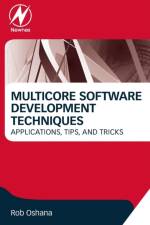
Provides a set of practical processes and techniques used for multicore software development. This book focuses on solving day to day problems using practical tips and tricks and industry case studies to reinforce the key concepts in multicore software development.
Transliteracy in Complex Information Environments considers this relatively new concept, which has attracted a great deal of interest in the library andá information field, particularly among practitioners. The notion of transliteracy arises in the context of increasingly complex information and communication environments characterised by multimodality and new roles of creators and consumers. Transliteracy concerns the ability to apply and transfer a range of skills and contextual insights to a variety of settings. Rather than focusing on any one skillset or technology, transliteracy is about fluidity of movement across a range of contexts. This book is concerned with processes of learning and knowledge creation. An understanding of transliteracy emergesfrom research data gathered in university and high school settings. Transliteracy is considered in relation to other literacies as an overarching framework. Applications in education and lifelong learning are discussed. Social aspects of transliteracy are considered in relation to academic cultures and broader social trends, particularly hybrid culturesProvides an overarching model of transliteracy based on the well-established information literacyRelates to a number of professional and academic fields, such as library and information, education, communication, media, and cultural studiesIntegrates both professional and academic perspectives
From Information Literacy to Social Epistemology: Insights from Psychology focuses on information and the ways in which information literacy relates to critical thinking in education, the workplace, and in our social life. The broad context for our interest is the development in internet technologies often characterised by terms like the ''digital age'', leading to questions of digital participation, digital divides, and the role of thinking in the information society. In short, to what extent is the ''digital age'' engendering changes in learning directed towards the better use of information, and in addition, encouraging or even requiring improvements in critical thinking?Provides a new and relevant contribution based on the authors'' synthesis of a number of psychological constructs aligned to information literacyAddresses the issue of information literacy in the wider population by researching adult returnees to higher education and investigating their experiences in relation to prior experienceApplies insights to recent developments on the topic, i.e. the Secker and Coonan IL curriculum, alowing an alternative disciplinary perspective and a new, research-based platformDevelops a model based on the literature reviewed and discusses the relation of the model to the broader concept of social epistemology
Infrared thermography is a fast and reliable methodology for non-destructive evaluation of composite materials used in the aerospace field. Infrared thermography in the evaluation of aerospace composite materials covers this topic comprehensively
Abonner på vårt nyhetsbrev og få rabatter og inspirasjon til din neste leseopplevelse.
Ved å abonnere godtar du vår personvernerklæring.