






















Gjør som tusenvis av andre bokelskere
Abonner på vårt nyhetsbrev og få rabatter og inspirasjon til din neste leseopplevelse.
Ved å abonnere godtar du vår personvernerklæring.Du kan når som helst melde deg av våre nyhetsbrev.

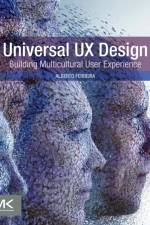
Universal UX Design: Building Multicultural User Experience provides an ideal guide as multicultural UX continues to emerge as a transdisciplinary field that, in addition to the traditional UI and corporate strategy concerns, includes socio/cultural and neurocognitive concerns that constitute one of the first steps in a truly global product strategy. In short, multicultural UX is no longer a nice-to-have in your overall UX strategy, it is now a must-have. This practical guide teaches readers about international concerns on the development of a uniquely branded, yet culturally appealing, software end-product. With hands-on examples throughout, readers will learn how to accurately predict user behavior, optimize layout and text elements, and integrate persuasive design in layout, as well as how to determine which strategies to communicate image and content more effectively, while demystifying the psychological and sociopolitical factors associated with culture. . The book reviews the essentials of cognitive UI perception and how they are affected by socio-cultural conditioning, as well as how different cultural bias and expectations can work in UX design.
A book on the subject of fermentation and bioprocess technology that covers a variety of topics such as: sterilization, media development, monitoring and control, aeration and agitation, fermenter vessels and design, downstream processing, and economics.
For the practitioner, this volume is a useful tool for predicting reservoir flow in the most efficient and profitable manner possible, using quantitative methods. It integrates mathematical methods for simulating and predicting reservoir flow both near and away from the well.
OCUP 2 Certification Guide: Preparing for the OMG Certified UML 2.5 Professional 2 Foundation Exam both teaches UML® 2.5 and prepares candidates to become certified. UML® (Unified Modeling Language) is the most popular graphical language used by software analysts, designers, and developers to model, visualize, communicate, test, and document systems under development. UML® 2.5 has recently been released, and with it a new certification program for practitioners to enhance their current or future career opportunities. There are three exam levels: Foundation, Intermediate, and Advanced. The exam covered in this book, Foundation, is a prerequisite for the higher levels. Author Michael Jesse Chonoles is a lead participant in the current OCUP 2 program¿not only in writing and reviewing all the questions, but also in designing the goals of the program. This book distills his experience in modeling, mentoring, and training. Because UML® is a sophisticated language, with 13 diagram types, capable of modeling any type of modern software system, it takes users some time to become proficient. This effective resource will explain the material in the Foundation exam and includes many practice questions for the candidate, including sample problems similar to those found in the exam, and detailed explanations of why correct answers are correct and why wrong answers are wrong.
Quantum Inspired Computational Intelligence: Research and Applications explores the latest quantum computational intelligence approaches, initiatives, and applications in computing, engineering, science, and business. The book explores this emerging field of research that applies principles of quantum mechanics to develop more efficient and robust intelligent systems. Conventional computational intelligence-or soft computing-is conjoined with quantum computing to achieve this objective. The models covered can be applied to any endeavor which handles complex and meaningful information.
Abonner på vårt nyhetsbrev og få rabatter og inspirasjon til din neste leseopplevelse.
Ved å abonnere godtar du vår personvernerklæring.