




















Gjør som tusenvis av andre bokelskere
Abonner på vårt nyhetsbrev og få rabatter og inspirasjon til din neste leseopplevelse.
Ved å abonnere godtar du vår personvernerklæring.Du kan når som helst melde deg av våre nyhetsbrev.

Global Groundwater: Source, Scarcity, Sustainability, Security, and Solutions presents a compilation of compelling insights into groundwater scenarios within all groundwater-stressed regions across the world. Thematic sub-sections include groundwater studies on sources, scarcity, sustainability, security, and solutions. The chapters in these sub-sections provide unique knowledge on groundwater for scientists, planners, and policymakers, and are written by leading global experts and researchers. Global Groundwater: Source, Scarcity, Sustainability, Security, and Solutions provides a unique, unparalleled opportunity to integrate the knowledge on groundwater, ranging from availability to pollution, nation-level groundwater management to transboundary aquifer governance, and global-scale review to local-scale case-studies.
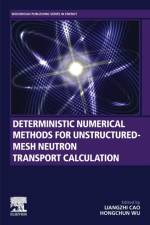
Deterministic Numerical Methods for Unstructured-Mesh Neutron Transport Calculation presents the latest deterministic numerical methods for neutron transport equations (NTEs) with complex geometry, which are of great demand in recent years due to the rapid development of advanced nuclear reactor concepts and high-performance computational technologies. This book covers the wellknown methods proposed and used in recent years, not only theoretical modeling but also numerical results. This book provides readers with a very thorough understanding of unstructured neutron transport calculations and enables them to develop their own computational codes. The fundamentals, numerical discretization methods, algorithms, and numerical results are discussed. Researchers and engineers from utilities and research institutes are provided with examples on how to model an advanced nuclear reactor, which they can then apply to their own research projects and lab settings.
Plant Breeding and Cultivar Development features an optimal balance between classical and modern tools and techniques related to plant breeding. Written for a global audience and based on the extensive international experience of the authors, the book features pertinent examples from major and minor world crops. Advanced data analytics (machine learning), phenomics and artificial intelligence are explored in the book's 28 chapters that cover classical and modern plant breeding. By presenting these advancements in specific detail, private and public sector breeding programs will learn about new, effective and efficient implementation. The insights are clear enough that non-plant breeding majoring students will find it useful to learn about the subject, while advanced level students and researchers and practitioners will find practical examples that help them implement their work.
Though sustainable development goals and other international initiatives have insisted on the importance of energy access in peace building, there is still little understanding about the extent to which energy systems themselves can contribute to or mitigate structural violence. While there are ample relevant examples globally from a diverse literature and increasing body of case studies, this knowledge has not been systematically organized to show theoretical alternatives to current energy systems or deliver practical policy advice in building such alternatives.Informed by the contributions of a multidisciplinary global author pool, Energy Policy for Peace provides both a new foundation for researchers and practitioners exploring how energy systems can be changed to build positive peace, and a toolkit for redressing structural violence. The work opens by reviewing how unequal energy access strengthens structural violence. It argues that increasing access to energy access may be an important tool in mitigating structural violence. It concludes with practical policy recommendations and institutional reforms designed to mitigate the structural violence embedded in many energy systems and develop energy strategies for peace building.
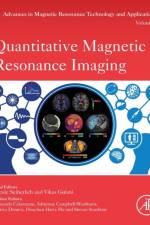
Quantitative Magnetic Resonance Imaging is a `go-tö reference for methods and applications of quantitative magnetic resonance imaging, with specific sections on Relaxometry, Perfusion, and Diffusion.Each section will start with an explanation of the basic techniques for mapping the tissue property in question, including a description of the challenges that arise when using these basic approaches. For properties which can be measured in multiple ways, each of these basic methods will be described in separate chapters. Following the basics, a chapter in each section presents more advanced and recently proposed techniques for quantitative tissue property mapping, with a concluding chapter on clinical applications. The reader will learn: The basic physics behind tissue property mapping How to implement basic pulse sequences for the quantitative measurement of tissue properties The strengths and limitations to the basic and more rapid methods for mapping the magnetic relaxation properties T1, T2, and T2* The pros and cons for different approaches to mapping perfusion The methods of Diffusion-weighted imaging and how this approach can be used to generate diffusion tensor maps and more complex representations of diffusion How flow, magneto-electric tissue property, fat fraction, exchange, elastography, and temperature mapping are performed How fast imaging approaches including parallel imaging, compressed sensing, and Magnetic Resonance Fingerprinting can be used to accelerate or improve tissue property mapping schemes How tissue property mapping is used clinically in different organs
Psychosocial Aspects of Chronic Kidney Disease: Exploring the Impact of CKD, Dialysis, and Transplantation on Patients provides an overview of the emotional and psychological challenges faced by people with renal disease. This book outlines the epidemiology and treatment of the psychosocial factors affecting them. The sections in the book cover psychiatric illness in the earlier and middle stages of chronic kidney disease, end-stage renal disease treated with dialysis, and renal transplantation. The book concludes with a section on special considerations, delving into topics such as treating children and adolescents, quality of life, caregiver burden, challenges in psychosocial research in kidney disease, and future directions for intervention.
Applications of Nonlinear Fiber Optics, Third Edition presents sound coverage of the fundamentals of lightwave technology, along with material on pulse compression techniques and rare-earth-doped fiber amplifiers and lasers. The book's chapters include information on fiber-optic communication systems and the ultrafast signal processing techniques that make use of nonlinear phenomena in optical fibers. This book is an ideal reference for R&D engineers working on developing next generation optical components, scientists involved with research on fiber amplifiers and lasers, graduate students, and researchers working in the fields of optical communications and quantum information.
Fundamentals of Heat and Fluid Flow in High Temperature Fuel Cells introduces key-concepts relating to heat, fluid and mass transfer as applied to high temperature fuel cells. The book briefly covers different type of fuel cells and discusses solid oxide fuel cells in detail, presenting related mass, momentum, energy and species equation. It then examines real case studies of hydrogen- and methane-fed SOFC, as well as combined heat and power and hybrid energy systems. This comprehensive reference is a useful resource for those working in high temperature fuel cell modeling and development, including energy researchers, engineers and graduate students.
Marcus and Feldman's Osteoporosis, Fifth Edition, is the most comprehensive, authoritative reference on this disease. Led by a new editorial team, this fifth edition offers critical information on reproductive and hormonal risk factors, new therapeutics, ethnicity, nutrition, therapeutics, management and economics, comprising a tremendous wealth of knowledge in a single source not found elsewhere. Written by renowned experts in the field, this two-volume reference is a must-have for biomedical researchers, research clinicians, fellows, academic and medical libraries, and any company involved in osteoporosis drug research and development.
Advanced Analytic Control Techniques for Thermal Systems with Heat Exchangers presents the latest research on sophisticated analytic and control techniques specific for Heat Exchangers (HXs) and heat Exchanger Networks (HXNs), such as Stability Analysis, Efficiency of HXs, Fouling Effect, Delay Phenomenon, Robust Control, Algebraic Control, Geometric Control, Optimal Control, Fuzzy Control and Artificial Intelligence techniques. Editor Libor Pekar and his team of global expert contributors combine their knowledge and experience of investigated and applied systems and processes in this thorough review of the most advanced networks, analyzing their dynamics, efficiency, transient features, physical properties, performance, feasibility, flexibility and controllability. The structural and dynamic analyses and control approaches of HXNs, as well as energy efficient manipulation techniques are discussed, in addition to the design of the control systems through the full life cycle. This equips the reader with an understanding of the relevant theory in a variety of settings and scenarios and the confidence to apply that knowledge to solve problems in an academic or professional setting.Graduate students and early-mid career professionals require a robust understanding of how to suitably design thermal systems with HXs and HXNs to achieve required performance levels, which this book offers in one consolidated reference. All examples and solved problems included have been tried and tested, and these combined with the research driven theory provides professionals, researchers and students with the most recent techniques to maximize the energy efficiency and sustainability of existing and new thermal power systems.
Micro- and Nanostructured Composite Materials for Neutron Shielding Applications presents recent developments and future possibilities for neutron shielding materials. Emphasis is placed on the correlation between the morphology, shielding mechanisms, and other desired properties, including their mechanical and thermal properties. The effect of neutron absorbing fillers, including their size on final properties is also examined, as are recent advancements in preparation, characterization and simulation techniques. Written by specialists in their respective fields, this comprehensive resource will help professionals and students understand the fundamentals of neutron shielding, as well as the properties of micro- and nanopolymer-based composites, concrete materials, alloy materials and metal-ceramic composites. Provides an up-to-date understanding of the fundamentals of shielding mechanisms, morphology and material property correlationsCovers a broad range of micro and nano composite materials for neutron shieldingDiscusses recent advances surrounding the synthesis and processing of nanostructures and nanocomposite materials
Abonner på vårt nyhetsbrev og få rabatter og inspirasjon til din neste leseopplevelse.
Ved å abonnere godtar du vår personvernerklæring.