






















Gjør som tusenvis av andre bokelskere
Abonner på vårt nyhetsbrev og få rabatter og inspirasjon til din neste leseopplevelse.
Ved å abonnere godtar du vår personvernerklæring.Du kan når som helst melde deg av våre nyhetsbrev.

Protein Biosynthesis Interference in Disease offers a thorough discussion and overview of protein biosynthesis interference, its mechanisms of action, and influence over disease processes. This book examines the role of protein biosynthesis interference in Alzheimer¿s and other neurodegenerative conditions, cancer and inflammatory disorders, with specific attention paid to the biochemical dynamics of tryptamine, biogenic amines and aminoacyl-tRNA synthetases in these pathologies. Methods of regulating protein translation and interference mechanisms, including gene therapy, are presented, empowering biochemists, molecular biologists, disease researchers, and health professionals to understand the underlying factors of protein disease and improve patient outcomes.
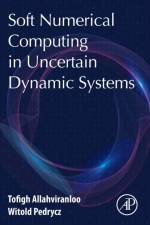
Soft Numerical Computing in Uncertain Dynamic Systems is intended for system specialists interested in dynamic systems that operate at different time scales. The book discusses several types of errors and their propagation, covering numerical methods¿including convergence and consistence properties and characteristics¿and proving of related theorems within the setting of soft computing. Several types of uncertainty representation like interval, fuzzy, type 2 fuzzy, granular, and combined uncertain sets are discussed in detail. The book can be used by engineering students in control and finite element fields, as well as all engineering, applied mathematics, economics, and computer science students. One of the important topics in applied science is dynamic systems and their applications. The authors develop these models and deliver solutions with the aid of numerical methods. Since they are inherently uncertain, soft computations are of high relevance here. This is the reason behind investigating soft numerical computing in dynamic systems. If these systems are involved with complex-uncertain data, they will be more practical and important. Real-life problems work with this type of data and most of them cannot be solved exactly and easily¿sometimes they are impossible to solve. Clearly, all the numerical methods need to consider error of approximation. Other important applied topics involving uncertain dynamic systems include image processing and pattern recognition, which can benefit from uncertain dynamic systems as well. In fact, the main objective is to determine the coefficients of a matrix that acts as the frame in the image. One of the effective methods exhibiting high accuracy is to use finite differences to fill the cells of the matrix.
Power Electronic Converters for Solar Photovoltaic Systems provides design and implementation procedures for power electronic converters and advanced controllers to improve standalone and grid environment solar photovoltaics performance. Sections cover performance and improvement of solar photovoltaics under various conditions with the aid of intelligent controllers, allowing readers to better understand the nuances of power electronic converters for renewable energy systems. With algorithm development and real-time implementation procedures, this reference is useful for those interested in power electronics for performance improvement in distributed energy resources, design of advanced controllers, and measurement of critical parameters surrounding renewable energy systems. By providing a complete solution for performance improvement in solar PV with novel control techniques, this book will appeal to researchers and engineers working in power electronic converters, renewable energy, and power quality.
Mass Transport, Gravity Flows, and Bottom Currents: Downslope and Alongslope Processes and Deposits focuses solely on important downslope and alongslope processes. The book provides clear definitions and characteristics based on soil mechanics, fluid mechanics and sediment concentration by volume. It addresses Slides, Slumps, and Debris Flows, Grain Flows, Liquefied/Fluidized Flows, and Turbidity Currents, Density plumes, Hyperpycnal Flows, the Triggering Mechanisms of Downslope Processes, Bottom Currents, and Soft-Sediment Deformation Structures. The mechanics of each process are described in detail and used to provide empirically-driven categories to help recognize these deposits it the rock record. Case studies clearly illustrate of the problems inherent in recognizing these processes in the rock record, and potential solutions are provided alongside future avenues of research. An appendix also provides step-by-step guidance in describing and interpreting sediments.
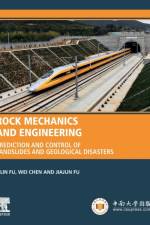
Rock Mechanics and Engineering: Prediction and Control of Landslides and Geological Disasters presents the state-of-the-art in monitoring and forecasting geotechnical hazards during the survey and design, construction, and operation of a railway. This volume offers the latest research and practical knowledge on the regularity of disaster-causing activities, and the monitoring and forecasting of rockfalls, landslides, and debris flow induced by rainfall and human activity. The book gives guidance on how to optimize railway design, prevent and control measures during construction, and geological hazard remediation. The book also advises engineers on how to achieve traffic safety on high-speed railways. Eleven chapters present best practices in the prediction and control of landslides and rockfalls in geological disasters, derived from years of geotechnical engineering research and practice on high-speed railways in China. High-speed railways bring characteristic geotechnical challenges including a complete maintenance system, a long railway line, and the subjection of the geological body to cyclic loads. Since the damage to the geological body is influenced by fatigue as well as rock and soil strength and hydrology, the study of geotechnical hazards to high-speed rail is very complex. Monitoring and predicting such hazards on high-speed railways is a significant challenge to their safe construction and operation.
Gas phase molecular spectroscopy is a powerful tool for obtaining information on the geometry and internal structure of isolated molecules and their interactions with others. It enables the understanding and description, through measurements and modeling, of the influence of pressure on light absorption, emission, and scattering by gas molecules, which must be taken into account for the correct analysis and prediction of the resulting spectra. Collisional Effects on Molecular Spectra: Laboratory Experiments and Models, Consequences for Applications, Second Edition provides an updated review of current experimental techniques, theoretical knowledge, and practical applications. After an introduction to collisional effects on molecular spectra, the book moves on by taking a threefold approach: it highlights key models, reviews available data, and discusses the consequences for applications. These include areas such as heat transfer, remote sensing, optical sounding, metrology, probing of gas media, and climate predictions. This second edition also contains, with respect to the first one, significant amounts of new information, including 23 figures, 8 tables, and around 700 references.Drawing on the extensive experience of its expert authors, Collisional Effects on Molecular Spectra: Laboratory Experiments and Models, Consequences for Applications, Second Edition, is a valuable guide for all those involved with sourcing, researching, interpreting, or applying gas phase molecular spectroscopy techniques across a range of fields.
The last decade has seen significant global changes that have impacted the library, information, and learning services and sciences. There is now a mood to find pragmatic information solutions to pressing global challenges. Future Directions in Digital Information presents the latest ideas and approaches to digital information from across the globe, portraying a sense of transition from old to new. This title is a comprehensive, international take on key themes, advances, and trends in digital information, including the impact of developing technologies. The latest volume in the `Chandos Digital Information Review Series¿, this book will help practitioners and thinkers looking to keep pace with, and excel among, the digital choices and pathways on offer, to develop new systems and models, and gain information on trends in the educational and industry contexts that make up the information sphere. A group of international contributors has been assembled to give their view on how information professionals and scientists are creating the future along five distinct themes: Strategy and Design; Who are the Users?; Where Formal meets Informal; Applications and Delivery; and finally, New Paradigms. The multinational perspectives contained in this volume acquaint readers with problems, approaches, and achievements in digital information from around the world, with equity of information access emerging as a key challenge.
YY1 Is Pivotal in the Control of the Pathogenesis and Drug Resistance of Cancer: A Critical Therapeutic Target describes the current state-of-the-art of the transcription factor YY1 that is overexpressed in the majority of cancers and a central factor that regulates all of the major features and characteristics of human cancers. This book emphasizes the biochemical, molecular and genetic underlying mechanisms by which YY1 regulates its pro-cancerous activities. In addition, it also describes the role of YY1 in the regulation of tumor cell resistance to conventional chemo and immunotherapies and the important role of inhibiting YY1 in cancer. This book is a valuable source for cancer researchers, oncologists and several members of medical and biomedical field who are interested in understanding further the role of YY1 in cancer.
Implementing the Circular Economy for Sustainable Development presents the concept of the circular economy with the goal of understanding its present status and how to better implement it, particularly through environmental policies. It first tackles the definition of a circular economy in the context of sustainability and the differences in defining the concept across disciplines, including its fallibilities and practical examples. It then goes on to discuss the implementation of a circular economy, including the increasing variety of technological, mechanical, and chemical procedures to contend with and the need for stakeholder support in addition to improved business models. The second half of the book, therefore, presents tools, approaches, and practical examples of how to shape environmental policy to successfully implement a circular economy. It analyzes deficiencies of current regulations and lays the groundwork for the design of integrated environmental policies for a circular economy. Authored by an expert in environmental economics with decades of experience, Implementing the Circular Economy for Sustainable Development is a timely, practical guide for sustainability researchers and policymakers alike to move more efficiently toward a circular economy and sustainable development.
Molecular Aspects of Neurodegeneration, Neuroprotection, and Regeneration in Neurological Disorders presents readers with comprehensive and cutting-edge information on the neurochemical mechanisms of various types of neurological disorders. The book covers information on signal transduction processes associated with neurochemistry of neurological disorders, including neurodegenerative, neurotraumatic, and neuropsychiatric disorders. The book also discusses risk factors, symptoms, pathogenesis, biomarkers, and the potential treatments of neurological disorders. The comprehensive information in this monograph may not only help in early detection of various neurological disorders, but will also promote the discovery of new drugs.
Regenerated Organs: Future Perspectives provides the translational-research aspects, currently lacking in existing literature, in this rapidly-moving field. The book is divided into six sections: Engineering Approaches, Cardiovascular System, Musculoskeletal Regeneration, Regenerative Neuroscience, Respiratory Research, a Future Outlook and Conclusions. Each chapter is multi-authored by international experts in each area. The book's primary audience is academic faculty and those in industry interested in translational research in regenerative medicine and tissue engineering. Additionally, this book is ideal for graduate students in the field.
Abonner på vårt nyhetsbrev og få rabatter og inspirasjon til din neste leseopplevelse.
Ved å abonnere godtar du vår personvernerklæring.