![[ECO]systems of Resilience Practices](https://cdnbackdoor.tales.as/thumbnail/150x225/products/00130/88667/ecosystems-of-resilience-practices-contributions-for-sustainability-and-climate-change-adaptation.jpg)




















Gjør som tusenvis av andre bokelskere
Abonner på vårt nyhetsbrev og få rabatter og inspirasjon til din neste leseopplevelse.
Ved å abonnere godtar du vår personvernerklæring.Du kan når som helst melde deg av våre nyhetsbrev.

Ecosystems of Resilience Practices: Contributions for Sustainability and Climate Change Adaptation focuses on resilience in action by exploring and providing approaches, perspectives, toolboxes, and theoretical discourses for the improvement and enhancement of territorial and community resilience practices towards sustainability and climate change mitigation/adaptation. The book develops a set of tools and design criteria to support the dissemination of resilience practices. This new toolset will support the expansion and reinforcement of resilience practices and the building of solutions related to climate change. The book is divided into three sections: Section one investigates the contribution this kind of resilience approach could have on sustainable development goals as related to climate change. It also includes other environmental challenges such as ecosystem resilience in the face of climate change. Chapters dedicated to exploring the issues for a renovated governance of territorial transformation processes are included. Section two focuses on the eco-systems of resilience practices characterization, including discourses on international networking of transitions initiatives. Section three presents operative guidelines, instruments, and proposals for the resilience practices "stabilization," "blooming," and "up scaling," aiming at a more effective and consistent contribution of resilience practices in reaching sustainability, adaptation goals, and scenarios at local and global scales. --
Molecular Medical Microbiology, Third Edition presents the latest release in what is considered to be the first book to synthesize new developments in both molecular and clinical research. The molecular age has brought about dramatic changes in medical microbiology, along with great leaps in our understanding of the mechanisms of infectious disease. This third edition is completely updated, reviewed and expanded, providing a timely and helpful update for microbiologists, students and clinicians in the era of increasing use of molecular techniques, changing epidemiology and prevalence, and increasing resistance of many pathogenic bacteria. Written by experts in the field, chapters include cutting-edge information and clinical overviews for each major bacterial group, along with the latest updates on vaccine development, molecular technology and diagnostic technology.
Interpreting Subsurface Seismic Data presents recent advances in methodologies for seismic imaging and interpretation across multiple applications in geophysics including exploration, marine geology, and hazards. It provides foundational information for context, as well as focussing on recent advances and future challenges. It offers detailed methodologies for interpreting the increasingly vast quantity of data extracted from seismic volumes. Organized into three parts covering foundational context, case studies, and future considerations, Interpreting Subsurface Seismic Data offers a holistic view of seismic data interpretation to ensure understanding while also applying cutting-edge technologies. This view makes the book valuable to researchers and students in a variety of geoscience disciplines, including geophysics, hydrocarbon exploration, applied geology, and hazards.
The Evolutionary Ecology of Invasive Species offers new insights into the mechanisms that underlie rapid evolution in these species. The book provides a comprehensive overview of achievements in the field during the boom of information over the past two decades and includes discussions of possible future directions for the study of evolution in invasive species. Written by an international expert in invasion ecology, population genetics, and evolutionary biology, the book explores the roles of preadaptation, phenotypic plasticity, selection, and stochastic processes in driving rapid evolution. The book draws insights from a wide spectrum of invasive microbes, plants, and animals, covering many of the planet's biogeographic regions and discusses the evolutionary consequences for native species in response to biological invasions. A valuable resource to researchers and students in evolutionary biology, invasive species biology, and global change biology, this text suggests future research directions related to the evolutionary biology, impacts, and management of invasive species.
The cybersecurity of connected medical devices is one of the biggest challenges facing healthcare today. The compromise of a medical device can result in severe consequences for both patient health and patient data. Cybersecurity for Connected Medical Devices covers all aspects of medical device cybersecurity, with a focus on cybersecurity capability development and maintenance, system and software threat modeling, secure design of medical devices, vulnerability management, and integrating cybersecurity design aspects into a medical device manufacturer's Quality Management Systems (QMS). This book is geared towards engineers interested in the medical device cybersecurity space, regulatory, quality, and human resources specialists, and organizational leaders interested in building a medical device cybersecurity program.
Steroids in the Laboratory and Clinical Practice covers both basic chemistry and therapeutic application of steroids in a single source. The comprehensive reference addresses the specificity of steroid determinations to clarify confusion arising from the laboratory results. The book covers important advancements in the field and is a valuable addition in the literature addressing all existing knowledge gaps. This is a must have reference for pathologists, laboratorians, endocrinologists, analytical/clinical chemists and biochemists.
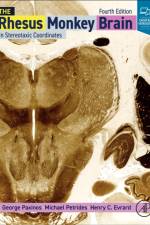
Paxinos and Petrides' The Rhesus Monkey Brain in Stereotaxic Coordinates is the most comprehensive and accurate atlas of the monkey brain currently available. The fourth edition of this classic book will be a complete revision, featuring many improvements and upgrades. Containing coronal diagrams and accompanying photographic plates spaced at 120 µm intervals, this atlas follows the same nomenclature and abbreviations conventions as the mouse, rat, chicken, and human brain atlases published under George Paxinos¿ leadership. This atlas is suitable for researchers who work with both monkeys and humans. Constructed by the established leaders in neuroanatomical atlas development, the new edition will again be the indispensable resource for all scientists working on the primate nervous system.
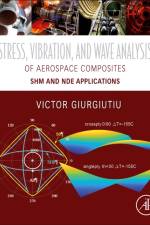
Stress, Vibration, and Wave Analysis in Aerospace Composites: SHM and NDE Applications presents a unified approach to studying and understanding stress, vibrations and waves in composite materials used in aerospace applications. Combining topics that are typically found across an array of various sources, the book starts by looking at the properties of various composite materials, progresses to coverage of an analysis of stress, vibration and waves and then concludes with a discussion of various structural health monitoring (SHM) and nondestructive evaluation (NDE) techniques and applications based on the analysis developed earlier in the book. Every chapter of the book contains a variety of worked-out examples to illustrate and tie together underlying theory and specific applications. The MATLAB code used to generate these examples is available on the book¿s companion website, as are solution documents and additional MATLAB code for problems and exercises featured in each chapter.
Tissue Barriers in Disease, Injury and Regeneration focuses on the molecular and cellular fundamentals of homeostatic and defense responses of tissue barriers, covering the damaging impacts and exposure to pathogens and engineered nanomaterials. Sections emphasize the role of mesenchymal stoma, vascular, epithelial, telocyte, myofibroblast, lymphoid and reticuloendothelial cells, along with reactions that bridge the effects of ambient factors, medical treatments, drag delivery systems with alterations in barrier integrity, tissue/organ functions, and metabolic status. Other sections cover the role of progenitor cells of different origins in the remodeling and regeneration of tissue stroma, vasculature of blood-tissue barriers, and more.
Fundamentals of Pediatric Imaging, Third Edition presents the foremost techniques of pediatric medical image analysis and processing. It includes advanced imaging techniques, neuro applications, and highlights basic anatomy needed to understand this complex specialty. The book introduces the theory and concepts of pediatric digital image analysis and newly revised information on quality and safety topics, imaging modalities, imaging applications, and new discoveries in diseases and treatments. The newly revised edition provides updates in areas of expertise including neurologic, musculoskeletal, cardiac, chest, and GU imaging. Edited by Lane F. Donnelly, MD, recipient of the Society of Pediatric Radiology¿s 2009 Singleton-Taybi Award, this book is sure to be a prime reference in pediatric medical imagining.
Psychopathy and Criminal Behavior: Current Trends and Challenges fills a gap in the market by covering new topics and angles not addressed in other literature. The book's authors approach the interaction of psychopathy with different types of crime, reflecting on comorbidity with other disorders, symptoms and emotional function. In addition to examining questions of prevention and treatment, they present new developments with solid theory and scientific evidence, also addressing forensic realities. This is a must-have guide for practitioners, students or anyone interested in psychopathy, criminal behavior and the various avenues of treatment.
Carbon materials form pores ranging in size and morphology, from micropores of less than 1nm, to macropores of more than 50nm, and from channel-like spaces with homogenous diameters in carbon nanotubes, to round spaces in various fullerene cages, including irregularly-shaped pores in polycrystalline carbon materials. The large quantity and rapid rate of absorption of various molecules made possible by these attributes of carbon materials are now used in the storage of foreign atoms and ions for energy storage, conversion and adsorption, and for environmental remediation. Porous Carbons: Syntheses and Applications focuses on the fabrication and application of porous carbons. It considers fabrication at three scales: micropores, mesopores, and macropores. Carbon foams, sponges, and 3D-structured carbons are detailed. The title presents applications in four key areas: energy storage, energy conversion, energy adsorption, including batteries, supercapacitors, and fuel cells and environmental remediation, emphasizing the importance of pore structures at the three scales, and the diffusion and storage of various ions and molecules. The book presents a short history of each technique and material, and assesses advantages and disadvantages. This focused book provides researchers with a comprehensive understanding of both pioneering and current synthesis techniques for porous carbons, and their modern applications.
Abonner på vårt nyhetsbrev og få rabatter og inspirasjon til din neste leseopplevelse.
Ved å abonnere godtar du vår personvernerklæring.