













Gjør som tusenvis av andre bokelskere
Abonner på vårt nyhetsbrev og få rabatter og inspirasjon til din neste leseopplevelse.
Ved å abonnere godtar du vår personvernerklæring.Du kan når som helst melde deg av våre nyhetsbrev.

State of the Art in Neural Networks and Their Applications, Volume Two presents the latest advances in artificial neural networks and their applications across a wide range of clinical diagnoses. The book provides over views and case studies of advances in the role of machine learning, artificial intelligence, deep learning, cognitive image processing, and suitable data analytics useful for clinical diagnosis and research applications. The application of neural network, artificial intelligence and machine learning methods in biomedical image analysis have resulted in the development of computer-aided diagnostic (CAD) systems that aim towards the automatic early detection of several severe diseases. State of the Art in Neural Networks and Their Applications is presented in two volumes. Volume One: Neural Networks in Oncology Imaging covers lung cancer, prostate cancer, and bladder cancer. Volume Two: Neural Networks in Brain Disorders and Other Diseases covers autism spectrum disorder, Alzheimer's disease, attention deficit hyperactivity disorder, hypertension, and other diseases. Written by experienced engineers in the field, these two volumes will help engineers, computer scientists, researchers, and clinicians understand the technology and applications of artificial neural networks.
High-Temperature Processing of Food Products, a volume in the Unit Operations and Processing Equipment in the Food Industry series, explains the processing operations and equipment necessary for high-temperature processing of different food products including frying, baking, roasting, and cooking. These processes and unit operations are very important in terms of achieving favorable sensory properties and energy usage. Divided into four sections, "Cooking Operations," "Baking and Roasting Operations," "Thawing Operations," and "Frying Operations," all the chapters emphasize the fundamentals of experimental, theoretical, and/or computational applications of food engineering principles and the relevant processing equipment to high-temperature unit operations. Written by experts in the field of food engineering, in a simple and dynamic manner, this book targets industrial engineers working in the field of food processing and in food factories to make them more familiar with food processing operations and equipment.
Covers the fundamental principles of mass transport, chemical partitioning, and chemical/biological transformations in surface waters, in soil and groundwater, and in air. This title emphasizes intuitively based mathematical models for chemical transport and transformations in the environment. It is useful for students and practitioners.
Customized Production Through 3D Printing in Cloud Manufacturing explains how to combine the latest cloud manufacturing and additive manufacturing technology to find innovative solutions to important problems in research and industry. The manufacturing industry strives constantly to improve levels of product personalization for its customers, who have become increasingly demanding in this respect in recent decades. Among the tools currently growing in use in the industry, there is great potential to address this demand. Cloud manufacturing maps manufacturing resources and capabilities to the cloud, adding the capacity to gather decentralized manufacturing resources and use manufacturing services on-demand, and 3D printing provides strong support for truly individualized manufactured components. This is the first book to cover the whole lifecycle of 3D printing services in a cloud environment, including topics like: cloud servitization of 3D printers, 3D printing model design, supply-demand matching and scheduling, on-demand using and pricing, printing monitoring in cloud, and printing service evaluation. With a systematic introduction to this promising manufacturing paradigm, as well as coverage of models and service management to practical applications, this book will meet the needs of a broad range of researchers as well as practitioners.
In today¿s competitive environment, airlines are doing everything they can to improve efficiency and productivity. Productivity and Efficiency Measurement of Airlines: Data Envelopment Analysis using R identifies and explains sources of airline efficiency and helps achieve these goals through the use of state-of-the-art measurement techniques. Each chapter measures airline performance through the data envelopment analysis (DEA) model and other DEA variants. This book thoroughly discusses topics such as cost and revenue efficiency performance, carbon emissions performance management, and complex airline data analysis, employing appropriate models for each. Model methodologies are also discussed. The in-depth coverage is useful for all audiences, including students with a basic understanding of models, researchers and airline operators and management. Productivity and Efficiency Measurement of Airlines: Data Envelopment Analysis using R provides R codes to help readers generate results and quantify efficient practices. These results provide airline decision-makers with the essential information they need to create better policies and avoid underperforming practices.
Magnetic Resonance Image Reconstruction: Theory, Methods and Applications presents the fundamental concepts of MR image reconstruction, including its formulation as an inverse problem, as well as the most common models and optimization methods for reconstructing MR images. The book discusses approaches for specific applications such as non-Cartesian imaging, under sampled reconstruction, motion correction, dynamic imaging and quantitative MRI. This unique resource is suitable for physicists, engineers, technologists and clinicians with an interest in medical image reconstruction and MRI.
Discrete Mathematics: Essentials and Applications offers a comprehensive survey of the area, particularly concentrating on the basic principles and applications of Discrete Mathematics. This up-to-date text provides proofs of significance, keeping the focus on numerous relevant examples and many pertinent applications. Written in a simple and clear tone, the title features insightful descriptions and intuitive explanations of all complex concepts and ensures a thorough understanding of the subject matter.
Methods in Microbiology serial highlights new advances in the field with this new volume presenting interesting chapters. Each chapter is written by an international board of authors. Provides the authority and expertise of leading contributors from an international board of authors Presents the latest release in Methods in Microbiology serials Updated release includes the latest information on Methods in Recombinant Protein Production
Algebraic Theory for True Concurrency presents readers with the algebraic laws for true concurrency. Parallelism and concurrency are two of the core concepts within computer science. This book covers the different realms of concurrency, which enables programs, algorithms or problems to be broken out into order-independent or partially ordered components to improve computation and execution speed. There are two primary approaches for executing concurrency: interleaving concurrency and true concurrency. The main representative of interleaving concurrency is bisimulation/rooted branching bisimulation equivalences which is also readily explored. This work eventually founded the comprehensive axiomatization modulo bisimulation equivalence -- ACP (Algebra of Communicating Processes).The other approach to concurrency is true concurrency. Research on true concurrency is active and includes many emerging applications. First, there are several truly concurrent bisimulation equivalences, including: pomset bisimulation equivalence, step bisimulation equivalence, history-preserving (hp-) bisimulation equivalence, and hereditary history-preserving (hhp-) bisimulation equivalence, the most well-known truly concurrent bisimulation equivalence.
Forest Fungi: Biodiversity, Conservation, Mycoforestry and Biotechnology explores sustainable option aspects of forest fungal research, from the selection of hosting plants, isolation, identification, fermentation, identification of secondary metabolites, omics-tools for better understanding the plant-fungus Interactions. Forests are the world's greatest repository of terrestrial biomass, soil carbon and biodiversity. They provide a variety of provisioning, supporting, regulatory and cultural ecosystem services, which are crucial for the survival of human beings. Fungi play key roles in forest ecosystems as mutualists, saprobes and pathogens.
Developments of antifungal agents have declined as compared to other antibiotics that have displayed a potent development with time. There is an urgent need for both prophylactic and therapeutic treatments worldwide to control the severity of infections caused by Candida. Anticandidal Therapeutics: Discovery and Development provides the readers with a compiled knowledge of the fungal human infection Candida and the development of anticandidal drugs. Anticandidal Therapeutics helps researchers form the basis for the discovery and development of novel anticandidal therapies. In 14 chapters this book provides collective information on anticandidal agents and their discovery and development with respect to major drug transporter families, different stages of anticandidal agent development, recent trends and progress in antifungal translational research, clinical studies status of anticandidal therapeutic agents, and drug repurposing for development of novel anticandidal agents.
Infectious Diseases: Smart Study Guide for Medical Students, Residents, Physicians and Clinical Pharmacists attempts to consolidate knowledge and information into a step-by-step process that would be easy to understand, remember, and apply in a clinical setting. High-yield information presented in this book is necessary for medical students and residents. This book has provided information for all disciplines working in infectious diseases, whether students, residents, physicians, pharmacists, or nurses. The book is organized for quick and easy to retrieve information for all professionals.
Bacterial Physiology and Biochemistry provides the most current, authoritative, and relevant presentation of bacterial physiology and biochemistry on subject, chemical composition and functional bacterial cell structure, nutrition and growth, the process of cell differentiation, metabolism and the influence of environmental factors. The book helps the reader learn and obtain modern knowledges on bacterial physiology and biochemistry, including chemical composition and functional cell structures, bacterial nutrition and growth, and the processes of cell differentiation, bacterial metabolism and microbial growth in nature, and the effect of environmental factors on bacterial cells. This book is an educational resource designed for use in advanced bachelor's and master's courses in biology, including microbiology, biochemistry and molecular biology. It contains curriculum taught to biology students specializing in microbiology.
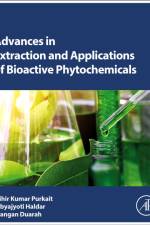
Advances in Extraction and Applications of Bioactive Phytochemicals presents comprehensive and systematic coverage of extraction techniques for bioactive phytochemical compounds and their delivery and therapeutic effectiveness. Sections focus on the pharmaceutical industry's perspective, aiming at compiling recent advances of natural products in the field of drug delivery, including a brief overview of plant-based bioactive molecules, utilization of different plant elements for the extraction of phytochemicals, a compilation of conventional extraction approaches, advanced extraction methods, including Supercritical carbon-dioxide extraction, computational methods to improve production, drug delivery aspects of bioactive phytochemicals, their therapeutic effectiveness, and more. This book is a complete reference targeted at pharma researchers in academic and corporate environments and those willing to apply the most current extraction methods and health applications. Researchers in medicinal chemistry and chemical engineering will also benefit from this comprehensive resource.
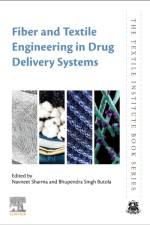
Fiber and Textile Engineering in Drug Delivery Systems explains how innovative textile processing methods including rotary spinning, microfluidics, wet spinning and electrospinning can be used to produce novel drug delivery solutions. This topical book provides detailed descriptions of how to produce such new materials for this purpose, with foundational content to help readers from a range of backgrounds understand the context of material selection and design decisions. Emphasis is given to the engineering side of the manufacturing of the textile and its role in drug delivery, but this also acts as a guide to pharmaceutical applications of textile fibers for materials scientists. Drug delivery research is rapidly expanding and experimenting with new materials to drive improved clinical outcomes as the efficacy of the therapeutic molecule is highly dependent on the right choice of carrier system. Recently, fiber based carriers at both nano and micro scales are gaining interest in the scientific community due to ease of manufacturing, high surface area to volume ratio, desirable drug release kinetics and high mechanical strength.
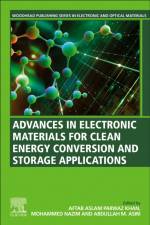
Advances in Electronic Materials for Clean Energy Conversion and Storage Applications reviews green synthesis and fabrication techniques of various electronic materials and their derivatives for applications in photovoltaics. The book investigates recent advances, progress and issues of photovoltaic-based research, including organic, hybrid, dye-sensitized, polymer, and quantum dot-based solar cells. There is a focus on applications for clean energy and storage in the book. Clean energy is defined as energy derived from renewable resources or zero-emission sources and natural processes that are regenerative and sustainable resources such as biomass, geothermal energy, hydropower, solar and wind energy. Materials discussed include nanomaterials, nanocomposites, polymers, and polymer-composites. Advances in clean energy conversion and energy storage devices are also reviewed thoroughly based on recent research and developments such as supercapacitors, batteries etc. Reliable methods to characterize and analyze these materials systems and devices are emphasized throughout the book. Important information on synthesis and analytical chemistry of these important systems are reviewed, but also material science methods to investigate optical properties of carbon-nanomaterials, metal oxide nanomaterials and their nanocomposites.
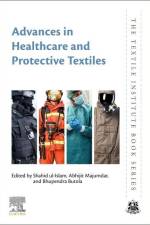
Advances in Healthcare and Protective Textiles addresses technologies that have had a major impact in industry for decades, but which are currently attracting unprecedented attention due to their applications in the fight against the Coronavirus epidemic. Recent advances in textile technology have opened new possibilities for textile researchers and scientists in antiviral textiles, flame-retardant textiles, antimicrobial textiles, insect repellent textiles, breathable medical textiles, aroma-protective textiles, high tech-textiles, smart textiles, nano textiles, and more. This book provides systematic and comprehensive coverage of cutting-edge research and developments on material design, methodologies, characterizations, processes, properties and applications of medical healthcare and protective textiles. In addition, sections pay special attention to advanced fabrication methodologies and materials used in apparel engineering.
Nanotechnology-based E-Noses reviews advances in nanomaterials and their modification for use in e-sensors. "E-noses" or "electronic sensors" are emerging as advanced technologies for the fast detection of chemicals, gases, and explosives. The concept behind the "e-nose" is similar to the capability of humans and dogs in detecting materials based on odors. Nanomaterials can be used for e-nose technologies but their properties must be modified to make them effective sensors. The sensing capability and performance of these materials depend on several factors, such as morphology, dopants, microadditives, design of sensors, phase, and structure of the nanomaterials. Theoretical understanding of nanomaterials and technologies for improving sensors with better detection limits are covered. The most relevant nanomaterials, their synthesis strategies, and the relationship between properties and device performance are provided. Current state-of-the-art progress in nanotechnology device fabrication along with directions for future applications and challenges are discussed.
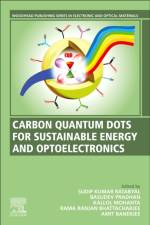
Carbon Quantum Dots for Sustainable Energy and Optoelectronics reviews the synthesis, properties, and applications of carbon nanodots. This book provides readers with an overview of the key advances in the development of carbon quantum dots including synthesis and surface engineering strategies such as pyrolysis-based synthesis, biomass-based synthesis, functionalization, and other methods toward large-scale development of these carbon nanomaterials. The emerging applications of carbon quantum dots in different fields, such as energy harvesting, energy storage, and biomedical applications, are thoroughly reviewed, emphasizing the impact of enhanced properties of carbon quantum dots for these applications. Carbon Quantum Dots for Sustainable Energy and Optoelectronics is suitable for graduate students, materials scientists, and engineers working in academia and industry. This book is also beneficial for the interdisciplinary community of researchers and practitioners working in the field of nanotechnology.
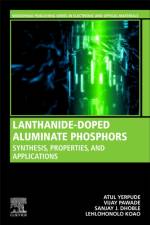
Lanthanide Doped Aluminate Phosphors: Synthesis, Properties, and Applications overviews advances in research on aluminate-based long persistent phosphors and their applications in lighting, display, radiation dosimetry and imaging. The book reviews the most important categories of rare earth aluminate-based phosphors, including aluminosilicates and aluminoborates. This category of material is attractive for a wide range of applications because of their high quantum efficiency, long afterglow life, chemical stability and optical properties, which is discussed throughout. Optical properties, in particular, are emphasized in the book along with the relationship of the chemical composition and doping of these materials and their optical performance. This book is suitable for researchers and practitioners working in academia and research and development in industry in the disciplines of materials science and engineering, chemistry and physics.
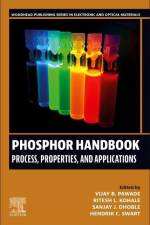
Phosphor Handbook: Process, Properties and Applications provides a comprehensive overview of the latest advances in research on the synthesis, characterization and applications of organic and inorganic phosphors. There is detailed information presented on the characterization of the relevant phosphor groups, such as up-conversion and down-conversion phosphors, inorganic LED phosphors, organic LED phosphors and thermoluminescence and dosimetric phosphors using various physical and chemical advances. Finally, the advances in phosphor technologies are discussed, including current barriers to their use in commercial applications and emerging opportunities. This book is suitable for researchers and practitioners in academia and those working in R&D in industry in the disciplines of materials science and engineering, materials chemistry, materials physics, photonics science and technology, nanotechnology and physical chemistry.
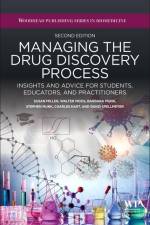
Managing the Drug Discovery Process, Second Edition thoroughly examines the current state of pharmaceutical research and development by providing experienced perspectives on biomedical research, drug hunting and innovation, including the requisite educational paths that enable students to chart a career path in this field. The book also considers the interplay of stakeholders, consumers, and drug firms with respect to a myriad of factors. Since drug research can be a high-risk, high-payoff industry, it is important to students and researchers to understand how to effectively and strategically manage both their careers and the drug discovery process. This new edition takes a closer look at the challenges and opportunities for new medicines and examines not only the current research milieu that will deliver novel therapies, but also how the latest discoveries can be deployed to ensure a robust healthcare and pharmacoeconomic future. All chapters have been revised and expanded with new discussions on remarkable advances including CRISPR and the latest gene therapies, RNA-based technologies being deployed as vaccines as well as therapeutics, checkpoint inhibitors and CAR-T approaches that cure cancer, diagnostics and medical devices, entrepreneurship, and AI. Written in an engaging manner and including memorable insights, this book is aimed at anyone interested in helping to save countless more lives through science. A valuable and compelling resource, this is a must-read for all students, educators, practitioners, and researchers at large-indeed, anyone who touches this critical sphere of global impact-in and around academia and the biotechnology/pharmaceutical industry.
Abonner på vårt nyhetsbrev og få rabatter og inspirasjon til din neste leseopplevelse.
Ved å abonnere godtar du vår personvernerklæring.