
















Gjør som tusenvis av andre bokelskere
Abonner på vårt nyhetsbrev og få rabatter og inspirasjon til din neste leseopplevelse.
Ved å abonnere godtar du vår personvernerklæring.Du kan når som helst melde deg av våre nyhetsbrev.

A Biologist¿s Guide to Artificial Intelligence: Building the Foundations of Artificial Intelligence and Machine Learning for Achieving Advancements in Life Sciences provides an overview of the basics of Artificial Intelligence for life science biologists. In 14 chapters/sections, readers will find an introduction to Artificial Intelligence from a biologist¿s perspective, including coverage of AI in precision medicine, disease detection, and drug development. The book also gives insights into the AI techniques used in biology and the applications of AI in food, and in environmental, evolutionary, agricultural, and bioinformatic sciences. Final chapters cover ethical issues surrounding AI and the impact of AI on the future. This book covers an interdisciplinary area and is therefore is an important subject matter resource and reference for researchers in biology and students pursuing their degrees in all areas of Life Sciences. It is also a useful title for the industry sector and computer scientists who would gain a better understanding of the needs and requirements of biological sciences and thus better tune the algorithms.
Introductory Differential Equations, Sixth Edition provides the foundations to assist students in learning not only how to read and understand differential equations, but also how to read technical material in more advanced texts as they progress through their studies. The book's accessible explanations and many robust sample problems are appropriate for a first semester course in introductory ordinary differential equations (including Laplace transforms), for a second course in Fourier series and boundary value problems, and for students with no background on the subject.
Emery and Rimoin¿s Principles and Practice of Medical Genetics and Genomics: Developmental Disorders, Seventh Edition is distinguished as the ultimate resource for clinicians integrating genetics into medical practice. This updated edition includes the latest information on seminal topics such as prenatal diagnosis, genome and exome sequencing, public health genetics, genetic counseling, and management and treatment strategies. This comprehensive yet practical resource emphasizes theory and research fundamentals related to applications of medical genetics across the full spectrum of inherited disorders and applications in medicine more broadly. Users will find comprehensive sections on medical genetics applied to a range of developmental disorders and an emphasis on understanding the genetic mechanisms underlying these disorders, diagnostic approaches, and therapeutics that make use of current genomic technologies and translational studies. Updated chapters on human developmental genetics as well as the genetics of sexual development, clefting, dental, and craniofacial syndromes, craniosynostosis, rasopathies, sex-chromosome abnormalities, and autosomal deletions, among other disorders are included.
Anatomy of Neuropsychiatry: The New Anatomy of the Basal Forebrain and Its Implications for Neuropsychiatric Illness, Second Edition presents the anatomical systems that take part in the scientific and clinical study of emotional functions and neuropsychiatric disorders. The book discusses the limbic system¿the cortical and subcortical structures in the human brain involved in emotion, motivation, and emotional association with memory¿and how this is no longer a useful guide to psychiatric disorders. Newly revised, this book now includes chapters focusing on the anatomy of Basal Forebrain and Cerebellum Macrosystems and the role these macrosystems play in motion, emotion, and neuropsychiatric illnesses.This book will help reader develop an understanding of the gross anatomical organization of the human forebrain.
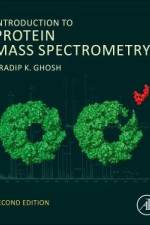
Introduction to Protein Mass Spectrometry, Second Edition provides a comprehensive overview of this increasingly important, yet complex, analytical technique. This book enables readers to understand how determinations about protein identity from mass spectrometric data are made. Coverage begins with the technical basics, including preparations, instruments, and spectrometric analysis of peptides and proteins, before exploring applied use in biological applications, bioinformatics, database, and software resources. This new edition is fully updated to include the latest developments in the field and will feature new content covering recent progress in the areas where there have been the most exciting advances. These include PNNL¿s multilevel-PCB-based SLIM realization, SLIM-Agilent QQQ field trials; employment of SLIM-IMS-cryo-IR combination in molecular structure determination; proximity-labelling mass spectrometry, and applications in neuroscience.
Dynamic Aquaria: Building and Restoring Ecosystems and the Biosphere, Fourth Edition demonstrates how the living systems modeling of aquatic ecosystems for ecological, biological, physiological research, and ecosystem restoration produce answers to very complex ecological questions. The book describes unique characteristics of water that have allowed carbon chemistry to flourish and evolve life over 4 billion years, along with current disruptions such as global warming, overfishing, and chemical pollution. New content in this edition includes the use of LED lighting, DNA sequencing in microcosm construction and analysis, and the expansion of the bioengineered tool Algal Turf Scrubbing (ATS) to combat global pollution problems.The book also features new information on marine calcification, research microcosms, thermogeography, and methods of water movement for minimizing plankton loss. It supports a deeper biological and ecological intelligence among the human population to better understand the processes behind environmental issues.
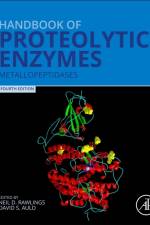
Handbook of Proteolytic Enzymes, Metallopeptidases has stood as most comprehensive work in the field of applied enzymology and biocatalysis since the first edition published in 1998. Extensively revised and updated, the new fourth edition is an essential reference for biochemists, biotechnologists, and molecular biologists across academia and industry. Edited by world-renowned experts in the field, and with five volumes available for individual sale, this work provides detailed information on all known proteolytic enzymes researched to-date, with expanded coverage of metallopeptidases, cysteine peptidases, serine and threonine peptidases, aspartic and glutamic peptidases, and inhibitors of proteolytic enzymes. This volume includes over 300 chapters on known metallopeptidases enzymes, including their name, history, activity and specificity, structural chemistry, preparation, biological aspects, and distinguishing features, with 2D structures of peptidases in color, extensive references, and links to PubMed and MEROPS databases.
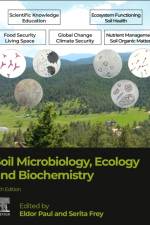
Soil Microbiology, Ecology, and Biochemistry, Fifth Edition addresses the increasingly important field of soil biota and their interactions in research and education. Soil biota are extremely important, and especially relevant to today¿s societal questions related to global change, ecosystem sustainability, and food security in our ever-changing environment. Revised by a group of world-renowned authors in many institutions and disciplines, this book relates breakthroughs in knowledge in this important field, along with its history and future applications. This new edition provides readable, practical, impactful information for many applied and fundamental disciplines. There is no other available volume on the topics covered that also integrates the concepts in a way that makes them useful to a broad group of readers.
Geophysical Data Analysis and Inverse Theory with MATLAB or Python, Fifth Edition is a revised and expanded introduction to inverse theory and tomography as it is practiced by geophysicists. The book demonstrates the methods needed to analyze a broad spectrum of geophysical datasets, with special attention given to those methods that generate images of the earth. Data analysis can be a mathematically complex activity, but the treatment in this volume is carefully designed to emphasize those mathematical techniques that readers will find the most familiar and to systematically introduce less-familiar ones. A series of "crib sheets" offer step-by-step summaries of methods presented. Utilizing problems and case studies, along with MATLAB and Python computer code and summaries of methods, the book provides professional geophysicists, students, data scientists and engineers in geophysics with the tools necessary to understand and apply mathematical techniques and inverse theory.
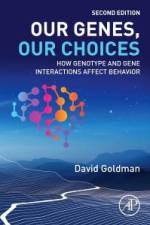
Our Genes, Our Choices: How Genotype and Gene Interactions Affect Behavior, Second Edition explains how the complexity of human behavior, including concepts of free will, derives from a relatively small number of genes, which direct neurodevelopmental sequences. Are people free to make choices or do genes determine behavior? Paradoxically, the answer to both questions is "yes," because of neurogenetic individuality, a new theory with profound implications. Here, author David Goldman uses judicial, political, medical, and ethical examples to illustrate that this lifelong process is guided by individual genotype, molecular and physiologic principles, as well as by randomness and environmental exposures. Written in an authoritative yet accessible style, the book includes practical descriptions of the function of DNA, discusses the scientific and historical bases of genethics, and introduces the topics of epigenetics and the predictive power of behavioral genetics.
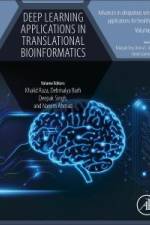
Deep Learning Applications in Translational Bioinformatics, a new volume in the Advances in Ubiquitous Sensing Application for Healthcare series, offers a detailed overview of basic bioinformatics, deep learning, and various applications of deep learning in translational bioinformatics, including deep learning ensembles, deep learning in protein classification, detection of various diseases, prediction of antiviral peptides, identification of antibiotic resistance, computer aided drug design and drug formulation. This new volume helps researchers working in the field of machine learning and bioinformatics foster future research and development.
Introduction to Plasmas and Plasma Dynamics: With Plasma Physics Applications to Space Propulsion, Second Edition provides an accessible introduction to the understanding of the high temperature, ionized gases necessary to conduct research and develop applications related to plasmas. Thoroughly updated and expanded, this second edition is also amended for greater ease of use with the inclusion of self-study problems. New chapters addressing numerical methods in plasmas, the kinetic description and analysis of plasma, and the chemistry of the ionosphere open up this subject to a broader range of readers. Starting with the essential theory, this book goes on to describe relevant devices and mechanisms, before presenting a clear outline of the analysis and numerical details of plasma. The latest trends, concepts, and applications in plasma engineering are also addressed, including plasma formation and magnetic fusion, plasma thrusters and space propulsion.
The New Public Health has established itself as a solid textbook throughout the world. Translated into seven languages, this work distinguishes itself from other public health textbooks, which are either highly locally oriented or, if international, lack the specificity of local issues relevant to students' understanding of applied public health in their own setting. Fully revised, The New Public Health, Fourth Edition provides a unified approach to public health appropriate for graduate students and advance undergraduate students especially for courses in MPH, community health, preventive medicine, community health education programs, community health nursing programs. It is also a valuable resource for health professionals requiring an overview of public health.
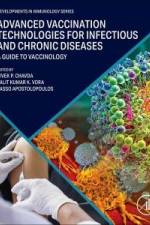
Advanced Vaccination Technologies for Infectious and Chronic Diseases is a comprehensive guide that delves into the intricate details of vaccine design, development across various platforms, and the path to commercialization. This book provides an introductory overview of vaccines, covering various types, developmental methodologies, delivery systems, adjuvants, immunization, and measurement of vaccine efficacy. It also showcases examples of vaccine research efforts targeting infectious diseases, autoimmune disorders, and cancer. The book concludes by exploring cutting-edge advances in proteogenomics, immunopeptidomics, and future vaccine technologies. The primary objective of this book is to inform a broad scientific audience about the fundamental concepts underlying vaccine and immunology. Further, it serves as an invaluable reference for understanding the critical steps in the journey from discovery to regulatory processes for human clinical trials, addressing common misconceptions and presenting factual information about vaccinations. Advanced Vaccination Technologies for Infectious and Chronic Diseases is a requisite reference for occupational health professionals whose roles involve supervision of immunization programs such as those working within the National Health Service, some sectors of higher education, or the pharmaceutical industry. It also caters to those researchers engaged in vaccine development and all who want to learn the processes involved from laboratory research to final product.
Recent advances in pharmacology and brain stimulation have led to the development of novel treatments for psychiatric disorders. These new advances have led to the development of a new subspecialty, Interventional Psychiatry. Interventional Psychiatry: Road to Novel Therapeutics reviews all specialized treatments including device-based interventions such as electroconvulsive therapy (ECT), repetitive transcranial magnetic stimulation (rTMS), and deep brain stimulation (DBS). This book discusses the procedure-based pharmacologic interventions including ketamine infusion therapy and psychedelic therapies. Internationally contributed, this book outlines the state of the field, as well as implications for training and the role of the interventional psychiatrist in treatment teams.
Parameter Estimation and Adaptive Control for Nonlinear Servo Systems presents the latest advances in observer-based control design, focusing on adaptive control for nonlinear systems such as adaptive neural network control, adaptive parameter estimation, and system identification. This book offers an array of new, real-world applications in the field. Written by eminent scientists in the field of control theory, this book covers the latest advances in observer-based control design and provides fundamentals, algorithms, and key applications in the fields of power systems, robotics and mechatronics, flight, and automotive systems.
Abonner på vårt nyhetsbrev og få rabatter og inspirasjon til din neste leseopplevelse.
Ved å abonnere godtar du vår personvernerklæring.