






















Gjør som tusenvis av andre bokelskere
Abonner på vårt nyhetsbrev og få rabatter og inspirasjon til din neste leseopplevelse.
Ved å abonnere godtar du vår personvernerklæring.Du kan når som helst melde deg av våre nyhetsbrev.

Experimental Organic Chemistry: Laboratory Manual is designed as a primer to initiate students in Organic Chemistry laboratory work. Organic Chemistry is an eminently experimental science that is based on a well-established theoretical framework where the basic aspects are well established but at the same time are under constant development. Therefore, it is essential for future professionals to develop a strong background in the laboratory as soon as possible, forming good habits from the outset and developing the necessary skills to address the challenges of the experimental work. . This book is divided into three parts. In the first, safety issues in laboratories are addressed, offering tips for keeping laboratory notebooks. In the second, the material, the main basic laboratory procedures, preparation of samples for different spectroscopic techniques, Microscale, Green Chemistry, and qualitative organic analysis are described. The third part consists of a collection of 84 experiments, divided into 5 modules and arranged according to complexity. The last two chapters are devoted to the practices at Microscale Synthesis and Green Chemistry, seeking alternatives to traditional Organic Chemistry.
The Economics and Organization of Brazilian Agriculture: Recent Evolution and Productivity Gains presents insights on Brazilian agriculture and its impressive gains in productivity and international competitiveness, also providing insightful examples for global policymakers. In Brazil, as in many countries, many economists and policymakers believe that agriculture is a traditional, low-tech sector that crowds out the development of other economic sectors and the country. This book shows that this anti-agriculture bias is ill-informed, and with population growth, rising incomes, urbanization and diet changes ¿ especially in developing countries like China and India ¿ on the rise, the demand for food is expected to double in the next 40 years. Brazil has the natural resources, technology and management systems in place to benefit from this expected growth in food consumption and trade. Through real-world examples, the book shows how other low-latitude countries with tropical climate and soils like Brazil ¿ especially in sub-Saharan Africa ¿ can benefit from the agricultural technology, production, and management systems developed in Brazil. Case studies in each of three key categories, including technology, resource management, and effective government programs provide valuable insights into effective decision-making to maximize the effect of each.
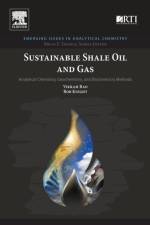
Shale oil and gas have altered the energy landscape, possibly permanently. They burst upon the fossil energy scene with a suddenness that initially defied prediction. Even the political balance of the world has changed. But, with the methods employed, the vast majority of the oil and gas remains in the ground. At the same time, serious environmental impact issues have been raised. A new volume in the Emerging Issues in Analytical Chemistry series, Sustainable Shale Oil and Gas Production: Analytical, Biochemical, and Geochemical Methods was written on the premise that analytical methods to inform these areas were wanting. While not attempting to be comprehensive, it describes important analytical methods, some still in development. These methods are underpinned primarily by chemistry, but geochemistry and even biochemistry play significant roles. The book has a solutions flavor; problems are posed together with approaches to ameliorate them.Provides a clear understanding of the potential environmental issues as well as a path to solutionsIncludes background information for understanding potential impacts of shale operations from both an environmental and public health perspectiveAuthored by leaders from diverse disciplines with expertise in a variety of areas: groundwater quality, petroleum-related operations, microbial ecology, and electronic technologiesReviews new sensing and evaluation methods that could be key enablers to sustainable fracking: portable mass spectrometry, microbiome analysis, DNA as tracers, and a microparticulate matter detector
Energy Positive Neighborhoods and Smart Energy Districts: Methods, Tools, and Experiences from the Field is a comprehensive guide to this highly interdisciplinary topic. Monti et. al''s combined experience make them the most qualified team of editors to explore the processes and tools involved in creating Energy Positive Neighborhoods and Smart Energy Districts in an urban setting. Tools include: A complete simulation library to quickly support the implementation of a model of the scenarioA set of possible approaches to neighborhood energy optimizationAn open, extensible information model for neighbourhood asset description The structure of this book offers different reading paths to appeal to the very varied audience it addresses. It describes the process of adaption and the challenges faced by the decision makers, and also how simulation, optimisation, ICT approaches and business models are combined in a holistic and pragmatic way. It also offers possible business models and a means to quantify them to complete the development process. This book is suitable for students on muti-disciplinary energy engineering courses, energy practitioners, ICT vendors aiming to develop new services to target the building industry, and decision makers aiming to structure an urban renovation program.Delivers a significant amount of exclusive knowledge on the topics of energy positive neighborhoods and smart energy districtsAllows readers to grasp the complexity of this interdisciplinary topic by providing access to well-structured processes and tools Includes real life examples of the transformation of two demonstration sites that illustrate the concepts discussed to add context and value to their implementation
Redefining Diversity and Dynamics of Natural Resources Management in Southeast Asia, Volumes 1-4 brings together scientific research and policy issues across various topographical areas in Asia to provide a comprehensive overview of the issues facing the region. Upland Natural Resources and Social Ecological Systems in Northern Vietnam, Volume 2, provides chapters on natural resource management in northern Vietnam tied together by the concept that participatory local involvement is needed in all aspects of natural resource management. The volume examines planning for climate change, managing forestland, alleviating food shortages, living with biodiversity, and assessing the development projects and policies being implemented. Without the involvement of local communities, households, and ultimately individual people, the needed action will not be effectively taken. Upland Natural Resources and Social Ecological Systems in Northern Vietnam, Volume 2, goes beyond just Northern Vietnam to address the issue of transboundary natural resource management-an issue that Vietnam is dealing with in its relations with northern neighbor, China, and western neighbor, Laos-as well as the transboundary water governance between Pakistan and India in south Asia, with the hope that some of the lessons learned may one day be useful in the case of Vietnam and its neighbors.Provides a multi-disciplinary case study into a complex environmental situation involving government institutions, planning, and practices, using northern Vietnam as the focusCovers the issues of natural resource management and biodiversity in depth using international case studiesProvides examples of measuring the potential climate change impacts on food security in agricultural regionsExamines topics such as planning for climate change, managing forestland, alleviating food shortages, living with biodiversity, and assessing development projects and policies
Na Channels from Phyla to Function, the latest volume in the Current Topics in Membranes series, is targeted toward scientists and researchers in biochemistry and molecular and cellular biology, providing the necessary membrane research to assist them in discovering the current state of a particular field and in learning where that field is heading. This volume offers an up-to-date presentation of the current knowledge in the field of Na Channels.Written by leading experts in the field of Na ChannelsContains original material, both textual and illustrative, that make it a very relevant reference Presented in a very comprehensive mannerBoth researchers in the field and general readers will find this book relevant and up-to-date with regard to its information
Abonner på vårt nyhetsbrev og få rabatter og inspirasjon til din neste leseopplevelse.
Ved å abonnere godtar du vår personvernerklæring.