













Gjør som tusenvis av andre bokelskere
Abonner på vårt nyhetsbrev og få rabatter og inspirasjon til din neste leseopplevelse.
Ved å abonnere godtar du vår personvernerklæring.Du kan når som helst melde deg av våre nyhetsbrev.

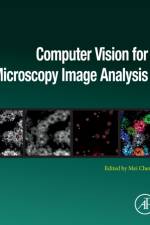
Are you a computer scientist working on image analysis? Are you a biologist seeking tools to process the microscopy data from image-based experiments? Computer Vision for Microscopy Image Analysis provides a comprehensive and in-depth discussion of modern computer vision techniques, in particular deep learning, for microscopy image analysis that will advance your efforts.Progress in imaging techniques has enabled the acquisition of large volumes of microscopy data and made it possible to conduct large-scale, image-based experiments for biomedical discovery. The main challenge and bottleneck in such experiments is the conversion of "big visual data" into interpretable information.Visual analysis of large-scale microscopy data is a daunting task. Computer vision has the potential to automate this task. One key advantage is that computers perform analysis more reproducibly and less subjectively than human annotators. Moreover, high-throughput microscopy calls for effective and efficient techniques as there are not enough human resources to advance science by manual annotation.This book articulates the strong need for biologists and computer vision experts to collaborate to overcome the limits of human visual perception, and devotes a chapter each to the major steps in analyzing microscopy images, such as detection and segmentation, classification, tracking, and event detection.
Single-Cell Omics: Volume 1: Technological Advances and Applications provides the latest technological developments and applications of single-cell technologies in the field of biomedicine. In the current era of precision medicine, the single-cell omics technology is highly promising due to its potential in diagnosis, prognosis and therapeutics. Sections in the book cover single-cell omics research and applications, diverse technologies applied in the topic, such as pangenomics, metabolomics, and multi-omics of single cells, data analysis, and several applications of single-cell omics within the biomedical field, for example in cancer, metabolic and neuro diseases, immunology, pharmacogenomics, personalized medicine and reproductive health. This book is a valuable source for bioinformaticians, molecular diagnostic researchers, clinicians and members of the biomedical field who are interested in understanding more about single-cell omics and its potential for research and diagnosis.
Handbook of Energy Economics and Policy: Fundamentals and Applications for Engineers and Energy Planners presents energy engineers and managers with analytical skills and concepts that enable them to apply simple economic logic to understand the interrelations between energy technologies, economics, regulation and governance of the industry. Sections cover the origins, types and measurement of energy sources, transportation networks, and regulatory and policy issues on electricity and gas at a global level, new economic and policy issues, including innovation processes in the energy industry and economic and policy implications. Final sections cover state-of-the-art methods for modeling and predicting the dynamics of energy systems. Its unique approach and learning path makes this book an ideal resource for energy engineering practitioners and researchers working to design, develop, plan or deploy energy systems. Energy planners and policymakers will also find this to be a solid foundation on which to base decisions.
Abonner på vårt nyhetsbrev og få rabatter og inspirasjon til din neste leseopplevelse.
Ved å abonnere godtar du vår personvernerklæring.