


















Gjør som tusenvis av andre bokelskere
Abonner på vårt nyhetsbrev og få rabatter og inspirasjon til din neste leseopplevelse.
Ved å abonnere godtar du vår personvernerklæring.Du kan når som helst melde deg av våre nyhetsbrev.

Monte Carlo Methods and Codes for Nuclear Engineering Analysis provides a comprehensive survey of the state-of-the-art in radiation transport methods used by Monte Carlo (MC) codes. It explores the real-world implementation of these methods in codes used by nuclear scientists and engineers, considering the advantages and disadvantages of the various techniques, design philosophies and algorithm implementations. After a foreword and introduction giving a brief history of Monte Carlo methods, code systems, and their applications in nuclear science and engineering, subsequent chapters describe the fundamentals of Monte Carlo radiation transport methods by dividing the field into a number of topics or focus areas. Subjects selected include potential geometry and particle tracking, nuclear data, variance reduction, time-dependent analysis and parallel computing. Each chapter presents a comprehensive survey of the state-of-the-art implementations, algorithms, and methodologies used by production-level Monte Carlo codes for the area. A concluding chapter provides a handy summary by briefly listing the methods used by key Monte Carlo codes for each focus area in several tables. This book is an essential guide to Monte Carlo methods and codes for nuclear scientists, engineers and code developers in academia and industry and students studying this topic.
Thoroughly guides the reader through the "how-to? on different stages of 3D-data-related research Provides statistical analysis options for 3D image data Covers protocols, methods and techniques as associated with biological anthropology and archaeology
Process Equipment and Plant Design: Principles and Practices takes a holistic approach towards process design in the chemical engineering industry, dealing with the design of individual process equipment and its configuration as a complete functional system. Chapters cover typical heat and mass transfer systems and equipment included in a chemical engineering curriculum, such as heat exchangers, heat exchanger networks, evaporators, distillation, absorption, adsorption, reactors and more. The authors expand on additional topics such as industrial cooling systems, extraction, and topics on process utilities, piping and hydraulics, including instrumentation and safety basics that supplement the equipment design procedure and help to arrive at a complete plant design. The chapters are arranged in sections pertaining to heat and mass transfer processes, reacting systems, plant hydraulics and process vessels, plant auxiliaries, and engineered safety as well as a separate chapter showcasing examples of process design in complete plants. This comprehensive reference bridges the gap between industry and academia, while exploring best practices in design, including relevant theories in process design making this a valuable primer for fresh graduates and professionals working on design projects in the industry.
Trauma Informed Guilt Reduction Therapy (TrIGR) provides mental health professionals with tools for assessing and treating guilt and shame resulting from trauma and moral injury. Guilt and shame are common features in many of the problems trauma survivors experience including posttraumatic stress disorder (PTSD), depression, substance use, and suicidality. This book presents Trauma Informed Guilt Reduction (TrIGR) Therapy, a brief, transdiagnostic psychotherapy designed to reduce guilt and shame. TrIGR offers flexibility in that it can be delivered as an individual or group treatment. Case examples demonstrate how TrIGR can be applied to a range of trauma types including physical assault, sexual abuse, childhood abuse, motor vehicle accidents, and to moral injury from combat and other military-related events. Conceptualization of trauma-related guilt and shame, assessment and treatment, and special applications are covered in-depth.
Confronting Prejudice and Discrimination: The Science of Changing Minds and Behaviors focuses on confrontation as a strategy for reducing bias and discrimination. The volume tackles questions that people face when they wish to confront bias: What factors influence people's decisions to confront or ignore bias in its various forms? What are the motives and consequences of confrontation? How can confrontation be approached individually, through education and empowerment, and in specific contexts (e.g., health care) to yield favourable outcomes? These questions are paramount in contemporary society, where confrontation of bias is increasingly evident. Moreover, great strides in the scientific study of confrontation in the past 20 years has yielded valuable insights and answers. This volume is an essential resource for students and researchers with an interest in prejudice and prejudice reduction, and will also be valuable to non-academics who wish to stand up to bias through confrontation.
Acceptance and Commitment Therapy: The Clinician's Guide for Supporting Parents constitutes a principles-based guide for clinicians to support parents across various stages of child and adolescent development. It uses Acceptance and Commitment Therapy (ACT) as an axis to integrate evolution science, behaviour analysis, attachment theory, emotion-focused and compassion-focused therapies into a cohesive framework. From this integrated framework, the authors explore practice through presenting specific techniques, experiential exercises, and clinical case studies.
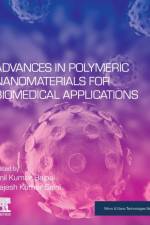
Advances in Polymeric Nanomaterials for Biomedical Applications examines advanced polymer synthetic strategies for developing novel biomaterials for use in medicine. With a strong focus on fundamentals and structure, the authors also explore their fabrication, along with their current and potential biomedical applications. The book begins with a look at the fundamentals of polymeric nanomaterials and their properties and then discusses the design of biomaterials and their applications in drug delivery. Further chapters explore important applications, such as imaging and regenerative medicine, including current challenges and future trends. This valuable resource is especially useful for materials and polymer scientists, and bioengineers wishing to broaden their knowledge of polymeric nanobiomaterials.
Abonner på vårt nyhetsbrev og få rabatter og inspirasjon til din neste leseopplevelse.
Ved å abonnere godtar du vår personvernerklæring.