
























Gjør som tusenvis av andre bokelskere
Abonner på vårt nyhetsbrev og få rabatter og inspirasjon til din neste leseopplevelse.
Ved å abonnere godtar du vår personvernerklæring.Du kan når som helst melde deg av våre nyhetsbrev.

Design for Health: Applications of Human Factors delves into critical and emergent issues in healthcare and patient safety and how the field of human factors and ergonomics play a role in this domain. The book uses the Design for X (DfX) methodology to discuss a wide range of contexts, technologies, and population dependent criteria (X''s) that must be considered in the design of a safe and usable healthcare ecosystem. Each chapter discusses a specific topic (e.g., mHealth, medical devices, emergency response, global health, etc.), reviews the concept, and presents a case study that demonstrates how human factors techniques and principles are utilized for the design, evaluation or improvements to specific tools, devices, and technologies (Section 1), healthcare systems and environments (Section 2), and applications to special populations (Section 3). The book represents an essential resource for researchers in academia as well as practitioners in medical device industries, consumer IT, and hospital settings. It covers a range of topics from medication reconciliation to self-care to the artificial heart. Uses the Design for X (DfX) methodologyA case study approach provides practical examples for operationalization of key human factors principles and guidelinesProvides specific design guidelines for a wide range of topics including resilience, stress and fatigue management, and emerging technologiesExamines special populations, such as the elderly and the underservedBrings a multidisciplinary, multi-industry approach to a wide range of healthcare human factors issues
Focused on understanding the key underlying group processes that contribute to youth sport experiences, The Power of Groups in Youth Sport provides an innovative and expansive overview of the research in group dynamics within youth sports. The first section of the book examines topics relating to forming and structuring groups, including team selection, athlete socialization, normative expectations, roles, coach and athlete leadership, social identity, and more.  The second section reviews concepts associated with group functioning and management, such as cohesion, subgroups, motivational climate, teamwork, and team building. This book concludes with a series of chapters focused on specific developmental considerations in youth sports that are often overlooked in group dynamics research including parental involvement, bullying and hazing, mental health, ,and disability and accessibility. Synthesizes the research of group dynamics within the context of youth sportHighlights how groups form and functionDiscusses the role of parents and peers on youth sport experiences and developmentSuggests ways to advance the field of group dynamics in youth sports
Sialic Acids and Sialoglycoconjugates in the Biology of Life, Health and Disease enables the reader to understand the role of sialylation as a post translational modification. The book provides insights on the latest knowledge in the field of sialoglycobiology. Sialic acids as terminal residues of oligosaccharide chains play crucial roles in several cellular recognition events. Synthesized post translationally, they play an important role in recognition, signaling, immunological response and cell-cell interaction. Improper sialylations have been associated with several diseases including cancer. In the post genomics and proteomics era, sialoglybiology has become more and more important in deciphering health and disease conditions. Discusses the sialic acids and their role in different diseases (other than cancer)Provides an understanding of sialylations as post translational modifications (PTM) Demonstrates the impact sialylation has on infectious diseases, the autoimmune system and healthGives insights on the importance of sialic acid biology through animal models
Emotion in Posttraumatic Stress Disorder provides an up-to-date review of the empirical research on the relevance of emotions, such as fear, anxiety, shame, guilt, and disgust to posttraumatic stress disorder (PTSD).  It also covers emerging research on the psychophysiology and neurobiological underpinnings of emotion in PTSD, as well as the role of emotion in the behavioral, cognitive, and affective difficulties experienced by individuals with PTSD.  It concludes with a review of evidence-based treatment approaches for PTSD and their ability to mitigate emotion dysfunction in PTSD, including prolonged exposure, cognitive processing therapy, and acceptance-based behavioral therapy. Identifies how emotions are central to understanding PTSD.Explore the neurobiology of emotion in PTSD.Discusses emotion-related difficulties in relation to PTSD, such as impulsivity and emotion dysregulation.Provides a review of evidence-based PTSD treatments that focus on emotion.
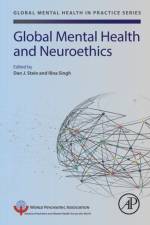
Global Mental Health and Neuroethics explores conceptual, ethical and clinical issues that have emerged with the expansion of clinical neuroscience into middle- and low-income countries. Conceptual issues covered include avoiding scientism and skepticism in global mental health, integrating evidence-based and value-based global medicine, and developing a welfarist approach to the practice of global psychiatry. Ethical issues addressed include those raised by developments in neurogenetics, cosmetic psychopharmacology and deep brain stimulation. Perspectives drawing on global mental health and neuroethics are used to explore a number of different clinical disorders and developmental stages, ranging from childhood through to old age. Synthesizes existing work at the intersection of global mental health and neuroethicsPresents the work of leading practitioners of global mental health and neuroethics who address clinical issuesLooks at clinical decision-making in settings with non-Western values and customsCovers patient empowerment, human rights, cognitive enhancement, and more
High-Speed Machining covers every aspect of this important subject, from the basic mechanisms of the technology, right through to possible avenues for future research. This book will help readers choose the best method for their particular task, how to set up their equipment to reduce chatter and wear, and how to use simulation tools to model high-speed machining processes. The different applications of each technology are discussed throughout, as are the latest findings by leading researchers in this field. For any researcher looking to understand this topic, any manufacturer looking to improve performance, or any manager looking to upgrade their plant, this is the most comprehensive and authoritative guide available. Summarizes important R&D from around the world, focusing on emerging topics like intelligent machiningExplains the latest best practice for the optimization of high-speed machining processes for greater energy efficiency and machining precisionProvides practical advice on the testing and monitoring of HSM machines, drawing on practices from leading companies
Ecology and Management of Inland Waters: A Californian Perspective with Global Applications presents the geologic history and physical characteristics of aquatic ecology. The author draws on his research from the inland waters of California and applies this to other areas, including Mediterranean climate systems, the tropics, and even South Africa. The endorheic basins covered in this text can be found in 30% of the US, including the Aral Sea, which is a fascinating case study that provides an important warning for other locations. The author also covers Zebra Mussels, which are set to soon be a permanent population in California. The book is authored by an expert in the field who covers a very wide and interdisciplinary subject area which brings a holistic view to this complex discipline. Focuses on examples from California, which is not currently covered in most limnology books, but with an outlook to other locationsExamines complex patterns of human and natural development, allowing the reader to appreciate how aquatic systems in the Anthropocene experience a new "regime" that does not rely on vague and outdated versions of ecological theoryPresents a geological history, including fossil records, of California which allows the reader to appreciate how inland waters formed
An Introduction to Interdisciplinary Toxicology: From Molecules to Man integrates the various aspects of toxicology, from "simple” molecular systems, to complex human communities, with expertise from a spectrum of interacting disciplines. Chapters are written by specialists within a given subject, such as a chemical engineer, nutritional scientist, or a microbiologist, so subjects are clearly explained and discussed within the toxicology context. Many chapters are comparative across species so that students in ecotoxicology learn mammalian toxicology and vice versa. Specific citations, further reading, study questions, and other learning features are also included. The book allows students to concurrently learn concepts in both biomedical and environmental toxicology fields, thus better equipping them for the many career opportunities toxicology provides. This book will also be useful to those wishing to reference how disciplines interact within the broad field of toxicology. Covers major topics and newer areas in toxicology, including nanotoxicology, Tox21, epigenetic toxicology, and organ-specific toxicityIncludes a variety of perspectives to give a complete understanding of toxicologyWritten by specialists within each subject area, e.g., a chemical engineer, to ensure concepts are clearly explained
Much of clinical psychology relies upon cognitive behavior therapy to treat clinical disorders via attempting to change thinking and feeling in order to change behavior. Functional approaches differ in that they focus on context and the environmental influence on behavior, thoughts, and feelings. This second edition of Functional Analysis in Clinical Treatment updates the material in keeping with DSM-5 and ICD-10 and provides 40% new information, including updated literature reviews, greater detail in the functional analysis/assessment sections of each chapter, two new chapters on autism spectrum disorders and chronic health problems, and examples of worked assessments, such as interview transcripts, ABC charts, and observational data. Discusses functional analytic approaches to treat specific clinical disordersAppropriate for use with both adult and child populationsUpdated to reflect DSM-5Includes two new chapters on treatment for ADHD and chronic health problemsShows more examples of worked assessments and treatment plans
Aquaporin Regulation, Volume 112, the latest release in the Vitamins and Hormones series, highlights new advances in the field, with this new volume presenting interesting chapters highlighting Perspectives on the evolution of aquaporin superfamily, Structure and dynamics of aquaporin-1, Selectivity and Transport in Aquaporins from Molecular Simulation Studies, Aquaporin regulation in metabolic organs, Phosphorylation of human AQP2 and its role in trafficking, Regulation of Aquaporin-2 by RNA Interference, Aquaporin Regulation: Lessons from Secretory Vesicles, CFTR Regulation of Aquaporin-mediated Water Transport, Glucocorticoid Gene Regulation of Aquaporin-7, and much more. Provides the authority and expertise of leading contributors from an international board of authorsPresents the latest release in the Vitamins and Hormones seriesUpdated release includes the latest information on aquaporin regulation
Advances in Clinical Chemistry, Volume 94, the latest installment in this internationally acclaimed series, contains chapters authored by world-renowned clinical laboratory scientists, physicians and research scientists. The serial discusses the latest technologies relating to the field of clinical chemistry, with specific chapters in this new release covering Hypertensive disorders of pregnancy: Strategy to develop clinical peptide biomarkers for more accurate evaluation of the pathophysiological status of this syndrome, Clotting factors - Clinical biochemistry and their roles as plasma enzymes, Myokines: The endocrine coupling of skeletal muscle and bone, Epigenetic reprogramming and potential application of epigenetic-modifying drugs in acquired chemotherapeutic resistance, and more. Provides the most up-to-date technologies in clinical chemistry and clinical laboratory scienceAuthored by world renowned clinical laboratory scientists, physicians and research scientistsPresents the international benchmark for novel analytical approaches in the clinical laboratory
Advances in Agronomy continues to be recognized as a leading reference and first-rate source for the latest research in agronomy. Each volume contains an eclectic group of reviews by leading scientists throughout the world. As always, the subjects covered are rich, varied and exemplary of the abundant subject matter addressed by this long-running serial. Includes numerous, timely, state-of-the-art reviews on the latest advancements in agronomyFeatures distinguished, well recognized authors from around the worldBuilds upon this venerable and iconic review seriesCovers the extensive variety and breadth of subject matter in the crop and soil sciences
Chemical and Synthetic Biology Approaches to Understand Cellular Functions - Part C, Volume 633, the latest release in the Methods in Enzymology series, continues the legacy of this premier serial. This release includes sections on Next generation probes for molecular imaging in cells, Competitive binding assay for biotin and biotin derivatives, based on avidin and biotin-4-fluorescein, Converting avidin to bind ligands other than biotin, especially steroids, Chemoenzymatic Labeling Strategy, Engineered Siderophores, Small molecules to inhibit bacterial population behavior, NMR tube bioreactor, Small molecule controlled RAS activation system, Small molecule regulated Cas9, the Design and application of synthetic receptors, and much more. Contains the authority of authors who are leaders in their field Provides a comprehensive source on new methods and research in enzymology
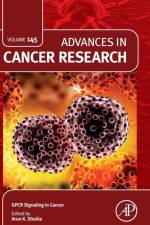
GPCR Signaling in Cancer, Volume 145, the latest release in the Advances in Cancer Research series, highlights recent developments in the area of GPCRs and cancer biology. Chapters included in this volume cover several GPCRs and their downstream effectors as case examples to highlight their fundamental understanding and therapeutic potential. Specific chapters address the Role of GRKs and beta-arrestins in cancer, Atypical GPCRs in cancer, the Role of a chemokine receptor (CCR) 5 in cancer, Targeting G protein-coupled receptors for therapeutics in cancer, Emerging GPCR signaling pathways in cancer, and more. G protein-coupled receptors (GPCRs) constitute a large family of cell surface receptors which are involved in nearly every cellular and physiological event. These receptors can recognize a broad array of ligands and they are targeted by nearly one third of the currently prescribed drugs including anti-cancer therapeutics. Covers the latest concepts in GPCR signaling and their relevancy to cancer biologyPresents new indications for anti-cancer therapeutic programsIncludes sections on cross-talk and signaling networks of GPCRs and effectors in molecular oncology and therapeutics
The Digital Twin Paradigm for Smarter Systems and Environments: The Industry Use Cases, Volume 117, the latest volume in the Advances in Computers series, presents detailed coverage of new advancements in computer hardware, software, theory, design and applications. Chapters vividly illustrate how the emerging discipline of digital twin is strategically contributing to various digital transformation initiatives. Specific chapters cover Demystifying the Digital Twin Paradigm, Digital Twin Technology for "Smarter Manufacturing", The Fog Computing/ Edge Computing to leverage Digital Twin, The industry use cases for the Digital Twin idea, Enabling Digital Twin at the Edge, The Industrial Internet of Things (IIOT), and much more. Provides in-depth descriptions of digital transformation technologies and tools Covers various research accomplishments in this flourishing field of relevance Includes many detailed industry use cases with all the right information
Protein Misfolding, Volume 118, covers the wide spectrum of diseases and disorders that are attributed to protein misfolding, including degenerative and neurodegenerative, cardiovascular, renal, glaucoma, cancer, cystic fibrosis, Gaucher''s disease, and many others. Specific chapters cover Mass spectrometric approaches for profiling protein folding and stability, Biomembranes, a key player in protein misfolding, how Genetic and environmental factors interact to disrupt proteostasis and trigger protein misfolding diseases, Formation of oligomers and large amorphous aggregates by intrinsically disordered proteins, Protein misfolding in ER stress with applications to cardiovascular and renal disease, and much more. Integrates methods for studying protein misfolding, factors that trigger this process and its role in a wide spectrum of diseases and disordersContains timely chapters written by well-renowned authorities in their fieldProvides data that is well supported by a number of high quality illustrations, figures and tables, and targets a very wide audience of specialists, researchers and students
Tumor Immunology and Immunotherapy - Cellular Methods Part B, Volume 632, the latest release in the Methods in Enzymology series, continues the legacy of this premier serial with quality chapters authored by leaders in the field. Topics covered include Quantitation of calreticulin exposure associated with immunogenic cell death, Side-by-side comparisons of flow cytometry and immunohistochemistry for detection of calreticulin exposure in the course of immunogenic cell death, Quantitative determination of phagocytosis by bone marrow-derived dendritic cells via imaging flow cytometry, Cytofluorometric assessment of dendritic cell-mediated uptake of cancer cell apoptotic bodies, Methods to assess DC-dependent priming of T cell responses by dying cells, and more. Contains content written by authorities in the field Provides a comprehensive view on the topics covered Includes a high level of detail
Dynamics and Control of Nuclear Reactors presents the latest knowledge and research in reactor dynamics, control and instrumentation; important factors in ensuring the safe and economic operation of nuclear power plants. This book provides current and future engineers with a single resource containing all relevant information, including detailed treatments on the modeling, simulation, operational features and dynamic characteristics of pressurized light-water reactors, boiling light-water reactors, pressurized heavy-water reactors and molten-salt reactors. It also provides pertinent, but less detailed information on small modular reactors, sodium fast reactors, and gas-cooled reactors. Provides case studies and examples to demonstrate learning through problem solving, including an analysis of accidents at Three Mile Island, Chernobyl and Fukushima DaiichiIncludes MATLAB codes to enable the reader to apply the knowledge gained to their own projects and researchFeatures examples and problems that illustrate the principles of dynamic analysis as well as the mathematical tools necessary to understand and apply the analysis
Describes the chemical and the physical principles behind plant physiological processes Provides key equations for each chapter and solutions for the problems on each topic Includes features that enhances the utility of the book for self-study such as problems after each chapter and the 45-page section "Solution to Problems" at the end ofthe book Includes appendices with conversation factors, constants/coefficients, abbreviations, and symbols New to this edition: The scientific fields and the nationalities of the more than 115 scientists mentioned in the book, providing a nice personal touch While adding over 100 new or updated references, reference of special importance historically are retained, showing how science has advanced over the ages The often challenging problems at the end of each chapter provide an important test of the mastery of the topics covered. Moreover, the solutions to the problems are presented in detail at the end of the book. The book can thus be used in courses but also especially useful for students or other persons studying this often difficult material on their own Finally and most important, the fifth edition continues the emphasis of a quantitative approach begun fifty years ago by Park Nobel (1970) with the publication of his first book in the series. Over the next fifty years from 1970 to 2020, the author has gained considerable experience on how to present quantitative and often abstract material to students. This edition is most likely the final version in the series, which not only covers some of his unique contributions but also has helped countless students and colleagues appreciate the power and insight gained into biology from calculations!
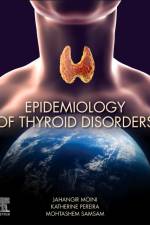
Epidemiology of Thyroid Disorders provides comprehensive, clinical knowledge to professionals dealing with thyroid disorders. The book focuses on the pathophysiology of thyroid disorders, the prevalence and incidence of various diseases, and their prevention. This focused analysis on thyroid disorders raises awareness of this global problem that, once diagnosed or misdiagnosed, can sometimes lead to over-treatment and cardiovascular complications, especially in the elderly. This succinct, targeted reference gives the reader excellent information on the epidemiology of global thyroid disorders, as well as up-to-date treatment data and a special focus on prevention.
Abonner på vårt nyhetsbrev og få rabatter og inspirasjon til din neste leseopplevelse.
Ved å abonnere godtar du vår personvernerklæring.