















Gjør som tusenvis av andre bokelskere
Abonner på vårt nyhetsbrev og få rabatter og inspirasjon til din neste leseopplevelse.
Ved å abonnere godtar du vår personvernerklæring.Du kan når som helst melde deg av våre nyhetsbrev.

Integrative Pancreatic Intervention Therapy: A Holistic Approach summarizes, in a systematic manner, the diagnosis and treatment of late, critical pancreatic diseases. The book gives insights into each interventional technique, with an ultimate goal of improving survival rates for late stage pancreatic cancer patients. Six sections cover basic and transformation research on pancreatic diseases, interventional therapy for benign pancreatic disease, interventional therapy for malignant pancreatic diseases, interventional therapy for pancreative cancer-related lesions, stem cell and targeted molecular therapy for pancreative carcinoma, and combined interventional therapy for pancreative carcinoma. This book will be useful for those looking to understand how best to apply interventional therapy for the improvement of late state pancreatic cancer treatment.
Spectroscopy, Diffraction and Tomography in Art and Heritage Science gives an overview of the main spectroscopy and diffraction techniques currently available for cultural heritage research. It starts with an introductory, general discussion of spectroscopy and diffraction and the kinds of information they can give. Further sections deal with, respectively, typical laboratory methods, mobile equipment, and large-scale instruments and infrastructural methods. The work concludes with comments on combining and comparing multiple techniques, sources of error, and limitations of the analytical methods.
Insect-Borne Diseases in the 21st Century provides a comprehensive look at the most notorious diseases carried by insects. It offers an assessment of current and potential insect-vectored diseases as they relate to human health and agricultural and livestock production. Written by a leading expert in insect-borne diseases, it examines the history of insect-borne diseases, beginning with those that have been well-known to scientists for decades, also including recent outbreaks like Zika. The book takes into consideration environmental conditions and climate change and explores the bionetworks and system biology of potential new superorganisms, offering preventative and protective solutions. This is a must-have resource for entomology researchers and students who seek the most up-to-date information on disease-causing pathogens transmitted by insects. This book will also serve as a resource for ordinary people whose lives may be affected by such diseases.
A Laboratory Guide to the Tight Junction offers broad coverage of the unique methods required to investigate its characteristics. The methods are described in detail, including its biochemical and biophysical principles, step-by-step process, data analysis, troubleshooting, and optimization. The coverage includes various cell, tissue, and animal models. Chapter 1 provides the foundations of cell biology of tight junction. Chapter 2 covers the Biochemical approaches for paracellular channels and is followed by chapter 3 providing the Biophysical approaches. Chapter 4 describes and discusses Histological approaches for tissue fixation and preparation. Chapter 5 discusses Light microscopy, while chapter 6 presents Electron microscopic approaches. Chapter 7 covers Transgenic manipulation in cell cultures, including DNA and siRNA, Mutagenesis, and viral infection. Chapter 8 covers transgenic manipulation in mice, including: Knockout, Knockin, siRNA knockdown, GFP/LacZ reporter, and overexpression. The final chapter discusses the future developments of new approaches for tight junction research. Researchers and advanced students in bioscience working on topics of cell junction, ion channel and membrane protein will benefit from the described methods. Clinicians and pathologists interested in tissue barrier diseases will also benefit from the biochemical and biophysical characterization of tight junctions in organ systems, and their connection to human diseases.
Diagnosis and Management in Parkinson's Disease: The Neuroscience of Parkinson¿s, Volume 1 provides a single source of material covering different scientific domains of neuropathology underlying this condition. The book covers a wide range of subjects and unravels the complex relationships between genetics, molecular biology, pharmaceutical chemistry, neurobiology, imaging, assessments, and treatment regimens. It fills a much-needed gap as a "one-stop" synopsis of everything concerning the neurology and neuroscience related to Parkinson¿s disease, from chemicals and cells to individuals. The book is an invaluable resource for neuroscientists, neurologists, and anyone in the field.
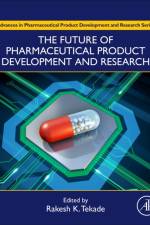
The Future of Pharmaceutical Product Development and Research examines the latest developments in the pharmaceutical sciences, also highlighting key developments, research and future opportunities. Written by experts in the field, this volume in the Advances in Pharmaceutical Product Development and Research series deepens our understanding of the product development phase of drug discovery and drug development. Each chapter covers fundamental principles, advanced methodologies and technologies employed by pharmaceutical scientists, researchers and the pharmaceutical industry. The book focuses on excipients, radiopharmaceuticals, and how manufacturing should be conducted in an environment that follows Good Manufacturing Practice (GMP) guidelines. Researchers and students will find this book to be a comprehensive resource for those working in, and studying, pharmaceuticals, cosmetics, biotechnology, foods and related industries.
Asian Noodle Manufacturing: Ingredients, Technology, and Quality is a comprehensive handbook for the manufacture of noodles that includes traditional styles and gluten free and whole grain varieties. The book is split into three main sections, with the first detailing the ingredients in noodles and information on how ingredient functionality affects their processing. The second section details the actual manufacture and quality assurance in producing noodle products, with the final section detailing advances in varieties of noodles. Particular attention is paid to gluten free and whole grain noodles, both of which are becoming increasingly popular around the world. Written by an expert with over twenty years of experience in the production and quality assurance of noodles, the book is essential reading for those in the food industry who are tasked with the development of new noodle based products.
Abonner på vårt nyhetsbrev og få rabatter og inspirasjon til din neste leseopplevelse.
Ved å abonnere godtar du vår personvernerklæring.