










Gjør som tusenvis av andre bokelskere
Abonner på vårt nyhetsbrev og få rabatter og inspirasjon til din neste leseopplevelse.
Ved å abonnere godtar du vår personvernerklæring.Du kan når som helst melde deg av våre nyhetsbrev.

Intends to evaluate the contribution that the nursing makes in the community. This book explores three themes: the shift from secondary to primary care; establishing needs and priority care; and, the role of evaluation in evidence-based practice. It is suitable for various community nurses.
Offers a developed analysis of the practice of acupuncture and its theoretical bases. This book addresses: What is acupuncture, in all its diverse forms of practice? What are the key concepts, which underpin current practice? Exactly which historical and cultural factors have shaped the present and past development of acupuncture?
A practical textbook which provides occupational therapists working in this area with a theoretical framework for practice. It outlines the work of the occupational therapist in this area of mental health and introduces a variety of theoretical approaches and therapeutic interventions used with child and adolescent mental health clients.
Consisting of 10 chapters, each written by subject experts, this text aims to provide nurses with the fundamental skills and knowledge they require to practise rehabilitation techniques. It brings a nursing focus to the topic of rehabilitation. With informative and instructive style, it is useful for the hands-on practitioner.
A book for those who work with amputees. It addresses various aspects of care and rehabilitation for this group of clients. It also addresses the day to day problems of rehabilitation therapists and their clients in a practical way and considers the provision of care and rehabilitation for amputees.
Provides insights into a range of therapeutic interventions. This book provides theoretical background, addresses legal and ethical issues, and raises questions about the language we use to describe behaviour we find difficult to understand. It is suitable for those working in health and social services, educational, and independent settings.
Provides an introduction to the scientific principles and clinical practice of working in an operating department. This book covers the basic sciences, physics, electronics and clinical practice in anaesthesia, recovery, and surgery. It covers acid-base and electrolyte balance, cardiopulmonary resuscitation, and the management of chronic pain.
Heterocycles are ubiquitously present in nature and occupy a unique place in organic chemistry as they are part of the DNA and haemoglobin that make life possible. The Chemistry of Heterocycles covers an introduction to the topic, followed by a chapter on the nomenclature of all classes of isolated, fused and polycyclic heterocycles. The third chapter delineates the highly strained three membered N,O and S containing aromatic and non-aromatic heterocycles with one and more than one similar and dissimilar heteroatom. The four-membered heterocycles are abundantly present in various natural and synthetic products of pharmacological importance. This chapter describes the natural abundance, synthesis, chemical reactivity, structural features and their medicinal importance. This class of compounds are present as sub-structures in penicillin and cytotoxic Taxol. Lastly, a chapter on the natural abundance, synthesis, chemical reactivity and pharmacological importance of 5-membered heterocycles with N,O,S heteroatom is covered. The chemistry of heterocycles with mixed heteroatom such as, N-S, N-O, N-S etc. is also described.Gives in-depth, clear information about various systems of nomenclature along with widely acceptable IUPAC system for naming various classes of heterocyclesProvides complete information about natural occurrences, synthesis, chemical reactivity, pharmacological importance of heterocycles and their application in material scienceHighly relevant for graduate students and researchers, providing updated information about various isolated and fused N,O and,S containing heterocycles
Validamycin and Its Derivatives: Discovery, Chemical Synthesis and Biological Activity presents, for the first time, a complete review of the underlying chemistry, synthesis, behavior and application of these compounds. Beginning with an introduction to validamycin, the book then outlines the key elements of its discovery and production, including details of its structures, isolation, analysis, and issues relating to its large scale production. Biological activities are then explored in more detail, followed by details of biosynthesis. Further to this, the chemical synthesis of validamycin and its intermediates, including valienamine, validamine, valiolamine, and validoxylamines is reviewed, before preparation of these derivatives and their biological activities are explored. Finally, the book concludes with a discussion of the economic aspects of working with validamycin and its potential in future applications and trends. With its detailed chemical coverage from a team of expert authors, this detailed guide can be applied to the large-scale industrial production of antibiotics and the adaptation of bioactive agents, from agricultural, to novel pharmaceutical applications.Offers complete coverage of validamycin chemistry from a highly experienced team of authors Encourages the discovery of further novel drugs based on validamycin derivativesPresents an interesting model for establishing new pharmaceutical leads from agricultural sourcesIncludes coverage of the total chemical synthesis of validamycin and its intermediates, including valienamine, validamine, valiolamine and validoxylamines
Capital Market Integration in South Asia: Realizing the SAARC Opportunity discusses the potential Capital Market Products/Activities which can create closer inter-linkage of the South Asian capital markets and help local/global investors benefit from this economic opportunity. While some ideas may be implementable now; others have future promise as the regional markets further mature. The book demonstrates both retail and institutional investor interest in this combined high-growth region by offering scope for yield, diversification and risk mitigation, maximized upside from multiple growth markets, minimized downside through low-correlation constituents, and more. The book''s core theme addresses the challenges towards deepening the awareness and acceptability of regional economies. Only when this happens will the asset flows increase into the regional market products, providing scale-up that will aid viability for these products. Presents unconventional ideas for converting SAARC''s unique opportunities into ideas for capital markets Includes socioeconomic issues as a part of the discussionOffers a unique perspective on how the region''s economic opportunities can be translated into actual productsIncludes numerous charts and figures on South Asia''s economic state, its financial opportunities, and projected growth
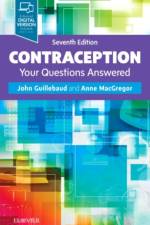
This seventh edition has been completely revised and updated, incorporating relevant WHO and national guidance documents: therefore imparting best evidence-based practice for all methods. Combined oral contraceptives (COCs) Based on the long-established evidence that 7 days of routinely not-taking pills in each cycle is too long for maintained ovarian suppression - and this necessarily leads to too little margin for errors in pill-taking - the authors recommend that providers switch to a new norm for all users of either: Tricycling, the 84/4 regimen, or totally continuous use (365/365), OR, for women who remain keen to see monthly pill-bleeds (which are completely unnecessary for health), one of the regimens (24/4 or 21/4) that shorten the contraception-non-taking time to 4 days New methods, and their importance or otherwise: Intrauterine system: Jaydess® Subcutaneous, self-injectable alternative to Depo-Provera: Sayana® Press 24/4 combined hormonal contraceptives: Zoely®, Eloine® Diaphragm: Caya® Updates Quick starting and bridging (the Proving not Pregnant Protocol) Emergency contraception (EC), how advice differs for ulipristal acetate EC Drug metabolism (implications with norethisterone) and interactions (eg affecting lamotrigine) Question and answer format Important information boxes Unwanted side effects boxes Frequent patient questions at the end of relevant chapters Management advice Follow-up advice Comes with free e-book on  ExpertConsult for the first time This seventh edition has been completely revised and updated, incorporating relevant WHO and national guidance documents: therefore imparting best evidence-based practice for all methods. Combined oral contraceptives (COCs) Based on the long-established evidence that 7 days of routinely not-taking pills in each cycle is too long for maintained ovarian suppression - and this necessarily leads to too little margin for errors in pill-taking - the authors recommend that providers switch to a new norm for all users of either: Tricycling, the 84/4 regimen, or totally continuous use (365/365), OR, for women who remain keen to see monthly pill-bleeds (which are completely unnecessary for health), one of the regimens (24/4 or 21/4) that shorten the contraception-non-taking time to 4 days New methods, and their importance or otherwise: Intrauterine system: Jaydess® Subcutaneous, self-injectable alternative to Depo-Provera: Sayana® Press 24/4 combined hormonal contraceptives: Zoely®, Eloine® Diaphragm: Caya® Updates Quick starting and bridging (the Proving not Pregnant Protocol) Emergency contraception (EC), how advice differs for ulipristal acetate EC Drug metabolism (implications with norethisterone) and interactions (eg affecting lamotrigine) Intermittent quizzes for CPD portfolio purposes Now on ExpertConsult
New edition of the hugely popular Survival Guide to Midwifery, originally created in response to student requests for quality-assured, `dip intö information designed for use in the clinical environment. The latest edition is fully updated throughout and has new authorship from the UK and Australia. Helpful bullet point style allows rapid access to essential information Useful revision guide for examinations and assessments Contains common abbreviations, medications, drug calculations, glossary of common terms, and normal values Thoroughly revised to reflect key developments in current midwifery practice Now includes further reading and useful website addresses
Organizational Learning in Asia: Issues and Challenges addresses important and pressing questions on organizational learning in Asia in both domestic and foreign firms-those that have been forgotten in the mainstream literature or that remain unasked and unanswered. Three sets of questions are especially salient. First, how can firms operating in, or from, Asia detect, respect, recognize, and honor different cultural stances on suggestion-giving, knowledge sharing, and standardization while also challenging accepted wisdom, avoiding risks and mistakes, and voicing disagreement? Second, how can such firms facilitate local experimentation and innovation by providing a common knowledge platform in a non-totalitarian manner? Finally, how can such forums promote ''reverse'' knowledge transfer from subsidiary to headquarters and across subsidiaries in different nations by avoiding ethnocentricity, cultivating local talent, and building a group of ''communities of practice'' across cultural and status boundaries?Addresses important and pressing questions about organizational learning in Asia for both domestic and foreign firmsExplores how such firms can facilitate local experimentation and innovationPromotes ''reverse'' knowledge transfer from subsidiary, to headquarters, and across subsidiaries in different nations
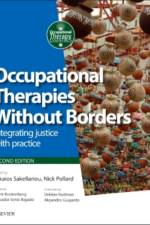
The new edition of this landmark international work builds on the previous two volumes, offering a window onto occupational therapy practice, theory and ideas in different cultures and geographies. It emphasizes the importance of critically deconstructing and engaging with the broader context of occupation, particularly around how occupational injustices are shaped through political, economic and historical factors. Centering on the wider social and political aspects of occupation and occupation-based practices, this textbook aims to inspire occupational therapy students and practitioners to include transformational elements into their practice. It also illustrates how occupational therapists from all over the world can affect positive changes by engaging with political and historical contexts. Divided into six sections, the new edition begins by analyzing the key concepts outlined throughout, along with an overview on the importance and practicalities of monitoring and evaluation in community projects. Section Two explores occupation and justice emphasizing that issues of occupational injustice are present everywhere, in different forms: from clinical settings to community-based rehabilitation. Section Three covers the enactment of different Occupational Therapies with a focus on the multiplicity of occupational therapy from the intimately personal to the broadly political. Section Four engages with the broader context of occupational therapy from the political to the financial. The chapters in this section highlight the recent financial crisis and the impact it has had on people's everyday life. Section Five collects a range of different approaches to working to enable a notion of occupational justice. Featuring chapters from across the globe, Section Six concludes by highlighting the importance and diversity of educational practices. Comprehensively covers occupational therapy theory, methodology and practice examples related to working with underserved and neglected populations Gives a truly global overview with contributions from over 100 international leading experts in the field and across a range of geographical, political and linguistic contexts Demonstrates how occupational injustices are shaped through political, economic and historical factors Advocates participatory approaches which work for those who experience inequalities Includes a complete set of new chapters Explores neoliberalism and financial contexts, and their impact on occupation Examines the concept of disability Discusses theoretical and practical approaches to occupational justice
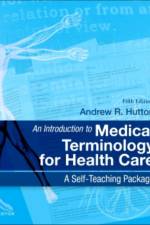
An Introduction to Medical Terminology for Health Care is designed to introduce medical terms to readers who have little or no prior knowledge of the language of medicine. The latest edition of this hugely popular volume retains its effective approach to learning medical terminology by breaking words into their component parts and applying knowledge through exercises and examples from patient care. Throughout the book, information is organised into friendly, accessible, learning modules which are presented in a helpful, template format. Abundant fill-in exercises and helpful diagrams also aid the process of analysing and learning medical terms. In this latest fifth edition, Andy Hutton has brought the book completely up-to-date by with the addition of new exercises and more information on common pathological conditions, medical procedures and laboratory tests. Each unit now includes a comprehensive list of associated words that are often used in combination with specific medical terms in patient records and medical publications. An Introduction to Medical Terminology for Health Care is suitable for medical secretaries and clerical staff - particularly those on AMSPAR courses, foundation level nursing and allied health students, CMA (AAMA) candidates and anyone undertaking the SQA National Progression Award in administration for medical receptionists and secretaries. A self-directed learning package that requires no previous knowledge of medical terminology New design with icons to direct the reader and facilitate the learning process Case Histories help put the words into a 'real life' context Over 120 clear images enable students to associate medical terms with human anatomy and medical equipment Self-assessment modules allow readers to test their knowledge of the meaning of word components and their association with a disease, anatomical feature or medical specialty Simple, non-technical descriptions of pathological conditions, symptoms, laboratory tests, medical instruments and clinical procedures Numerous fill-in word exercises to ensure fast and effective learning Comprehensive abbreviation lists and a glossary A valuable resource for readers taking the City and Guilds (AMSPAR) exams or CMA (AAMA) exams in medical terminology Fresh design and updated artwork program gives added appeal to the volume Each unit contains a list of common associated words often used in conjunction with specific medical terms in patient records and medical publications More information on pathological conditions, laboratory tests and clinical procedures Self-assessment exercises on medical specialties Revised lists of common abbreviations associated with each speciality
Provides a set of data linking the operational quantities defined by ICRU with the dosimetric and protection quantities defined by ICRP. This report presents a basis for designing measurement programmes. It is useful to operational health physicists, medical physicists and those involved in the calibration of instruments and personal dosimetry.
Psychologically Informed Physiotherapy is a key new textbook for those who need a trusted and comprehensive resource to guide them in applying psychosocial perspectives to their physiotherapy practice. The first of its kind, this textbook brings together an international and interdisciplinary team of leading experts in the field. Together they present an evidence-based range of ideas and concepts around the psychologically informed practice framework, bringing psychosocial aspects of physiotherapy to the fore alongside the established biomedical model. By applying these aspects to screening, exploration and triaging, physiotherapists are better able to identify the origins of pain and barriers to rehabilitation; and so are more likely to achieve consistently good clinical outcomes for their patients. Throughout, clinical case studies ensure that the theory is then grounded in a variety of practical scenarios after which some reflective exercises and clinically relevant scenarios reinforce learning and understanding. Chapters on: Psychology of professional identity in health care The biopsychosocial model Screening for red flags Adapting interactions with others to form empowering relationships and influence behavioural change Neuro-immune-endocrine interactions and clinical practice in stress, pain and recovery Care of the anxious patient through cognitive and person-centred strategies Alternative and evolving models of practice, including the clinical flag system The psychology of the athlete from the physiotherapist's perspective Using counselling and psychological strategies within physiotherapy Making evidence-based decisions and measuring effectiveness in practice Using psychological interventions as a student or new graduate First textbook of its kind for physiotherapists Ideal confidence booster for both students and practitioners new to the subject Illustrates the role social factors have on thoughts, emotions and behaviour in patients as well as the neurobiological manifestations of social stressors Presents key, evidence-based concepts from leading international academics, clinicians and researchers in the field and across a range of health professions, including counselling and psychology
What are the must-know aspects to preparing for and performing the most frequently requested diagnostic and therapeutic interventional procedures? Interventional Radiology: A Survival Guide, 4th Edition gives you the information you need to provide safe care in an easy-to-read, concise format. Written by experienced radiologists Drs. H. David Kessel and Iain Robertson, this edition features clear, step-by-step instructions for fundamental skills in this fast-growing field.
Clinical Problem Solving in Orthodontics and Paediatric Dentistry 3e provides a unique step-by-step guide to differential diagnosis and treatment planning. The popular format helps readers combine different dental procedures into a rational plan of treatment for patients who may have several dental problems requiring attention. This hugely successful practical resource in orthodontics and paediatric dentistry will be ideal for undergraduate dental students and post-graduates preparing for the MJDF and similar exams.
Grounded in scientific and clinical evidence, this highly illustrated new guide gives an introduction to the diagnosis and treatment of musculoskeletal disorders using the Fascial Manipulation (FM) method developed by Luigi Stecco - the foremost scientifically valid method of evaluating and treating fascial dysfunction. It describes FM's history, anatomy and physiology of fasciae, indications and contraindications, mechanisms of action, and details of the subjective and physical techniques used to manage disorders. A Practical Guide to Fascial Manipulation focuses on concepts around evaluating the fascia based on functional testing, movement and direction in specific spatial planes, and the location of specific areas to treat safely. With an emphasis throughout on accessible practical information, the book is also supported by a website - www.guidefascial.com - containing procedural video clips and an image bank.
The fourth edition of the Dictionary of Veterinary Nursing is a must-have, highly practical source of information for student and qualified veterinary nurses and for anyone working in animal care. Covering all companion animals, equine, poultry and exotic patients this is the only dictionary written specifically for veterinary nurses that covers all aspects of the veterinary nursing curriculum. This new edition has been thoroughly updated and expanded to ensure all the information you require can be easily accessed.
As the requirements of the semiconductor industry have become more demanding in terms of resolution and speed it has been necessary to push photoresist materials far beyond the capabilities previously envisioned. Currently there is significant worldwide research effort in to so called Next Generation Lithography techniques such as EUV lithography and multibeam electron beam lithography. These developments in both the industrial and the academic lithography arenas have led to the proliferation of numerous novel approaches to resist chemistry and ingenious extensions of traditional photopolymers. Currently most texts in this area focus on either lithography with perhaps one or two chapters on resists, or on traditional resist materials with relatively little consideration of new approaches. This book therefore aims to bring together the worlds foremost resist development scientists from the various community to produce in one place a definitive description of the many approaches to lithography fabrication.Assembles up-to-date information from the world''s premier resist chemists and technique development lithographers on the properties and capabilities of the wide range of resist materials currently under investigationIncludes information on processing and metrology techniquesBrings together multiple approaches to litho pattern recording from academia and industry in one place
In the present report, ICRP provides information on radiation doses to the infant due to intakes of radionuclides in maternal milk. As in Publication 88 on doses to the embryo and fetus following intakes of radionuclides by the mother, intakes by female members of the public and female workers are addressed. This book deals with this report.
In 1997, the International Commission on Radiological Protection (ICRP) initiated a project intended to lead up to the replacement of its 1990 Recommendations (Publication 60) with a view to producing new, consolidated Recommendations 10-15 years after those of 1990. This book deals with this topic.
Myles Pocket Reference for Midwives is a brand new resource that offers readers a ready source of up-to-date information at the fingertips! Well illustrated with over 100 figures, tables and pull-out boxes, this slim pocket guide includes a wealth of information ranging from physical examination to drug calculations, antenatal investigations, screening, infant feeding, medical complications of pregnancy, and birth emergencies. Myles Pocket Reference for Midwives will be ideal for all midwives ¿ whether qualified or in training. Helpful bullet point style enables rapid access to essential information Splash proof cover ensures durability Rich illustrative programme enables rapid access to key information
Abonner på vårt nyhetsbrev og få rabatter og inspirasjon til din neste leseopplevelse.
Ved å abonnere godtar du vår personvernerklæring.