













Gjør som tusenvis av andre bokelskere
Abonner på vårt nyhetsbrev og få rabatter og inspirasjon til din neste leseopplevelse.
Ved å abonnere godtar du vår personvernerklæring.Du kan når som helst melde deg av våre nyhetsbrev.

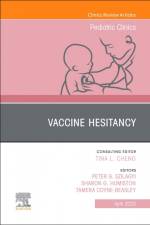
In this issue of Pediatric Clinics of North America, guest editors Drs. Peter G. Szilagyi, Sharon G. Humiston, and Tamera Coyne-Beasley bring their considerable expertise to the topic of Vaccine Hesitancy. A growing problem even before the COVID-19 pandemic, vaccine hesitancy encompasses various factors involving both researchers and practitioners: transparency in research, scientific findings, and governmental programs; effective communication strategies; addressing and understanding cultural, psychosocial, spiritual, political, and cognitive factors; and a willingness to learn the root causes and concerns about vaccine hesitancy. In this issue, top experts address these topics to help you improve vaccine confidence with your patients. Contains 14 practice-oriented topics including COVID-19 vaccine hesitancy, vaccine hesitancy, trust, and culture; social media and vaccine hesitancy; optimizing your pediatric office for vaccine confidence; overcoming vaccine hesitancy using community-based efforts; and more. Provides in-depth clinical reviews on vaccine hesitancy, offering actionable insights for clinical practice. Presents the latest information on this timely, focused topic under the leadership of experienced editors in the field. Authors synthesize and distill the latest research and practice guidelines to create clinically significant, topic-based reviews.
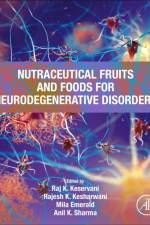
Nutraceutical Fruits and Foods for Neurodegenerative Disorders presents food-based strategies, specifically related to nutraceuticals, in delaying the onset and slowing down of the propensity of neuronal devastation. In addition to highlighting the positive effects of nutraceutical fruits and foods on brain health, the book also explores the medicinal properties of fruits, vegetables, berries and nutraceuticals, along with their contribution to environmental factors, potential hazards and the need for specific regulatory actions. This book will be a welcomed reference for nutrition researchers, dieticians, nutritionists and academicians studying related fields.
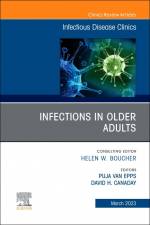
In this issue of Infectious Disease Clinics of North America, guest editors Drs. Puja Van Epps and David H. Canaday bring their considerable expertise to the topic of Infections in Older Adults. Of the top ten leading causes of death in older adults, two (influenza and pneumonia, and septicemia) are directly related to infection, and infections likely play an important role in several of the other leading causes of death, as well. In this issue, top experts provide important updates on treating and managing infections, including COVID-19, in older adults. Contains 12 practice-oriented topics including sexually transmitted infections in older adults; resistant bacterial infections in older adults; anticoagulation and COVID-19 in long-term care; antimicrobial stewardship in older adults; prevention of COVID-19 in older adults; and more. Provides in-depth clinical reviews on infections in older adults, offering actionable insights for clinical practice. Presents the latest information on this timely, focused topic under the leadership of experienced editors in the field. Authors synthesize and distill the latest research and practice guidelines to create clinically significant, topic-based reviews.
In Silico Approach Towards Magnetic Fluid Hyperthermia in Cancer Treatment: Modeling and Simulation presents mathematical modeling and simulation approaches contrary to costly and time consuming in-vivo and in-vitro studies. Finite element method-based models of all hyperthermia processes of liver, brain and breast tumors are simulated on COMSOL Multiphysics software. Problems of constant versus variable heat sources, the backflow problem, the enhanced permeation and retention effect, the flow around Happel's sphere in cells model structure, the deformation effect in poroelastic brain tumor, 3D flow through porous tissue, the reacting nanofluid flows, and optimization of parameters have been simulated for quantitative analysis. This important reference aids in hyperthermia treatment planning in clinical applications and provides an important compendium for practitioners as well as non-medical practicing scientists and engineers and is resource for both research and medical practice in hyperthermia treatment planning in clinical applications.
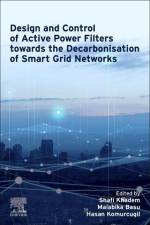
Design and Control of Active Power Filters towards the Decarbonisation of Smart Grid Networks helps readers optimize grid stability and power quality using active power filters in transitioning decarbonized power systems moving from high voltage to low voltage distributed smart networks. The work opens with an extensive foundation in in grid stability and power quality optimization, but then goes on to discuss advanced design, control, integration and placement considerations for APFs for smart grids with high penetration of VRE and EV. Integration topologies and the placement of APFs in these VRE integrated networks are also discussed. Finally, applied solutions on design, control and integration of APFs in microgrid networks are presented before parallel operation and distributed design and control issues are reviewed. Numerous case studies support the work, and a expansive discussion of future trends for APFs in smart grids rounds out the content.
The Teeth of Non-Mammalian Vertebrates: Form, Function, Development and Growth, Second Edition is devoted to the teeth and dentitions of living fishes, amphibians, and reptiles. This book presents a comprehensive survey of the wide variety of tooth forms among non-mammalian vertebrates, based on descriptions of approximately 450 species belonging to about 170 families.This latest edition discusses the functional morphology of feeding, the attachment of teeth, and the relationship of tooth form to function, with each chapter accompanied by a comprehensive, up-to-date reference list. Following the descriptions of the teeth and dentitions in each class, four chapters review current topics with considerable research activity: tooth development; tooth replacement; and the structure, formation, and evolution of the dental hard tissues. The Teeth of Non-Mammalian Vertebrates: Form, Function, Development and Growth, Second Edition is authored by internationally recognized teachers and researchers in the field. This new edition reflects the resurgence of interest in the dentitions of non-mammalian vertebrates as experimental systems to help understand genetic changes in evolution of teeth and jaws.
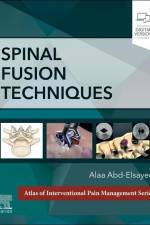
Spinal Fusion Techniques, a volume in the Atlas of Interventional Pain Management series, is a concise, practical guide that provides clinicians with detailed, step-by-step guidance on how to perform the latest interventional techniques for treating patients with chronic pain as a result of spinal stenosis. This comprehensive, easy-to-follow guide offers expert coverage of how to deliver safe, accurate, and cost-effective pain relief to patients using all clinically useful imaging modalities, including ultrasound-guided techniques and fluoroscopy. With high-quality images and clear, authoritative guidance throughout, it shows exactly how to evaluate the causes of pain, identify the most promising stimulation technique, locate the site with precision, and deliver effective relief. Offers a comprehensive overview of the latest techniques used in spinal fusion. Features clinically relevant anatomic drawings and radiologic images that provide step-by-step instruction on techniques. Provides clear guidance on the risks and benefits, as well as indications and contraindications, for each procedure. Covers key topics such as Minimally Invasive Posterior Lumbar Fusion: A Novel Approach to Facet Fusion; Posterior Spinal Fusion; and Interspinous Fusion with Lateral Percutaneous Technique. Includes easy-to-follow, templated content on patient selection, preoperative prep, and post-operative care. Contains full-color line drawings, photographs, and ultrasound images that provide you with a firm grasp of the anatomy and equipment involved with each procedure. Highlights potential pitfalls for each technique and offers clinical pearls on how to avoid them. An eBook version is included with purchase. The eBook allows you to access all of the text, figures and references, with the ability to search, customize your content, make notes and highlights, and have content read aloud.
Details the physiologic, clinical, morphologic, and investigational aspects of the full range of sleep disorders you encounter in everyday practice - and helps you interpret the visual manifestations of your patients' sleep disorders so you can manage them most effectively.
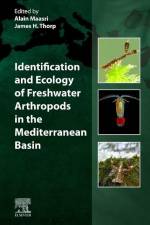
Identification and Ecology of Freshwater Arthropods in the Mediterranean Basin covers the entire Mediterranean basin, including parts of Europe, Asia, Africa and the Mediterranean islands, but excluding other biogeographic locations with Mediterranean climates located outside the region. The book provides an extensive description of the taxonomy and ecology of aquatic arthropods encountered in lentic and lotic habitats, as well as in less studied underground and estuarine habitats. It offers expanded taxonomic identification keys to major groups of arthropods with a description of their ecology and distribution. Keys for insects include aquatic larval stages and water-dwelling adults of Coleoptera and Heteroptera. Additional sections focus on taxa that can be encountered in adjacent brackish and estuary ecosystems as long as the taxon primarily occurs in freshwaters. This is a much-needed, comprehensive resource on the taxonomy and ecology of freshwater arthropods with an introduction to recent molecular tools for identifications. It will be particularly useful for freshwater ecologists, limnologists, environmentalists and students in the ecological sciences.
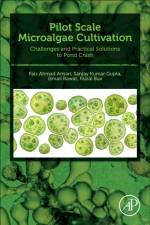
Pilot Scale Microalgae Cultivation: Challenges and Practical Solutions to Pond Crash brings together the latest research on microalgae cultivation for biofuels and proposes methods for tackling the critical issue of sudden pond crash in both pilot and demonstration scale cultivation. Engaging the challenges in both academic research and industrial applications, this book provides routes to identify signs of imminent pond crash, control damage where possible, and prevent future crashes through environmental control and early detection. Chapters outline microalgae cultivation at pilot scale, showing methods for upstream and down-stream processing of microalgae and outlining different applications for microalgae biomass, along with potential challenges.
Pesticides in a Changing Environment: Impact, Assessment, and Remediation covers compounds that repel, kill or to prevent any pest. On the basis of the target killed, pesticides are mainly classified as herbicides, fungicides and insecticides. The increased demand of food on account of population explosion has compelled man to use pesticides for better crop production. However, there are many negative impacts of these chemical agrochemicals like toxicity to non-target organisms and retention in bio-systems in the form of their residues, leading to harmful effects on the food chain and food web.This book will be an important source of information for researchers and academicians working in the field of pesticide pollution, its physiology and biochemistry, and development of pesticide remediation technologies.
Polymers in Electronics: Optoelectronic Properties, Design, Fabrication, and Applications brings together the fundamentals and latest advances in polymeric materials for electronic device applications, supporting researchers, scientists and advanced students, and approaching the topic from a range of disciplines. The book begins by introducing polymeric materials, their dielectric, optical, and thermal properties, and the essential principles and techniques for polymers as applied to electronics. This is followed by detailed coverage of the key steps in the preparation of polymeric materials for opto-electronic devices, including fabrication methods, materials design, rheology, encapsulation, and conductive polymer mechanisms. The final part of the book focuses on the latest developments in advanced devices, covering the areas of photovoltaics, transistors, light-emitting diodes, and stretchable electronics. In addition, it explains mechanisms, design, fabrication techniques, and end applications. This is a highly valuable resource for researchers, advanced students, engineers and R&D professionals from a range of disciplines.
The first publication devoted entirely to management of this potentially devastating syndrome, Empty Nose Syndrome: Evidence Based Proposals for Inferior Turbinate Management takes a comprehensive, state-of-the-art look at ENS, serving as a valuable addition to the literature for physicians, surgeons, and trainees. ENS is a secondary atrophic rhinitis which is most often the result of excessive surgical removal of functioning turbinate tissue. In this timely reference, Drs. Eugene Barton Kern and Oren Friedman solidify the awareness of ENS, inform readers of the current state of knowledge on ENS, and provide detailed coverage of how to prevent or minimize it. Provides comprehensive coverage of the entire problem of ENS, based on scientific research and including an extensive bibliography for further reading. Addresses proper turbinate management during nasal surgery in detail, noting that ENS can be prevented in most instances. Contains chapters on symptoms of ENS, key definitions, diagnosis, treatment options for ENS, and more, along with extensive coverage of every aspect of turbinate management Consolidates today's available information on this timely topic into a single, convenient resource.
Handbook of Power Electronics in Autonomous and Electric Vehicles provides advanced knowledge on autonomous systems, electric propulsion in electric vehicles, radars and sensors for autonomous systems, and relevant aspects of energy storage and battery charging. The work is designed to provide clear technical presentation with a focus on commercial viability. It supports any and all aspects of a project requiring specialist design, analysis, installation, commissioning and maintenance services. With this book in hand, engineers will be able to execute design, analysis and evaluation of assigned projects using sound engineering principles and commercial requirements, policies, and product and program requirements.
Resource Recovery in Drinking Water Treatment concentrates on techniques and methods for water purification. The book develops a new approach-resource recovery-toward drinking water, including the role of methods (adsorption, membrane, ion - exchange, biosorption, coagulation, etc.) and nanocomposites (such as biochar, sludge-based composites, chitosan, polymer, magnetic particles, etc.) in water resource recovery. It provides an in-depth overview on emerging water treatment techniques and the resource recovery of materials during the treatment process. Finally, the book aims to introduce polluted waters as new and sustainable sources rather than seeing wastewaters only a source of hazardous organic and inorganic matters. This book is part of a three-volume set that stresses the importance of contaminated water remediation, including surface waters, municipal or industrial wastewaters, and waters as a new source of nutrients, minerals and energy.
Resource Recovery in Municipal Waste Waters provides various municipal wastewater remediation methods and techniques to recover materials from such wastewaters. Sections cover the basic principles of resource recovery, along with the recovery of methane, phosphorous, electricity and metals. The volume covers comprehensive cutting-edge techniques for resource recovery and municipal wastewater treatment and reports on new findings in these areas. It also introduces polluted waters as new and sustainable sources rather than seeing wastewaters as a source of hazardous organic and inorganic matters. The main advantages and disadvantages of both wastewater/polluted water treatment and recovery are also discussed. This three-volume set stresses the importance of contaminated waters remediation, including surface waters, municipal or industrial wastewaters, treating these waters as a new source of nutrients, minerals and energy.
Lantibiotics as Alternative Therapeutics explores alternative therapeutics, lantibiotics and other novel drugs. This book provides concrete information to readers regarding lantibiotics and various types of antimicrobial peptides with their mode of actions in treating various multidrug resistant organisms. It explains various techniques that are involved in analyzing antimicrobial peptides and their mode of actions. The development of antibiotic resistance has now reached a point of crisis where innovative methods and application of novel compounds and methods are required to prevent the spread of drug resistant infections. Novel compounds exhibit different modes of action to the currently used mechanism of therapeutics in order to combat against the resistant organisms. Lantibiotics hold considerable potential as a consequence of their unusual structure, unique mechanisms of action and their potency against multi-drug resistant bacteria. This book will be useful for pharmaceutical industry scientists and researchers in microbial and biomedical research as well as graduate and advanced students in microbiology, medical biotechnology, health, and pharmaceutical sciences.
Resource Recovery in Industrial Waste Waters provides a holistic approach for discovering and harnessing valuable resources from industrial wastewaters, the cutting-edge technologies required, and a discussion on the new findings. In three volumes, the books stress the importance of contaminated waters' remediation, including surface waters, municipal or industrial wastewaters and treating these waters as a new source of nutrients, minerals and energy. It introduces polluted waters as new and sustainable sources, rather than seeing wastewaters as only a source of hazardous organic and inorganic matters. Sections discuss wastewater treatment and recovery and contribute to generate a sustainable approach of wastewater by providing the main advantages and disadvantages of both wastewater/polluted water treatment and recovery.
Nano- and Nanohybrid Fungicides: Novel Applications in Plant Pathology addresses nanofungicides and the opportunities that nano-agrochemicals can provide. Organized into three parts, this book addresses the synthesis and formulation of nanofungicides and nanohybrid fungicides, as well as their sensing, degradation, and commercialization. Furthermore, the book assesses the potential hazards and safety of nanofungicdes for agroecosytems, in addition to startup, patents, regulatory concerns, and prospects. Plant scientists, plant pathologist, agriculture and food scientists, and professionals and students working in related fields will all benefit from this timely resource.
Fundamentals and Applications of Nonlinear Nanophotonics includes key concepts of nonlinear nanophotonics, computational and modeling techniques to design these materials, and the latest advances. This book addresses the scientific literature on nanophotonics while most existing books focus almost exclusively on the linear aspects of light-matter interaction at the nanoscale. Sections cover nonlinear optics of sub-wavelength photonic nanostructured materials, review nonlinear optics of bound-states in the continuum, nonlinear optics of chiral plasmonic metasurfaces, nonlinear hyperbolic nanomaterials, nonlinear topological photonics, plasmonic lattice solitons, and more. This book is suitable for academics and industry professionals working in the discipline of materials science, engineering and nanotechnology.
Whittle's Gait Analysis - formerly known as Gait Analysis: an introduction - is now in its fifth edition with a new team of authors led by David Levine and Jim Richards. Working closely with Michael Whittle, the team maintains a clear and accessible approach to basic gait analysis. It will assist both students and clinicians in the diagnosis of and treatment plans for patients suffering from medical conditions that affect the way they walk. Highly readable, the book builds upon the basics of anatomy, physiology and biomechanics Describes both normal and pathological gait Covers the range of methods available to perform gait analysis, from the very simple to the very complex. Emphasizes the clinical applications of gait analysis Chapters on gait assessment of neurological diseases and musculoskeletal conditions and prosthetics and orthotics Methods of gait analysis Design features including key points A team of specialist contributors led by two internationally-renowned expert editors 60 illustrations, taking the total number to over 180 Evolve Resources containing video clips and animated skeletons of normal gait supported by MCQs, an image bank, online glossary and sources of further information. Log on to http://evolve.elsevier.com/Whittle/gait to register and start using these resources today!
Trusted by clinicians for more than 75 years, Conn's Current Therapy presents today's evidence-based information along with the personal experience and discernment of expert physicians. The 2023 edition is an excellent resource for a wide range of healthcare professionals, including primary care, subspecialists, and allied health, providing current treatment information in a concise yet in-depth format. Nearly 350 topics have been carefully reviewed and updated to bring you state-of-the-art content in even the most rapidly changing areas of medicine. Offers personal approaches from recognized leaders in the field, covering common complaints, acute diseases, and chronic illnesses along with the most current evidence-based clinical management options. Follows a consistent, easy-to-use format throughout, with diagnosis, therapy, drug protocols, and treatment pearls presented in quick-reference boxes and tables for point-of-care answers to common clinical questions. Includes new chapters on leg edema and venous stasis, multisystem inflammatory syndrome in children (MIS-C), monoclonal antibodies, and genetic testing. Incorporates more electronic links throughout the text that connect the reader to apps and clinical prediction tools that can easily be accessed in practice. Features thoroughly reviewed and updated information from many new authors and two new associate editors, Drs. Joel J. Heidelbaugh and Ernestine M. Lee, who offer a fresh perspective and their unique personal experience and judgment. Provides current drug information thoroughly reviewed by PharmDs. Features nearly 300 images, including algorithms, anatomical illustrations, and photographs, that provide useful information for diagnosis. Enhanced eBook version included with purchase. Your enhanced eBook allows you to access all of the text, figures, and references from the book on a variety of devices.
Abonner på vårt nyhetsbrev og få rabatter og inspirasjon til din neste leseopplevelse.
Ved å abonnere godtar du vår personvernerklæring.