














Gjør som tusenvis av andre bokelskere
Abonner på vårt nyhetsbrev og få rabatter og inspirasjon til din neste leseopplevelse.
Ved å abonnere godtar du vår personvernerklæring.Du kan når som helst melde deg av våre nyhetsbrev.

Approaching high-volume spay and neuter as a separate discipline, this comprehensive reference addresses the unique challenges of this branch of shelter medicine. You will learn how to become faster at performing these procedures in a variety of settings, while still maintaining the safety of the patient. Safety is emphasized throughout with guidance on how to best treat patients with unknown medical histories and financial constraints that restrict the ability to do pre-anesthetic blood work. Special attention is given to considerations about surgical technique, as well as topics such as suture selection and size, suture pattern, patient order, medications, and aftercare. Coverage of mobile veterinary services examines how to provide low-cost spay and neuter to underserved communities with this emerging trend in the industry. Comprehensive coverage examines the "hows" and "whys" of the mechanics of high-volume spay/neuter, as well as how to manage complications that can occur. Written by Victoria Valdez, an experienced veterinarian who has performed more than 40,000 spays and neuters. Information on how to set up both a mobile and a stationary suite offers guidance for providing low-cost spay and neuter services in a variety of settings. Easy-to-read reference manual format ensures each chapter includes all pertinent information on a topic, eliminating the need to cross-reference throughout the book. Enhanced eBook on Expert Consult offers a fully searchable version of the text.
This premier volume of Advances in Small Animal Care, a twice-yearly, multi-specialty publication, publishes the most current thinking and recent advances in small animal veterinary practice from the voice of a truly distinguished editorial board, including Editor-in-Chief Philip H. Kass, and a stellar invited author list. Topics discussed in this first volume are within the areas of behavior, diagnostic imaging, gastroenterology, infectious disease, nutrition, rehabilitation, and urology. This volume will appeal to all practicing veterinarians and will inform and enhance clinical practice.
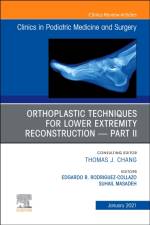
Guest edited by Drs. Edgardo R. Rodriguez-Collazo and Suhail Masadeh, this issue of Clinics in Podiatric Medicine and Surgery is Part II of the Editors' two-part issue on Orthoplastic techniques for lower extremity reconstruction. This issue is one of four selected each year by our series Consulting Editor, Dr. Thomas Chang. Articles in this issue include, but are not limited to: The Role of Bone Marrow Aspirate in Osseous and Soft Tissue Pathology; Reconstructive Pedal Amputation; A Surgical Approach to Location Specific Neuropathic Foot Ulceration; A Novel Technique of External Fixation For Immediate Post-Operative Ambulation And Protection Of Soft Tissue Reconstructions; Classification and Management of stump neuroma; Treatment Protocol for Peripheral Nerve Dysfunction of the Lower Extremity: A Systematic Approach; Targeted Muscle Reinnervation for the Management of Drop Foot; Membrane induced technique for the management of combine soft tissue and osseous defects; Management of Osseous Defects in the Tibia; and Vascularized fibula free and fibular medialization for the management of bone defects.
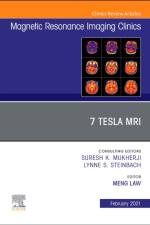
This issue of MRI Clinics of North America focuses on 7T MRI and is edited by Dr. Meng Law. Articles will include: 3T vs 7T MRI: Is It Really Worth It?; High Resolution Structural MRI & Quantitative Susceptibility Mapping; High Resolution Neurovascular Imaging at 7T: Arterial Spin Labeling Perfusion, 4-dimensional MR Angiography and Black blood MRI; 7T and Beyond Functional MRI; Sodium and Other UHF MRI; MR-EYE: Ultra High Field MRI of the Human Eye and Orbit at 7T; 7T MRI of Perivascular Spaces; 7T MRI in ¿Non Lesional" Epilepsy/ Perivascular Spaces; 7T Multiple Sclerosis; 7T Brain Tumors and Radiation Therapy; 7T Musculoskeletal MRI; Body Applications for 7T; MRI Safety at 7T/Implants; 7T Simultaneous MRI PET with PET Insert; GluCest 7T MRI; and more!
This issue of Advances in Molecular Pathology will provide a comprehensive review of the most current practices, trends, and developments in the field of Molecular Pathology. Publishing on an annual basis, the volume will be divided into 7 sections: Genetics, Hematopathology, Infectious Disease, Pharmacogenomics, Informatics, Solid tumors, and Identity/HLA. Led by Dr. Gregory Tsongalis of Dartmouth University, a team of experienced pathologists from institutions across the country oversee annual topic and expert author selection.
This issue of Dermatologic Clinics, guest edited by Drs. Victoria Williams and Carrie Kovarik, will cover a number of important topics in Global Dermatology and Telemedicine. This issue is one of four each year selected by long-time series Consulting Editor, Dr. Bruce Thiers. Topics discussion include, but are not limited to: Patterns of Skin Disease in the Context of a High Prevalence HIV Population in Botswana; Telemedicine and Community Health Projects in Asia; Utilizing Technology for Dermatology Care in Tajikistan: A Health Systems Perspective; Community Outreach Projects to Increase Dermatology Education and Access to Care in Argentina; Challenges and Successes of Dermatology Training Programs in Africa; Developing an Electronic Platform for Global Dermatology Mentorship and Collaboration; Novel Diagnostics for Kaposi Sarcoma and Other Skin Diseases in Resource Poor Settings; Implementing a Locally Made Low-Cost Intervention for Wound and Lymphedema Care in Western Kenya; Challenges of Managing Skin Disease in Migrants and Refugees; Factors Affecting Quality of Life for People Living with Albinism in Botswana; and Integration of Management Strategies for Neglected Tropical Diseases Affecting the Skin
Geometrical Dimensioning and Tolerancing for Design, Manufacturing and Inspection: A Handbook for Geometrical Product Specification Using ISO and ASME Standards, Third Edition presents the state-of-the art in geometrical dimensioning and tolerancing. The book describes the international standardization in this field while also indicating how it differs from the American Standard ASME Y14.5M. The general principles of geometric dimensioning and tolerancing are described, helping users define precision-related specifications unambiguously and consistently with the constraints of the manufacturing and inspection processes. Principles for the inspection of geometrical deviations are given, along with a basis for tolerancing suitable for inspection. Since publication of the second edition of this book in 2006 more than ten ISO GPS standards have been revised, involving the introduction of new symbols and concepts, and in many cases default interpretation of the tolerance indicators have changed, in addition two new versions of American standard ASME Y14.5 (2009 and 2018) have appeared. This book is an ideal introduction to geometrical dimensioning and tolerancing for students, and an essential reference for researchers and practitioners in the fields of design, manufacturing and inspection.
Materials Experience 2: Expanding Territories of Materials and Design is the follow-up companion to Materials Experience published in 2014. Materials experience as a concept has evolved substantially and is now mobilized to incorporate new ways of thinking and designing. Through all-new peer-reviewed chapters and project write-ups, the book presents critical perspectives on new and emerging relationships between designers, materials, and artifacts. Subtitled Expanding Territories of Materials and Design, the book examines in depth the increased prevalence of material-driven design practices, as well as the changing role of materials themselves, toward active and influential agents within and outside design processes. The book is essential reading for anyone involved in materials and design, containing 11 authoritative chapters and 18 illustrated accounts of contemporary research projects and practices.
Geological Structures and Maps: A Practical Guide, Fourth Edition is a highly illustrated guide that introduces the skills of interpreting a geological map and relating it to the morphology of the most important types of geological structures. Photographs of structures are set alongside their representations on maps. The maps used in exercises have been chosen to provide all of the realism of a survey map without the huge amount of data present so that readers can develop skills without becoming overwhelmed or confused. In particular, emphasis is placed throughout on developing the skill of three-dimensional visualization that is important to the geologist. Thoroughly revised, and with more international examples, it is ideal for use by students and practicing geologists.
Early recognition and management of adverse effects of cancer treatments are essential for optimal care of patients with cancer, and drastically different approaches are required for different physiologic reactions. Handbook of Cancer Treatment-Related Symptoms and Toxicities is a focused, one-stop resource that enables clinicians to quickly find up-to-date, reliable information needed at the point of care. The high-yield approach prioritizes the most common toxicities associated with cancer treatment, and concise, templated chapters offer fast access to information needed in day-to-day practice. Presents a user-friendly overview of cancer treatment-related symptoms and toxicities management in a practical, easy-to-use format, allowing you to quickly find information in one convenient, concise resource. Covers systemic and radiation therapies, including chemotherapy, immunotherapy, targeted therapies, and radiation therapy, detailing symptoms of each toxicity to confirm your diagnosis. Overviews pharmacologic and non-pharmacologic approaches to symptom management. Offers recommendations for mitigating toxicities in high-risk patients. Discusses key topics such as management of infusion reactions, when the need for biopsy is warranted, and the unique challenges posed by novel immunotherapies. Enhanced eBook version included with purchase. Your enhanced eBook allows you to access all of the text, figures, and references from the book on a variety of devices.
This issue of Veterinary Clinics: Equine Practice, guest edited by Drs. Edward Earley, Robert Baratt, and Stephen S. Galloway, is focused on Equine Dentistry and Oral Surgery. This is one of three issues each year selected by the series consulting editor, Dr. Thomas Divers. Article topics include: History of Equine Dentistry; Oral Endoscopy; Dental Floating; Standing Sedation and Analgesia; Radiology Interpretation; Imaging: Computed Tomography Interpretation; Oral Extraction Techniques; Alternative Extraction Techniques; Standing Surgical Extraction Techniques; Sinus Surgery; Extraction Complications; and Nasal Endoscopy: Treating Bullae Disease and Sinus Disease.
Comprehensive, yet concise, 3D Printing for the Radiologist presents an overview of three-dimensional printing at the point of care. Focusing on opportunities and challenges in radiology practice, this up-to-date reference covers computer-aided design principles, quality assurance, training, and guidance for integrating 3D printing across radiology subspecialties. Practicing and trainee radiologists, surgeons, researchers, and imaging specialists will find this an indispensable resource for furthering their understanding of the current state and future outlooks for 3D printing in clinical medicine. Covers a wide range of topics, including basic principles of 3D printing, quality assurance, regulatory perspectives, and practical implementation in medical training and practice. Addresses the challenges associated with 3D printing integration in clinical settings, such as reimbursement, regulatory issues, and training. Features concise chapters from a team of multidisciplinary chapter authors, including practicing radiologists, researchers, and engineers. Consolidates today¿s available information on this timely topic into a single, convenient, resource.
Offering a clear and consistent framework for recognition, diagnosis, and treatment of a wide range of cardiac arrhythmia disturbances, Clinical Cardiac Electrophysiology: A Practical Guide covers the fundamental analytical skills needed in this challenging area. This portable, highly accessible handbook focuses on the basics of clinical electrophysiology- how and when to perform an electrophysiology study as well as principles of ablation and other invasive therapies-all in a succinct and modern format. Focuses on using an effective, consistent, decision-making process in recognizing, diagnosing, and treating rhythm disturbances of the heart, including supraventricular tachycardias, atrial fibrillation, ventricular tachycardias, and other rapid or irregular heartbeats. Covers anatomic fundamentals of cardiac structures, clinical indications for electrophysiology studies, practicalities and methodology of performing an electrophysiology study, and problems encountered during the procedure. Includes quick clinical summaries and more than 180 illustrations: electrophysiology recordings, ECGs, cardiac anatomy, radiographic images, and electroanatomic maps. Discusses key topics such as mechanisms of arrhythmias, conventional and electroanatomic mapping systems, fundamentals of cardiac mapping, biophysics of catheter ablation, and much more. Offers real-world guidance on contemporary practice from leading cardiac electrophysiologists Drs. Demosthenes G Katritsis and Fred Morady, with input from a multinational team of electrophysiology fellows and cardiologists. Ideal as a stand-alone resource or used in conjunction with Dr. Douglas Zipes' renowned textbook, Cardiac Electrophysiology: From Cell to Bedside. Enhanced eBook version included with purchase. Your enhanced eBook allows you to access all of the text, figures, and references from the book on a variety of devices.
With the increased prevalence of subfertility (any form of reduced fertility with prolonged time of unwanted non-conception) and the number of subfertile patients turning to assisted reproductive clinics for help, Subfertility: Recent Advances for Management and Prevention is a much-needed resource for today¿s health care providers. Written by doctors with extensive expertise in the areas of reproductive physiology and endocrinology, it provides a description of the methods for achieving conception, an overview of the causes of subfertility and how to detect them, a review of the psychological impact of subfertility, guidelines for the treatment of subfertility, and a look at assisted reproductive technologies. Provides a holistic approach to the causes and treatment of subfertility, with guidance on selecting patients on the basis of ovarian reserve/sperm parameters and the management of special endocrine abnormalities like polycystic ovarian syndrome, endometriosis, and thyroid disorders. Offers a concise review of the most recent advances for improving assisted reproductive techniques. Covers reproductive physiology and the causes of subfertility, with special focus on endocrine abnormalities that lead to subfertility. Consolidates today¿s available information on this timely topic into a single, convenient resource.
Pathology Case Reports: Beyond the Pearls is a case-based reference that covers the key material essential for USMLE and exam preparation. Focusing on the practical information you need to know, it teaches how to analyze a clinical vignette, sharpening your clinical decision-making skills and helping you formulate an evidence-based approach to realistic patient scenarios
Access card had the code to access the corresponding audio files available for download.
Abonner på vårt nyhetsbrev og få rabatter og inspirasjon til din neste leseopplevelse.
Ved å abonnere godtar du vår personvernerklæring.