








Gjør som tusenvis av andre bokelskere
Abonner på vårt nyhetsbrev og få rabatter og inspirasjon til din neste leseopplevelse.
Ved å abonnere godtar du vår personvernerklæring.Du kan når som helst melde deg av våre nyhetsbrev.

With a new reading of Thomas Reid on primary and secondary qualities, Christopher A. Shrock illuminates the Common Sense theory of perception. Shrock follow's Reid's lead in defending common sense philosophy against the problem of secondary qualities, which claims that our perceptions are only experiences in our brains, not of the world.
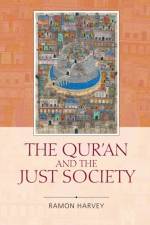
Utilising a pioneering theological and hermeneutic framework adapted from both classical Muslim literature and contemporary academic studies of the Qur'an, Ramon Harvey explores the underlying principles of its system of social justice.
The American Short Story Cycle' spans two centuries to tell the history of a genre that includes both major and marginal authors, from Washington Irving through William Faulkner to Jhumpa Lahiri.
Using archival research and interviews with politicians, Andrew W. Neal investigates security politics from the 1980s to the present day to show how its meaning and practice have changed over time. He develops an original reassessment of the security/politics relationship that directly challenges current debates in critical security studies.
This book investigates work of the NGO Tostan as a working model of human development. The study is grounded in the ethnographic study of the actual change that happened in one West African village.
Stephen Zepke shows how the idea of sublime art waxes and wanes in the work of Jean-Francois Lyotard, Gilles Deleuze and Felix Guattari, Jacques Derrida, Jacques Ranciere and the recent Speculative Realism movement.
Rosalyn Diprose and Ewa Ziarek show us that biopolitics along with sexism, racism and political theology seeks to control to women's reproductive agency. They reconfigure Arendt's philosophy of natality (birth rate)in terms of biopolitical theory and feminism to defend women's reproductive choices and democratic pluralism.
This book shows that addressing crowded halls from Ayr to Aberdeen, Frederick Douglass gained the confidence, mastered the skills and fashioned the distinctive voice that transformed him as a campaigner.
Abonner på vårt nyhetsbrev og få rabatter og inspirasjon til din neste leseopplevelse.
Ved å abonnere godtar du vår personvernerklæring.