
Gjør som tusenvis av andre bokelskere
Abonner på vårt nyhetsbrev og få rabatter og inspirasjon til din neste leseopplevelse.
Ved å abonnere godtar du vår personvernerklæring.Du kan når som helst melde deg av våre nyhetsbrev.

Alexandre Matheron has worked and written substantially on Spinoza since the publication of his influential 1969 masterpiece 'Individu et communaute chez Spinoza' (Editions de Minuit) and he is considered one of the most important interpreters of Spinoza's philosophy in the 20th century. The 20 essays gathered here focus on the themes of ontology, knowledge, politics and ethics in Spinoza, his predecessors and his contemporaries. This is a crucial collection for anyone seeking to understand 20th-century continental Spinozism.
Considers the nature and status of contemporary cinema by way of a series of technological reflections on its pastArgues for a progressive historiography that looks forward, moving beyond the sense of anxiety and loss that has dominated accounts of cinema's postulated demiseDraws on the latest thinking on evolving screen technologies and media archaeology and the development of cognate areas such as memory studiesCharts the historical memory of cinema, with a view to considering how our engagement with, and understanding of, this history might be reconfigured in the present.Channelling a focus on the history of cinema into the present and beyond, Persistent Images: Encountering Film History in Contemporary Cinema explores the continuing resonance of the memory of cinema as revealed in the technological and aesthetic expressions of a range of experimental practices. With case studies of films that reflexively foreground and creatively reimagine the past, including Shirin (2008), Goodbye to Language (2014) and Francofonia (2015), the book demonstrates how the medium of film can look simultaneously backwards and forwards, encountering and reframing the past in the present, and offering new ways of thinking about both film history and contemporary cinema alike.
Explores a Byzantine emperor's construction of authority with the help of his rhetorical texts Examines the changes in the Byzantine imperial idea by the end of the fourteenth century with a particular focus on the instrumentalization of the intellectual dimension of the imperial ruleIntegrates late Byzantine imperial visions into the bigger picture of Byzantine imperial ideology Provides a fresh understanding of key pieces of Byzantine public rhetoric and introduces analytical concepts from rhetorical, literary, and discursive theoriesOffers translations of key passages from late Byzantine rhetoricManuel II Palaiologos was not only a Byzantine emperor but also a remarkably prolific rhetorician and theologian. His oeuvre included letters, treatises, dialogues, short poems and orations. Florin Leonte deals with several of his texts shaped by a didactic intention to educate the emperor's son and successor, John VIII Palaiologos. He argues that the emperor constructed a rhetorical persona which he used in an attempt to compete with other contemporary power-brokers. While Manuel Palaiologos adhered to many rhetorical conventions of his day, he also reasserted the civic role of rhetoric. With a special focus on the first two decades of Manuel II Palaiologos' rule, 1391-1417, Leonte offers a new understanding of the imperial ethos in Byzantium by combining rhetorical analysis with investigation of social and political phenomena.
This book tells the story of Armenian migration to North America in the late Ottoman period, and Istanbul's efforts to prevent it. It shows how, just as in the present, migrants in the late 19th and early 20th centuries were forced to travel through clandestine smuggling networks, frustrating the enforcement of the ban on migration. Further, migrants who attempted to return home from sojourns in North America risked debarment at the border and deportation, while the return of migrants who had naturalized as US citizens generated friction between the United States and Ottoman governments. The author sheds light on the relationship between the imperial state and its Armenian populations in the decades leading up to the Armenian genocide. He also places the Ottoman Empire squarely in the middle of global debates on migration, border control and restriction in this period, adding to our understanding of the global historical origins of contemporary immigration politics and other issues of relevance today in the Middle East region, such borders and frontiers, migrants and refugees, and ethno-religious minorities.
Integrating forgotten tales of literary communities across Iran, Afghanistan and South Asia - at a time when Islamic empires were fracturing and new state formations were emerging - this book offers a more global understanding of Persian literary culture in the 18th and 19th centuries. It challenges the manner in which Iranian nationalism has infilitrated Persian literary history writing and recovers the multi-regional breadth and vibrancy of a global lingua franca connecting peoples and places across Islamic Eurasia. Focusing on 3 case studies (18th-century Isfahan, a small court in South India and the literary climate of the Anglo-Afghan war), it reveals the literary and cultural ties that bound this world together as well as some of the trends that broke it apart.
Uncovers the link between Ruskin and the tradition of the aesthetics of spaceDiscusses a hitherto under-researched tradition of city-writing, linking Ruskin to modernismReads comparatively five important mid to late nineteenth-century writersMarries close textual analysis with historically and geographically informed contextFills a gap in the critical literature on city-writing between realism and early modernismCharting an 'aesthetic', post-realist tradition of writing, this book considers the significant role played by John Ruskin's art criticism in later writing which dealt with the new kinds of spaces encountered in the nineteenth-century. With chapters devoted to the ways in which aesthetic and decadent writers such as Walter Pater and Oscar Wilde built upon and challenged Ruskin's ideas, the book links the late Dickens to the early modernism of Henry James. The Aesthetics of Space in Nineteenth-Century British Literature gives a vibrant vision of what an aesthetically sensitive treatment of these spaces looked like during the period.
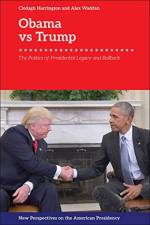
Examines how Trump's election as President signals a rollback of the Obama yearsEstablishes what can be regarded as Obama's legacy, in both domestic and foreign policy Investigates how far the Trump administration (up to the 2018 mid-terms) undoes Obama's legacy legacyFocuses on meaningful shifts in presidential priorities, policy changes, and the imprint of presidential leadershipCase studies on specific policy areas where presidential 'undoing' has had a significant impact or has been thwarted, such as health care reform and immigration policyIn 2008, in what seemed a seminal moment for the country's politics, the United States elected an African American as President. Yet, eight years later, in the form of Donald Trump, the nation put in office a man who was the very antithesis of his predecessor. This book determines what can legitimately be regarded as the legacy of the Obama presidency and investigates how far the Trump administration has reversed it. The analysis is embedded in a historical context, based on examination and scrutiny of how, and how successfully, presidents in the modern era have overturned the work of their predecessor when they have attempted to do so. The authors focus on meaningful priority shifts, policy changes and the imprint of presidential leadership, providing a framework for assessing Obama's legacy, which in turn affords context to a discussion of the Trump administration's capacity to fulfil its promise to reverse the direction taken by the Obama White House. Looking beyond the noise and hyperbole, the book examines how robust the Obama legacy has proved to be in the face of Trump's challenge.
Situated within the interrelated disciplines of sociolinguistics and sociology of language, this book explores the language use and attitudinal perceptions of a sample of 130 adults who received Gaelic-medium education (GME) at primary school, during the first years of that system's availability in Scotland. As the first students to have attended GME are now in their late 20s and 30s, this volume offers a timely examination of the long-term outcomes of the system in its earliest years, and of the future prospects for Gaelic language maintenance and revitalisation in Scotland.The book presents in-depth discussion and analysis of narratives in order to demonstrate former Gaelic-medium students' present-day relationships to the languages they speak, offering fascinating insights into the possible reasons - historical, ideological and personal - for these relationships. This book presents the first open assessment of the outcomes of Gaelic-medium education in Scotland, and offers suggestions for individuals and policymakers seeking to revitalise languages internationally.
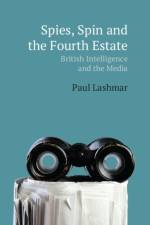
Combining his expertise as a national security correspondent and research academic, Paul Lashmar reveals how and why the media became more critical in its reporting of the Secret State. He explores a series of major case studies including Snowden, WikiLeaks, Spycatcher, rendition and torture, and MI5's vetting of the BBC - most of which he reported on as they happened. He discusses the issues that news coverage raises for democracy and gives you a deeper understanding of how intelligence and the media function, interact and fit into structures of power and knowledge.
Combining recent insights from animal studies, critical plant studies and the new materialisms, Danielle Sands reads fiction and philosophy alongside each other to propose a method of thinking of and with animals that draws on a bestiary of affects. She challenges the claim that empathy should be primary mode of engagement with nonhuman life. Instead, she looks at the stories that we tell, and are told, by insects - beings at the edges of animal life. The indifference, even disgust, that these creatures evoke in us forms the basis for a new ethics not limited by empathy. Along the way she encounters fiction writers Yann Martel, Karen Joy Fowler, Han Kang and Jim Crace beside the philosophy of Graham Harman, Donna Haraway, Jacques Derrida and Roger Caillois.
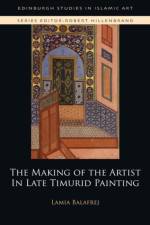
In the absence of a tradition of self-portraiture, how could artists signal their presence within a painting? Centred on late Timurid manuscript painting (ca. 1470-1500), this book reveals that pictures could function as the painter's delegate, charged with the task of centring and defining artistic work, even as they did not represent the artist's likeness. Influenced by the culture of the majlis, an institutional gathering devoted to intricate literary performances and debates, late Timurid painters used a number of strategies to shift manuscript painting from an illustrative device to a self-reflective object, designed to highlight the artist's imagination and manual dexterity. These strategies include visual abundance, linear precision, the incorporation of inscriptions addressing aspects of the painting and the artist's signature. Focusing on one of the most iconic manuscripts of the Persianate tradition, the Cairo Bustan made in late Timurid Herat and bearing the signatures of the painter Bihzad, this book explores Persian manuscript painting as a medium for artistic performance and self-representation, a process by which artistic authority was shaped and discussed.
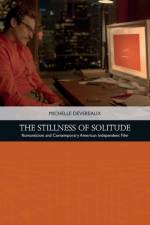
In the first book-length study of Romanticism in relation to American film, Michelle Devereaux takes established theories of contemporary American independent cinema as a point of entry, exploring the underlying philosophical and aesthetic Romantic connections between a selection of seven films from four popular filmmakers: Wes Anderson, Sofia Coppola, Spike Jonze and Charlie Kaufman. Primarily dealing with questions of identity, imagination and the relation between self and world, these films also emphasise the anxieties of our own time: the nostalgia for an imaginary past, and the fear of an uncertain future.
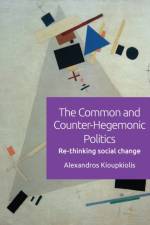
Alexandros Kioupkiolis re-conceptualises the common in tandem with the political. By engaging with key thinkers of community and the commons, including Nancy, Ostrom, Hardt and Negri, he harnesses the political thrust of a radical democratic politics of solidarity, equality and collective self-organisation. He calls into play poststructuralist conceptions of agonism and hegemony, put forward by thinkers such as Mouffe and Laclau, to remedy the failure of existing theories of the commons to address power relations and division.
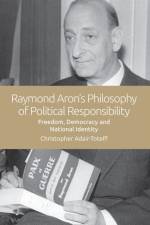
Raymond Aron made major investigations into the dialectic between war and peace, and also developed a sophisticated theory of international relations. Despite this, his body of work has been overlooked compared to that of his more famous contemporaries. This book shines a light on both the man and his work on ideological critique, the philosophy of history, international relations and political economy. The book also discusses Aron's political legacy and argues that a number of his critiques and theories can help us address many of the problems and conflicts of the 21st century.
Explores the role of the mind in creating erotic experience on the early modern stageAdvances a new critical methodology that credits the role of cognition in the experience of erotic desire, and pleasure itselfExplores the philosophical underpinnings of erotic metaphors, drawing from ancient, early modern, and contemporary thinkers such as Aristotle, Giordano Bruno, Gaston Bachelard, Emmanuel Levinas, Kenneth Burke, George Lakoff, and Mark TurnerIlluminates the dramatic vitality of philosophical and contemplative erotic speechProvides the first full-length study that pairs John Lyly's and William Shakespeare's drama, uncovering new forms of intimacy in their playsTo 'conceive' desire is to acknowledge the generative potential of the erotic imagination, its capacity to impart form and make meaning out of the most elusive experiences. Drawing from cognitive theories about the metaphorical nature of thought, Gillian Knoll traces the contours of three conceptual metaphors - motion, space and creativity - that shape desire in plays by John Lyly and William Shakespeare. Metaphors, she argues, do more than narrate or express eros; they constitute erotic experience for Lyly's and Shakespeare's characters.
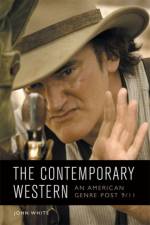
The September 11th attacks in 2001 and the subsequent 'War on Terror' have had a profound effect on American cinema, and the contemporary Western is no exception. In this book, John White explores how films such as Open Range, True Grit and Jane Got a Gun reinforce a conservative myth of America exceptionalism; endorsing the use of extreme force in dealing with enemies and highlighting the importance of defending the homeland. Placing their characters within a dark world of confusion and horror, these films reflect the United States' post-9/11 uncertainties, and the conflict between civilised values and the brutality employed to defend them.
Multiculturalism has recently been declared dead; at the same time, the value of diversity is still emphasised. How can we explain this? In this book, Alexej Ulbricht sets out to completely reassess liberal theories of multiculturalism, and argues that the 'backlash' is actually the strengthening of tendencies already present in liberal multiculturalism. Using the theories of Roberto Esposito, he argues that liberal multiculturalism is best understood as a series of immunitary processes. He examines three of these processes - using the work of Kymlicka, Parekh and Taylor - and looks to what cultural coexistence beyond immunity might be like.
Maghrebi literature published in the first half of the twentieth century is a subject that seldom receives focused scholarly treatment. This is partly due to limited availability of the books, some of which were printed in as few as fifty copies. Zahia Smail Salhi tracked down these rare works and put them in the spotlight for the first time here. Through close textual analysis and in-depth engagement with religious and socio-political contexts, Smail Salhi determines whether these texts belong to a collective formation we may call 'Occidentalism'. In so doing, this book reintegrates the pre-1945 Maghrebi novels into the history and study of modern Arabic literature.
Thomas Reid might not have published much on politics, but his manuscripts reveal that he was deeply concerned with social, political and economic issues throughout his career. Published here for the first time, Reid's Glasgow lecture notes and his papers to learned societies in Aberdeen and Glasgow show that he was an acute commentator on contemporary politics and that his theoretical ideas framed solutions to some of the practical political and economic problems of his day.
This book sets out the importance of charity in Scottish Reformation studies. Based on extensive archival research involving more than thirty parishes, it sheds new light on the practice of poor relief in the century following the Reformation.
Drawing on case studies of films including Charlie Kaufman's Synecdoche, New York, Nuri Bilge Ceylan's Climates and John Akomfrah's The Nine Muses, this books asks to what extent is politics shaping art cinema? And, in turn, could art cinema possibly affect the political structure of the world as we know it?
This book focuses on Stanley Cavell's account of what makes Hollywood movies so magical, which proposes the remarkable thesis that most truly great Hollywood films reflect the struggle to become who we are that is foregrounded in the characteristically American theory of Emersonian perfectionism.
This book focuses on how the 'Reform Era' has been constructed in the work of the director Jia Zhangke, analysing the archetypal class figures of worker, peasant, soldier, intellectual and entrepreneur that are found in his films.
In 'Time, Existential Presence and the Cinematic Image', Sam B. Girgus relates Laura Mulvey's theory of delayed cinema to ideas on time and the relationship to the other in the writings of Jean-Luc Nancy, Emmanuel Levinas and Julia Kristeva, among others.
Dickens and Demolition' examines how tropes, characters, or extracts from Dickens' fiction were repurposed as a portable terminology in arguments for large-scale demolition and redevelopment projects in London during his lifetime.
Abonner på vårt nyhetsbrev og få rabatter og inspirasjon til din neste leseopplevelse.
Ved å abonnere godtar du vår personvernerklæring.