
Gjør som tusenvis av andre bokelskere
Abonner på vårt nyhetsbrev og få rabatter og inspirasjon til din neste leseopplevelse.
Ved å abonnere godtar du vår personvernerklæring.Du kan når som helst melde deg av våre nyhetsbrev.

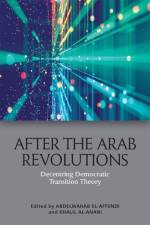
Incorporates the lessons learned from the 2011 Arab revolutions into democratic transition theory.
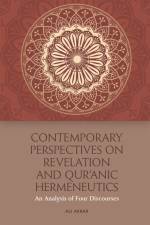
Ali Akbar examines the works of four noted scholars of Islam: Fazlur Rahman (Pakistan), Abdolkarim Soroush (Iran), Muhammad Mujtahed Shabestari (Iran) and Nasr Hamid Abu Zayd (Egypt).
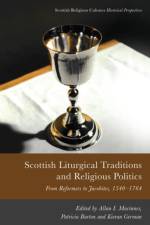
Exploring the religious cultures, beliefs and imperatives that shaped the Jacobite movement in ScotlandThe Revolution of 1688-90 was accompanied in Scotland by a Church Settlement which dismantled the Episcopalian governance of the church. Clergy were ousted and liturgical traditions were replaced by the new Presbyterian order. As Episcopalians, non-jurors and Catholics were side-lined under the new regime, they drew on their different confessional and liturgical inheritances, pre- and post-Reformation, to respond to ecclesiastical change and inform their support of the movement to restore the Stuarts. In so doing, they had a profound effect on the ways in which worship was conducted and considered in Britain and beyond.This book provides a fresh examination of the Jacobite movement based not on dynastic identification but on confessional and intellectual bases of support, focussing on the composite and nuanced traditions that sustained the Jacobite movement for seven decades beyond the Revolution of 1688-90.Allan I. Macinnes is Emeritus Professor of History, University of Strathclyde. Patricia Barton is Subject Leader in History, School of Humanities, University of Strathclyde. Kieran German is a Teaching Fellow at the University of Dundee.
Imagined States examines representations of the law in British and Nigerian high-brow, middle-brow and popular fiction and journalism. It reads works by Chinua Achebe, Joyce Cary, Cyprian Ekwensi and Edgar Wallace, together with a range of Nigerian market literature and journalism.
Russia increasingly emphasises the importance of 'soft power' for securing its foreign policy interests, but recent research has paid more attention to Russia's intentions rather than to the receiving end of its cultural and public diplomacy. This volume seeks to address this gap and explore the specifics of both Russian language promotion and its acceptance in a number of case and country studies, including Ukraine, Germany and Ireland. A range of scholars discuss the legal status and the practical use of Russian for communication or media use, both in the 'near' and the 'far abroad', examining the politics of the Russian language, the role of the Russian Federation in influencing these politics and the challenges that the promotion of Russian faces in particular contexts across the globe. Christian Noack is associate professor with the chair group of East European Studies at the University of Amsterdam, where he also served as director of the Amsterdam School for Regional, Transnational and European Studies between 2015 and 2019. Cover image: from the project Artconstitution, 2003, Alexander Sigutin, used with the permission of the artist and S.ART (Petr Vois gallery) Cover design: Michael Chatfield [EUP logo] edinburghuniversitypress.com ISBN 978-1-4744-6379-9 Barcode
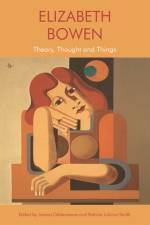
Explores Elizabeth Bowen's significant contribution to twentieth-century literary theory From experiments in language and identity to innovations in the novel, the short story and life narratives, the contributors discuss the ways in which Bowen's work straddles, informs and defies the existing definitions of modernist and postmodernist literature which dominate twentieth-century writing. The eleven chapters present new scholarship on Bowen's inventiveness and unique writing style and its attachment to objects, covering topics such as queer adolescents, housekeeping, female fetishism, habit and new technologies such as the telephone. Jessica Gildersleeve is Associate Professor of English Literature at the University of Southern Queensland. Patricia Juliana Smith is Associate Professor of English at Hofstra University in New York.
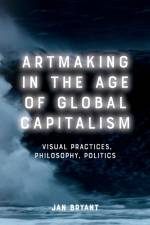
Jan Bryant looks at the strategies visual artists and filmmakers are using to criticise the social and economic conditions shaping our historical moment. She then assesses how the world is being positively re-imagined through their work today. Located at the intersection of practice and theory, Bryant argues that an effective contemporary political aesthetics encompasses more than just analysis of a work's conceptual or aesthetic reality. It should also consider the impact the artwork has at the point of reception, the methods adopted by the artists and the relationships they engender with communities.
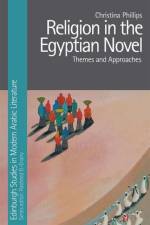
This is an in-depth, original survey of religion in the modern Arabic novel. Tracing the relationship from the genesis of the form in the early twentieth century to present, Phillips provides a thematic exploration of the push and pull between religion and secularism as it played out on the pages of the Egyptian novel.
These three books reflect the beginnings of one of the most radical and exhilarating figures in modern literature Incandescent Limbo recounts White's years in Paris. Many a writer in the modern era had made Paris a focal point of his or her activity, but probably no one made more of it or got more out of it than Kenneth White. While exploring a labyrinthine underworld, the book is fundamentally an autoanalysis and traces the birth of the writer as an intellectual nomad. Letters from Gourgounel takes us from the city to a wild part of south-eastern France, the Ardèche, where White undertakes a resourcing in an elementary context. Hailed in England as a 'fascinating curiosity of literature', this book not only made White famous overnight in France, it was seen there as a turning point in the contemporary situation. In the third book, Travels in the Drifting Dawn, the intellectual nomad begins his moves across territories and cultures. After passing through the London underground of the sixties, then delving into the ground of his native Scotland and neighbouring Ireland, we shift back to the Continent, accumulating experience on different levels in France, Spain, Belgium, Holland, before concluding the cycle in North Africa. The trilogy is not only a summary of White's itinerary in its initial stages, it opens up a whole intellectual and cultural programme. Kenneth White is not only a convinced European Scot, but he renews the tradition of the medieval Scotus vagans ('wandering Scot'), an existence devoted to travelling and learning, finding and founding. After much moving about, he taught (1983-96) from a specially created Chair of Twentieth-Century Poetics at the Sorbonne. In 1989, he founded the International Institute of Geopoetics, the aim of which is to explore in depth the human and non-human habitation of the earth and the basis of live culture. On the Continent, his work, whether in essay, narrative or poem, has been awarded many prizes, among them the Prix Medicis Etranger and the French Academy's Grand Prix du Rayonnement.
Three collections of essays whose aim is to express the cartography and the experience of a live, open world If Kenneth White was keenly interested in early twentieth-century attempts to rescue his home territory, Scotland, from a heavy heritage of historicism, doldrums, flat realism (and its cousin, fantasticality), right from the start he was out for something more radically grounded, more intellectually incisive and culturally more coherent. The three books gathered here illustrate his initial movement on these lines in all its aspects, from politics to poetics. On Scottish Ground reveals the terrain to be explored, from geology and archaeology up, resituating figures such as David Hume, Patrick Geddes, Hugh MacDiarmid, as well as revisiting the works of scotic thinkers such as Duns Scotus and John Scot Erigena. Ideas of Order at Cape Wrath takes the exploration further. The word "wrath" here, taken by many to mean "anger", in fact goes back to the old Norse word signifying "turning point". White's turning point is not only geographical, it is fundamental. The third book, The Wanderer and his Charts, lays out the co-ordinates of the new space White has opened up. He may have left Scotland, but he has taken with him a lot of what we might call a quintessential Scotland, just as Joyce took with him an essential Ireland. Kenneth White is not only a convinced European Scot, but he renews the tradition of the medieval Scotus vagans ('wandering Scot'), an existence devoted to travelling and learning, finding and founding. After much moving about, he taught (1983-96) from a specially created Chair of Twentieth-Century Poetics at the Sorbonne. In 1989, he founded the International Institute of Geopoetics, the aim of which is to explore in depth the human and non-human habitation of the earth and the basis of live culture. On the Continent, his work, whether in essay, narrative or poem, has been awarded many prizes, among them the Prix Medicis Etranger and the French Academy's Grand Prix du Rayonnement.
Bullets to Ballots explores the different trajectories that the deradicalisation process can take - whether it occurs after a military victory, a military defeat, or a draw in an armed conflict between insurgent groups and incumbent authorities.
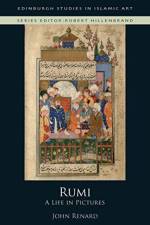
Studies the illustrated 16th-century Ottoman manuscripts of a major hagiography of Rumi and his spiritual descendants Picturing the life story of Jalal ad-Din Rumi, an outstanding poet, mystic and founder of the Sufi Mawlawi order (later popularly known as 'The Whirling Dervishes'), the paintings in three extant manuscripts of Aflaki's Wondrous Feats of the Knowers of God provide a unique way to interpret the text. Part One's three chapters, under the heading 'History and Context', provide the medieval Anatolian historical setting; the broad contours of literary and artistic works of Islamic hagiography; and the specific details of the three manuscripts to be explored. Part Two - 'Text and Image' - proposes a method for interpreting a hybrid literary-visual document as a grand narrative of the family Rumi at the inspirational and ethical core of a virtuous community flourishing within a complex Muslim society under divine providence. The paintings in the three manuscripts were produced by studios of painters under the patronage of major late 16th-century Ottoman sultans. The result of their efforts is a kind of 'visualised hagiography' uniquely capable of suggesting distinctive and often surprising twists on the narratives, enhancing the text with images of striking beauty and rich detail. Key Features - Presents a visualised hagiography in three 16th-century Ottoman manuscripts - Includes colour images of all the paintings from the three manuscripts, accompanied by a summary of the text illustrated in each picture - Focuses on the specific relationships between literary narrative and its visual representation in late medieval Islamic art - Provides Anatolian and Ottoman historical background as context for the life story of Rumi and the Mawlawi Sufi order John Renard is Professor of Theological Studies at Saint Louis University. He has written many books including Crossing Confessional Boundaries: Exemplary Lives in Jewish, Christian, and Islamic Traditions (2020), Friends of God: Islamic Images of Piety, Commitment and Servanthood (2008) and All the King's Falcons: Rumi on Prophets and Revelation (1994).
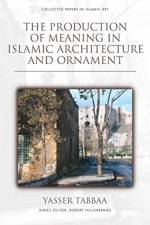
Presents transformations in Islamic architecture and ornament in relation to parallel theological and political changesThis volume collects Yasser Tabbaa's investigative and interpretive articles on medieval Islamic architecture, ornament and gardens in Syria and Iraq, with comparative expansions into Anatolia, Egypt, North Africa and Spain. The monuments in question, many of which have vanished in recent years, are examined within the context of the political divisions and theological ruptures that characterised the Islamic world between the 11th and 13th centuries.The writings cover such significant forms as muqarnas vaulting, proportioned Qur'anic scripts and cursive public inscriptions, and monument types such as the madrasa, the hospital, the tribunal (dar al-'adl) and the citadel palace. Collectively, they present medieval Islamic architecture as a transformative process that echoes Abbasid glory and signals future developments in later Islamic architecture.Key Features¿ Discusses monuments in Syria and Iraq, many of which have vanished without being properly studied¿ Explores innovations in medieval Islamic architecture within the shifting political and theological landscape¿ Reaffirms the centrality of the Abbasid Caliphate in these innovations and their dispersion throughout the Islamic world¿ Expands on the role of poetry in the transmission of garden and fountain types from the eastern to the western Islamic world¿ Explores the unprecedented expansion of Shi'i shrines in Syria, largely due to Iranian patronageYasser Tabbaa has taught Islamic art and architecture for 35 years in several major US universities, including MIT, the University of Michigan, and Oberlin College. He is the author of several books including Constructions of Power and Piety in Medieval Aleppo (1997) and The Transformation of Islamic Art during the Sunni Revival (2001).
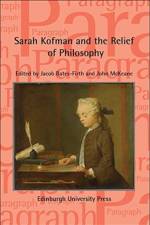
Sarah Kofman and the Relief of Philosophy addresses Kofman's relations with her contemporary Jacques Derrida, but also her readings of psychoanalysis, music, Shakespeare, and more. The volume closes with a previously untranslated text of hers interpreting Nietzsche and Voltaire's responses to natural catastrophe.
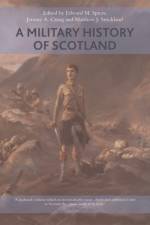
A Military History of Scotland is a wide-ranging and lavishly illustrated volume, which covers the military history of Scotland from the Picts to Basra.
Explores the interconnected creative partnerships of the Wattses and De Morgans - Victorian artists, writers and suffragists This is the first book dedicated to examining the marital relationships of Mary and George Watts and Evelyn and William De Morgan as creative partnerships. The study demonstrates how they worked, individually and together, to support greater gender equality and female liberation in the nineteenth century. The author traces their relationship to early and more recent feminism, reclaiming them as influential early feminists and reading their works from twentieth-century theoretical perspectives. By focusing on neglected female figures in creative partnerships, the book challenges longstanding perceptions of them as the subordinate wives of famous Victorian artists and of their marriages as representatives of the traditional gender binary. This is also the first academic critical study of Mary Watts's recently published diaries, Evelyn De Morgan's unpublished writings and other previously unexplored archival material by the Wattses and the De Morgans. Key Features:Reveals the ways in which the couples promoted progressive socio-political ideasDraws on extensive archival research and analyses unpublished writings, including diaries and poemsFocuses on neglected female figures in creative partnerships to challenge longstanding perceptions of them as the submissive or subordinate wives of famous Victorian artists, and of their marriages as representatives of the traditional gender binaryShows how male and female writers and artists engaged with mid-to-late Victorian feminism together and individually, reclaiming them as influential early feminists
Vittorio Morfino draws out the implications of the dynamic Spinoza-Machiavelli encounter by focusing on the concepts of causality, temporality and politics. This allows him to think through the relationship between ontology and politics, leading to an understanding of history as a complex and plural interweaving of different rhythms.
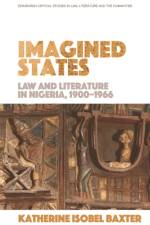
Imagined States examines representations of the law in British and Nigerian high-brow, middle-brow and popular fiction and journalism. Drawing on a rich range of examples, the book focuses on the imaginative role that the state of exception played in the application of indirect rule during British colonialism and in the legal machinations of the postcolonial state. It reads works by Chinua Achebe, Joyce Cary, Cyprian Ekwensi and Edgar Wallace, together with a range of Nigerian market literature and journalism.
Discover how rivalling discourses of American grand strategy reveal a fractured consensus of geopolitical identity and national security under President Obama. This conflict manifested in divergent elite visions of liberal hegemony, cooperative engagement and unilateral restraint. Georg Lfflmann examines the identity conflict within the Washington foreign policy establishment, between elite insiders and outsiders, and how the 'Obama Doctrine' both confirmed a geopolitical vision of American exceptionalism and challenged established notions of US hegemony and world leadership.
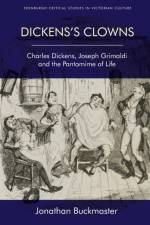
Establishes the importance of the popular radical figure of the pantomime clown in the work of Charles DickensThis book reappraises Dickens's Memoirs of Joseph Grimaldi and his imaginative engagement with its principal protagonist. Arguing that the Memoirs should be read as integral to Dickens's wider creative project on the theatricality of everyday existence, Jonathan Buckmaster analyses how Grimaldi's clown stepped into many of Dickens's novels. Dickens's Clowns presents new readings of Dickens's treatment of topics such as identity, the grotesque and violence within the context of the tropes of the Regency pantomime. This is the first study to identify the Dickensian clown as a unifying force for several Dickensian themes, overturning traditional views of Dickens's clowns as peripheral figures.Key FeaturesProvides a new reading of one of Dickens's most neglected texts, and firmly re-establishes it within the Dickens canon as both part of a wider project alongside his other major works of the period and an important influence on later work Identifies the pantomime routines of the Regency clown as a key cultural influence on Dickens's work, tracing significant new sources for his comical treatment of violence and his comedy more generallyOffers important new perspectives on two other key themes in Dickens's work - the use of food and drink within Dickens's articulation of the bodily grotesque and Dickens's use of clothing as a radical signifier of individual liberty
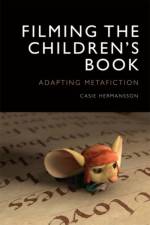
Just as a work of self-reflexive 'metafiction' - and the experience of reading it - differ from other types of literature, the work and the experience of viewing films that adapt metafiction are distinct from those of other films, and from other film adaptations of literary works. This book explores the adaptation of children's metafictions, including works such as Inkheart, The Invention of Hugo Cabret and the Harry Potter series. Not only are the plot devices of books and reading explored on screen in these adaptations, but so is the nature of transmedial adaptation itself - the act of representing one work of art in another medium. Analysing the 'work' done by children's metafiction and the experience of reading it, Casie E. Hermansson situates the adaptations of these types of books to film within contemporary adaptation criticism.
One of the most controversial issues that divided Islamic philosophers and theologians during the Middle Ages was whether human beings would have a spiritual or bodily existence after death. The idea of a world of image was conceived as a solution, suggesting that there exists a world of non-physical (imagined) bodies, beyond our earthly existence. This world may be reached in sleep, in meditation or after death.From the embryonic conception by Ibn Sina, to the radical rethinking by Suhrawardi and Shahrazuri into a sophisticated system, L. W. C. van Lit unravels the history of this idea. Using a distant reading approach for measuring the transmission, he further shows how the idea remained relevant for Muslim thinkers through the centuries, up until today.
Alain Badiou, Quentin Meillassoux, Catherine Malabou, Michel Serres and Bruno Latour: this new generation of French philosophers is laying fresh claim to the human. Across a number of new strains of philosophy, they are rethinking humanity's relationships: to 'nature' and 'culture', to the objects that surround us, to the possibility of social and political change, to ecology and even to our own brains. Christopher Watkin draws out both the promises and perils of these new philosophies. And he shows just how high the stakes are for our technologically advanced but socially atomised and ecologically vulnerable society.
Abonner på vårt nyhetsbrev og få rabatter og inspirasjon til din neste leseopplevelse.
Ved å abonnere godtar du vår personvernerklæring.