

Gjør som tusenvis av andre bokelskere
Abonner på vårt nyhetsbrev og få rabatter og inspirasjon til din neste leseopplevelse.
Ved å abonnere godtar du vår personvernerklæring.Du kan når som helst melde deg av våre nyhetsbrev.

Provides unique access to the key elements of David Sellar's pioneering contribution to Scottish legal history This collection brings together in one volume the principal essays of David Sellar (1941-2019) on Scottish legal history, focused upon the influence of Celtic, Canon, English and customary law in the development of Scots law. It includes a paper written during Sellar's time as Lord Lyon King of Arms (2008-2014) but left unpublished at his death, along with a general introduction by Hector L. MacQueen. Sellar was a pioneering historian of Scots law who rejected previous interpretations of the subject as a series of false starts and rejected experiments. He emphasised instead the continuity of legal development, with change a process of integration of external influences from very early times on. Sellar's approach, articulated mainly through essays published in diverse places over four decades, has had significant influence upon our general understanding of legal history in Scotland as well as leading to appreciation elsewhere of its comparative significance. By gathering the major essays in a single collection, this book demonstrates the scope and reach of Sellar's overall contribution. It provides an opportunity to view Sellar's work as a whole and to access his distinctive perspective on the overall trajectory of Scottish law. Hector L. MacQueen is Emeritus Professor of Private Law at the University of Edinburgh.
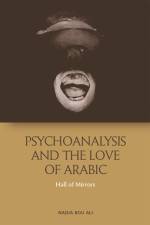
Psychoanalysis and the Love of Arabic reorients the debates around Arabic and global modernity in relation to psychoanalysis, capitalism and universality. The study offers the first psychoanalytic reading of 19th-century works written during the nahda movement by Ahmad Faris Shidyaq (1805-87) and Butrus al-Bustani (1819-83), showing how a curious relationship was forged between language and politics - one driven by both a desire for, and anxiety about, modernity.a In analysing the abstractness of national belonging as belonging to the language, author Nadia Bou Ali considers why modern Arabic grammarians fell in love with language again and explores how language became ideated as a 'mirror of the nation'. Bou Ali argues that the problems of language speak for the subject of the unconscious, divided bya language, desire and enjoyment.a
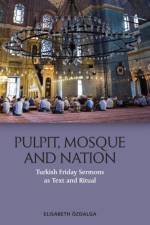
'Through a meticulous examination of the Friday sermons, Elisabeth Özdalga analyses the public role of religion in Turkey - from containment by the secular state to instrumentalisation by the Islamist government. This is a most valuable contribution to our understanding of state-religion configurations in modern Turkey.' Sami Zubaida, Emeritus Professor of Politics and Sociology at Birkbeck, University of London 'In her innovative and timely study, Özdalga shows that it is not so much the rather bland and repetitive contents of the Friday sermon that makes it influential, but the rather the fact of its performance. Attended by over half of the male population, the Friday prayer and sermon form a communal act that plays a key role in installing in the audience "oneness and togetherness" that is the foundation stone of Turkish republican nationalism.' Erik-Jan Zurcher, Emeritus Professor of Turkish Studies, Leiden University A historical and sociological analysis of the role of Friday sermons in the nation building process in modern Turkey Since the formation of the Republic in 1923, Friday sermons (hutbe) have been an important platform that allows the state to engage and communicate with the Turkish people. Sermon topics vary from religious and ethical issues to matters concerning family, women, health, education, business and the environment. Even if politics, in the name of secularism, has been banned from mosques and sermons, questions of how to be a good citizen and honour the Turkish nation have been of utmost importance. With an all-pervading sermon theme of social, national and political unity, Elisabeth Özdalga explores how long-standing religious rituals are utilised and mobilised in the formation of modern political loyalties and national identities. Key Features - Presents a new field of research, which focuses the role of Islamic oratory in the nation building process in modern Turkey - Analyses various forms and contents (including a large number of translations from Turkish to English) of Friday prayer oratory - Highlights how state patronage conducted through a secular political order has controlled religion, but also how an overpowering state has been challenged by various religious groups and institutions - Synthesises three basic analytical dimensions of official Muslim oratory: the religious ritual; political and ideological discourses; and, governmental supervision through the official religious institution Diyanet Elisabeth Özdalga is a retired Senior Researcher and former Director of the Swedish Research Institute in Istanbul. Cover image: Blue Mosque, Sultan Ahmed Mosque, Istanbul, Turkey (c) Look-foto / LOOK-foto Cover design: Andrew McColm [EUP logo] edinburghuniversitypress.com ISBN 978-1-4744-8820-4 Barcode
Provides an assessment of the coal industry, theoretical debates about coal, and government's role in a just transition and sustainability This book investigates the consequences of shifting social responsibilities, new inequalities and the sustainability concerns created by the likely energy transition in Africa to end the fossil-fuel era. Focusing on describing the local realities in a growing coal and energy town of South Africa, Emalahleni, it explores whether a just transition from coal-generated energy is possible and what the local implications will be of this global restructuring of the energy sector. The book also provides an overview of the current situation in South Africa, mining and mining towns and the theory of a just transition and mine closure, in order to present a thorough assessment of the political economy of coal towns. Lochner Marais is Professor of Development Studies in the Centre for Development Support at the University of the Free State. His research integrates themes of housing policy, health and mining communities. Philippe Burger, an economist by training, is currently the Pro Vice-Chancellor: Poverty, Inequality and Economic Development and Vice-Dean at the University of the Free State, Bloemfontein, South Africa. Maléne Campbell is Associate Professor in the Department of Urban and Regional Planning at the University of the Free State. Stuart Paul Denoon-Stevens is a Lecturer in the Department of Urban and Regional Planning at the University of the Free State. Deidré Van Rooyen is Programme Director for Development Studies and a researcher in the Centre for Development Support at the University of the Free State.
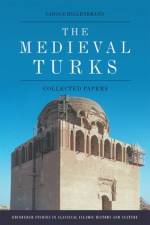
The collected papers of one of the world's leading experts on medieval Islamic history Organised into 3 distinct volumes - on the Crusades, the Medieval Turks and Classical Islam - this collection represents several decades of scholarship. The Medieval Turks explores the impact of the Turks on the Islamic world. It covers themes such as nomadism, shamanism, clan and social structure, the role of women, military expertise, engagement with Islamic orthodoxy and the daily interface between Turks and non-Turks. Key Features - Collects in one place 20 papers from a pre-eminent scholar in the field - Allows the reader to trace the evolution of thought over several decades - Includes many papers located in out-of-print or hard-to-find works - Includes a preface that outlines Professor Hillenbrand's interest in the Crusades over the course of her career, and an index of names, places and terms Carole Hillenbrand is Honorary Professorial Fellow, Professor Emerita at the University of Edinburgh and Professor of Islamic History at the University of St Andrews since 2013. In 2005 she became the first non-Muslim scholar to be awarded the prestigious King Faisal International Prize for Islamic Studies, reflecting her 'revolutionary approach to the largely one-sided subject of the Crusades'. Cover image: the mausoleum of the Seljuq Turkish sultan Sanjar at Merv, Turkmenistan, c. 1150. Photograph by Professor Bernard O'Kane, The American University in Cairo and used with his kind permission. Cover design: www.paulsmithdesign.com. [EUP logo] edinburghuniversitypress.com ISBN 978-1-4744-8594-4 Barcode
The collected papers of one of the world's leading experts on medieval Islamic history Organised into 3 distinct volumes - on the Crusades, the Medieval Turks and Classical Islam - this collection represents several decades of scholarship. Islam and the Crusades showcases multiple perspectives, especially as viewed from the Muslim side. It explores the distinctive nature of Islamic jihad as expressed in poetry, sermons and inscriptions; the development of the counter-crusade; and the careers of major Muslim leaders including Zengi and Saladin. Key Features - Collects in one place 20 papers from a pre-eminent scholar in the field - Allows the reader to trace the evolution of thought over several decades - Includes many papers located in out-of-print or hard-to-find works - Includes a preface that outlines Professor Hillenbrand's interest in the Crusades over the course of her career, and an index of names, places and terms Carole Hillenbrand is Honorary Professorial Fellow, Professor Emerita at the University of Edinburgh and Professor of Islamic History at the University of St Andrews since 2013. In 2005 she became the first non-Muslim scholar to be awarded the prestigious King Faisal International Prize for Islamic Studies, reflecting her 'revolutionary approach to the largely one-sided subject of the Crusades'. Cover image: the now lost Nur al-Din minbar once in the Aqsa mosque in Jerusalem, c. 1168. Photograph by Mr Alastair Duncan and used with his kind permission. Cover design: www.paulsmithdesign.com. [EUP logo] edinburghuniversitypress.com ISBN 978-1-4744-8590-6 Barcode
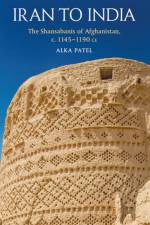
Brings together all the architectural patronage attributed to the Shansabānīs This book charts the origins and rise of the Shansabānīs, a nomadic-pastoralist or transhumant group from modern central Afghanistan. As they adapted and mastered the mores of Perso-Islamic kingship, they created a transregional empire unseen in the region for almost a millennium, since the Kushanas of the early centuries CE. The Shansabānīs' imperialism of little more than a half-century belies their longue durée significance: they altered the geopolitical landscapes of eastern Khurasan through the Indo-Gangetic plains, reconnecting these regions in continuous flows of people, objects, and ideas that broadened the Persianate world and had consequences into the modern age of nation-states in Central and South Asia. Alka Patel is Professor in the Department of Art History and in the PhD Program for Visual Studies at the University of California, Irvine.
The Feminist Library Series Editors: Jackie Jones, Alison Light & Gill Plain Brings together the pioneering work of leading feminist cultural and literary critics for a new generation of readers. Alison Light - Inside History: From Popular Fiction to Life-Writing A collection of thought-provoking essays spanning thirty-five years of Alison Light's work. Inside History addresses a number of the central preoccupations within feminist cultural criticism over this period: the nature of writing by women and what women writers might or might not share; the place of such writing in any literary history or cultural analysis; the politics of popular culture and the question of pleasure; women's relation to ideas of national identity and other forms of belonging; and finally, their contribution to life-writing in its different genres. The volume offers a lively, wide-ranging way into feminist debates, touching on a number of major authors from Alice Walker to Virginia Woolf, on genre fiction, and on the writing of memoir and biography. Chronologically arranged, the essays and short 'think-pieces' chart Alison Light's own intellectual formation as a critic and writer within a wider collective politics. This is explored and contextualised in an autobiographical introduction. Alison Light is a writer and Honorary Professor in the Department of English, University College London; she is also an Honorary Professor at Edinburgh University and a non-stipendiary Senior Research Fellow in English and History at Pembroke College Oxford. She is the author of a number of books, including Common People: The History of an English Family (Penguin 2014), which was shortlisted for the Baillie Gifford prize, and her most recent, A Radical Romance, which won the 2020 PEN Ackerley prize for memoir. She writes regularly for the London Review of Books.
Farīd ad-Dīn-e ʿAṭṭār's Persian folk tale The Conference of the Birds relates the quest by thousands of pilgrim birds for an ideal king, the mythical bird called Sīmorgh. At the end of the quest, the surviving birds recognise that the longed-for king is nothing other than the reflection of their own existence. But what about those other birds that were not able to become part of the final representation? This groundbreaking book calls them 'counter-memories'; memories that are barred from hegemonic history, but are, nevertheless present in cinematic forms. Due to the strategic and artistic interventions of a range of Iranian filmmakers, such as Abbas Kiarostami and Shahram Mokri, Ali Hatami and Tahmineh Milani, Kianoush Ayari and Rakshan Banietemad, the history of post-revolutionary Iranian Cinema is also structured by counter-memories, with the potential to destabilise officially fabricated success stories of revolution, war and sacred defence. Counter-Memories in Iranian Cinema establishes a new framework for understanding the tensions between censorship and resistance, helping to carve out resistant points of remembering both within and outside state-controlled cinema. Matthias Wittmann is a researcher on media (especially film), curator, and writer. He was Research Associate and Chief Assistant at the Seminar for Media Studies (University of Basel) and Visiting Professor in Vienna. He has just finished a book about the Octopus (Die Gesellschaft des Tentakels, 2021) and is currently writing a book on Martyrographies in Iranian Cinema. Ute Holl is Professor for Media Aesthetics at the Seminar for Media Studies, University of Basel
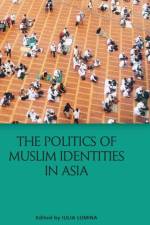
'The Politics of Muslim Identities brings together nine case studies from across Asia. The discussions in each chapter together illustrate the contested diversity of Islam as it is understood and practiced by Muslims, and contributes to a growing and much-needed literature which emphasises the need for historicised and anti-essentialist understandings of Islam.' Syed Farid Alatas, Professor of Sociology, National University of Singapore Explores the intersection between Islam and politics in contemporary, Southeast Asia, South Asia and China Approaching religious identity with an emphasis on agency and contestation, this book offers a multi-disciplinary perspective on the development of Muslim identities in Asia and examines the contingent politics that influence how Muslims constitute themselves as modern subjects. Through 9 country-based case studies, the book analyses how Muslims articulate their religious identity vis-à-vis the state and society in which they live and how their position relates to specific social and political contexts. The contributors survey the contemporary ways in which religious affiliation sparks a politics of difference in contexts where Islamic practices, beliefs and aspirations are contested, as well as where Muslims are framed as the 'Other'. Key Features - Gives a comparative view of Asia's diverse Muslim identities, looking at the complexity of identity politics and the instrumentalisation of religious difference that create social divides - Situates the contemporary contestations of identity and belonging amid new waves of Islamic revivalism, ethnic nationalism and political repression - Includes 9 country-based case studies: Singapore, Malaysia, Pakistan, Indonesia, Bangladesh, Philippines, India, Myanmar and China - Features contributions from experts in political science, anthropology, Islamic studies, sociology including: Irfan Ahmad, Syed Imad Alatas, Nazry Bahrawi, Syafiq Hasyim, Imrul Islam, Nazneen Mohsina, Matthew J. Nelson, Nathan Gilbert Quimpo and Joanne Smith Finley Iulia Lumina is an independent researcher who specialised in the comparative study of Islam at the School of Oriental and African Studies (SOAS), University of London. Cover image: Indonesia, Jakarta (c) Afrijal Dahrin / EyeEm / Getty Images Cover design: [EUP logo] edinburghuniversitypress.com ISBN 978-1-4744-6683-7 Barcode
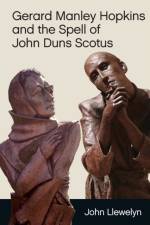
The early medieval Scottish philosopher and theologian John Duns Scotus shook traditional doctrines of universality and particularity by arguing for a metaphysics of 'formal distinction'. Hundreds of years later, why did the 19th-century poet and self-styled philosopher Gerard Manley Hopkins find this revolutionary teaching so appealing? John Llewelyn answers this question by casting light on various neologisms introduced by Hopkins and reveals how Hopkins endorses Scotus' claim that being and existence are grounded in doing and willing. Drawing on modern responses to Scotus made by Heidegger, Peirce, Arendt, Leibniz, Hume, Reid, Derrida and Deleuze, Llewelyn's own response shows why it would be a pity to suppose that the rewards of reading Scotus and Hopkins are available only to those who share their theological presuppositions.
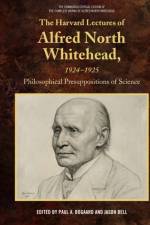
Presents Whitehead's lectures at Harvard during the 1924-1925 academic year Beginning in September of 1924, Alfred North Whitehead presented a regular course of 85 lectures which concluded in May of 1925. These represent the first ever philosophy lectures he gave and capture him working out the philosophical implications of the remarkable turns physics had taken in his lifetime. This first volume in the critical edition shares these lectures by transcribing notes by W. P. Bell, W. E. Hocking and Louise Heath taken at the time - many of which have only recently been discovered. These notes provide unique insight into what emerges from this extensive course of lectures being given in the very months during which Whitehead is drafting his seminal work, Science and the Modern World. Paul A. Bogaard is Hart Massey Emeritus Professor of Philosophy at Mount Allison University, Canada. Jason Bell is Fulbright Professor at the University of Göttingen, Germany and Marjorie Young Bell Research Fellow at Mount Allison University, Canada. Cover image: Alfred North Whitehead by P. D. Drury 1928 (c) The Master and Fellows of Trinity College Cambridge Cover design: Stuart Dalziel [EUP logo] edinburghuniversitypress.com ISBN 978-1-4744-0184-5 Barcode
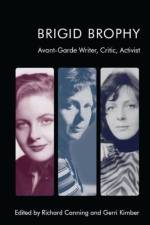
'Brigid Brophy, uniquely significant in postwar British literary, cultural and public intellectual life, is also its most egregiously neglected genius. This astonishing volume - which, as befits its subject, is honest, multifaceted and exploding with critical and imaginative intelligence - does a great and necessary service to her legacy, and to the history of twentieth-century letters.' Robert McKay, University of Sheffield Celebrates Brigid Brophy's life's work, its diversity, originality and achievement This book explores all aspects of Brophy's literary career, alongside contributions on animal rights, vegetarianism, anti-vivisectionism, humanism, feminism and sexual politics, not only celebrating Brophy's eclectic achievements but fully reflecting them. Contributors include literary critics, animal rights activists, Brophy's daughter, Kate Levey, and Brophy herself. Richard Canning has taught English Literature at five UK universities, most recently as a Professor of British and American Literature. He is currently Visiting Professor at the University of Buckingham. Gerri Kimber is Visiting Professor in English at the University of Northampton, and Chair of the Katherine Mansfield Society. Cover images: Brigid Brophy, kindly supplied by Kate Levey Cover design: [EUP logo] edinburghuniversitypress.com ISBN 978-1-4744-6266-2 Barcode
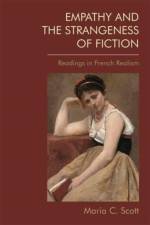
Explores how and why narrative fiction engages empathy, including Theory of MindOffers a broad overview of current scientific work on the effects of fiction-reading on empathy, including Theory of MindProvides an original intervention in the field of literary theory, centring on the reflexive properties of the fictional strangerIncludes stand-alone close readings of three novels by important French authorsThis book studies recent psychological findings which suggest that reading fiction cultivates empathy, encouraging us to be critically reflective, suspicious readers as well as participatory, 'nave' readers. Scott draws on literary theory and close readings to argue that engagement with fictional stories also teaches us to resist uncritical forms of empathy and reminds us of the limitations of our ability to understand other people. The book treats figures of the stranger in Balzac's La Fille aux yeux d'or, Stendhal's Le Rouge et le Noir and Sand's Indiana as emblematic of the strangeness of narrative fiction, both drawing us in and keeping us at a distance.
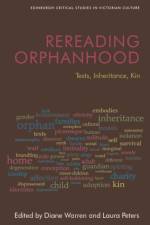
Rereading Orphanhood: Texts, Inheritance, Kin explores the ways in which the figure of the literary orphan can be used to illuminate our understanding of the culture and mores of the long nineteenth century, especially those relating to family and kinship.
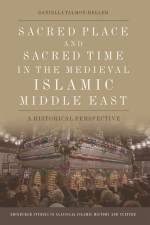
This book offers a fresh perspective on religious culture in the medieval Middle East. It investigates the ways Muslims thought about and practiced at sacred spaces and in sacred times through two detailed case studies: the shrines in honour of the head of al-Husayn (the martyred grandson of the Prophet), and the holy month of Rajab. The changing expressions of the veneration of the shrine and month are followed from the formative period of Islam until the late Mamluk period, paying attention to historical contexts and power relations. Readers will find interest in the attempt to integrate the two perspectives synchronically and diachronically, in a discussion of the relationship between the sanctification of space and time in individual and communal piety, and in the religious literature of the period.
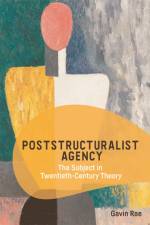
Gavin Rae shows that the problematic status of agency caused by the poststructuralist decentring of the subject is a central concern for poststructuralist thinkers. First, Rae shows how this plays out in the thinking of Deleuze, Derrida and Foucault. He then demonstrates that it is with those poststructuralists associated with and influenced by Lacanian psychoanalysis that this issue most clearly comes to the fore. He goes on to reveal that the conceptual schema of Cornelius Castoriadis best explains how the founded subject is capable of agency.
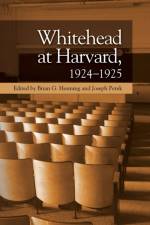
This book examines the significance of Whitehead's first year of lectures at Harvard, recently published in the first volume of The Edinburgh Critical Edition of the Complete Works of Alfred North Whitehead. In these newly commissioned essays, leading Whitehead scholars ask a range of important questions: Do these lectures challenge or confirm previous understandings of Whitehead's published works? What is revealed about the development of Whitehead's thought in the crucial period after London but before the publication of Science and the Modern World? What should we make of concepts and terms that were introduced in these lectures but were never incorporated into subsequent publications? The lectures published in The Harvard Lectures of Alfred North Whitehead, 1924-1925: Philosophical Presuppositions of Science represent Whitehead's first American lectures in philosophy after a long career in England as a mathematician and throw new light on the development of his philosophy. Also included in this volume is the text of Whitehead's first lecture at Harvard, recently gifted to the Critical Edition of Whitehead, allowing for a clearer understanding of Whitehead's plans and goals for his first course of lectures in philosophy than has previously been possible. Brian G. Henning, Founding Executive Editor of the Critical Edition of Whitehead, is Professor of Philosophy and Environmental Studies at Gonzaga University in Spokane, Washington. Joseph Petek, Assistant Editor of the Critical Edition, is a doctoral candidate in process studies at Claremont School of Theology.
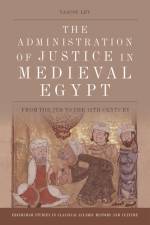
This book shows how political and administrative forces shaped the way justice was applied in medieval Egypt. It introduces the model that evolved during the 7th to the 9th centuries, which involved four judicial institutions: the cadi, the court of complaint (mazalim), the police/shurta (responsible for criminal justice) and the Islamized market law (hisba) administrated by the market supervisor/muhtasib. Literary and non-literary sources are used to highlight how these institutions worked in real-time situations such as the famine of 1024-1025, which posed tremendous challenges to the market supervisors in Cairo. The inner workings of the court of complaint during the 11th-12th century Fatimid state are revealed through array of documentary sources. Further, non-Muslim communities, their courts and their sphere of responsibilities are treated as integral to how justice was dispensed in medieval Islam. Documentary sources offers significant insights into these issues and illuminate the scope and limits of non-Muslims self-rule/judicial autonomy.In sum, the book shows that the administrative and political history of the judiciary in medieval Egypt implicitly and explicitly illuminates broader questions about religious and social forces that shaped the lives of medieval people in the Middle East, Muslims and non-Muslims alike.
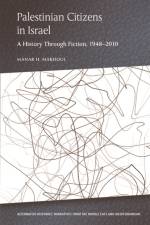
This book uses the methodology of sociology and literary studies to come to terms with the reality of Palestinian citizens of Israel across several generations. It explores the evolution of Palestinian identity from one that struggled for independence and self-determination up to 1948, to one that now presses the call for civil rights and civic equality. What were the forces that shaped this transformation over six decades?a Traditional sociological research on this community focusses on the structural relationships between Israel and its Palestinian citizens. Primarily concerned with the political discourse and activism of this community, it mostly makes use of party agendas, voting patterns and opinion polls as primary indicators. In contrast, this book focuses on the Palestinian voice, through an analysis of the 75 novels published by Palestinian citizens of Israel from 1948 to 2010. Paying attention to processes that are internal to this community, the author identifies the intellectual and ideological forces that drove major social and political transformations in this community over this period.
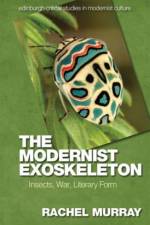
Argues for the importance of insects to modernism's formal innovationsUses the idea of the insect as a key to modernist writers' engagement with questions of politics, psychology, life, and literary formProvides in-depth analysis of lesser-known modernist narratives, such as H.D.'s Asphodel and Lewis's Snooty Baronet, as well as new readings of canonical texts - including D. H. Lawrence's Lady Chatterley's Lover and Samuel Beckett's TrilogyExplores the influence of popular scientific writing on modernist aestheticsReveals the attentiveness of modernist writers to nonhuman life, thus forging new lines of connection between modernism and literary animal studiesFocusing on the writing of Wyndham Lewis, D. H. Lawrence, H.D. and Samuel Beckett, this book uncovers a shared fascination with the aesthetic possibilities of the insect body - its adaptive powers, distinct stages of growth and swarming formations. Through a series of close readings, it proposes that the figure of the exoskeleton, which functions both as a protective outer layer and as a site of encounter, can enhance our understanding of modernism's engagement with nonhuman life, as well as its questioning of the boundaries of the human.
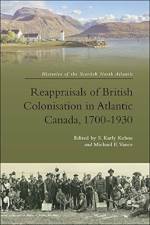
Investigating the contested legacies of British colonisation on Canada's Atlantic coast This volume offers fresh perspectives on the legacy of British colonisation in Atlantic Canada, a region that was pivotal in safeguarding Britain's imperial ambitions. Chapters in the collection engage with this legacy across three sections: Dispossession and Settlement; Religion and Identity; and Reappraising Memory. Showcasing research from both new and established scholars from Canada, the UK and the United States, the collection challenges the established historiography of the region and brings groups who have traditionally been excluded from Britain's broader imperial narrative into sharper focus. Key Features - Situates the Scottish experience within the process of British colonisation, challenging the tendency to omit the Scots from critical explorations of the colonisation process in this region. - Highlights the Indigenous experience, as well as the experience of the enslaved, free people of colour and religious minorities. - Features contributions from a broad range of scholars including John Reid, Annie Tindley and Willeen Keough S. Karly Kehoe is the Canada Research Chair in Atlantic Canada Communities and Michael E. Vance is Professor of History, both at Saint Mary's University, Nova Scotia. Cover images (top) shutterstock.com and (bottom) Harris H. Reid's photograph of Scottish settler descendants and indigenous Mi'kmaw participants at the Hector celebration in Pictou, Nova Scotia, taken on 17 July 1923; image courtesy of the McCulloch Museum and Genealogy Centre, Pictou, Nova Scotia, Canada Cover design: [EUP logo] edinburghuniversitypress.com ISBN 978-1-4744-5903-7 Barcode
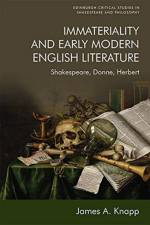
Examines literary engagement with immateriality since the 'material turn' in early modern studiesProvides six case studies of works by Shakespeare, Donne, and Herbert, offering new readings of important literary texts of the English Renaissance alongside detailed chapters outlining attitudes towards immateriality in works of natural philosophy, medicine, and theologyEmploys an innovative organization around three major areas in which problem of immaterial was particularly pitched: Ontology, Theology, and Psychology (or Being, Believing, and Thinking)Includes wide-ranging references to early modern literary, philosophical, and theological textsDemonstrates how innovations in natural philosophy influenced thought about the natural world and how it was portrayed in literatureEngages with current early modern scholarship in the areas of material culture, cognitive literary studies, and phenomenologyImmateriality and Early Modern English Literature explores how early modern writers responded to rapidly shifting ideas about the interrelation of their natural and spiritual worlds. It provides six case studies of works by Shakespeare, Donne and Herbert, offering new readings of important literary texts of the English Renaissance alongside detailed chapters outlining attitudes towards immateriality in works of natural philosophy, medicine and theology. Building on the importance of addressing material culture in order to understand early modern literature, Knapp demonstrates how the literary imagination was shaped by changing attitudes toward the immaterial realm.
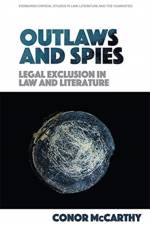
By reading two bodies of literature not normally read together - the outlaw literature and espionage literature - Conor McCarthy shows how these genres represent and critique the longstanding use of legal exclusion as a means of supporting state power. Texts discussed range from the medieval Robin Hood ballads, Shakespeare's history plays, and versions of the Ned Kelly story to contemporary writing by John le Carre, Don DeLillo, Ciaran Carson and William Gibson.
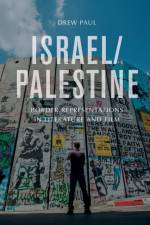
Since the early 1990s, Israel has greatly expanded a system checkpoints, walls and other barriers in the West Bank and Gaza that restrict Palestinian movement. Israel/Palestine examines how authors and filmmakers have grappled with the spread of these borders. Focusing on the works of Elia Suleiman, Raba'i al-Madhoun, Ghassan Kanafani, Sami Michael and Sayed Kashua, it traces how political engagement in literature and film has shifted away from previously common paradigms of resistance and coexistence and has become reorganised around these now ubiquitous physical barriers. Depictions of these borders interrogate the notion that such spaces are impenetrable and unbreakable, imagine distinct forms of protest, and redefine the relationship between cultural production and political engagement.
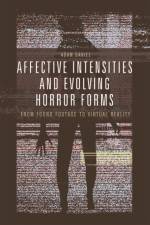
Horror cinema is a genre that is undergoing constant evolution, from the sub-genre of 'found footage,' to post-cinematic new media forms such as Youtube horror, horror video games and cinematic virtual reality horror. By investigating how these new forms alter the dynamics of spectatorship, this book charts how cinema's affective capacities have shifted in relation to these modifications in the forms of cinematic horror. It applies a rich theoretical synthesis of phenomenological and Deleuzian approaches to a number of case studies, including films like The Blair Witch Project, Paranormal Activity and Creep as well as video games such as Alien: Isolation and new media forms such as Youtube horror and virtual reality horror.
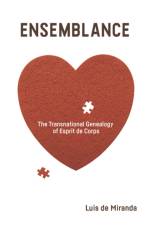
Esprit de corps has played a significant role in the cultural and political history of the last 300 years. Through several historical case studies, Luis de Miranda shows how this phrase acts as a combat concept with a clear societal impact. He also reveals how interconnected, yet distinct, French, English and American modern intellectual and political thought is. In the end, this is a cautionary analysis of past and current ideologies of ultra-unified human ensembles, a recurrent historical and theoretical fabulation the author calls 'ensemblance'.
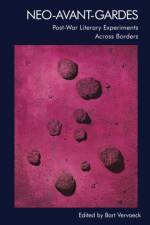
A systematic transnational investigation of post-war literary experiments in Europe and the Americas What are the forms in which the avant-garde returns after the Second World War? How does the literary avant-garde re-invent itself without losing its affinity with historical avant-garde currents such as surrealism and futurism? This book explores the international relevance of the concept of neo-avant-garde for the study of post-war literary innovations covering North American, Latin American, Caribbean, Austrian, French, British, Belgian, Dutch and German cases. Each of the twenty-one newly commissioned chapters combines theoretical reflection with practical analysis. Together, they provide a multi-faceted account of diverse group and trends, such as the New Realists, Black Arts Movement, Labris and the Vienna Group. They also focus on a wide range of authors, like Pierre Alferi, Amiri Baraka, Konrad Bayer, Mario Bellatín, Kamau Brathwaite, and Anna Kavan. In addition, they pay attention to specific techniques, including erasure, lyricisation, and montage, and to specific genres such as comic books, experimental fiction, and visual poetry. Bart Vervaeck is Professor of Dutch Literature and Narrative Theory at the University of Leuven.
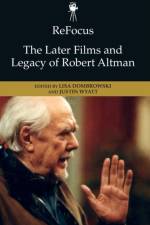
Examines an under-analysed period of Robert Altman's career.
Abonner på vårt nyhetsbrev og få rabatter og inspirasjon til din neste leseopplevelse.
Ved å abonnere godtar du vår personvernerklæring.