
Gjør som tusenvis av andre bokelskere
Abonner på vårt nyhetsbrev og få rabatter og inspirasjon til din neste leseopplevelse.
Ved å abonnere godtar du vår personvernerklæring.Du kan når som helst melde deg av våre nyhetsbrev.

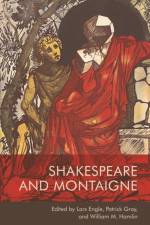
Introduces and explores a wide range of fresh approaches to comparative study of Shakespeare and Montaigne.
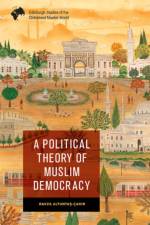
Develops an idea that has yet to be properly explained - Muslim democracy Ravza Altuntaş-Çakır proposes a framework of Muslim democracy that reconciles public claims made by Muslims with the normative and practical demands of democratic regimes. This book examines the ideals, institutions and processes that shape the development of a concrete Muslim-based democratic system - a form of democracy that recognises the centrality of religion in Muslim societies. Questioning the customary characterisations of Islam's compatibility with democracy, the book adopts a comparative political theory approach that initiates a dialogue between Muslim and Western political thought. It systematically studies debates concerning Muslim political thought, multiculturalism, secularism, the public sphere and constitutionalism, which enables an exploration of Muslim democracy through a political theory approach, rather than a theological one. Key Features - Constructs a Muslim democracy framework, inspired by Muslim and Western multiculturalist political thought - Provides an inclusive typology of Muslim political thought to discover essential norms for democratic thinking - Provides an inclusive typology of multiculturalism elaborating upon its capacity to reconcile democracy with religion - Synthesises these theoretical concepts and values to provide interpretative tools for a comparative political of Muslim democracy - Offers a scholarly construction of the notion of a political theory of Muslim democracy Ravza Altuntaş-Çakır is a Lecturer in the Political Science and International Relations Department, Istanbul Sabahattin Zaim University.
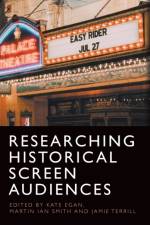
Showcasing current research and contemporary debate in the field of screen history and audience studies, Researching Historical Screen Audiences draws upon a wide variety of previously untapped sources - including photographs, maps, Mass Observation reports, diaries, fan letters, cinema records and original oral testimonies- to explore the challenges and pleasures of conducting research in this field. Containing twelve new essays from an international group of leading and emerging scholars, the book explores and assesses the current status and shape of the field of historical audience research, showcasing new research which foregrounds the transnational and multi-cultural dimensions of past cinemagoing, the roles played by management personnel and marketing campaigns, and the currently under-explored area of the past reception of home video. Kate Egan is Senior Lecturer in Film and Media at Northumbria University, UK Martin Ian Smith is an independent researcher from Durham, UK. He has a PhD in Film Studies from Northumbria University Jamie Terrill is a Research Associate at Lancaster University, UK
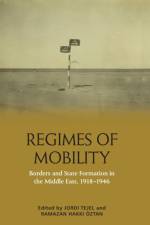
Reinterprets the making of the modern Middle East by studying its borderlands The emergence of the modern Middle East is the result of three complementary historical developments: the disintegration of the Ottoman Empire, the institution of British and French control in its stead and the nationalist challenges to this colonial scramble. The introduction of international borders that accompanied this process is commonly portrayed as the drawing of lines in the sand, an artificial partitioning that brought diplomatic closure to an otherwise contested historical space. For the past two decades, insights gained from the burgeoning field of borderlands studies have enabled a new generation of scholars to challenge such popular depictions. For them, the region's borderlands were not sites of peripheral activity, but rather liminal spaces criss-crossed by global flows and circulations central to state- and nation-formation across the Middle East. Regimes of Mobility offers a select number of case studies that highlight the connectedness of the politics of borderlands throughout the interwar Middle East. Key features - Evidence-driven case studies cover borderlands in Turkey, Iraq, Syria, Palestine, and Transjordan - Informed by discussions in borderland and mobility studies, and by global and environmental history - Brings late Ottomanists into conversation with historians of the interwar Middle East Jordi Tejel is Research Professor in Contemporary History at the University of Neuchâtel. Ramazan Hakkı Öztan is Assistant Professor at the Atatürk Institute for Modern Turkish History at Boğaziçi University, Istanbul.
This collection highlights the adaptability of English in contact with other languages, cultures and societies in diverse regional habitats. The book's ecological perspective offers a fresh theoretical framework for analysing both outer- and inner-circle Englishes. It investigates the varieties of English spoken as a second language, by bi- or multilingual speakers in South Africa, India, Singapore, Hong Kong and the Philippines, and by some lesser-known oceanic varieties in Micronesia and Polynesia, revealing the remarkable divergences in the use of common English elements across geographical distances. Tapping into current debates about colonial legacies and decolonization, as well as ongoing concerns about democracy, regional power and globalisation, this book explores a range of fresh evidence to discuss language variation across the globe. Key features: - Examines features of world Englishes in their sociocultural contexts - Structurally appraises lexical and constructional innovations in English - Presents fresh empirical evidence to discuss language variation Pam Peters is Emeritus Professor in Linguistics at Macquarie University, Sydney Kate Burridge is Professor of Linguistics at Monash University, Melbourne
New studies on the interaction of various media in ancient Greek art.
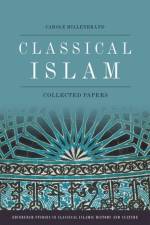
Classical Islam PPC spine 24mm, 274 x 376mm The collected papers of one of the world's leading experts on medieval Islamic history Organised into 3 distinct volumes - on the Crusades, the Medieval Turks and Classical Islam - this collection represents several decades of scholarship. Classical Islam presents studies of the career of the Prophet Muhammad and the environment from which he sprang; the evolution of Islamic mysticism; political thought; and philosophical themes. It also includes investigations into the development of the late 'Abbasid caliphate; analyses of the Mirror for Princes literature; and studies of the minor dynasties of Iraq and Anatolia, and of the major cities in the region. Key Features - Collects in one place 20 papers from a pre-eminent scholar in the field - Allows the reader to trace the evolution of thought over several decades - Includes many papers located in out-of-print or hard-to-find works - Includes a preface that outlines Professor Hillenbrand's interest in the Crusades over the course of her career, and an index of names, places and terms Carole Hillenbrand is Honorary Professorial Fellow, Professor Emerita at the University of Edinburgh and Professor of Islamic History at the University of St Andrews since 2013. In 2005 she became the first non-Muslim scholar to be awarded the prestigious King Faisal International Prize for Islamic Studies, reflecting her 'revolutionary approach to the largely one-sided subject of the Crusades'. Cover image: tilework inscription from the Qaratay madrasa in Konya, Turkey, 1251. Photograph by Professor Bernard O'Kane, The American University in Cairo and used with his kind permission. Cover design: www.paulsmithdesign.com. [EUP logo] edinburghuniversitypress.com ISBN 978-1-4744-8598-2 Barcode
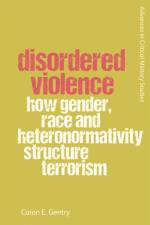
Disordered Violence looks at how gender, race, and heteronormative expectations of public life shape Western understandings of terrorism as irrational, immoral and illegitimate. Caron Gentry examines the profiles of 8 well-known terrorist actors, including Andreas Baader, Bernardine Dohrn, Leila Khaled, Dhanu, Anders Breivik, Nidal Hasan and Aafia Siddiqui. Gentry looks for gendered, racial, and sexualised assumptions in how their stories are told. Additionally, she interrogates how the current counterterrorism focus upon radicalisation is another way of constructing terrorists outside of the Western ideal. Finally, the book argues that mainstream Terrorism Studies must contend with the growing misogynist and racialised violence against women.
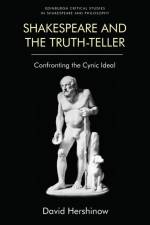
Highlighting the necessity of literary thinking to political philosophy, this book explores Shakespeare's responses to sixteenth-century debates over the revolutionary potential of Cynic critical activity.
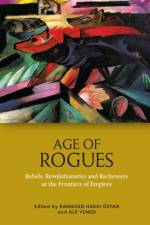
'The scholarship is of the highest quality. A fine book.' Stephanie Cronin, St Antony's College, University of Oxford 'A rich and original work dedicated to one of the most compelling issues within late imperial history.' Ryan Gingeras, Naval Postgraduate School 'A crucial addition not just to the conversation about how these empires disintegrated but also to the analysis of the fractured and violent nation-states that replaced them.' Laura Robson, Penn State University 'A highly readable collection of cutting-edge research on agents of change.' Isa Blumi, Stockholm University A study of the frontier cultures of revolution that shaped the making of the modern Middle East Rebels, revolutionaries and racketeers played central roles in the violent process of imperial disintegration as it unfolded in the frontiers of the Ottoman, Habsburg, Romanov and Qajar empires. This is a history of these transgressive actors from the late 19th century to the interwar years, a time marked by similar, if-not-shared, revolutionary experiences and repertoires of contention across the connected geography of the Balkans, the Middle East and the Caucasus. Contributions by leading scholars engage with themes of historical and cultural legacies, contentious interactions within imperial regimes, and the biographical trajectory of men and women who challenged the political status quo of their time. Ramazan Hakkı Öztan teaches history at the Atatürk Institute for Modern Turkish History at Boğaziçi University, Istanbul. Alp Yenen is Assistant Professor of Modern Turkish History and Culture at the Institute for Area Studies at Leiden University. Front cover: Die Wölfe (Balkankrieg) [The Wolves (Balkan War), Franz Marc, 1913. Image courtesy of Wikimedia Commons/Charles Clifton, James G. Forsyth, and Charles W. Goodyear Funds 1951 Back cover: Stoyko Bakalov cheta, 1905, unknown photographer, image courtesy of Wikimedia Commons Key Features removed to make space: Key Features - Uses a novel conceptual framework that charts the rise of transgressive politics in the frontiers of empires - Includes a variety of biographical approaches to the key disruptive figures during the crisis of imperial and post-imperial regimes in the region - Represents a connected geography of imperial collapse and nation-state formation in 12 case study chapters - Engages with scholarship on intercommunal violence, revolutionary politics, and subaltern agency
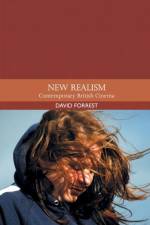
The tradition of British realism has changed dramatically over the last 20 years, where films by directors such as Duane Hopkins, Joanna Hogg, Andrea Arnold, Shane Meadows and Clio Barnard have suggested a markedly poetic turn. This new realism rejects the instrumentalism and didacticism of filmmakers like Ken Loach in favour of lyrical and often ambiguous encounters with place, where the physical processes of lived experience interacts with the rhythms of everyday life. Taking these 5 filmmakers as case studies, this book seeks to explore in depth this new tradition of British cinema - and in the process, it reignites debates over realism that have concerned scholars for decades.
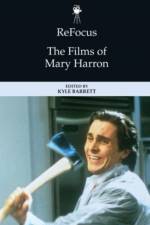
Mary Harron's diverse career includes cult films like I Shot Andy Warhol, American Psycho and The Notorious Bettie Page, as well as a range of network and cable television episodes. This is the first book to examine an overlooked filmmaker in relation to feminist cinema. It discusses the dialectical dynamics within her wide-ranging body of work, and it argues that Harron's work has a distinguishing approach to stylistic and aesthetic choices prompted by cultural contexts, controversial subject matter and production limitations. Each chapter provides an in-depth study on Harron's creative approaches to film and television production, with chapters offering close readings of each of her 5 narrative features, and her work in television and promotional film. With scholarly approaches from the fields of cinema, television, gender, fashion, death and celebrity studies, this is a long-awaited introduction to a groundbreaking figure in contemporary cinema. Kyle Barrett is a Lecturer and filmmaker in Screen and Media Studies at the University of Waikato, New Zealand.
PPC spine 22mm, 274 x 374mm 'A wonderfully wide-ranging collection of essays, critical and yet hopeful, presenting a compelling cultural map of the "New Turkey" and in so doing making a significant contribution to the globalisation of Turkish cultural studies.' John Storey, Emeritus Professor of Cultural Studies, University of Sunderland Investigates the relationship between culture, politics and power in present-day Turkey Since coming to power, President Erdoğan's Justice and Development Party (AKP) have focused on narrating their vision of a 'New Turkey' - an ideal that has resulted in the politicisation of popular culture and people's everyday lives. Exposing the strategy of Turkey's ruling elite to obtain cultural hegemony, this book examines the AKP's efforts to rewrite Turkish public memory by promoting its ideas through TV series, movies, propaganda videos, school curricula and material culture in urban public spaces. It also explores the tactics of cultural resistance developed by the politically weak to counter the ruling elite's dominant culture of pious conservatism. Key Features - Provides a comprehensive view of the politics of culture in Turkey under the rule of the AKP - Analyses the success of authoritarian populism and the decline of democracy in Turkey from a cultural studies perspective - Brings together 16 empirical studies which explore a variety of cultural aspects, from heavy metal music and arthouse films to headscarf politics and national memory Pierre Hecker is a Senior Researcher and Lecturer at the Centre for Near and Middle Eastern Studies (CNMS), Philipps-University Marburg. Ivo Furman is Assistant Professor at the Faculty of New Media and Communication, Istanbul Bilgi University. Kaya Akyıldız is Assistant Professor at the Department of Sociology, Istanbul Bahçeşehir University. Cover image: (c) Sumeyye Kesgin, Turkish illustrator and comic book artist, co-creator of Elsewhere series by Image Comics. (Instagram: @kesgin1 and Twitter: sumeyyekesgin1). Cover design: www.paulsmithdesign.com [EUP logo] edinburghuniversitypress.com ISBN 978-1-4744-9028-3 Barcode
Abonner på vårt nyhetsbrev og få rabatter og inspirasjon til din neste leseopplevelse.
Ved å abonnere godtar du vår personvernerklæring.