



Gjør som tusenvis av andre bokelskere
Abonner på vårt nyhetsbrev og få rabatter og inspirasjon til din neste leseopplevelse.
Ved å abonnere godtar du vår personvernerklæring.Du kan når som helst melde deg av våre nyhetsbrev.

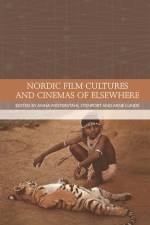
Nordic Film Cultures and Cinemas of Elsewhere introduces a new concept to Nordic film studies as well as to other small national, transnational and world cinema traditions.
Nordic Film Cultures and Cinemas of Elsewhere introduces a new concept to Nordic film studies as well as to other small national, transnational and world cinema traditions. Examining overlooked 'elsewheres', the book presents Nordic cinemas as international, cosmopolitan, diasporic and geographically dispersed, from their beginnings in the early silent period to their present 21st-century dynamics. Exploring both canonical works by directors like Ingmar Bergman and Lars von Trier, as well as a wide range of unknown or overlooked narratives of movement, synthesis and resistance, the book offers a new model of inquiry into a multi-varied Scandinavian cultural lineage, and into small nation and pan-regional world cinemas.Anna Westerstahl Stenport is Professor and Chair of the School of Modern Languages at Georgia Institute of Technology. Arne Lunde is Associate Professor in the Scandinavian Section and in Cinema and Media Studies at UCLA.
Written from various critical standpoints by internationally renowned scholars, 'Scottish Gothic: An Edinburgh Companion' interrogates the ways in which the concepts of the Gothic and Scotland have intersected and been manipulated from the mid-eighteenth century to the present day.
This volume examines the cultural importance of the coastline in Britain during a time of vast change.
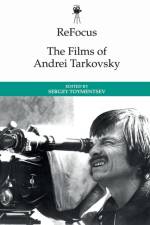
Reassesses the work of the influential Russian filmmaker Andrei TarkovskySheds new light on Tarkovsky's biography in connection to his filmsAssesses the director's contributions to film theory and aesthetics by close analysis of his films and writingsOffers highly original interpretations of Tarkovsky's oeuvre in the context of film aesthetics, psychoanalysis, philosophy, cultural studies and art historyTraces the influence of Tarkovsky's legacy on contemporary filmmakersDespite an output of only 7 feature films in 20 years, Andrei Tarkovsky has had a profound influence on international cinema. Famous for their spiritual depth and incredible visual beauty, his films have gained cult status among cineastes and are often included in ranking polls and charts dedicated to the 'best movies ever made.' Beginning with the late 1980s, Tarkovsky's highly complex cinema has continuously attracted scholarly attention by generating countless hermeneutic challenges and possibilities for film critics.This book provides a fresh look at the director's legacy, with critical essays by both world-famous and early-career film scholars. It examines Tarkovsky's cinematic techniques and his treatment of genre, landscape and sound and offers highly original interpretations of his oeuvre in the context of film aesthetics, psychoanalysis, philosophy, cultural studies and art history.
This book provides a fresh look at the director's legacy, with critical essays by both world-famous and early-career film scholars.
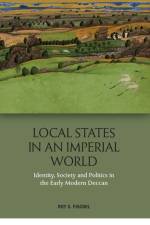
'In this important book, Fischel brings us a compelling new perspective on the politics and culture of early modern India. Combining a broad sweep with careful attention to local circumstance, he brings central India's Deccan states centre-stage. He demonstrates how their history reveals plural and flexible forms of the state, and a language of vernacular politics, differing significantly from the imperial models that have long dominated our understanding of this era.'Polly O'Hanlon, Oriental Institute, University of OxfordExplores the concept of the non-imperial state, taking a spatial approach to early modern political identitiesFocusing on the Deccan Sultanates of 16th- and 17th-century central India, Local States in an Imperial World promotes the idea that some polities of the time were not aspiring to be empires. Instead of the universalist and hierarchical vision typical of the language of empire, the sultanates presented another brand of state - one that prefers negotiation, flexibility and plurality of languages, religions and cultures.Building on theories of early modernity, empire, cosmopolitanism and vernaculars, Roy Fischel considers the components that shaped state and society: people, identities and idioms. He presents a frame for understanding the Deccan Sultanates as a rare case of the early modern non-imperial state, shedding light both on the region and on the imperial world surrounding it.Key Features. Develops the concept of the non-imperial early modern state, adding a new perspective to the ongoing debate of the early modern world and empire. Examines the political idiom of the sultanates as a unique case within the field of Persian studies. Case studies include: the structure of Iranian migrant society in the Deccan; the construction of political language in Bijapur; the development of the early Maratha State within, and in relation to, the sultanate system; and the different uses of Indian vernaculars in Muslim statesRoy S. Fischel is a Lecturer in the History of South Asia at SOAS, University of London.
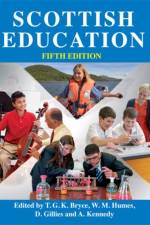
This detailed, informed and critical account of contemporary education in Scotland examines each of the main sectors in depth: early years, primary, secondary, further and higher education.
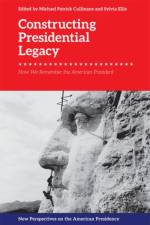
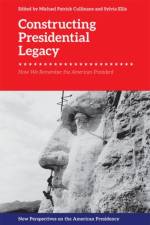
World-leading experts take a multi-disciplinary approach to explore how presidents, including Washington, Jefferson, Lincoln, the Roosevelts, Kennedy, Lyndon Johnson, Eisenhower, Reagan, Obama and Trump, are remembered in film, museums, public art, political invocations, pop culture, literature and evolving technological advancements.
World-leading experts take a multi-disciplinary approach to explore how presidents, including Washington, Jefferson, Lincoln, the Roosevelts, Kennedy, Lyndon Johnson, Eisenhower, Reagan, Obama and Trump, are remembered in film, museums, public art, political invocations, pop culture, literature and evolving technological advancements.
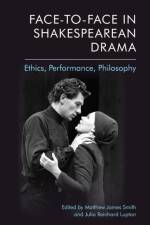
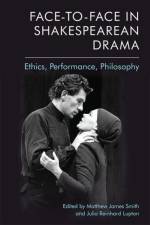
This book celebrates the theatrical excitement and philosophical meanings of human interaction in Shakespeare.
'Face to face encounters are the essence of dramatic art. This collection shows us that close reading - knowing the score - is the condition of possibility for theatrical performance. The essays here feature some of the freshest and most original writing on Shakespeare I have seen in a long time.'Michael D. Bristol, McGill UniversityExplores the drama of proximity and co-presence in Shakespeare's playsThis book celebrates the theatrical excitement and philosophical meanings of human interaction in Shakespeare. On stage and in life, the face is always window and mirror, representation and presence. A distinguished group of contributors examine the emotional and ethical surplus that appears between faces in the activity and performance of human encounter on stage. By transitioning from face as noun to face as verb - to face, outface, interface, efface, deface, sur-face - chapters reveal how Shakespeare's plays discover conflict, betrayal and deception as well as love, trust and forgiveness between faces and the bodies that bear them.Matthew J. Smith is Associate Professor of English at Azusa Pacific University.Julia Reinhard Lupton is Professor of English at the University of California, Irvine.Cover image: Ian McKellen and Judi Dench in Macbeth, at the Other Place, Royal Shakespeare Company, Stratford-upon-Avon, 1976 ©Laurence Burns / ArenaPALCover design:[EUP logo]edinburghuniversitypress.comISBN 978-1-4744-3568-0Barcode
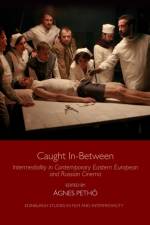
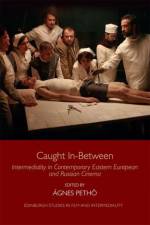
This collection of essays explores intermediality as a new perspective in the interpretation of the cinemas that have emerged after the collapse of the former Eastern bloc. As an aesthetic based on a productive interaction of media and highlighting cinema's relationship with the other arts, intermediality always implies a state of in-betweenness which is capable of registering tensions and ambivalences that go beyond the realm of media. The comparative analyses of films from Hungary, Romania, Poland, the Czech Republic, Bosnia and Herzegovina, and Russia demonstrate that intermediality can be employed in this way as a form of introspection dealing with complex issues of art and society. Appearing in a variety of sensuous or intellectual modes, intermediality can become an effective poetic strategy to communicate how the cultures of the region are caught in-between East and West, past and present, emotional turmoil and more detached self-awareness. The diverse theoretical approaches that unravel this in-betweenness contribute to the understanding of intermedial phenomena in contemporary cinema as a whole. Ágnes Pethő is Professor of Film Studies at the Department of Film, Photography and Media of the Sapientia Hungarian University of Transylvania in Cluj-Napoca (Romania).
This collection of essays explores intermediality as a new perspective in the interpretation of the cinemas that have emerged after the collapse of the former Eastern bloc.
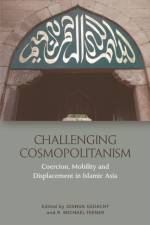
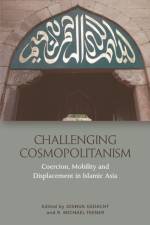
Featuring new historical and ethnographic research on China and Southeast Asia, this book explores how power and violence have shaped the experiences of Sufis and state-builders, as well as refugees and rebels, contributing to a more nuanced understanding of Islamic cosmopolitanism.
Featuring new historical and ethnographic research on China and Southeast Asia, this book explores how power and violence have shaped the experiences of Sufis and state-builders, as well as refugees and rebels, contributing to a more nuanced understanding of Islamic cosmopolitanism.
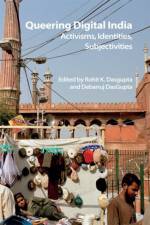
This pioneering interdisciplinary collection works across mainstream and alternative spaces such as Twitter, Youtube, Facebook, Grindr and gay men's health websites. These digital platforms are then situated within the socio-political situation in India, offering a new way of understanding queerness and Indian-ness.
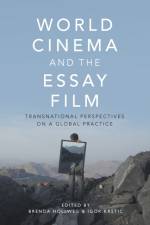
World Cinema and the Essay Film examines the ways in which essay film practices are deployed by non-Western filmmakers in specific local and national contexts, in an interconnected world.
Showcases the wide spectrum of Pound's engagement with the arts throughout his career.
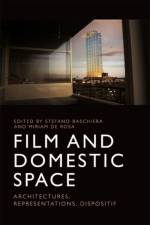
Film and Domestic Space: Architectures, Representations, Dispositif Edited by Stefano Baschiera and Miriam De Rosa Although film and media studies have widely engaged with the different aspects of social space, domestic space in film has rarely been studied in its multiple dimensions. Drawing on a broad range of theoretical disciplines - and with case studies of directors such as Chantal Akerman, Agnès Varda, Claire Denis, Todd Haynes, Amos Gitai, Martin Ritt, John Ford, Ila Bêka and Louise Lemoine - this book goes beyond the representational approach to the analysis of domestic space in cinema, in order to look at it as a dispositif. Adopting this innovative two-fold approach that couples representation and dispositif, the home is studied as an architecture, as the place that embodies, defines and perpetuates the family history, as the milieu of gender and generational struggle, as well as the first site where manifestations of power unfold. All chapters contribute to explore, unpack the complexities, and expand on the richness encapsulated in the notion of domesticity and dwelling in its fascinating relation to moving images. Stefano Baschiera is Senior Lecturer in Film Studies at Queen's University Belfast. Miriam De Rosa is Research Fellow at the Centre for Postdigital Cultures, Coventry University, and an independent film and exhibition curator.
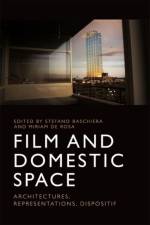
Film and Domestic Space: Architectures, Representations, DispositifEdited by Stefano Baschiera and Miriam De RosaAlthough film and media studies have widely engaged with the different aspects of social space, domestic space in film has rarely been studied in its multiple dimensions. Drawing on a broad range of theoretical disciplines - and with case studies of directors such as Chantal Akerman, Agnès Varda, Claire Denis, Todd Haynes, Amos Gitai, Martin Ritt, John Ford, Ila Bêka and Louise Lemoine - this book goes beyond the representational approach to the analysis of domestic space in cinema, in order to look at it as a dispositif.Adopting this innovative two-fold approach that couples representation and dispositif, the home is studied as an architecture, as the place that embodies, defines and perpetuates the family history, as the milieu of gender and generational struggle, as well as the first site where manifestations of power unfold. All chapters contribute to explore, unpack the complexities, and expand on the richness encapsulated in the notion of domesticity and dwelling in its fascinating relation to moving images.Stefano Baschiera is Senior Lecturer in Film Studies at Queen's University Belfast. Miriam De Rosa is Research Fellow at the Centre for Postdigital Cultures, Coventry University, and an independent film and exhibition curator.
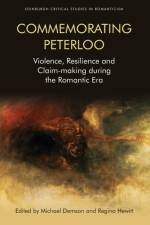
Two hundred years after the massacre of protestors in Manchester, known as Peterloo, distinguished scholars of Romantic-era literature join together in this commemorative volume to assess the implications of the violence.
Abonner på vårt nyhetsbrev og få rabatter og inspirasjon til din neste leseopplevelse.
Ved å abonnere godtar du vår personvernerklæring.