






Gjør som tusenvis av andre bokelskere
Abonner på vårt nyhetsbrev og få rabatter og inspirasjon til din neste leseopplevelse.
Ved å abonnere godtar du vår personvernerklæring.Du kan når som helst melde deg av våre nyhetsbrev.

A handy guide to the major figures and issues in Christian philosophy from Augustine to the present.This volume covers a broad historical sweep and takes into account those non-Christian philosophers that have had a great impact on the Christian tradition. However, it concentrates on the issues that perplex Christian philosophers as they seek to think through their faith in a philosophical way and their philosophical beliefs in the light of their faith. Examples of the topics discussed are the question of whether and how God knows the future, whether we actually know that God exists, and what Athens has to do with Jerusalem. The leaders of the recent revival of Christian analytic philosophy, especially Alvin Plantinga, Nicholas Wolterstorff, William Alston, and Robert Adams are also included.
Language, this book argues, is political from top to bottom, whether considered at the level of an individual speaker's choice of language or style of discourse with others (where interpersonal politics are performed), or at the level of political rhetoric, or indeed all the way up to the formation of national languages. By bringing together this set of topics and highlighting how they are interrelated, the book will function well as a textbook on any applied or sociolinguistic course in which some or all of these various aspects of the politics of language are covered.
We are all psychologists. As human beings, we all have intuitive beliefs and ideas about why people do the things they do, and the ability to form such beliefs is an important part of surviving and getting on in the world. Indeed those few individuals who lack this ability are severely disadvantaged. Studying psychology at a university level is both like and quite unlike these natural skills. Many of our beliefs about the social world are accurate, but some are unfortunately quite incorrect and misleading. How do we know when we are correct? How do we go about finding out? Our natural inclination is to seek evidence to confirm our beliefs, and therein lies prejudice. The answer from psychology is to form hypotheses and systematically test them against the evidence, and this is what makes psychology a science. This book aims to encourage and enable the reader to link a natural interest in human (and animal) behaviour with the sorts of models and theories that are used by academic psychologists. Part 1 covers the main areas of psychological endeavour, seeking to provide engaging examples of psychological questions, rather than to provide an exhaustive account. Part 2 addresses the business of living and studying at university, inviting the reader to reflect on what psychology has to say about being a student.
A Glossary of English Grammar presents a wide range of terms used to describe the way the English language is structured. Grammatical terms can be a problem for students, especially when there are alternative names for the same thing (for example, 'past tense' and 'preterite'). This book therefore provides a basic and accessible guide, focusing on the English language. Definitions of grammatical terms are given in simple language, with clear examples, many from authentic texts and spoken sources, showing how they are used. The terms used in the Comprehensive Grammar of the English Language are widely seen as standard, and form the basis of grammatical terminology in this book. At the same time, this glossary does not neglect other variants of English grammar, such as that of Huddleston and Pullum's influential Cambridge Grammar of the English Language, whose most important terms are also covered here. This book is indispensable for anyone wishing to understand present-day terminology of English grammar more fully.
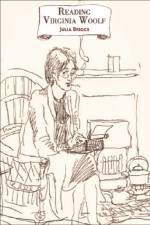
The pleasure and excitement of exploring Virginia Woolf's writings is at the heart of this book by a highly respected Woolf critic and biographer. Julia Briggs reconsiders Woolf's work--from some of her earliest fictional experiments to her late short story, 'The Symbol', and from the most to the least familiar of her novels--from a series of highly imaginative and unexpected angles. Individual essays analyse Woolf's neglected second novel, Night and Day and investigate her links with other writers (Byron, Shakespeare), her ambivalent attitudes to 'Englishness' and to censorship, her fascination with transitional places and moments, with the flow of time (and its relative nature), her concern with visions and revision and with printing and the writing process as a whole. We watch Woolf as she typesets an extraordinarily complex high modernist poem (Hope Mirrlees's 'Paris'), and as she revises her novels so that their structures become formally - and even numerologically - significant. A final essay examines the differences between Woolf's texts as they were first published in England and America, and the further changes she occasionally made after publication, changes that her editors have been slow to acknowledge. Julia Briggs brings to these discussions an extensive knowledge of Woolf both as a scholar and as an editor. She records her findings and observations in a lively, graceful and approachable style that will entice readers to delve further and more meaningfully into Woolf's work
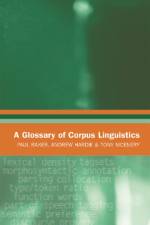
This alphabetic guide provides definitions and discussion of key terms used in corpus linguistics. Corpus data is being used in a growing number of English and Linguistics departments which have no record of past research with corpus data. This is the first comprehensive glossary of the many specialist terms in corpus linguistics and will be useful for corpus linguists and non corpus linguists alike. Clearly written, by a team of experienced academics in the field, the glossary provides full coverage of both traditional and contemporary terminology.
This alphabetic guide introduces terms referring to key concepts in semantics and pragmatics. The study of meaning as it is conveyed through language - the domain of semantics and pragmatics--is one of the central concerns of linguistics, and its importance cannot be exaggerated. Written by an author well-known in the field of semantics, the glossary provides clear and accessible explanations of terms drawn from a wide range of theoretical approaches.
A philosophical history of the concept of evil in western culture. 'Evil is something to be feared, and historically, we shall see, it is the enemy within who has been seen as representing the most intense evil of all - the enemy who looks just like us, talks like us, and is just like us.' The Myth of Evil explores a contradiction: the belief that human beings cannot commit acts of pure evil, that they cannot inflict harm for its own sake, and the evidence that pure 'evil' truly is a human capacity. Acts of horror are committed not by inhuman 'monsters', but by ordinary human beings. This contradiction is clearest in the apparently 'extreme' acts of war criminals, terrorists, serial murderers, sex offenders and children who kill. Phillip Cole delves deep into our two, cosily established approaches to evil. There is the traditional approach where evil is a force which creates monsters in human shape. And there is the 'enlightened' perspective where evil is the consequence of the actions of misguided or mentally deranged agents. Cole rejects both approaches. Satan may have played a role in its evolution, but evil is really a myth we have created about ourselves. And to understand it fully, we must acknowledge this. Drawing on the philosophical ideas of Nietzsche, Arendt, Kant, Mary Midgley and others, as well as theology, psychoanalysis, fictional representations and contemporary political events such as the global 'war on terror', Cole presents an account of evil that is thorough and thought-provoking, and which, more fundamentally, compels us to reassess our understanding of human nature.
The transition from RE A level, or from entirely alternate roots (many RS students have not taken previous RS related courses), to Religious Studies at university requires some careful shepherding. The field is huge. This introductory book will provide a clear map for the key features of the terrain. The two main strands shaping the book define what religions are and explain how Religious Studies approaches the religions. The language is clear at the same time as introducing some of the key terminology used in the study of religions. The study of religions and the academic discipline of Religious Studies are growing areas in tertiary education in the UK. The continued interest in RE AS and A level as well as the growth in cognate humanities and social sciences, such as Psychology, Sociology, Philosophy, at AS/A level and GNVQ level indicates the significant interest amongst students on matters that pertain to culture and humanity in general. Students realise that religion is a driving force in contemporary culture and the study of it is central to understanding the contemporary world. The statistics on religious belief bear out their interest: four billion out of the six billion people who inhabit the world profess religious belief; even in the 'secular' societies of the Western world religiosity is growing and changing--a recent BBC poll stated that 70% of people in the UK believe in a 'higher being' or spiritual force.
Drawing on two decades of research this social and political history of North-Western Ghana traces the creation of new ethnic and territorial boundaries, categories and forms of self-understanding, and represents a major contribution to debates on ethnicity, colonialism and the 'production of history'. It explores the creation and redefinition of ethnic distinctions and commonalities by African and European actors, showing that ethnicity's power derives from a contradiction: while ethnic identities purport to be non-negotiable, creating permanent bonds, stability and security, the boundaries of the communities created and the associated traits and practices are malleable and adaptable to specific interests and contexts.
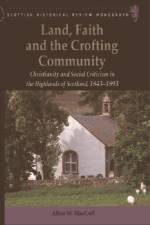
This book probes the deep-rooted links between the land, the people and the religious culture of the Scottish Highlands and Islands in the nineteenth century. The responses of the clergy to the social crisis which enveloped the region have often been characterised as a mixture of callous indifference, cowering deference or fatalistic passivity. Allan MacColl's pioneering research challenges such stereotypical representations of Highland ministers head-on. Land, Faith and the Crofting Community is the first full-scale examination of Christian social teaching in the nineteenth-century Gaidhealtachd and addresses a major gap in the historical understanding of Gaelic society. Seeking to lay bare the existing myths by a wide-ranging analysis of all the denominational, theological and social factors at play, this study boldly overturns the received scholarly and popular interpretations. A ground-breaking work, it explores a substantial but under-utilised field of evidence and questions whether or not Highland Christians "e; both clergy and laity "e; were committed to land reform as an engine of social improvement and conciliation. The Christian contribution to the development of a distinctively Highland identity "e; which found expression during the Crofters' War of the 1880s "e; is delineated, while wider links between theology and social philosophy are examined from beyond the perspective of the Highlands.
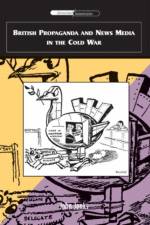
This is a study of the British state's generation, suppression and manipulation of news to further foreign policy goals during the early Cold War. Bribing editors, blackballing "e;unreliable"e; journalists, creating instant media experts through provision of carefully edited "e;inside information"e;, and exploiting the global media system to plant propaganda--disguised as news--around the world: these were all methods used by the British to try to convince the international public of Soviet deceit and criminality and thus gain support for anti-Soviet policies at home and abroad. Britain's shaky international position heightened the importance of propaganda. The Soviets and Americans were investing heavily in propaganda to win the "e;hearts and minds"e; of the world and substitute for increasingly unthinkable nuclear war. The British exploited and enhanced their media power and propaganda expertise to keep up with the superpowers and preserve their own global influence at a time when British economic, political and military power was sharply declining. This activity directly influenced domestic media relations, as officials used British media to launder foreign-bound propaganda and to create the desired images of British "e;public opinion"e; for foreign audiences. By the early 1950s censorship waned but covert propaganda had become addictive. The endless tension of the Cold War normalized what had previously been abnormal state involvement in the media, and led it to use similar tools against Egyptian nationalists, Irish republicans and British leftists. Much more recently, official manipulation of news about Iraq indicates that a behind-the-scenes examination of state propaganda's earlier days is highly relevant. John Jenks draws heavily on recently declassified archival material for this book, especially files of the Foreign Office's anti-Communist Information Research Department (IRD) propaganda agency, and the papers of key media organisations, journalists, politicians and officials. Readers will therefore gain a greater understanding of the depth of the state's power with the media at a time when concerns about propaganda and media manipulation are once again at the fore.
A radical approach to the philosophy of mind, in which states of mind are identified with dispositions to behave in certain ways.The approach taken by Rowland Stout is a thoroughly up-to-date version of behaviourism, although not a form of behaviourism that denies the existence of consciousness, free will, rationality, etc., nor aims to reduce these to other sorts of things. Properly understood, the idea of being disposed to behave in a certain way is seen to be exactly as rich and interesting as the idea of being in a certain state of mind. The fact that our ways of behaving are sensitive to practical rationality is taken to be an essential aspect of our nature as conscious agents. And in describing such a version of practical rationality Stout claims we are describing the mental state of someone whose behaviour is sensitive to it.His account of behaviourism rests on two central notions - that of a causal disposition to behave and that of sensitivity to practical rationality. He explains and develops these notions in some detail, and then uses them to construct powerful and original accounts of belief, intention, knowledge, perception and consciousness.Key Features* A systematic and completely original theoretical approach to the philosophy of mind* A re-evaluation of the history of the philosophy of mind based on a rejection of the generally accepted arguments in the 1960s and 1970s used by functionalists against behaviourists* A serious engagement with the intuitively compelling issues concerning behaviourism.
This textbook brings together an introduction to the political theory of democracy since Ancient times and a critical picture of its place in Britain today.The author examines the work of Plato and Aristotle, Rousseau and Mill, Marx and Weber, and locates them and others in the debate about what democracy means. He then scrutinises Britain's claim to be a developing democracy, from the power of the Prime Minister and the role of political parties to the influence of pressure groups and the media, as well as recent constitutional changes.In the context of declining public trust in political institutions and increasing reluctance to vote, crucial questions are tackled: do we have a democracy, and why does it matter? Key Features:*A wide-ranging, accessible introduction to the place of Democracy in Britain today*Divided into two halves: on democratic theory (reflecting its history, development, and key concepts) and democratic practice (examining political institutions)*Offers examples of documentary material to illustrate the ideas presented*Up-to-date: includes material written after the 2005 General Election
Germany, as Europe's most powerful state, has a political significance which underlines the importance of twentieth-century German political thought. Yet this tradition has been poorly represented in academic literature. This book offers: * an account of German political thought emphasising its diversity and contested nature * an overview of the subject that allows access to relatively unknown figures as well as the 'names' of the tradition (Weber, Schmitt, Arendt, Habermas) * a demonstration of the political significance of figures better known in other disciplines including law and sociology The book is organised chronologically, with a series of recurrent themes providing analytic unity: (i) the nature of politics (including political vocation and leadership, and definitions of politics), (ii) collective identity, (iii) the rule of law, (iv) the role of the state, (v) the role of political parties and the nature of parliamentary democracy, (vi) state intervention in society and the economy, and (vii) the international order. Pedagogical features include a glossary of German terms and a substantial set of biographical notes identifying the major theorists referred to in the text.
This textbook provides an introduction to the topical subject of constitutional change in Britain. It considers the historical origins of the constitution but its main focus is on recent reforms and their likely impact. The key theme running throughout the book is the debate as to whether the constitution has undergone a revolutionary transformation or has gradually evolved.
This book considers the constitutional position of the judiciary and its role in shaping the individual's relations with the state. This textbook provides an important, accessible introduction to an area of current widespread concern.
This introduction to the workings of the Prime Minister and Cabinet is written in light of major recent events and issues such as the war with Iraq, the Hutton Inquiry, the Butler Report, the Blair-Brown relationship, and continuing problems relating to Europe. This insightful volume gives readers an overview of the Blair premiership and the workings of a Labour Cabinet at a time when both are facing increased criticism and pressure.
The Civil War is an event of great cultural significance, impacting upon American literature, film, music, electronic media, the marketplace and public performance. This book takes an innovative approach to this great event in American history, exploring its cultural origins and enduring cultural legacy. It focuses upon the place of the Civil War across the broad sweep of American cultural forms and practices and reveals important links between historical events and contemporary culture.The first chapter introduces a discussion of ante-bellum culture and the part cultural forces played in the sectional crisis that exploded into full-blown war in 1861. Subsequent chapters focus on particular themes, appropriations, interpretations and manifestations of the War as they have appeared in American culture.
Language Planning is a resurgent academic discipline, reflecting the importance of language in issues of migration, globalisation, cultural diversity, nation-building, education and ethnic identity. Written as an advanced introduction, this book engages with all these themes but focuses specifically on language planning as it relates to education, addressing such issues as bilingualism and the education of linguistic minority pupils in North America and Europe, the educational and equity implications of the global spread of English, and the choice of media of instruction in post-colonial societies. Contextualising this discussion, the first two chapters describe the emergence and evolution of language planning as an academic discipline, and introduce key concepts in the practice of language planning. The book is wide-ranging in its coverage, with detailed discussion of the context of language policy in a variety of countries and communities across North America, Europe, Africa and Asia.
'Identity' is a central organizing feature of our social world. Across the social sciences and humanities, it is increasingly treated as something that is actively and publicly accomplished in discourse. This book defines identity in its broadest sense, in terms of how people display who they are to each other. Each chapter examines a different discursive environment in which people do 'identity work': everyday conversation, institutional settings, narrative and stories, commodified contexts, spatial locations, and virtual environments. The authors describe and demonstrate a range of discourse and interaction analytic methods as they are put to use in the study of identity, including 'performative' analyses, conversation analysis, membership categorization analysis, critical discourse analysis, narrative analysis, positioning theory, discursive psychology and politeness theory. The book aims to give readers a clear sense of the coherence (or otherwise) of these different approaches, the practical steps taken in analysis, and their situation within broader critical debates. Through the use of detailed and original 'identity' case studies in a variety of spoken and written texts in order, the book offers a practical and accessible insight into what the discursive accomplishment of identity actually looks like, and how to go about analyzing it.
This book presents a clear, concise and critical introduction to contemporary media and cultural studies. The book will be of interest to all students about to embark on courses in which knowledge of the mass media, cultural identities, popular culture, film, or television, forms a part of their programme. But the book is also aimed at those who are interested in how media and cultural identities can be studied in relation to audiences and industries in the context of local and global media. And finally, the book is of interest to all those who are studying aspects of the media, culture, and communications industries and who want to consolidate their knowledge and critical skills in more comprehensive ways. Get Set for Media and Cultural Studies will provide a concise learning aid.
This book is aimed at students who are thinking of studying Computer Science or a related topic at university. Part One is a brief introduction to the topics that make up Computer Science, some of which you would expect to find as course modules in a Computer Science programme. These descriptions should help you to tell the difference between Computer Science as taught in different departments and so help you to choose a course that best suits you. Part Two builds on what you have learned about the nature of Computer Science by giving you guidance in choosing universities and making your applications to them. Then Part Three gives you some advice on what to do once you get to university, how to get the most out of studying your Computer Science degree. The principal objective of the book is to produce happy students, students who know what they are letting themselves in for when they start a Computer Science course, and hence find themselves very well suited for the course they choose.
This volume is a study of the language of literary texts. It looks at the usefulness of pragmatic theories to the interpretation of literary texts and surveys methods of analysing narrative, with special attention given to narratorial authority and character focalisation. The book includes a description of Grice's Co-operative Principle and its contribution to the interpretation of literary texts, and considers Sperber and Wilson's Relevance Theory, with particular stress on the valuable insights into irony and varieties of indirect discourse it offers. Bakhtin's theories are introduced, and related to the more explicitly linguistic Relevance Theory. Metaphor, irony and parody are examined primarily as pragmatic phenomena, and there is a strand of sociolinguistic interest particularly in relation to the theories of Labov and Bakhtin.
Get Set for Study Abroad is a guide-book for students who are thinking of studying outside the UK as part of their home degree and for others who want to know what is involved. It takes you through the whole process, from finding out about the opportunities available and making your selection of a programme up to completing the studies and returning home. It explains what things you need to think about at each stage as you make your preparations and then carry out your studies. There are sections on academic requirements, costs and funding. The book also offers advice on study skills and outlines issues which arise in intercultural communication. It gives particular coverage of programmes in the European Union (such as Erasmus/Socrates) and the USA, the two main areas of interest for UK students. Though the focus is largely on undergraduates, there are sections dealing also with postgraduate study. Student commentaries, a guide to web-sites and printed materials, and a glossary of the terms you are most likely to encounter are also included. The text cuts through the red-tape and bureaucratic language of much of the programme literature and presents a student-friendly viewpoint with candour and good humour.
An introduction to Early Modern English, this book helps students of English and linguistics to place the language of the period 1500-1700 in its historical context as a language with a common core but also as one which varies across time, regionally and socially, and according to register. The volume focuses on the structure of what contemporaries called the General Dialect - its spelling, vocabulary, grammar and pronunciation - and on its dialectal origins. The book also discusses the language situation and linguistic anxieties in England at a time when Latin exerted a strong influence on the rising standard language. The volume includes:*The major changes in English from the 15th to the 18th century*Emphasis on long-term linguistic developments*Sources for the study of Early Modern English*Illustrations ranging from drama and personal letters to trials and early science*Exercises encouraging further exploration of the changing English language.
The first book to explore Virginia Woolf's preoccupation with the literary past and its profound impact on the content and structure of her novels.It analyses Woolf's reading and writing practices via her essays, diaries and reading notebooks and presents chronological studies of eight of her novels, exploring how Woolf's intensive reading surfaced in her fiction. The book sheds light on Woolf's varied and intricate use of literary allusions; examines ways in which Woolf revisited and revised plots and tropes from earlier fiction; and looks at how she used parody as a means both of critical comment and homage.
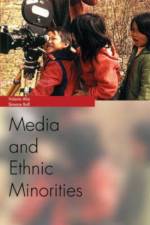
This book addresses cross-cultural representations of ethnic minority peoples by dominant society 'outsiders' and indigenous self-representation in the context of the 'New Media Nation'. In doing so, it explores the role of language, culture, identity and media in liberation struggles and the emergence of new political entities, and opens up issues of colonial oppression to public debate. It is intended to help inform policy in a variety of settings. Grounded in current perspectives on diaspora and homeland and drawing on Alia's work on minorities, media and identity as well as Bull's work on Maori socio-cultural issues and criminalisation of minorities, this volume offers a comparative, international perspective on the experiences of a broad range of ethnic minority peoples. These include Inuit and First Nations people in Canada; Native Americans and African Americans in the United States; Sami in northern Europe; Maori in New Zealand; Aboriginal people in Australia and Roma in Ireland and Britain.
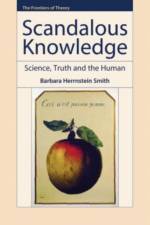
This book explores the radical reconceptions of knowledge and science emerging from constructivist epistemology, social studies of science, and contemporary cognitive science. Smith reviews the key issues involved in the twentieth-century critiques of traditional views of human knowledge and scientific truth and gives an extensively informed explanation of the alternative accounts developed by Fleck, Kuhn, Foucault, Latour, and others. She also addresses the various anxieties (e.g., over 'relativism') and 'wars' occasioned by these developments, placing them in their historical contexts and arguing that they are largely misplaced or spurious. Smith then examines the currently perplexed relations between the natural and human sciences, the grandiose claims and dubious methods of evolutionary psychology, and the complex play of naturalist, humanist, and posthumanist ideologies in contemporary views of the relation between humans and animals.
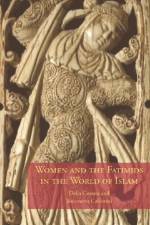
This first full-length study of women and the Fatimids is a groundbreaking work investigating an unexplored area in the field of Islamic and medieval studies. The authors have unearthed a wealth of references to women, thus re-inscribing their role in the history of one of the most fascinating Islamic dynasties, the only one to be named after a woman. At last some light is thrown on the erstwhile silent and shadowy figures of women under the Fatimids which gives them a presence in the history of women in medieval and pre-modern dynasties. Basing their research on a variety of sources from historical works to chronicles, official correspondence, documentary sources and archaeological findings, the authors have provided a richly informative analysis of the status and influence of women in this period. Their contribution is explored first within the context of Isma'ili and Fatimid genealogical history, and then within the courts in their roles as mothers, courtesans, wives and daughters, and as workers and servants. Throughout the book comparison is drawn with the status and roles of women in earlier, contemporary and subsequent Islamic as well as non-Islamic courts.
Abonner på vårt nyhetsbrev og få rabatter og inspirasjon til din neste leseopplevelse.
Ved å abonnere godtar du vår personvernerklæring.