














Gjør som tusenvis av andre bokelskere
Abonner på vårt nyhetsbrev og få rabatter og inspirasjon til din neste leseopplevelse.
Ved å abonnere godtar du vår personvernerklæring.Du kan når som helst melde deg av våre nyhetsbrev.

This book provides an insightful overview of the major cultural forms of 1930s America: literature and drama, music and radio, film and photography, art and design, and a chapter on the role of the federal government in the development of the arts. The intellectual context of 1930s American culture is a strong feature, whilst case studies of influential texts and practitioners of the decade - from War of the Worlds to The Grapes of Wrath and from Edward Hopper to the Rockefeller Centre - help to explain the cultural impulses of radicalism, nationalism and escapism that characterize the United States in the 1930s.
Environmental issues in the USA are more important now than ever before. The devastation inflicted by Hurricane Katrina, growing evidence of global warming, and a struggling national energy supply highlight the unfolding crisis. Environmental fears translate into US automobile giants plying consumers with 'fuel efficient' cars in the 'MPG Lounge' of sales. Politicians talk of energy independence and getting tough on polluters. Fears gravitate around a fast-approaching doomsday scenario, an environmental endgame, of wholesale collapse, unless something is done.Yet fears of doomsday are nothing new. John Wills shows how the current environmental crisis is firmly rooted in the past. As well as explaining how today's problems are manifestations of older systems of economics, culture and politics, he also argues that America has already witnessed a range of 'doomsday scenarios,' both real and imagined. He identifies and explores a cast of 'doomsday landscapes' that includes the Battle of the Wilderness in Virginia, the Santa Barbara Oil Spill, the 'Fable for Tomorrow' town featured in Rachel Carson's Silent Spring (1962), and Nevada's Doom Towns 1 and 2 blown apart by atomic testing in the 1950s. He reflects on contemporary ruminations over whether nature as a category endures given both the rising contamination of the US landscape and consumer proclivity for celebrating fake mementos of the outdoors (such as plastic lawn flamingos and artificial plants). And most significantly, he poses the question of whether Americans have been inviting doomsday through their long-term environmental actions.
The American West used to be a story of gunfights, glory, wagon trails, and linear progress. Historians such as Frederick Jackson Turner and Hollywood movies such as Stagecoach (1939) and Shane (1953) cast the trans-Mississippi region as a frontier of epic proportions where 'savagery' met 'civilization' and boys became men.During the late 1980s, this old way of seeing the West came under heavy fire. Scholars such as Patricia Nelson Limerick and Richard White forged a fresh story of the region, a new vision of the West, based around the conquest of peoples and landscapes.This book explores the bipolar world of Turner's Old West and Limerick's New West and reveals the values and ambiguities associated with both historical traditions. Sections on Lewis and Clark, the frontier and the cowboy sit alongside work on Indian genocide and women's trail diaries. Images of the region as seen through the arcade Western, Hollywood film and Disney theme parks confirm the West as a symbolic and contested landscape.Tapping into popular fascination with the Cowboy, Hollywood movies, the Indian Wars, and Custer's Last Stand, the authors show the reader how to deconstruct the imagery and reality surrounding Western history.Key Features*Uses popular subjects (the Cowboy, Hollywood westerns, the Indian Wars, and Custer's Last Stand) to enliven the text*Includes 13 b+w illustrations*Interdisciplinary approach covers film, literature, art and historical artefacts
Philosophy of Language A-Z offers a broad coverage of theories, debates, concepts, problems and philosophers in the philosophy of language. It consists of concise and accessible entries on each of the key terms and issues in this area of philosophy. Whilst this book is primarily focused on contemporary philosophy of language as discussed within the tradition of analytic philosophy, it also includes entries on historical topics and on key terms and philosophers working in the continental tradition.
This pocket-sized alphabetical guide to phonology provides an introduction to the range of phenomena studied in phonology and the main theoretical frameworks for engaging in phonological analysis. The entries are concise and clear, providing an overview of one of the main area of linguistic analysis.
Storm clouds always gather over the story of the Highland Clearances. The eviction of the Highlanders from the glens and straths of the Highlands and Islands of the north of Scotland still causes great historical dispute more than a century after the events. The Highland Clearances also generated a great deal of contemporary controversy and documentation. The record comes in diverse forms and with radically different provenances, offering excellent material for exercises in historical analysis and selection. Debating the Highland Clearances introduces the Highland Clearances as a classic historical problem. Eric Richards reviews the historical debate and examines the methods and sources employed by the combatants past and present. The debates among historians, novelists, politicians and economists are no less passionate today and raise major questions about interpretation and the appropriate frame of reference for the noisy and continuing public debate about the Highland Clearances. This book prese
This book explores the ways in which a range of recent American novelists have handled the genre of the 'coming-of-age' novel, or the Bildungsroman. Novels of this genre characteristically dramatise the vicissitudes of growing up and the trials and tribulations of young adulthood, often presented through depictions of immediate family relationships and other social structures. This book considers a variety of different American cultures (in terms of race, class and gender) and a range of contemporary coming-of-age novels, so that aesthetic judgements about the fiction might be made in the context of the social history that fiction represents. A series of questions are asked:* Does the coming-of-age moment in these novels coincide with an interpretation of the 'fall' of America?* What kind of national commentary does it therefore facilitate?* Is the Bildungsroman a quintessentially American genre?* What can it usefully tell us about contemporary American culture? Although the focus is on the conte
An important critical study of Canadian literature, placing internationally successful anglophone Canadian authors in the context of their national literary history. While the focus of the book is on twentieth-century and contemporary writing, it also charts the historical development of Canadian literature and discusses important eighteenth- and nineteenth-century authors. The chapters focus on four central topics in Canadian culture: Ethnicity, Race, Colonisation; Wildernesses, Cities, Regions; Desire; and Histories and Stories. Each chapter combines case studies of five key texts with a broad discussion of concepts and approaches, including postcolonial and postmodern reading strategies and theories of space, place and desire. Authors chosen for close analysis include Margaret Atwood, Michael Ondaatje, Alice Munro, Leonard Cohen, Thomas King and Carol Shields.
What key concerns are reflected in documentaries produced in and about the United States? How have documentaries engaged with competing visions of US history, culture, politics, and national identity? This book examines how documentary films have contributed to the American public sphere - creating a kind of public space, serving as sites for community-building, public expression, and social innovation. Geiger focuses on how documentaries have been significant in forming ideas of the nation, both as an imagined space and a real place. Moving from the dawn of cinema to the present day, this is the first full-length study to focus on the extensive range and history of American non-fiction filmmaking. Combining comprehensive overviews with in-depth case studies, Geiger maps American documentary's intricate histories, examining the impact of pre- and early cinema, travelogues, the avant-garde, 1930s social documentary, propaganda, direct cinema, postmodernism, and 'new' documentary. Offering detailed close analyses and fresh insights, this book provides students and scholars with a stimulating guide to American documentary, reminding us of its important place in cinema history. Key Features* Historical overview of major documentary forms and practices in the USA* Case studies, including Nanook of the North, The Plow that Broke the Plains, Grey Gardens, and Fahrenheit 9/11* Analysis of critical debates relating to filmic representations of reality
A concise alphabetical guide to the key terms, issues, theoretical approaches, projects and thinkers in feminist philosophy. Feminist Philosophies A-Z covers contemporary material in a number of feminist approaches. It illustrates the complexity, range and interconnectedness of issues in feminist philosophy while making clear the relationship of feminist philosophy to the rest of philosophy as a discipline (epistemology, metaphysics, ethics, social philosophy and metaphysics). Entries are pithy, detailed, informative and are cross-referenced to guide the reader through the lively debates in feminism. This volume is an indispensable resource for philosophers, students, and Women's Studies faculties as well as anyone with an interest in feminist philosophy."e;
This wide-ranging book illuminates the importance of the Western in American history. It explores the interconnections between the Western in both literature and film and the United States in the 20th century.Structured chronologically, the book traces the evolution of the Western as a uniquely American form. The author argues that America's frontier past was quickly transformed into a set of symbols and myths, an American meta-narrative that came to underpin much of the 'American century'. He details how and why this process occurred, the form and function of Western myths and symbols, the evolution of this mythology, and its subversions and reconstructions throughout 20th-century American history.The book engages with the full range of historical, literary and cinematic perspectives and texts, from the founding Western histories of Theodore Roosevelt and Frederick Jackson Turner to the New Western history of Patricia Nelson Limerick and Richard White.
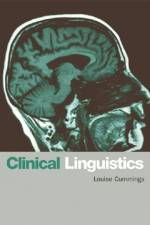
Louise Cummings provides a comprehensive introduction to speech and language therapy which will give SLT students an excellent starting point for a wide range of communication impairments. The Royal College of Speech and Language Therapists estimates that 2.5 million people in the UK have a communication disorder. Of this number, some 800,000 people have a disorder that is so severe that it is hard for anyone outside their immediate families to understand them. In Clinical Linguistics, Louise Cummings provides a comprehensive introduction to speech and language therapy which will give SLT students an excellent starting point for a wide range of communication impairments. In chapters that are dedicated to the discussion of individual communication disorders, Cummings argues that no treatment of this area can reasonably neglect an examination of the prevalence and causes of communication disorders. The assessment and treatment of these disorders by speech and language therapists are discussed at length.
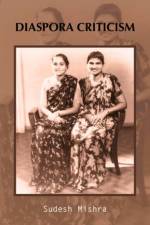
The first introduction to the field of Diaspora criticism that serves both as a timely guide and a rigorous critique. Diaspora criticism takes the concept 'diaspora' as its object of inquiry and provides a framework for discussing displaced communities in a way that takes contemporary social, cultural and economic pressures into account. It also offers an alternative to Postcolonial Studies. This book is the first to provide an accessible overview of the critical trends in Diaspora criticism and to critically evaluate the major Diaspora critics and their models, with the aim of adding to the debate on methodology.
Philosophy of science has always been an integral part of philosophy, and since the beginning of the 20h century it has developed its own structure and its fair share of technical vocabulary and problems. Philosophy of Science A-Z gives you concise, accurate and illuminating accounts of key positions, concepts, arguments and figures in the philosophy of science. It helps you to understand the current debates, explains their historical development and connects them with broader philosophical issues. It presupposes little prior knowledge of philosophy of science and is equally useful to students coming to the subject for the first time and for more advanced scholars who need to look up particular terms or figures. You will find illuminating explanations, careful analysis, relevant examples, open problems and precise arguments. Philosophy of science is a flourishing discipline and Philosophy of Science A-Z is a practical and imaginative way into and through it.
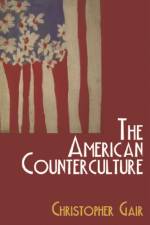
The American counterculture played a major role during a pivotal moment in American history. Post-War prosperity combined with the social and political repression characteristic of middle-class life to produce both widespread civil disobedience and artistic creativity in the Baby Boomer generation.This introduction explores the relationship between the counterculture and American popular culture. It looks at the ways in which Hollywood and corporate record labels commodified and adapted countercultural texts, and the extent to which countercultural artists and their texts were appropriated. It offers an interdisciplinary account of the economic and social reasons for the emergence of the counterculture, and an appraisal of the key literary, musical, political and visual texts which were seen to challenge dominant ideologies.
The transformation of Rome from a small central Italian city-state into the sole Mediterranean superpower has long proved fascinating and controversial. At its height the Roman Empire extended from Britain in the North to Libya in the South and from Spain in the West to Syria in the East. It has impressed not only by its extent but also by its longevity. Andrew Erskine examines the course and nature of Roman expansion, focusing on explanations, ancient and modern, the impact of Roman rule on the subject and the effect of empire on the imperial power. All these topics have created a tremendous amount of discussion among scholars, not least because the study of Roman imperialism has always been informed by contemporary perceptions of international power relations. The book is divided into two halves. Part I treats some of the main issues in modern debates about Roman imperialism, while Part II offers a selection of the most important source material allowing readers to enter these debates themselves
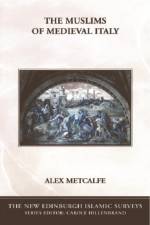
This significant new work focuses on the formation and fragmentation of an Arab-Muslim state and its society in Sicily and south Italy between 800 and 1300, which led to the formation of an enduring Muslim"e;Christian frontier during the age of the Crusades. It examines the long- and short-term impact of Muslim authority in regions that were to fall into the hands of European rulers, and explains how and why Muslim and Norman conquests imported radically different dynamics to the central Mediterranean. On the island of Sicily, a majority Muslim population came to be ruled by Christian kings who adopted and adapted political ideologies from Mediterranean regimes, while absorbing cultural influences from the diverse peoples over whom they reigned. This work provides an engaging, expert and wide-ranging introduction to the subject, and offers fresh, clear insights into the evolution of both Europe and the Islamic world.Key Features*An authoritative new book in a field where very little has yet been written*Explores the formation of lasting Muslim-Christian frontiers in medieval Europe. *Covers issues including Muslim-Christian relations, conquest, colonisation, conflict and acculturation, and the transmission and exchange of ideas from east to west*Suitable for a range of readers from the interested public and students to university researchers
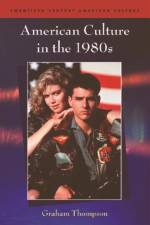
This book looks beyond the common label of 'Ronald Reagan's America' to chart the complex intersection of cultures in the 1980s. In doing so it provides an insightful account of the major cultural forms of 1980s America - literature and drama; film and television; music and performance; art and photography - and influential texts and trends of the decade: from White Noise to Wall Street, from Silicon Valley to MTV, and from Madonna to Cindy Sherman. A focused chapter considers the changing dynamics of American culture in an increasingly globalised marketplace.
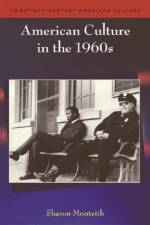
This book charts the changing complexion of American culture in one of the most culturally vibrant of twentieth-century decades. It provides a vivid account of the major cultural forms of 1960s America - music and performance; film and television; fiction and poetry; art and photography - as well as influential texts, trends and figures of the decade: from Norman Mailer to Susan Sontag; from Muhammad Ali's anti-war protests to Tom Lehrer's stand-up comedy; from Bob Dylan to Rachel Carson; and from Pop Art to photojournalism. A chapter on new social movements demonstrates that a current of conservatism runs through even the most revolutionary movements of the 1960s and the book as a whole looks to the West and especially to the South in the making of the sixties as myth and as history.
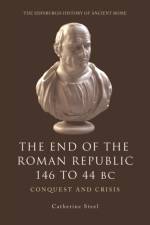
A crucial and turbulent centuryBy 146, Rome had established itself as the leading Mediterranean power.Over the next century, it consolidated its power into an immense territorial empire. At the same time, the internal balance of power shifted dramatically, as a narrow ruling elite was challenged first by the rest of Italy, and then by military commanders, a process which culminated in the civil war between Pompey and Caesar and the re-establishment of monarchy. Catherine Steel tells the history of this crucial and turbulent century, focussing on the issues of freedom, honour, power, greed and ambition, and the cherished but abused institutions of the Republic which were central to events then and which have preoccupied historians ever since.Key features:"e; traces the processes of change which transformed Rome from a republic to a monarchy"e; explores a period of political crisis in relation to its military and cultural dynamism"e; analyses the political culture of the Roman Republic as a dynamic and evolving system which reflected changes in citizenship and in the ruling elite
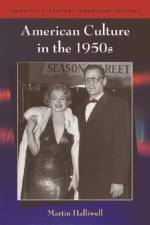
This book provides a stimulating account of the dominant cultural forms of 1950s America: fiction and poetry; theatre and performance; film and television; music and radio; and the visual arts. Through detailed commentary and focused case studies of influential texts and events - from Invisible Man to West Side Story, from Disneyland to the Seattle World's Fair, from Rear Window to The Americans - the book examines the way in which modernism and the cold war offer two frames of reference for understanding the trajectory of postwar culture. The two core aims of this volume are to chart the changing complexion of American culture in the years following World War II and to provide readers with a critical investigation of 'the 1950s'. The book provides an intellectual context for approaching 1950s American culture and considers the historical impact of the decade on recent social and cultural developments.
During the late 1970s and 1980s speaking out about the traumatic reality of incest and rape was a rare and politically groundbreaking act. Today it is a ubiquitous feature of popular culture and its political value uncertain. In Violence and the Cultural Politics of Trauma, Jane Kilby explores the complexity and consequences of this shift in giving first-hand testimony by focusing on debates over recovered memory therapy and false memory syndrome, the spectacle of talkshow disclosures, discourses of innocence and complicity as well as the aesthetics and affect of shock. In counterpoint to the frequently cynical readings of personal narrative politics, Kilby advances an alternative reading built around the concept of unrepresentability. Key to this intervention is the stress placed by Kilby on the limits of representing sexually traumatic experiences and how this requires both theoretical and methodological innovation. Based on close readings of survivor narratives and artworks, this book demonstrates the significance of unrepresentability for a feminist understanding of sexual violence and victimisation. The book will of interest to those working in the areas of Cultural, Literary, Media and Women's Studies as well as Memory and Trauma Studies.Key Features* Provides a topical discussion of the debates generated by a mass culture of speaking out about violence and victimisation* Offers an interdisciplinary case-study analysis of survivor testimony* Applies cutting-edge developments in trauma and testimony theory to a feminist analysis of women's incest testimony* Makes accessible the significance of unrepresentability for a cultural politics of trauma
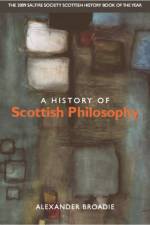
Winner of the Saltire Society Scottish History Book of the Year 2009. Shortlisted for the Saltire Society Scottish Research Book of the Year 2009 This is the first-ever account of the full 700-year-old Scottish philosophical tradition. The book focuses on a number of philosophers in the period from the later-13th century until the mid-20th and attends especially to some brilliantly original texts. The book also indicates ways in which philosophy has been intimately related to other aspects of Scotland's culture. Among the greatest philosophers that Scotland has produced are John Duns Scotus, Francis Hutcheson, David Hume, Adam Smith and Thomas Reid. But there were many other fine, even brilliant philosophers who are less highly regarded, if they are noticed at all, such as John Mair, George Lokert, Frederick Ferrier, Andrew Seth, Norman Kemp Smith and John Macmurray. All these thinkers and many others are discussed in these pages. This clearly written and approachable book gives us a strong sense of the Scottish philosophical tradition.
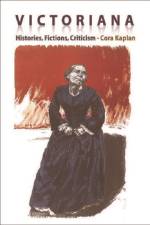
A series of astute critical reflections on our enduring fascination with all things Victorian. In this book Cora Kaplan looks at the politics of Victorians from the 1970s to the present, a politics that emerges from the alternation between nostalgia and critique in fiction, film, biography and literary studies. She asks how Jane Eyre can still evoke tears and rage, as well as inspiring imitation and high art, and why Henry James has become fiction's favourite late Victorian character in the new millennium? Victorians, the book argues, has developed a modern history of its own in which we can trace the shifting social and cultural concerns of the last few decades. Through the constant interrogation of history in such innovative works as John Fowles's The French Lieutenant's Woman, A.S. Byatt's Possession, David Lodge's Nice Work, Peter Ackroyd's Dickens, Jane Campion's The Piano, Colm Toibin's The Master, Sarah Waters's Fingersmith, Alan Hollinghurst's The Line of Beauty and Julian Barnes's Arthur and George, 'Victoriana' maps out a very particular postmodern temporality.
In the 780s northern Britain was dominated by two great kingdoms; Pictavia, centred in north-eastern Scotland and Northumbria which straddled the modern Anglo-Scottish border. Within a hundred years both of these kingdoms had been thrown into chaos by the onslaught of the Vikings and within two hundred years they had become distant memories. This book charts the transformation of the political landscape of northern Britain between the eighth and the eleventh centuries. Central to this narrative is the mysterious disappearance of the Picts and their language and the sudden rise to prominence of the Gaelic-speaking Scots who would replace them as the rulers of the North. From Pictland to Alba uses fragmentary sources which survive from this darkest period in Scottish history to guide the reader past the pitfalls which beset the unwary traveller in these dangerous times. Important sources are presented in full and their value as evidence is thoroughly explored and evaluated.
A fundamental challenge to the foundations of the discipline of international law. This book offers an internal critique of the discipline of international law whilst showing the necessary place for philosophy within this subject area. By reintroducing philosophy into the heart of the study of international law Anthony Carty explains how traditional philosophy has always been an integral part of the discipline. However, this has been driven out by legal positivism, which has, in turn become a pure technique of law. He explores the extent of the disintegration and confusion in the discipline and offers various ways of renewing philosophical practice. A range of approaches are covered - post-structuralism, neo-Marxist geopolitics, social-democratic constitutional theory and existential phenomenology - encouraging the reader to think afresh about how far to bring order to, or find order in, contemporary international society.
A comprehensive guide to the main positions, debates, key figures and problems as well as important terms in the philosophy of mind.Philosophy of Mind A-Z contains entries on historical and contemporary key figures, explaining the importance of the longstanding debates and how the contemporary field has been shaped. It covers both traditional and current topics, and even those topics that are only beginning to emerge. It includes a wide range of philosophy of mind, from Plato and Leibniz to externalism and the frame problem, from Husserl to neural Darwinism, from mental causation to the problem of consciousness. All of these issues are explained in compact clearly written entries where difficult topics are introduced with the help of numerous examples.Philosophy of Mind A-Z is a reliable and friendly guide for anyone studying philosophy of mind or cognitive science, or simply interested in the many sides and facets of our mental life.
Regulation of the media has traditionally been premised upon claims of 'the public interest', yet the term itself remains contested and generally ill defined. In the context of technological development and convergence, as well as corporate conglomeration, traditional 'public service' values in British broadcasting are challenged by market values. With such ongoing trends continuing apace, regulators must increasingly justify their interventions.The communication industries' commercialisation and privatisation pose a fundamental threat to democratic values. Media Regulation, Public Interest and the Law argues that regulators will only successfully protect such values if claims associated with 'citizenship' are recognised as the rationale and objective for the regulatory endeavour. While such themes are central to the book, this second edition has been substantially revised and updated, to take account of matters such as European Directives, the UK's Communications Act 2003, the process of reviewing the BBC's Charter, and relevant aspects of the reform of general competition law.Key Features*Identifies and examines the rationales underlying media regulation and the current challenges to them.*Considers fully the actual and potential utility of legal mechanisms and principles in the design and activities of regulatory institutions.*Fully updated to take account of the European Union's 2002 New Regulatory Framework and the UK's Communications Act 2003.*Accessible to a wide readership in media studies, journalism, broadcasting and law.Praise for the First Edition"e;A detailed and critical assessment of the problems and confusions of recent media regulation in the UK including digital television franchising and the Broadcasting Complaints Commission... it is well organised, and should be a useful resource for more advanced students and academics...for updating the public regulation case with vigour and clarity this book is to be welcomed."e;THES
This original study examines how the plays of Shakespeare and his contemporaries dramatise the cultural preoccupation with cosmetics. Farah Karim-Cooper analyses contemporary tracts that address the then-contentious issue of cosmetic practice and identifies a 'culture of cosmetics', which finds its visual identity on the Renaissance stage. She also examines cosmetic recipes and their relationship to drama as well as to the construction of early modern identities.
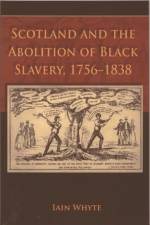
Although much has been written about Scottish involvement in slavery, the contribution of Scots to the abolition of black slavery has not yet been sufficiently recognised. This book starts with a Virginian slave seeking his freedom in Scotland in 1756 and ends with the abolition of the apprenticeship scheme in the West Indian colonies in 1838. Contemporary documents and periodicals reveal a groundswell of revulsion to what was described as "e;the horrible traffik in humans"e;. Petitions to Parliament came from remote islands in Shetland as well as from large public meetings in cities. In a land steeped in religion, ministers and church leaders took the lead in giving theological support to the cause of abolition. The contributions of five London Scots who were pivotal to the campaign throughout Britain are set against opposition to abolition from many Scots with commercial interests in the slave trade and the sugar plantations. Missionaries and miners, trades guilds and lawyers all played their parts in challenging slavery. Many of their struggles and frustrations are detailed for the first time in an assessment of the unique contribution made by Scotland and the Scots to the destruction of an institution whose effects are still with us today.
Abonner på vårt nyhetsbrev og få rabatter og inspirasjon til din neste leseopplevelse.
Ved å abonnere godtar du vår personvernerklæring.