


Gjør som tusenvis av andre bokelskere
Abonner på vårt nyhetsbrev og få rabatter og inspirasjon til din neste leseopplevelse.
Ved å abonnere godtar du vår personvernerklæring.Du kan når som helst melde deg av våre nyhetsbrev.

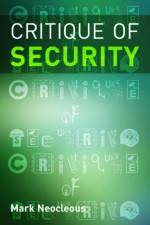
This book brings together a range of diverse discussions about security in order to sustain a genuine critique of the subject. It is unique in its examination of the historical and political links between social security and national security and in its assessment of the way that emergency powers (as the most intense realisation of the rhetoric of 'national security') have been synthesised with 'normal' law.Among other ideas and concepts, Mark Neocleous discusses the place of security in the liberal tradition of political theory. Building on insights from Foucault and Marx, he argues that liberalism's central category is not liberty, but security. He also deals with the role of security in justifying the introduction and continuation of emergency powers through a historical excavation of the state of emergency, a political reading of the way emergency powers are only tangentially concerned with warfare, and a theoretical reading of the debate between Schmitt and Benjamin.
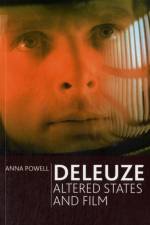
Deleuze, Altered States and Film offers a typology of altered states, defining dream, hallucination, memory, trance and ecstasy in their cinematic expression. The book presents altered states films as significant neurological, psychological and philosophical experiences. Chapters engage with films that simultaneously present and induce altered consciousness. They consider dream states and the popularisation of alterity in drugs films. The altered bodies of erotic arousal and trance states are explored, using haptics and synaesthesia. Cinematic distortions of space and time as well as new digital and fractal directions are opened up. Anna Powell's distinctive re-mapping of the film experience as altered state uses a Deleuzian approach to explore how cinema alters us by 'affective contamination'. Arguing that specific cinematic techniques derange the senses and the mind, she makes an assemblage of philosophy and art, counter-cultural writers and filmmakers to provide insights into the cinematic event as intoxication. The book applies Deleuze, alone and with Guattari, to mainstream films like Donnie Darko as well as arthouse and experimental cinema. Offering innovative readings of 'classic' altered states movies such as 2001, Performance and Easy Rider, it includes 'avant-garde' and 'underground' work. Powell asserts the Deleuzian approach as itself a kind of altered state that explodes habitual ways of thinking and feeling.
Jacques Derrida (1930-2004) was the most original and inspiring writer and philosopher of our time. In a series of distinctive essays that are at once self-contained and intricately linked, Royle explores the legacies of Derrida's thinking in the context of philosophy, language, globalisation, war, terrorism, justice, the democracy to come, poetry, literature, memory, mourning, the gift, friendship and dreams. Lucid, inventive and at times funny, Royle allows us to appreciate how much Derrida's work has altered the ways we read and think. Autobiography, children's literature, the Gothic and modernist fiction, for example, figure together with philosophy, queer studies, speech act theory and psychoanalysis. The writings of Horace Walpole, Herman Melville, E. M. Forster, Elizabeth Bowen, Joe Brainard and David McKee are illuminatingly put in play alongside Shakespeare. Royle's book suggests that one of Derrida's most profound legacies has to do with the combination of responsibility and freedom his work inspires for both reading and writing. In Memory of Jacques Derrida offers an exceptionally clear overview of Derrida's work, while also tracing directions in which it might productively be read in the future.
The European Union is a distinctive creation. There have been several examples of countries that have forged links in ventures of mutual benefit, but in aim, method and achievement this union has gone much further than the others.From the beginning, the EU has always been more than just a customs union. It has aimed for an ever closer union of its peoples and has developed supranational institutions with powers binding upon its members. Since its creation in 1993 it has also grown in size and in the extent of its responsibilities. Integration and intergovernmentalism have been the two forces at work in the evolution of the Community into the Union of 27 members today.In this volume the author sets out to provide an authoritative study of the EU, which clearly explains how it functions and makes it intelligible to a wide readership.
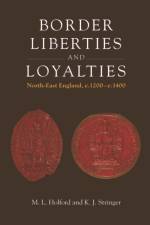
This book examines the organisation of power and society in north-east England over two crucial centuries in the emergence of the English 'state'. England is usually regarded as medieval Europe's most centralised kingdom, yet the North-East was dominated by liberties - largely self-governing jurisdictions - that greatly restricted the English crown's direct authority in the region. These local polities receive here their first comprehensive discussion; and their histories are crucial for understanding questions of state-formation in frontier zones, regional distinctiveness, and local and national loyalties. The analysis focuses on liberties as both governmental entities and sources of socio-political and cultural identification. It also connects the development of liberties and their communities with a rich variety of forces, including the influence of the kings of Scots as lords of Tynedale, and the impact of protracted Anglo-Scottish warfare from 1296. Why did liberties enjoy such long-term relevance as governance structures? How far, and why, did the English monarchy respect their autonomous rights and status? By what means, and how successfully, were liberty identities created, sharpened and sustained? In addressing such issues, this ground-breaking study extends beyond regional history to make significant contributions to the ongoing mainstream debates about 'state', 'society', 'identity' and 'community'.
World Ethics: The New Agenda identifies different ways of thinking about ethics, and of thinking ethically about international and global relations. It also considers several theories of world ethics in the context of issues such as war and peace, world poverty, the environment and the United Nations.Key Features:* Rejects the idea of international scepticism and the 'morality of states'* Demonstrates the distinction between a global ethic as a theory and as social reality* Defends the claim that we are world citizens with global duties The second edition has been substantially revised to take account of recent global developments. The discussion is grounded in an awareness of the post-9/11 world in which we live and offers a more detailed exploration of the idea of global citizenship and a global or cosmopolitan ethic. There are new sections on terrorism and security and on global justice, and additional material on issues such as climate change, internationalist ethics, the ethics of war, sustainability, development, globalisation, global civil society and global governance. Each chapter now has a summary box at the beginning and a set of questions for discussion at the end.
In these essays, collected here for the first time, renowned critic Catherine Belsey puts theory to work in order to register Shakespeare's powers of seduction, together with his moment in history. Teasing out the meanings of the narrative poems, as well as some of the more familiar plays, she demonstrates the possibilities of an attention to textuality that also draws on the archive. A reading of the Sonnets, written specially for this book, analyses their intricate and ambivalent inscription of desire. Between them, these essays trace the progress of theory in the course of three decades, while a new introduction offers a narrative and analytical overview, from a participant's perspective, of some of its key implications. Written with verve and conviction, this book shows how texts can offer access to the dissonances of the past when theory finds an outcome in practice.
In the first full-length literary-historical study of its subject, Edward Larrissy examines the philosophical and literary background to representations of blindness and the blind in the Romantic period. In detailed studies of literary works he goes on to show how the topic is central to an understanding of British and Irish Romantic literature. While he considers the influence of Milton and the 'Ossian' poems, as well as of philosophers, including Locke, Diderot, Berkeley and Thomas Reid, much of the book is taken up with new readings of writers of the period. These include canonical authors such as Blake, Wordsworth, Scott, Byron, Keats and Percy and Mary Shelley, as well as less well-known writers such as Charlotte Brooke and Ann Batten Cristall. There is also a chapter on the popular genre of improving tales for children by writers such as Barbara Hofland and Mary Sherwood. Larrissy finds that, despite the nostalgia for a bardic age of inward vision, the chief emphasis in the period is on the compensations of enhanced sensitivity to music and words. This compensation becomes associated with the loss and gain involved in the modernity of a post-bardic age. Representations of blindness and the blind are found to elucidate a tension at the heart of the Romantic period, between the desire for immediacy of vision on the one hand and, on the other, the historical self-consciousness which always attends it.
This book presents a provocative and timely reconsideration of modern Scottish literature in the light of ecological thought. Louisa Gairn demonstrates how successive generations of Scottish writers have both reflected on and contributed to the development of international ecological theory and philosophy. Provocative re-readings of works by authors including Robert Louis Stevenson, John Muir, Nan Shepherd, John Burnside, Kathleen Jamie and George Mackay Brown demonstrate the significance of ecological thought across the spectrum of Scottish literary culture. This book traces the influence of ecology as a scientific, philosophical and political concept in the work of these and other writers and in doing so presents an original outlook on Scottish literature from the mid-nineteenth century to the present.
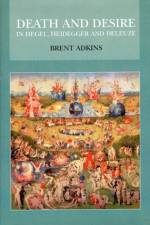
Despite what its title might suggest, Death and Desire is a meditation on life. Using the texts of Hegel, Heidegger, and Deleuze, the author argues that philosophy has been dominated by a form of thought that focuses exclusively on death. The importance of Death and Desire lies in its refusal of the morbidity of much contemporary philosophy. Its uniqueness lies in placing Hegel, Heidegger, and Deleuze in conversation. Its usefulness lies in the clarity with which it articulates and compares these very diverse thinkers.
This dictionary introduces undergraduate and post-graduate students in philosophy, mathematics, and computer science to the main problems and positions in philosophical logic. Coverage includes not only key figures, positions, terminology, and debates within philosophical logic itself, but issues in related, overlapping disciplines such as set theory and the philosophy of mathematics as well. Entries are extensively cross-referenced, so that each entry can be easily located within the context of wider debates, thereby providing a valuable reference both for tracking the connections between concepts within logic and for examining the manner in which these concepts are applied in other philosophical disciplines.
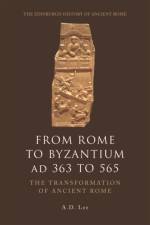
Outlines the significant developments in the period AD 363 to 565These centuries witnessed a number of momentous changes in the character of the Roman empire. Most obviously, control of the west was lost during the fifth century, and although parts of the west were reconquered in the sixth century, the empire's centre of gravity had shifted irrevocably to the east, with its focal point now the city of Constantinople. Equally important was the increasing dominance of Christianity not only in religious life, but also in politics, society and culture. A. D. Lee charts these and other significant developments which marked the transformation of Ancient Rome into medieval Byzantium. By no means only a story of decline and fall, it also explores the reasons for the resilience of the east, as well as Rome's legacy to the emerging medieval world.Key features:"e; draws together the threads of 'Roman' history up to this point"e; also points the way forward to the developments, both in the east and the west of the former Roman Empire in the centuries which followed
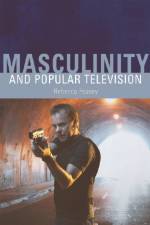
This book is a comprehensive and accessible introduction to the key debates concerning the representation of masculinities in a wide range of popular television genres. The volume looks at the depiction of public masculinity in the soap opera, homosexuality in the situation comedy, the portrayal of fatherhood in prime-time animation, emerging manhood in the supernatural teen text, alternative gender roles in science fiction, male authority in the police series, masculine anxieties in the hospital drama, violence and aggression in sports coverage, ordinariness and emotional connectedness in the reality game show, and domesticity in lifestyle television. Masculinity and Popular Television examines the ways in which masculinities are being constructed, circulated and interrogated in contemporary British and American programming, and considers the ways in which such images can be understood in relation to the 'common sense' model of the hegemonic male that is said to dominate the cultural landscape.
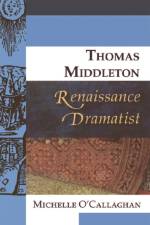
Thomas Middleton is one of the major English Renaissance dramatists alongside Marlowe, Shakespeare and Jonson. Middleton continues to fascinate audiences and readers with his black humour, his wry and witty treatment of sexuality, morality, and politics. He is a consummate professional dramatist, experimenting with stagecraft in a manner that combines the visual and the verbal to startling effect. This book brings together these aspects of Middleton's craft through a detailed study of his major plays. Middleton experimented with, and helped to shape, a range of dramatic genres: city comedy, tragicomedy, romance, and revenge tragedy. This new guide analyses in detail how the plays work in terms of the early modern theatre and dramatic genres, as well as elucidating the broader cultural issues shaping the plays. It provides an introduction to critical readings of Middleton's works as well as modern performances, demonstrating how modern critics, producers, dramatists and film makers see Middleton's dark, playful and challenging plays as speaking to our times.Key Features*Ideal student guide with its wide ranging introduction to Middleton's city comedies, tragedies, and collaborative plays and its readings of key texts such as The Roaring Girl, Chaste Maid in Cheapside, Revenger's Tragedy, Women Beware Women, and The Changeling*Uses the most recent edition available, the Oxford Middleton (2007)*Provides background contexts guiding readers through criticism of the plays as well as recent work on early modern theatre and culture*Emphasis on Middleton's stagecraft and its assessment of modern adaptations and film versions of his plays
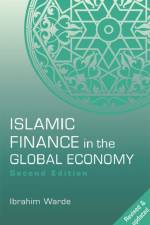
Islamic finance is growing at an astonishing rate and is now a $1200 billion industry, with operations in over 100 countries. This book explains the paradox of a system rooted in the medieval era thriving in the global economy. Coverage is exhaustively comprehensive, defining Islamic finance in its broadest sense to include banks, mutual funds, securities firms and insurance (or takaful) companies. The author places Islamic finance in the context of the global political and economic system and covers a wide variety of issues such as the underlying principles of Islamic finance, the range of Islamic financial products, and country differences. He also discusses a number of economic, political, regulatory and religious concerns and challenges. This second edition has been completely revised and updated to take into account the great changes and developments in the field in recent times. It includes the impact of the 9/11 and 7/7 terrorist attacks on the industry, the new forms of interaction with Western financial institutions, the emergence of innovative products such as sukuk, attempts by a broad range of financial centres - including Kuala Lumpur, London, Singapore, Bahrain and Dubai - to become global hubs of Islamic finance, and the repercussions of the 2008 global financial meltdown on Islamic institutions.
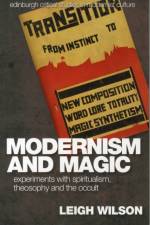
While modernism's engagement with the occult has been approached by critics as the result of a loss of faith in representation, an attempt to draw on science as the primary discourse of modernity, or as a hidden history of ideas, Leigh Wilson argues that these discourses have at their heart a magical practice which remakes the relationship between world and representation. As Wilson demonstrates, the courses of the occult are based on a magical mimesis which transforms the nature of the copy, from inert to vital, from dead to alive, from static to animated, from powerless to powerful. Wilson explores the aesthetic and political implications of this relationship in the work of those writers, artists and filmmakers who were most self-consciously experimental, including James Joyce, Ezra Pound, Dziga Vertov and Sergei M. Eisenstein.
This book represents the first comprehensive overview of the US-Iraqi relationship since 1979 and the first attempt to place the 2003 American invasion and subsequent occupation of Iraq in that wider historical context.Using a modified version of World Systems Theory, the book places American policy toward Iraq at the centre of a number of dynamics, including America's dominant role in managing the world capitalist system, the fundamental importance of Persian Gulf oil to that system, and long-term change in the American political system.It argues that American policy towards Iraq since 1979 has been shaped above all by the importance of Persian Gulf oil to the world economy and the consequent need to restore America's position as regional hegemon and guarantor of the global oil supply, which had been destabilized by the Iranian revolution.It also emphasizes the role of American domestic politics and above all the 'conservative ascendancy' which brought George W. Bush to the presidency, as a critical factor in explaining the 2003 invasion of Iraq. Key Features*Provides a comprehensive analysis of US-Iraqi relations from 1979*Demonstrates that the second Iraq War is a result of a longer historical process and not just the product of 9/11 and the War on Terror*Deepens understanding of the underlying factors of US policy towards the Persian Gulf, and its oil*Uses World Systems Theory to analyse US foreign policy
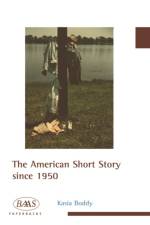
The American Short Story since 1950 offers a reappraisal and contextualisation of a critically underrated genre during a particularly rich period in its history. It offers new readings of important stories by key writers including Flannery O'Connor, John Cheever, Donald Barthelme, Raymond Carver, Lorrie Moore and Grace Paley. These readings are related throughout to the various contexts in which stories are written and published, including creative writing schools, story-writing handbooks, mass market and 'little' magazines.
This original study explores a vital aspect of early modern cultural history: the way that warfare is represented in the theatre of Shakespeare and his contemporaries. The book contrasts the Tudor and Stuart prose that called for the establishment of a standing army in the name of nation, discipline and subjectivity, and the drama of the period that invited critique of this imperative. Barker examines contemporary dramatic texts both for their radical position on war and, in the case of the later drama, for their subversive commentary on an emerging idealisation of Shakespeare and his work.The book argues that the early modern period saw the establishment of political, social and theological attitudes to war that were to become accepted as natural in succeeding centuries. Barker's reading of the drama of the period reveals the discontinuities in this project as a way of commenting on the use of the past within modern warfare. The book is also a survey and analysis of literary theory over the last tw
The 1970s was one of the most culturally vibrant periods in American history. This book discusses the dominant cultural forms of the 1970s - fiction and poetry; television and drama; film and visual culture; popular music and style; public space and spectacle - and the decade's most influential practitioners and texts: from Toni Morrison to All in the Family, from Diane Arbus to Bruce Springsteen, from M.A.S.H. to Taxi Driver and from disco divas to Vietnam protesters. In response to those who consider the seventies the time of disco, polyester and narcissism, this book rewrites the critical engagement with one of America's most misunderstood decades.Key Features*Focused case studies featuring key texts and influential writers, artists, directors and musicians*Chronology of 1970s American Culture*Bibliographies for each chapter and a general bibliography on 1970s Culture*14 black-and-white illustrations
A key feature of the New Labour government's constitutional reform agenda has been the introduction of a number of alternative methods of voting for both existing elections and for those to new political institutions. This book examines the workings of these various systems of elections, looking specifically at how they operate within the United Kingdom and their direct impact on representation and governance. It also considers voting behaviour in the UK, with reference to the context of the electoral system being used. In conclusion there is an attempt to discover the extent to which the introduction and operation of different electoral systems has affected voter behaviour.
This book analyses the relationships between music and contemporary media, both via the mediation of music, and music as mediator. It does so through a series of original interviews with key practitioners: musicians, writers, magazine editors, radio presenters and major and independent label bosses. Through these interviews, theory and practice are measured against each other and the book considers their experiences and observations in order to explore the ways popular music is produced, marketed and mediated. Examining visual, print, radio and new media, Media and Popular Music draws together disparate elements of music and media which formerly have not been considered together, and provides a fresh and innovative contribution to the swiftly growing field of popular music studies. *Key Features *Presents key topics via chapter-long case studies and more broadly applied theoretical analyses *Uses media theory and cultural theory to shed fresh light on theory and practice *Discusses music in relation to visual and print media.
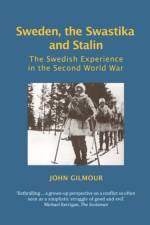
This book fills a gap in the existing literature on the Second World War by covering the range of challenges, threats, issues, dilemmas, and changes faced and dealt with by Sweden during the conflict. Interest in Sweden's wartime experiences has increased due to its post-war profile as a neutral that both allowed German troops to transit through its territory and also carried on trading with the Nazi regime during the holocaust years. Many misconceptions and false impressions have arisen and persisted as a result of deliberate misinformation and concealment by all sides during that time. Readers of this book will gain a fresh, broad view of the period, personalities and problems from a Swedish orientation.
In an era where citizens of liberal democracies are becoming increasingly disillusioned, dissatisfied and disenfranchised by the dominant political institutions and decision-making processes in these polities, new ideas of how to deepen democracy, re-engage citizens and enhance decision-making legitimacy are required. This book suggests that a combination of deliberative democracy and associational democracy is both a normatively desirable and an empirically plausible solution to the complex problems that are present in contemporary societies--as well as being compatible with many recent trends in governance. Author Stephen Elstub argues that by combining deliberative with associational democracy, the weaknesses of each model alone are compensated by the other, allowing the key strengths of each to manifest themselves. And he goes further by offering a detailed set of original, institutional requirements for liberal democracies that, if adopted, will enable a deliberative and associational democracy to be realised in practice.
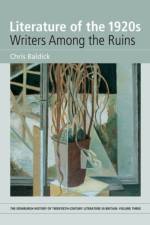
Eclipsed until now by the dominant story of Modernism, a much more inclusive range of 1920s literature emerges freshly illuminated in Chris Baldick's approachable history. The Twenties are reclaimed here as a period with its own distinctive historical awareness and creative agenda, one in which Modernist and non-Modernist currents are shown to engage with common memories and preoccupations. Spanning many genres high and low, including war memoirs, critical essays and detective stories as well as drama, poetry and the novel, Baldick's account situates leading works and authors of the decade - Eliot, Woolf, Lawrence, Huxley, Coward and others - among a rich array of their lesser-known contemporaries to discover common obsessions - especially with the now 'lost' world of pre-War Britain - and shared moods of elegiac despair, nervous frivolity and bold irreverence.
This textbook introduces students to the ways in which techniques from corpus linguistics can be used to aid sociolinguistic research. Corpus linguistics shares with variationist sociolinguistics a quantitative approach to the study of variation or differences between populations. It may also complement qualitative traditions of enquiry such as interactional sociolinguistics.This text covers a range of different topics within sociolinguistics:*Analysing demographic variation*Comparing language use across different cultures*Examining language change over time*Studying transcripts of spoken interactions*Identifying attitudes or discourses.Written for undergraduate and postgraduate students of sociolinguistics, or corpus linguists who wish to use corpora to study social phenomena, this textbook examines how corpora can be drawn on to investigate synchronic variation, diachronic change and the construction of discourses. It refers to several classic corpus-based studies as well as the author's own research. Original analyses of a number of corpora including the British National Corpus, the Survey of English Dialects and the Brown family of corpora are complemented by a new corpus of written British English collected around 2006 for the purposes of writing the book.Techniques of analysis like concordancing, keywords and collocations are discussed, along with corpus annotation and statistical procedures such as chi-squared tests and clustering. Paul Baker takes a critical approach to using corpora in sociolinguistics, outlining the limitations of the approach as well as its advantages.
Walter Scott and Modernity argues that, far from turning away from modernity to indulge a nostalgic vision of the past, Scott uses the past as means of exploring key problems in the modern world.This study includes critical introductions to some of the most widely read poems published in nineteenth-century Britain (which are also the most scandalously neglected), and insights into the narrative strategies and ideological interests of some of Scott's greatest novels. It explores the impact of the French revolution on attitudes to tradition, national heritage, historical change and modernity in the romantic period, considers how the experience of empire influenced ideas about civilized identity, and how ideas of progress could be used both to rationalise the violence of empire and to counteract demands for political reform. It also shows how current issues of debate - from relations between Western and Islamic cultures, to the political significance of the private conscience in a liberal society - are
This book is the first full-length volume to offer a comprehensive introduction to the English spoken in Britain's oldest overseas colony, and, since 1949, Canada's youngest province. Within North America, Newfoundland and Labrador English is a highly distinctive speech variety. It is known for its generally conservative nature, having retained close ties with its primary linguistic roots, the traditional speech of southwestern England and southern Ireland. It is also characterised by a high degree of regional and social variation. Over the past half century, the region has experienced substantial social, economic and cultural change. This is reflected linguistically, as younger generations of Newfoundlanders and Labradorians increasingly align themselves with 'mainland' North American norms. The volume includes:*An accessible description of the phonological, grammatical, lexical and discourse features of this variety*Treatment of regional speech variation within the province, and its historical sources*Discussion of the social underpinnings of ongoing language change *Language samples from both traditional and contemporary speakers*A survey of published work on Newfoundland and Labrador English from earlier centuries to the present day.
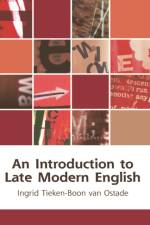
Some twenty years ago it was widely believed that nothing much happened to the English language since the beginning of the eighteenth century. Recent research has shown that this is far from true, and this book offers an introduction to a period that forms the tail end of the standardisation process (codification and prescription), during which important social changes such as the Industrial Revolution are reflected in the language. Late Modern English is currently receiving a lot of scholarly attention, mainly as a result of new developments in sociohistorical linguistics and corpus linguistics. By drawing on such research the present book offers a much fuller account of the language of the period than was previously possible. It is designed for students and beginning scholars interested in Late Modern English. The volume includes: * a basis in recent research by which sociolinguistic models are applied to earlier stages of the language (1700-1900) * a focus on people as speakers (wherever possible) and writers of English* Research questions aimed at acquiring skills at working with important electronic research tools such as Eighteenth Century Collections Online (ECCO), the Oxford English Dictionary and the Oxford Dictionary of National Biography* Reference to electronically available texts and databases such as Martha Ballard's Diary, the Proceedings of the Old Bailey and Mrs Beeton's Book of Household Management.
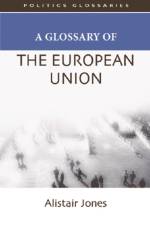
This A-Z guide explains the key concepts and institutions linked to the European Union, along with brief biographies of the leading figures related to the foundation and development of the EU. This will allow students to link some of the theoretical concepts with the people who introduced them.The book is useful in discerning between the British and European Parliaments - students often confuse many of the concepts of the EU with those of the British Government, and the definitions in this Glossary will demonstrate that the bodies have differing roles to play in many aspects of their existence.
Abonner på vårt nyhetsbrev og få rabatter og inspirasjon til din neste leseopplevelse.
Ved å abonnere godtar du vår personvernerklæring.