

Gjør som tusenvis av andre bokelskere
Abonner på vårt nyhetsbrev og få rabatter og inspirasjon til din neste leseopplevelse.
Ved å abonnere godtar du vår personvernerklæring.Du kan når som helst melde deg av våre nyhetsbrev.

This book looks at the way writers present the effects of trauma in their work. It explores narrative devices, such as OCymetafictionOCO, as well as events in contemporary America, including 9/11, the Iraq War, and reactions to the Bush administration.
Molly Greene provides a new interpretation of the Ottoman centuries, drawing extensively on recent Greek scholarship. Moving beyond old models of a cohesive and autonomous Greek community living behind communal walls, she demonstrates the variety of Greek experience under the sultans and asks what Ottoman subjecthood meant for Christians in general, and Greeks in particular. Larger debates in Ottoman historiography are also integrated into the history of the Greeks. The book will appeal not only to those interested in the Greek experience, but Ottoman historians as well..
How do speakers of English as an additional language manage their talk and interaction in chat rooms? Christopher J. Jenks thoroughly analyses the interactional effects of technology, and explores in detail the social and linguistic implications of communicating in second language chat rooms. Providing a unique look at how second language talk is organized in an online setting, this book is essential reading for postgraduate students and scholars in computer-mediated communications, social interactions, TESOL and applied linguistics. It focuses on voice-based chat rooms instead of text-based ones, adding to and enriching the existing body of research on second language textbooks within computer-mediated communication studies.
In this expanded edition of his landmark 2011 work on Meillassoux, Graham Harman covers new materials not available to the Anglophone reader at the time of the first edition. Along with Meillassoux's startling book on Mallarme's poem 'Un coup de des jamais n'abolira le hasard,' Harman discusses several new English articles by Meillassoux, including his controversial April 2012 Berlin lecture and its critique of 'subjectalism'. Freshly called to a professorship at the Sorbonne, Meillassoux's star has continued to rise. This expanded edition of the only book on Meillassoux remains the best introduction to one of Europe's most promising thinkers.
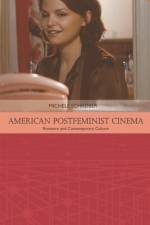
American Postfeminist Cinema is the first book to examine the symbiotic relationship between heterosexual romance and postfeminist culture.
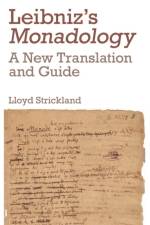
Lloyd Strickland presents a new translation of the 'Monadology', alongside key parts of the 'Theodicy', and an in-depth, section-by-section commentary that explains in detail not just what Leibniz is saying in the text but also why he says it. The sharp focus on the various arguments and other justifications Leibniz puts forward makes possible a deeper and more sympathetic understanding of his doctrines. Written in 1714, the 'Monadology' is widely considered to be the classic statement of Leibniz's mature philosophy. In the space of 90 numbered paragraphs, totalling little more than 6000 words, Leibniz outlines and argues for the core features of his philosophical system. Although rightly regarded as a masterpiece, it is also a very condensed work that generations of students have struggled to understand.
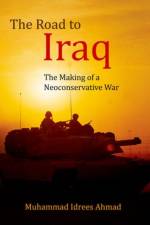
The Iraq war - its causes, agency and execution - has been shrouded in an ideological mist. Now, Muhammad Idrees Ahmad dispels the myths surrounding the war, taking a sociological approach to establish the war's causes, identify its agents and describe how it was sold. Ahmad presents a social history of the war's leading agents - the neoconservatives - and shows how this ideologically coherent group of determined political agents used the contingency of 9/11 to overwhelm a sceptical foreign policy establishment, military brass and intelligence apparatus, propelling the US into a war that a significant portion of the public opposed. The book includes an historical exploration of American militarism and of the increased post-WWII US role in the Middle East, as well as a reconsideration of the debates that John Mearsheimer and Stephen Walt sparked after the publication of 'The Israel lobby and US Foreign Policy'.
It is still a widespread assumption that metaphysics and ontology deal with roughly the same questions. They are supposed to be concerned with the fundamental nature of reality and to give an account of the meaning of 'existence' or 'being' in line with the broadest possible metaphysical assumptions. Against this, Markus Gabriel proposes a radical form of ontological pluralism that divorces ontology from metaphysics, understood as the most fundamental theory of absolutely everything (the world). He argues that the concept of existence is incompatible with the existence of the world and therefore proposes his innovative no-world-view. In the context of recent debates surrounding new realism and speculative realism, Gabriel also develops the outlines of a realist epistemological pluralism. His idea here is that there are different forms of knowledge that correspond to the plurality of fields of sense that must be acknowledged in order to avoid the trap of metaphysics.
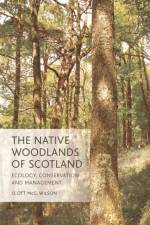
Topical information on ecology, conservation and management for Scottish native woodlandsThis authoritative textbook provides a convenient single source of up-to-date information about the fascinating native woodland habitats of Scotland, putting these into their wider British, European and global contexts. It draws upon professional experience of scientific research, survey and management, where the author has studied many important native woodlands in Scotland and beyond. It helps readers understand and value these irreplaceable habitats, at a time when they are required to produce a growing range of services to Scotland's people, while facing threats from climate change, pests and diseases. Following a contextual introduction and history four chapters deal with individual Scottish native woodland types pinewoods, oak/ birch woodlands, ash woodlands and wet woodlands, along with minor types such as juniper, hazel, aspen and elm. Three chapters deal with actions for native woodland conservation management, woodland creation and inter-linkages with plantations. A shorter chapter looks to the future, followed by a comprehensive gazetteer of native woodland sites to visit. Whether a student, a private woodland owner, a professional forester or interested in woodlands as a rambler or amateur naturalist, this attractive book provides the information you need in one convenient volume. Key Features:Covers all major aspects of relevance to Scottish native woodland ecology, conservation and management within a single convenient volumePitched at a technical level to attract those relatively new to the subjectContains illustrated examples of the author's extensive record of woodland study within Scotland and beyondTimely publication when interest in native woodlands has never been strongerFROM APFThis book presents up-to-date information about Scotland's native woodlands. It draws upon professional experience of scientific research, survey and management, where the author has studied many important native woodlands in Scotland and beyond. It helps readers understand and value these irreplaceable habitats, at a time when they are required to produce a growing range of services to Scotland's people, while facing threats from climate change, pests and diseases. Whether a student, a private woodland owner, a professional forester or interested in woodlands as a rambler or amateur naturalist, this attractive book provides the information you need in one convenient volume. After an introduction, three chapters deal with generic themes relevant to native woodlands in Scotland - international context, ecological relationships and historical development. Four chapters deal with individual Scottish native woodland types - pinewoods, oak/ birch woodlands, ash woodlands and wet woodlands. Minor types - juniper, hazel, aspen and elm - are covered within these. Three chapters deal with actions for native woodland - conservation management, woodland creation and inter-linkages with plantations. A shorter chapter looks to the future, followed by a comprehensive gazetteer of native woodland sites to visit. The book is supported by extensive bibliography and colour illustrations.
A sustained engagement with the increasingly complicated global, transnational and postmodern nature of citizenship
The 9th-century essayist, theologian and encyclopaedist 'Amr b. Ba?r al-Ja?i? has long been acknowledged as a master of early Arabic prose writing. Many of his most engaging writings were clearly intended for a broad readership but were presented as presented as letters to individuals. Despite the importance and quantity of these letters, surprisingly little academic notice has been paid to them. Now, Thomas Hefter takes a new approach in interpreting some of al-Ja?i?'s 'epistolary monographs'. By focussing on the varying ways in which he wrote to the addressee, Hefter shows how al-Ja?i? shaped his conversations on the page in order to guide (or manipulate) his actual readers and encourage them to engage with his complex materials.
This book offers a close investigation of interactional practices in L2 classrooms, and provides a deeper appreciation of the processes involved in the co-construction of understanding and knowledge in settings for instructed language learning. Using Conversation Analysis, and referring to epistemic, multimodal, and multilingual resources, Olcay Sert explicates key interactional and pedagogical practices observed in language classrooms by closely examining the verbal and nonverbal features of teacher-student interaction; for example, gaze, gestures and orientations to classroom artefacts. With an emphasis on the multimodal and multilingual resources, this is one of the first studies to comprehensively address these issues in L2 classrooms with a clear theoretical and practical underpinning, and is an essential study for researchers and postgraduate students in TESOL and Applied Linguistics.
This heavily illustrated and innovative study is founded upon personal documents, town council minutes, legal cases, inventories, travellers' tales, plans and drawings relating to some 30 Scots burghs of the Georgian period. It establishes a distinctive history for the development of Scots burghs, their living patterns and legislative controls, and shows that the Scottish urban experience was quite different from other parts of Britain. With population expansion, and economic and social improvement, Scots of the time experienced immense change both in terms of urban behaviour and the decay of ancient privileges and restrictions. This volume shows how the Scots Georgian burgh developed to become a powerfully controlled urban community, with disturbance deliberately designed out. This is a collaborative history, melding together political, social, economic, urban and architectural histories, to achieve a comprehensive perspective on the nature of the Scottish Georgian town. Not so much a history by growth and numbers, this pioneering study of Scottish urbanization explores the type of change and the quality of result
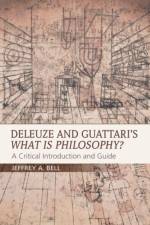
In their final collaborative work, Deleuze and Guattari set out to address the question, 'what is philosophy?' Their answer is simple enough: philosophy 'is the art of forming, inventing and fabricating concepts'. In this book, Jeffrey A. Bell explores what that involves. Crucial to Deleuze and Guattari's understanding of this task, Bell argues, is the assumption that philosophy is integral to a life well lived. Bell shows that a concept of learning is created through the course of the text, composed of three inseparable components: philosophy, science and art. Ultimately, What is Philosophy? can be understood as a meditation on a life well lived, with this concept of learning at its core.
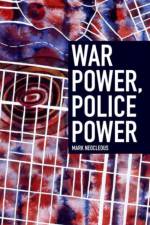
Why is liberalism so obsessed with waste? Is there a drone above you now? Are you living in a no-fly zone? What is the role of masculinity in the 'war on terror'? And why do so many liberals profess a love of peace while finding new ways to justify slaughter in the name of 'peace and security'? In this, the first book to deal with the concepts of war power and police power together, Mark Neocleous deals with these questions and many more by radically rethinking the relationship between war power and police power.
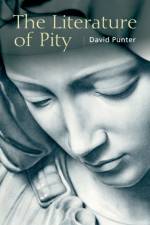
This book traces an entire history of pity, as an emotion and as an element in the arts, engaging as it does so with a wealth of theoretical ideas including Freud, Derrida, Levinas and others.
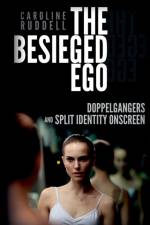
The Besieged Ego critically appraises the representation, or mediation, of identity in film and television through a thorough analysis of doppelgangers and split or fragmentary characters. The prevalence of non-autonomous characters in a wide variety of film and television examples calls into question the very concept of a unified, 'knowable' identity. The form of the double, and cinematic modes and rhetorics used to denote fragmentary identity, is addressed in the book through a detailed analysis of texts drawn from a range of industrial, historical and cultural contexts. The doppelganger or double carries significant cultural meanings about what it means to be 'human' and the experience of identity as a gendered individual. The double also expresses in fictional form our problematic experience of the world as a social, and supposedly whole and autonomous, subject. The Besieged Ego therefore raises important questions about the representation of identity onscreen and concomitant issues regarding autonomy and what it means to be 'human', yet it also charts a generic account of the double onscreen. Case studies include horror, fantasy, and comedy.
This book considersvarious theoretical and methodological issues in relation to a representative sample of fishing communities along ScotlandOCOs east coast. Can the lexical variation and change found in these communities be perceived as primary evidenc"e;
Taking linguistics students beyond the classical forms often taught in introductory courses, <i>Language and Logics</i> offers a comprehensive introduction to the wide variety of useful non-classical logics that are commonly used in research. Including a brief review of classical logic and its major assumptions, this textbook provides a guided tour of modal, many valued and substructural logics. The textbook starts from simple and intuitive concepts, clearly explaining the logics of language for linguistics students who have little previous knowledge of logic or mathematics. Issues are presented and discussed clearly before going on to introduce symbolic notation. While not avoiding technical detail, the book focuses throughout on helping students develop an intuitive understanding of the field, with particular attention to conceptual questions and to the tailoring of logical systems to thinking about different applications in linguistics and beyond. This is an ideal introductory volume for advanced undergraduates and beginning postgraduate students in linguistics, and for those specializing in semantics.
Materials development has become much more important in the field of TESOL in the last twenty years: modules on materials development are now commonplace on MA TESOL courses around the world. The overall aim of the book is to introduce readers to a wide range of theoretical and practical issues in materials development to enable them to make informed and principled choices in the selection, evaluation, adaptation and production of materials. The book aims to show how these choices need to be informed by an awareness of culture, context and purpose.
Can Shakespeare help us with the question of how to live? Re-Humanising Shakespeare argues that although Shakespeare strikingly dramatizes various kinds of uncertainty and scepticism, including scepticism about what it is to be human, his work can still serve as a rich source of existential wisdom and guidance. Revised throughout, this edition includes: a new introduction which focuses more attention on what is specific to literature's treatment of the human (as epitomised by Shakespeare); a section drawing on new work on literary and dramatic genres as different ways of attending to human life; a revised chapter on the history plays; and a reading of King Lear. Blending theory and critical resources with close analysis of the plays, this book makes provocative reading for all those interested in Shakespeare, ethics, human being and questions of literary value. Key FeaturesRevised throughout and includes a new section on genre, as well as discussion of King LearOffers new ways of understanding literature's distinctive treatment of the human Shows through detailed readings of the plays how Shakespeare both unsettles and reclaims ideas about being human Provides a clear account of modernity which illuminates the relationship between critical theory, scepticism and literary humanismIncludes close readings of a number of plays including Hamlet, Othello, The Merchant of Venice, As You Like It, The Winter's Tale, Coriolanus and Macbeth
This study takes as its point of departure an essential premise: that the widespread phenomenon of expatriation in American modernism is less a flight from the homeland than a dialectical return to it, but one which renders uncanny all tropes of familiarity and immediacy which 'fatherlands' and 'mother tongues' are traditionally seen as providing. In this framework, similarly totalising notions of cultural authenticity are seen to govern both exoticist mystification and 'nativist' obsessions with the purity of the 'mother tongue.' At the same time, cosmopolitanism, translation, and multilingualism become often eroticised tropes of violation of this model, and in consequence, simultaneously courted and abhorred, in a movement which, if crystallised in expatriate modernism, continued to make its presence felt beyond.Beginning with the late work of Henry James, this book goes on to examine at length Ezra Pound and Gertrude Stein, to conclude with the uncanny regionalism of mid-century San Francisco Renaissance poet Jack Spicer, and the deterritorialised aesthetic of Spicer's peer, John Ashbery. Through an emphasis on modernism as a space of generalized interference, the practice and trope of translation emerges as central to all of the writers concerned, while the book remains in constant dialogue with key recent works on transnationalism, transatlanticism, and modernism.
The first book-length scholarly monograph to address all of the important aspects of phonetic transcription.
Introduces postcolonial literary studies through close readings of a wide range of fiction and poetryThis guide places the literary works themselves at the centre of its discussions, examining how writers from Africa, Australasia, the Caribbean, Canada, Ireland, and South Asia have engaged with the challenges that beset postcolonial societies. Dave Gunning discusses many of the most-studied works of postcolonial literature, from Chinua Achebe's Things Fall Apart to Salman Rushdie's The Satanic Verses, as well as works by more recent writers like Chris Abani, Tahmima Anam and Shani Mootoo. Each chapter explores a key theme through drawing together works from various times and places. The book concludes with an extensive guide to further reading and tips on how to write about postcolonial literature successfully.Key FeaturesClose analysis of texts including, Sam Selvon's The Lonely Londoners, J.M Coetzee's Disgrace, Roddy Doyle's A Star Called Henry, Shani Mootoo's Cereus Blooms at Night, Tsitsi Dangarembga's Nervous Conditions, Zadie Smith's White Teeth, Mohsin Hamid's The Reluctant Fundamentalist, Tahmima Anam's A Golden Age, Michael Ondaatje's Anil's Ghost, and Amitav Ghosh's In an Antique Land, as well as poetry by Derek Walcott, Eavan Boland, Agha Shahid Ali, Chris Abani and others.Discusses important new themes in postcolonial literature including global Islam, postcolonial sexualities and the representation of military conflict.Includes a Chronology, a Guide to Further Reading, and Tips on Writing about Postcolonial Literature.
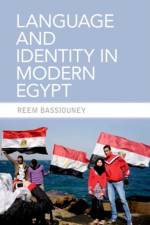
Focussing on nationalist discourse before, during and after the revolution of 2011, Reem Bassiouney explores the two-way relationship between language in Egyptian public discourse and Egyptian identity. Her sources include newspaper articles, caricatures, blogs, patriotic songs, films, school textbooks, TV talk-shows, poetry and novels.
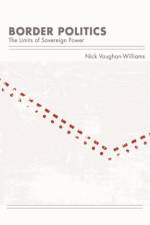
This book, newly available in paperback, presents a distinctive theoretical approach to the problem of borders in the study of global politics. It turns from current debates about the presence or absence of borders between states to consider the possibility that the concept of the border of the state is being reconfigured in contemporary political life.The author uses critical resources found in poststructuralist thought to think in new ways about the relationship between borders, security and sovereign power, drawing on a range of thinkers including Agamben, Derrida and Foucault. He highlights the necessity of a more pluralized and radicalised view of what borders are and where they might be found and uses the problem of borders to critically explore the innovations and limits of poststructuralist scholarship.
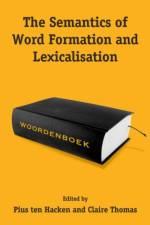
In the study of word formation, the focus has often been on generating the form. In this book, the semantic aspect of the formation of new words is central. It is viewed from the perspectives of word formation rules and of lexicalization. An extensive introduction gives a historical overview of the study of the semantics of word formation and lexicalization, explaining how the different theoretical frameworks used in the contributions relate to each other. Each chapter then concentrates on a specific question about a theoretical concept or a word formation process in a particular language and adopts a theoretical framework that is appropriate to the study of this question. From general theoretical concepts of productivity and lexicalization, the focus moves to terminology, compounding, and derivation. Theoretical frameworks discussed include Jackendoff's Conceptual Structure, Langacker's Cognitive Grammar, Lieber's lexical semantic approach to word formation, Pustejovsky's Generative Lexicon, Beard's Lexeme-Morpheme-Base Morphology, The onomasiological approach to terminology and word formation.
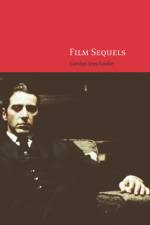
The film sequel has been much maligned in popular culture as a vampirish corporative exercise in profit-making and narrative regurgitation. Drawing upon a wide range of filmic examples from early cinema to the twenty-first century, this exciting new volume reveals the increasing popularity of, and experimentation with, film sequels as a central dynamic of Hollywood cinema. Now creeping into world cinemas and independent film festivals, the sequel is persistently employed as a vehicle for cross-cultural dialogue and as a structure by which memories and cultural narratives can be circulated across geographical and historical locations. This book aims to account for some of the major critical contexts within which sequelisation operates by exploring sequel production beyond box office figures. Its account ranges from sequels in recent mainstream cinema, art-house and 'indie' sequels, non-Hollywood sequels, the effects of the domestic market on sequelisation, and the impact of the video game industry on Hollywood. The book:*Situates the sequel within its industrial, cultural, theoretical and global contexts.*Offers an essential resource for students and critics interested in film and literary studies, adaptation, critical theory and cultural studies.*Provides the first study of film sequels in world cinemas and independent film-making.
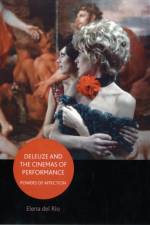
This book offers a unique reconsideration of the performing body that privileges the notion of affective force over the notion of visual form at the centre of former theories of spectacle and performativity. Drawing on Gilles Deleuze's philosophy of the body, and on Deleuze-Spinoza's relevant concepts of affect and expression, Elena del Rio examines a kind of cinema that she calls 'affective-performative'. The features of this cinema unfold via detailed and engaging discussions of the movements, gestures and speeds of the body in a variety of films by Douglas Sirk, Rainer W. Fassbinder, Sally Potter, Claire Denis, and David Lynch. Key to the book's engagement with performance is a consistent attention to the body's powers of affection. Grounding her analysis in these powers, del Rio shows the insufficiency of former theoretical approaches in accounting for the transformative and creative capacities of the moving body of performance.Deleuze and the Cinemas of Performance will be of interest to any scholars and students of film concerned with bodily aspects of cinema, whether from a Deleuzian, a phenomenological, or a feminist perspective.Key Features*The first study of the interface between Deleuzian theory and film performance.*A sustained consideration of the links between the body of performance and the body of affect.*A reevaluation of central concepts in earlier film theory-from fetishistic spectacle and performativity to Brechtian distanciation, sadomasochism, and narcissism.*An analysis of the relation of the performative body to a feminist politics.*New readings of classical melodramas as well as contemporary independent cinemas.
The first fully researched study to cover all of Sylvia Plath's fiction.'With tenacity and clear-eyed scholarly authority, Luke Ferretter has gone into the archive and emerged with a systematic sourcebook for readers of Sylvia Plath's fiction...Adeptly drawing on and adding to the body of recent criticism that has enlarged our sense of the scope and complexity of Plath's creativity, this is a very valuable book.'Langdon Hammer, Professor of English and American Studies, Yale University'Just as the unabridged Journals reveal Sylvia Plath's ferocious drive and dedication to the written word, Sylvia Plath's Fiction: A Critical Study documents her struggle during the repressive 1950s to find the biting, sardonic prose voice of The Bell Jar. Luke Ferretter brilliantly traces Plath's apprenticeship from the age of thirteen to thirty, uncovering many unpublished short stories along the way in American archives. Every scholar of Sylvia Plath needs to read Luke Ferretter's ground-breaking work, the first serious examination of the riveting prose voice of one of the 20th century's most electrifying poets.'Karen V. Kukil, Associate Curator of Special Collections, Smith CollegeAs well as poetry, Plath wrote fiction throughout her life. She wrote novels before and after The Bell Jar, as well as women's magazine romances, New Yorker stories, comedy, social criticism, autobiography, teenage fiction and science fiction. Discussing all these novels and stories, Ferretter analyses Plath's influences as a fiction writer, the relationships between her poetry and fiction, the political views she expresses in her fiction, and devotes two chapters to the central concern of her novels and stories, the roles of women in contemporary society.
Abonner på vårt nyhetsbrev og få rabatter og inspirasjon til din neste leseopplevelse.
Ved å abonnere godtar du vår personvernerklæring.