

Gjør som tusenvis av andre bokelskere
Abonner på vårt nyhetsbrev og få rabatter og inspirasjon til din neste leseopplevelse.
Ved å abonnere godtar du vår personvernerklæring.Du kan når som helst melde deg av våre nyhetsbrev.

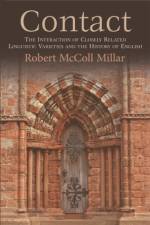
Much has been written on dialect formation through contact between dialects of the same language, but the question of what happens when closely related but linguistically discrete varieties come into contact with each other has largely been neglected. Here Robert McColl Millar sets out to redress this imbalance.
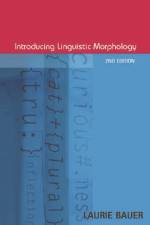
An expanded and updated new edition of this best-selling introduction to linguistic morphology. The text guides the reader from the very first principles of the internal structure of words through to advanced issues of current controversy.
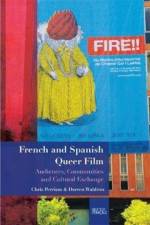
The book advances the current state of film audience research and of our knowledge of sexuality in transnational contexts by analysing how French LGBTQ films are seen in Spain and Spanish ones in France. It studies films (in various media and platforms) and their reception across four languages (Spanish, French, Catalan, English) and considers and engages with participants from across a range of digital and physical audience locations, with a particular focus on festivals. It examines films that chronicle the local (in portraying national and sub-national identities) and draws on the regional-global (translating and transferring foreign models of non-heterosexual experience). No comparative and crosscutting study with audience research at its heart has yet been undertaken.
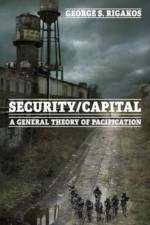
What is security, and what is its relationship to capitalism? George S. Rigakos' explosive treatise charts the rise of the security-industrial complex. Starting from a critical appraisal of 'productive labour' in the works of Karl Marx and Adam Smith, Rigakos builds a conceptual model of pacification based on practices of dispossession, exploitation and the fetish of security commodities. Rigakos argues that a defining characteristic of the global economic system is its ability to productively sell (in)security to those it makes insecure. Materially and ideologically, the security-industrial complex is the blast furnace of global capitalism, fuelling the perpetuation of the system while feeding relentlessly on the surpluses it has exacted.
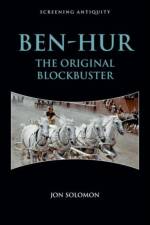
Ben-Hur was the first literary blockbuster to generate multiple and hugely profitable adaptations, highlighted by the 1959 film that won a record-setting 11 Oscars. General Lew Wallace's book was spun off into dozens of popular publications and media productions, becoming a veritable commercial brand name that earned tens of millions of dollars. Ben-Hur: The Original Blockbuster surveys the Ben-Hur phenomenon's unprecedented range and extraordinary endurance: various editions, spin-off publications, stage productions, movies, comic books, radio plays, and retail products were successfully marketed and sold from the 1880s and throughout the twentieth century. Today Ben-Hur Live is touring Europe and Asia, with a third MGM film in production in Italy. Jon Solomon's new book offers an exciting and detailed study of the Ben-Hur brand, tracking its spectacular journey from Wallace's original novel through to twenty-first century adaptations, and encompassing a wealth of previously unexplored material along the way
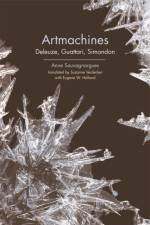
Across 13 essays - 12 of which were previously unavailable in English - Deleuze specialist Anne Sauvagnargues reveals the continuing potential of Deleuze, Guattari and Simondon to invent new concepts and new modes of creativity and existence. She redeploys their work, together with other key philosophers including Bergson, Lacan, Deligny and Ruyer, to create new concepts including geophilosophy, the artmachine, the ritornello, schizoanalysis and the machinic assemblage.
Ivy Compton-Burnett is a strikingly original novelist, writing conversation-novels in which talk is the medium and subject. She is innovative like Joyce and Woolf but more accessible and less theoretical, a modernist unawares. She makes readers think and her terse cool witty style reminds us that the novel is an art. To read most living writers of fiction after reading her is to feel novelists have become lazy and made their readers lazy. She requires attention, and she doesn't write to pass the time or invite identification, but she is amusing and challenging. This re-valuation of a neglected artist is a close analysis of forms, ideas and language in novels which range from her first conventionally moral love-story, Dolores, which she tried to suppress, to startling stories about landed gentry in Victorian and Edwardian England.
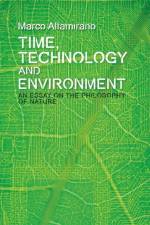
Marco Altamirano critiques the modern concept of nature to chart a new trajectory for the philosophy of nature. He goes on to deploy conceptual resources excavated from Deleuze, Guattari, Foucault and Leroi-Gourhan to show how technology, which bypasses the nature-artifice distinction, is an essential dimension of the philosophy of nature.
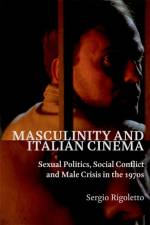
Headline: A study of how Italian films re-envisage male identity in response to sexual liberationBlurb: Italian cinema has traditionally used the trope of an inadequate man in crisis to reflect on the country's many social and political upheavals. Masculinity and Italian Cinema examines how this preoccupation with male identity becomes especially acute in the 1970s when a set of more diverse and inclusive images of men emerge in response to the rise of feminism and gay liberation. Through an analysis of the way Italian films explore anxieties about male sexuality and femininity, the book shows how such anxieties also intersect with particular preoccupations about national identity and political engagement. This is an essential study-tool to understand the multiple constructions of masculinity in Italian cinema, helping students and researchers to understand the work of some of Italy's most provocative filmmakers.Key Features* Re-examines key Italian films, including Bernardo Bertolucci's The Conformist, Ettore Scola's A Special Day, Pier Paolo Pasolini's Theorem and Lina Wertmuller's The Seduction of Mimi, in the light of gender and queer theory.* Covers the major thematic concerns, genres and stylistic traits of 1970s Italian political cinema* Analyses the broader cultural context of 1970s Italy, including sections on Italian feminism, Gay liberation and the post-'68 social movements.Key Words: Gender; Queer; Body; Gay; Feminism; Pier Paolo Pasolini; Bernardo Bertolucci; Lina Wertmuller; Nanni Moretti; Federico Fellini; Ettore Scola; Marco Ferreri.
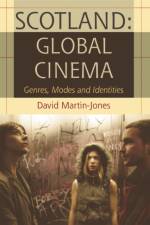
What is your favourite fantasy Scotland? Perhaps you enjoyed Whisky Galore! or Brigadoon, or maybe The Wicker Man is to your taste, Local Hero or Highlander? Yet have you also considered Kuch Kuch Hota Hai, Rob Roy, Dog Soldiers, Danny the Dog, Festival, The Water Horse, Carla's Song, Trainspotting and Red Road? Scotland: Global Cinema is the first book to focus exclusively on the unprecedented explosion of filmmaking in Scotland in the 1990s and 2000s. It explores the various cinematic fantasies of Scotland created by contemporary filmmakers from all over the world - including Scotland, England, France, the United States and India - who braved the weather to shoot in Scotland. Significantly broadening the scope of previous debates, Scotland: Global Cinema provides analysis of ten different genres and modes prevalent in the 1990s/2000s: the comedy, road movie, Bollywood extravaganza, (Loch Ness) monster movie, horror film, costume drama, gangster flick, social realist melodrama, female friendship/US indie movie, and art cinema. These various chapters suggest a wealth of different histories of cinema in Scotland, and uncover the numerous identities - national, transnational, diasporic, global/local, gendered, sexual, religious - created by these approaches. Cinema in Scotland is situated in a global context through analysis of the intersection of transversal flows of filmmaking, tourism, trade and transnational fantasy typical of globalization, as they meet and mingle against the world famous cinematic landscapes of Scotland.
Only the American right has ever really recognised the potency of the American left. Now, Rhodri Jeffreys-Jones fully details the left's numerous achievements, including the welfare state, opposing militarism, reshaping of American culture, black rights a
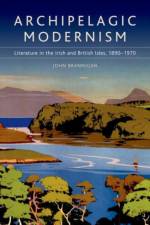
Offers a new archipelagic history of twentieth-century literature in Britain and IrelandArchipelagic Modernism examines the anglophone literatures of the archipelago from 1890 to 1970 for what they tell us about changing identities, geographies, and ecologies. The book argues that these literatures constitute an important resource for how we might begin to think about alternative political geographies, and alternative practices of belonging to place and environment. From the height of the British Empire in 1890, to the increasing sense by 1970 of the imminent 'break-up' of Britain, 'archipelagic modernism' turned to the 'peripheral' spaces of islands, coastlines, and the sea to re-invent the Irish and British archipelago as a plural and connective space.Key Features:Interdisciplinary particularly the relationships between literature, ecology, and geography Offers a new interpretation of how literature engages with place and environment in the 20thCIncludes major new interpretations of key modernist writers such as Yeats, Synge, Joyce, and Woolf, and gives canonical examples of archipelagic modernism accessible to the classroom Exploratory the book explores archipelagic narratives of literary history as a new model for understanding 20thC British and Irish literatures, and opens up ways of critically evaluating conventional literary histories of 'EngLit' and national literatures
This book covers the relevance of theories on language analysis to TESOL, showing students how to understand and evaluate TESOL methodology, curriculum, and materials in terms of cooperation, politeness, conversation structure, ideology, power, varieties, domains and genre. Students will be able to consider different ways of teaching in relation to these theories and will be encouraged to design tasks and lessons with a sociological and cultural focus. Key features* Written specifically for those studying TESOL teaching* Shows practical applications of language analysis theory to the TESOL classroom * Concepts and research are presented in an accessible way, regardless of the student's level of teaching experience or linguistic study* Provides group tasks and independent activities, as well as suggestions for teachers to use in their own classrooms.
This is a book about conflicts and fears: how domestic reasons are drawing countries in Europe into international events. There has been much research into why the U.S. and U.K. militaries intervened in Iraq, Afghanistan, and other conflict zones. But what explains France's newfound international activism, which is taking its military to Libya, Mali and deeper into Africa? Why has Poland become deeply engaged in Ukraine's politics? Why is Sweden, which has not fought a war since 1814, concerned with the fierce internal wars in Iraq and Syria? Can these actions be explained as countries simply protecting their national interests, or could domestic xenophobia also be playing a part? In 'Fear and the Making of Foreign Policy', Raymond Taras explains the causal mechanisms propelling these three EU states to become engaged in outside conflicts and tells the story of when and why xenophobia at home is converted into xenophobia abroad.
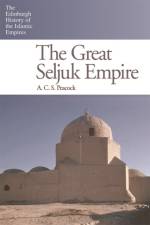
The Seljuks, nomadic tribesman in origin, invaded the Middle East in the 11th century and established themselves as sultans in the Islamic tradition. The Great Seljuk Empire became one of the major empires of Middle Eastern history and dominated Central Asia, Iran, Iraq and Syria in the 11th and 12th centuries.The proposed book will provide the first English language general history of this empire. It will outline the chronological history of the empire and will then explore the religious and institutional history, based on the following themes:* The relationship between tribes and the state* The development of administrative and religious institutions* The nature and impact of Turkish settlement in the Middle East and its consequences* The long-term significance of the religious history of the period* The struggle for legitimacy and authority between sultans, caliphs, religious scholars and amirs* The political role of women in the Seljuk court* The Seljuks and the non-Muslim world.
In recent years some of the best-known European and American art film directors have made films that place the spectator in a position of intense discomfort: Feel-Bad Films. These films systematically manipulate the spectator: sometimes by withholding information from her, sometimes by shocking her, and sometimes by seducing her in order to further disturb her. As a result, they have been criticized for being amoral, nihilistic, politically irresponsible and anti-humanistic. The Feel-Bad Film raises three questions to this body of work: How is the feel-bad experience created? What do the directors believe they can achieve in this manner? And how should the films be situated in intellectual history? Through close analysis of films by Lars von Trier, Gus Van Sant, Claire Denis, Michael Haneke, Lucille Hadzihalilovic, Brian de Palma, Bruno Dumont and Harmony Korine, the book argues that feel-bad directors invite the spectator to think of art as an experimental activity with ethical norms that are different from the ones we hope to find outside the movie theatre. Only when given the freedom to take advantage of this asymmetry can film realize its ethical potential.
These 13 essays explore Bruno Latour's legal theory from a variety of disciplinary perspectives. They combine analytical tools drawn from Latour's actor-network theory developed in Science in Action, Reassembling the Social and The Making of Law with the philosophical anthropology of the Moderns in An Inquiry into Modes of Existence to blaze a new trail in legal epistemology.
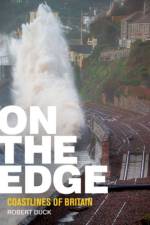
A first evaluation of the physical impact of railway construction on the British coast The building of railways has had a profound but largely ignored physical impact on Britain's coasts. This book explores the coming of railways to the edge of Britain, the ruthlessness of the companies involved and the transformation of our coasts through the destruction or damage to the environment. In many places today, railways are the first defence against the sea and similarly the embankments of long-closed lines act as sea walls. It is ironic, at a time when climate change is very much favouring rail as a means of transport, that many lines are increasingly exposed to extreme weather and the very actions associated with their construction have exacerbated coastal erosion. With the benefit of hindsight, many coastal railways have been built in locations that would not have been chosen today. As our climate changes and storminess potentially increases, what might be the implications for some of Britain's lines on the edge?Key features:First evaluation of the physical impact of railway construction on the British coast Unique combination of environmental and historical researchTimely given the impact of the storms of January and February 2014 Covers the breaching of the South Devon, Cambrian and Cumbrian coastal lines
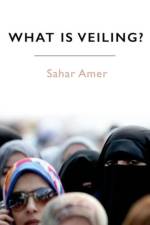
The Islamic veil in all its forms "e; from the headscarf to the full body garment "e; is one of the most visible signs of Islam as a religion. It is also one of its most controversial and misunderstood traditions among both Muslims and non-Muslims. In an environment of increasing conservatism in both Euro-American and Muslim-majority societies, in a world where a woman's right to wear the headscarf has become a touchstone for issues of all sorts, and at a time when racial and religious profiling has become commonplace, it is our political and social responsibility to gain a deeper understanding of veiling. This concise, easy-to-read and even-handed introduction is organised around three main topics: the historical, religious and cultural background; contemporary debates about the veil; and the varied, shifting meanings the veil has had for Muslim women over the past century.
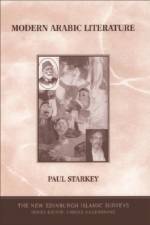
This book provides a succinct introduction to modern Arabic literature of the nineteenth and twentieth centuries. Designed primarily as an introductory textbook for English-speaking undergraduates, it will also be of interest to a more general readership interested in the contemporary Middle East or in comparative and modern literature. The work attempts to situate the development of modern Arabic literature in the context of the medieval Arabic literary tradition as well as the new literary forms derived from the West, exploring the interaction between social, political and cultural change in the Middle East and the development of a modern Arabic literary tradition. Poetry, prose writing and the theatre are discussed in separate chapters. The work overall aims to give a balanced account of the subject, reflecting the different pace of literary development in diverse parts of the Arab world, including North Africa. Key Features*A concise introduction to a field that deserves to be better known in the West.*Clear presentation, based on extensive classroom experience of teaching the subject.*Guidance on other sources of further information.*Extensive bibliography, with list of works in English translation.
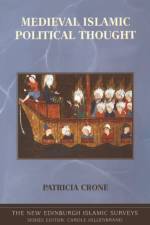
WINNER OF THE BRITISH-KUWAIT FRIENDSHIP SOCIETY PRIZEThis book presents general readers and specialists alike with a broad survey of Islamic political thought in the six centuries from the rise of Islam to the Mongol invasions. Based on a wide variety of sources, it seeks to bring out the enormous scope and high level of historical (and, in some cases, contemporary) interest of medieval Muslim thinking on this subject.The author aims to make Islamic political thought easier for modern readers to understand by relating it to the contexts in which it was formulated, analysing it in terms familiar to the reader, and, where possible, comparing it with medieval European and modern thought.Guiding the reader through this complex history on a tour of one of the great civilizations of the pre-modern world, the book brings out the fascinating nature of medieval Islamic political thought, both in its own right and as the background to political thinking in the Muslim world today.Key Features* Written by one of the most renowned scholars in the field* All concepts have been glossed and all persons, events and historical developments have been identified or summarised, both on first encounter and in the index (where the number of the page containing the gloss will be emboldened)* Specialists are addressed in the footnotes; non-specialists are free to skip these and read an uncluttered text
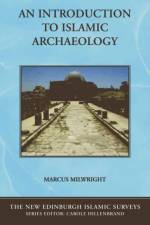
This book offers an introduction to the archaeology of the Islamic world. It traces the history of the discipline from its earliest manifestations through to the present and evaluates the contribution made by archaeology to the understanding of key aspects of Islamic culture. The author argues that it is essential for the results of archaeological research to be more fully integrated into the wider historical study of the Islamic world.Organising the book into broad themes allows a focus on issues that are relevant across different regions and periods. Short case studies are included to allow the reader to examine the ways in which archaeologists collect and interpret material in specific contexts. The emphasis is on archaeological work conducted in the area stretching from Afghanistan and the Central Asian republics in the east to Spain in the west. Comparisons are also be drawn with Islamic regions of sub-Saharan Africa and the Indian subcontinent, reflecting the main focus of archaeological work in the Islamic world to the present day.
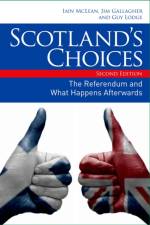
Scotland faces its biggest choice since the 1707 union "e; should Scotland be an independent country? The Yes and No campaigns are well under way but with the vote looming closer the information available to the public is still limited. The Scottish people will have to make their own judgments, and so they need to have the issues explained as clearly as possible without spin or bias. What will happen after the referendum? How will Westminster and the rest of the UK respond? What happens if the vote is 'No'? Is it even clear what independence will mean? What about the oil? What will the currency be? What will happen to the Old Age Pension pot if the UK splits? Scotland's Choices, now fully revised for the critical last few months before the referendum, tells you everything you need to know before you place your vote. Written by one former civil servant, one academic and one think-tanker one a resident Scot, one a Scot living in England and one an Englishman the authors clearly explain the issues you may not have considered and detail how each of the options would be put into place after the referendum.
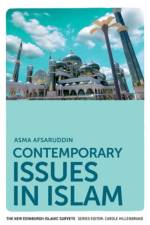
This book deals with certain "e;hot-button"e; contemporary issues in Islam that are often the focus of public scrutiny, including the Sharia, jihad, the caliphate, women's status, and interfaith relations. Notably, it places the discussion of these topics within a longer historical framework in order to reveal their multiple interpretations and contested applications over time. Most public and some academic discourses however present the Islamic tradition as unchanging and therefore unable to respond to the modern world. Such an ahistorical approach fosters the belief that Muslim and Western societies are destined to clash with one another. In contrast, this book allows the reader to see the diversity and transformations within Islamic thought over time. Focusing on this internal diversity permits us to appreciate the scriptural and intellectual resources available within the Islamic tradition for responding to the challenges of modernity, even as it interrogates and shapes modernity itself.
The Islamic finance industry faces the challenging task of attempting to reconcile the risk management demands of business entities with the difficulties posed by the seemingly rigid stance taken by some Shari'ah scholars over hedging practices. Offering a fresh perspective, Sherif Ayoub confronts the challenge by reformulating how we might think about the theorisation of economic matters in the Islamic faith. Shedding light on the way the Islamic finance industry conceptualises the role of financial instruments in a market risk management framework that adheres to the objectives of Islamic jurisprudence, readers will come to understand the issues surrounding the avoidance of Riba (usury), Gharar (excessive uncertainty) and Maysir (gambling).
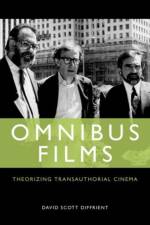
As the first book-length exploration of internationally distributed, multi-director episode films, Omnibus Films fills a considerable gap in the history of world cinema and aims to expand contemporary understandings of authorship, genre, narra
The emergence of these media enables new modes of perception that create "e;special"e; sensations of wonder, astonishment, marvel, and the fantastic. Such affections subsequently become mined by consumer industries for profit, thereby explaining the connection between media and consumerism that today seems inherent to the culture industry. Such modes and their affections are also translated into ideology, as American culture seeks to make sense of the sociocultural changes accompanying these new media, particularly as specific versions of American Dream narratives.Special Affects is the first extended exploration of the connection between media and consumerism, and the first book to extensively apply Deleuzian film theory to animation. Its exploration of the connection between the animated form and consumerism, and its re-examination of 20th century animation from the perspective of affect, makes this an engaging and essential read for film-philosophy scholars and students.
Exploring the archetypal representation of the straight girl with the queer guy in film and television culture from 1948 to the present day, Straight Girls and Queer Guys considers the process of the 'hetero media gaze' and the way it contextualizes sexual diversity and gender identity. Offering both an historical foundation and a rigorous conceptual framework, Christopher Pullen draws on a range of case studies, including the films of Doris Day and Rock Hudson, the performances of Kenneth Williams, televisions shows such as Glee, Sex and the City and Will and Grace, the work of Derek Jarman, and the role of the gay best friend in Hollywood film. Critiquing the representation of the straight girl and the queer guy for its relation to both power and otherness, this is a provocative study that frames a theoretical model which can be applied across diverse media forms.
This book discusses a number of approaches to charting the major developments in the syntax of English, addressing key issues of interpretation and focus for the benefit of students of the topic. It does not assume any knowledge of Old or Middle English or of formal syntax, although students should be familiar with traditional syntactic concepts such as verbs and nouns, subjects and objects, and a general knowledge of linguistic concepts such as morphology or case.Drawing on explanations from both formal and functional approaches, Los explores how syntactic changes are the product of the interaction of many factors, external (the product of a certain sociolinguistic constellation of language or dialect contact) and internal (e.g. the loss of morphology, pressure from analogy).The book will strike a balance between theoretical explanation and accessibility to readers who have not had any training in formal syntax.
How did the later medieval kings of Scotland manipulate their power and alliances after the Wars of Independence?Key Features:An introduction to a period in history dominated by national identity and independence from English sovereigntyExpert assessment of the period arranged in thematic chaptersGives fresh insights into the period that draw on a wide range of sourcesExtensive further reading listsPower and Propaganda is a thematic reflection on the political history of late medieval Scotland, that considers the ways in which power was expressed and renegotiated during a crucial period in the kingdom's history. It deals with themes including the nature of the power enjoyed by kings, how that power was maintained and how it was deployed; the interpersonal relations and struggles between kings and the elites within their kingdoms; and, the structures of governance through which power operated and was felt down to a local level. Late medieval Scotland is especially fertile ground for an examination of all of these themes as two new dynasties the Bruces and the Stewarts were faced with the challenge of establishing their own legitimacy and authority.
Abonner på vårt nyhetsbrev og få rabatter og inspirasjon til din neste leseopplevelse.
Ved å abonnere godtar du vår personvernerklæring.