














Gjør som tusenvis av andre bokelskere
Abonner på vårt nyhetsbrev og få rabatter og inspirasjon til din neste leseopplevelse.
Ved å abonnere godtar du vår personvernerklæring.Du kan når som helst melde deg av våre nyhetsbrev.

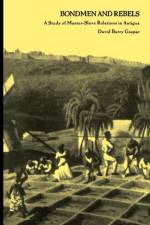
Originally published in 1985, and available for the first time in paperback, Bondmen & Rebels provides a pioneering study of slave resistance in the Americas. Using the large-scale Antigua slave conspiracy of 1736 as a window into that society, David Barry Gaspar explores the deeper interactive character of the relation between slave resistance and white control.
Since its publication in Japan ten years ago, the Origins of Modern Japanese Literature has become a landmark book, playing a pivotal role in defining discussions of modernity in that country. Against a history of relative inattention on the part of Western translators to modern Asian critical theory, this first English publication is sure to have a profound effect on current cultural criticism in the West. It is both the boldest critique of modern Japanese literary history to appear in the post-war era and a major theoretical intervention, which calls into question the idea of modernity that informs Western consciousness.In a sweeping reinterpretation of nineteenth-and twentieth-century Japanese literature, Karatani Kojin forces a reconsideration of the very assumptions underlying our concepts of modernity. In his analysis, such familiar terms as origin, modern, literature, and the state reveal themselves to be ideological constructs. Karatani weaves many separate strands into an argument that exposes what has been hidden in both Japanese and Western accounts of the development of modern culture. Among these strands are: the "discovery" of landscape in painting and literature and its relation to the inwardness of individual consciousness; the similar "discovery" in Japanese drama of the naked face as another kind of landscape produced by interiority; the challenge to the dominance of Chinese characters in writing; the emergence of confessional literature as an outgrowth of the repression of sexuality and the body; the conversion of the samurai class to Christianity; the mythologizing of tuberculosis, cancer, and illness in general as a producer of meaning; and the "discovery" of "the child" as an independent category of human being.A work that will be important beyond the confines of literary studies, Karatani''s analysis challenges basic Western presumptions of theoretical centrality and originality and disturbs the binary opposition of the "West" to its so-called "other." Origins of Modern Japanese Literature should be read by all those with an interest in the development of cultural concepts and in the interrelating factors that have determined modernity.
The white man''s burden, darkest Africa, the seduction of the primitive: such phrases were widespread in the language Western empires used to talk about their colonial enterprises. How this language itself served imperial purposes--and how it survives today in writing about the Third World--are the subject of David Spurr''s book, a revealing account of the rhetorical strategies that have defined Western thinking about the non-Western world.Despite historical differences among British, French, and American versions of colonialism, their rhetoric had much in common. The Rhetoric of Empire identifies these shared features—images, figures of speech, and characteristic lines of argument—and explores them in a wide variety of sources. A former correspondent for the United Press International, the author is equally at home with journalism or critical theory, travel writing or official documents, and his discussion is remarkably comprehensive. Ranging from T. E. Lawrence and Isak Dineson to Hemingway and Naipaul, from Time and the New Yorker to the National Geographic and Le Monde, from journalists such as Didion and Sontag to colonial administrators such as Frederick Lugard and Albert Sarraut, this analysis suggests the degree to which certain rhetorical tactics penetrate the popular as well as official colonial and postcolonial discourse. Finally, Spurr considers the question: Can the language itself—and with it, Western forms of interpretation--be freed of the exercise of colonial power? This ambitious book is an answer of sorts. By exposing the rhetoric of empire, Spurr begins to loosen its hold over discourse about—and between—different cultures.
Presents lives of eighteen Frankish women of the sixth and seventh centuries, all of whom became saints. This title covers the period from the fall of the Roman Empire and the conversion of the invading Franks to the rise of Charlemagne's family.
Presents an anthology of Chicano literary criticism, with essays on a range of texts - both old and new - that draws on diverse perspectives in contemporary literary and cultural studies: from ethnographic to postmodernist, from Marxist to feminist, from cultural materialist to new historicist.
This narrative account of three Napoleonic battles adheres rather closely to the Aristotelian configuration of evolving tragedy. The historian succeeds in presenting herein events and character not only in historical reality but also in unities employed by the artist or tragedian. For a beginning of this lively, military story, Harold T. Parker chooses a portrayal of Napoleon at the height of his power, the battle of Friedland. The middle episode is concerned with Napoleon in his first serious personal check, the battle of Aspern-Essling. To complete the unity and to conclude the tragic progression, the author resurveys the episode of Napoleon''s final defeat at the battle of Waterloo.
Ethnographic analyses of emerging bioscientific enterprises in Asia, including genetically modified foods in China, clinical trials in India, and stem-cell research in Singapore, South Korea, and Taiwan.
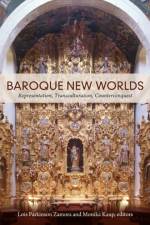
Traces the changing nature of Baroque representation across European and Latin American cultures, from an imperial aesthetic encoding Catholic ideologies, into a means of resistance to colonialism, into a mode of postcolonial self-definition.
Offers an inquiry into how to understand, describe, and represent what it is to live in the contemporary moment. This book argues that predictions that post-modernity would emerge as a global successor to modernity have not materialized as anticipated.
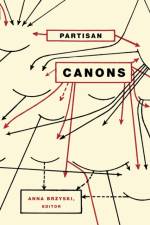
Case studies that counter the idea of a transcendent art canon by demonstrating that the content of any and every canon is historically and culturally specific.
Includes nine sections organized around themes such as everyday life, sex and gender, and science. This title features articles and book excerpts focused on bodies using tools and participating in rituals, on bodies walking and eating, and on the female circumcision controversy, as well as pieces on medical classifications, and spirit possession.
Explains that it was Lenin who made Karl Marx's thought explicitly political, who extended it beyond the confines of Europe, who put it into practice. This title demonstrates that truth and partisanship are not mutually exclusive as is often suggested.
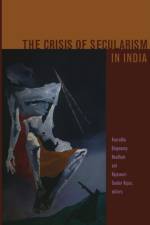
In this timely, nuanced collection, twenty leading cultural theorists assess the contradictory ideals, policies, and practices of secularism in India.
This anthology compares scholarly findings from around the world to comment on the creation, definition, and use of archival evidence in the writing of history
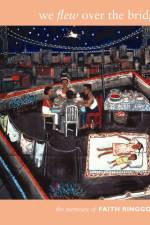
African American artist Faith Ringgold narrates the events of her life from her childhood in 1930s Harlem to her stellar careers as both a best-selling children's writer and well-respected artist whose "story quilts" are displayed in museums worldwide.
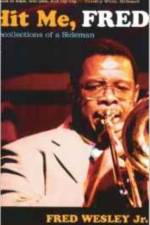
The famous trombonist and arranger from the James Brown band and Parliament-Funkadelic tells his own story.
A collection of essays rethinking the current uses of material culture study in anthropology, including engagements with art, science, and technology.
A third edition of this anthology of the most influential and comprehensive writing on the theory of fiction from the 19th century, through modernism and postmodernism to the present.
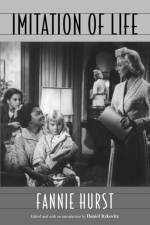
A reprint of the 1933 classic novel, the basis for two film versions, with a new introduciton.
Discusses the phenomenon of Pokemon in a transnational and multidisciplinary perspective
Offers a look at how nature has been culturally constructed in South and Southeast Asia. This book looks at how social and natural landscapes are created, maintained, and transformed by scientists, government administrators, monks, and farmers. It also analyzes campaigns to eradicate smallpox and save forests, waterways, and animal habitats.
Consider the usefulness of the category of the perverse for exploring how social relations are formed, maintained, and transformed. This book focuses on perversion as a psychic structure and provides an alternative to models of social interpretation based on classical Oedipal models of maturation and desire.
Chronicles the experiences of thirty-five white men whose efforts to combat racism and fight for social justice have been central to their lives. Based on interviews conducted by the authors, these oral histories tell the stories of the men's anti-racist work.
How do race and nature work as terrains of power? Synthesizing a number of fields - anthropology, cultural studies, and critical race, feminist, and postcolonial theory, this title analyses diverse historical, cultural, and spatial locations.
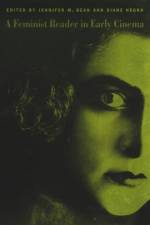
Marks a new era of feminist film scholarship. This title collects twenty essays that demonstrate how feminist historiographies at once alter and enrich ongoing debates over visuality and identification, authorship, stardom, and nationalist ideologies in cinema and media studies.
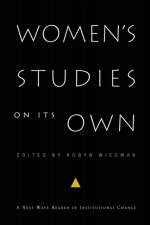
Since the 1970s, Womens Studies has grown from a volunteerist political project to a full scale academic enterprise. This book assesses the present and future of the field, demonstrating how institutionalization has extended a vital, ongoing intellectual project for a generation of scholars and students.
Suitable for scholars and students in popular music studies and American Studies as well as general readers interested in popular music, this book brings voices and perspectives to the study of popular-and particularly rock-music.
Challenges the limitations of thinking about nineteenth-century American culture within the narrow rubric of "male public" and "female private" spheres. This title examines the ways that the separate spheres binary has malingered in unexamined ways in feminist criticism, American literary studies, and debates on the public sphere.
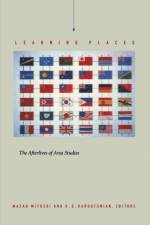
Examines the institutions and productions of area studies and explores what it takes to "learn a place."
Abonner på vårt nyhetsbrev og få rabatter og inspirasjon til din neste leseopplevelse.
Ved å abonnere godtar du vår personvernerklæring.