
















Gjør som tusenvis av andre bokelskere
Abonner på vårt nyhetsbrev og få rabatter og inspirasjon til din neste leseopplevelse.
Ved å abonnere godtar du vår personvernerklæring.Du kan når som helst melde deg av våre nyhetsbrev.

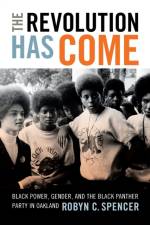
In The Revolution Has Come Robyn C. Spencer traces the Black Panther Party's organizational evolution in Oakland, California, examining how its internal politics along with external forces such as COINTELPRO shaped the Party's efforts at fostering self-determination in Oakland's black communities.
Kath Weston addresses the emergence of a new animism in the context of food, energy, water, and climate to trace how new intimacies between humans, animals, and the environment are emerging as people attempt to understand how the high-tech ecologically damaged world they have made is remaking them.
Finding biopolitics unable to adequately reveal the mechanisms of power that govern contemporary life, Elizabeth A. Povinelli offers "geontopower" as a new theory of power that operates through the regulation of clear distinctions between life and nonlife.
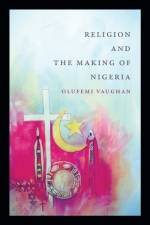
In Religion and the Making of Nigeria Olufemi Vaughan examines how Christian, Muslim, and indigenous religious structures along with the legacies of British colonial rule have provided the essential social and ideological frameworks for the construction of contemporary Nigeria.
In this invitation to reflect on the power of performance, Diana Taylor explores the multiple and overlapping meanings of performance, showing how it can convey everything from artistic, economic, and sexual performance, to providing ways of understanding how race, gender, identity, and power are performed.
Presents a theoretical analysis of Japanese thinkers and activists' efforts to reintegrate the natural environment into Japan's social and political thought in the late nineteenth century and early twentieth.
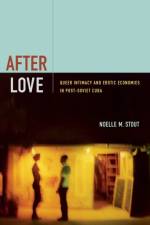
Focused on the intimate effects of large-scale economic transformations, this book illuminates how everyday efforts to imagine, resist, and enact market reforms shape sexual desires and subjectivities.
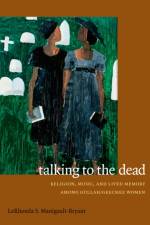
Presents an ethnography of seven Gullah/Geechee women from the South Carolina lowcountry. This book emphasizes that this communication affirms the women's spiritual faith - which seamlessly integrates Christian and folk traditions - and reinforces their position as powerful culture keepers within Gullah/Geechee society.
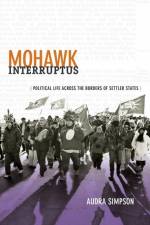
Combining political theory with ethnographic research among the Mohawks of Kahnawake, a reserve community in what is now southwestern Quebec, this book examines their struggles to articulate and maintain political sovereignty through centuries of settler colonialism.
What is the relationship between a cinematic grid of color and that most visceral of negative affects, disgust? How might anxiety be a matter of an interrupted horizontal line, or grief a figure of blazing light? This title deals with these questions.
Forms of embodied labor, such as surrogacy and participation in clinical trials, are central to biomedical innovation, but they are rarely considered as labor. This book examines the rapidly expanding transnational labor markets surrounding assisted reproduction and experimental drug trials.
Rewrites black feminism's theory of representation. This title offers an analysis and that moves beyond black feminism's preoccupation with injury and recovery to consider how racial fictions can create a space of agency and even pleasure for black female subjects.
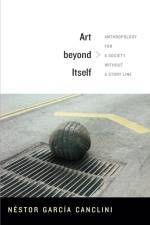
Art is expanding into urban development and the design and tourism industries. Art practices based on objects are displaced by practices based on contexts. Aesthetic distinctions dissolve as artworks are inserted into the media, urban spaces, digital networks, and social forums. This book deals with this topic.
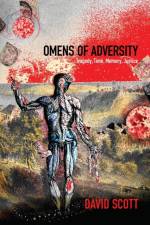
Omens of Adversity is a profound critique of postcolonial temporality. David Scott argues that the palpable sense of the present as time stalled, without hope for emancipatory futures, has had far-reaching effects on how we think about justice and the nature of political action.
Offers a pioneering social and environmental history of southern Chile, exploring the origins of forestry "miracle" in Chile. This book narrates the century-long struggles among peasants, indigenous communities, large landowners, and the state over access to forest commons in the frontier territory.
examines contemporary films, including Avatar, The Matrix, and The Lord of the Rings movies, revealing the films astonishing computer-generated visual effects as central to their narratives.
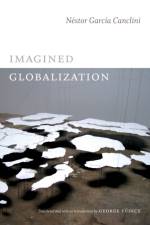
A leading figure in cultural studies worldwide, Nestor Garcia Canclini is a Latin American thinker who has consistently sought to understand the impact of globalization. In this book, newly available in English, he considers how globalization is imagined by artists, academics, migrants, and entrepreneurs, all of whom traverse boundaries and engage in multicultural interactions.
Offers a historical guide through the metamorphoses and tumultuous debates that have defined literary study in recent decades, as viewed by one of critical theory's most astute thinkers.
David F. Garcia examines the work of a wide range of musicians, dancers, academics, and activists between the 1930s and the 1950s to show how their belief in black music's African roots would provide the means to debunk racist ideologies, aid decolonization of Africa, and ease racial violence.
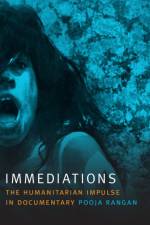
Pooja Rangan interrogates participatory documentary's humanitarian ethos of "giving a voice to the voiceless" in documentaries featuring marginalized subjects, showing how it reinforces the films' subjects as the "other" and reproduces definitions of the human that exclude non-normative modes of thinking, being, and doing.
Based on in-depth ethnographic research in Cairo and Rio de Janeiro, Paul Amar describes new forms of governance emerging in the Global South, partly in opposition to neoliberalism.
Focused on Botswana's only dedicated oncology ward, Improvising Medicine renders the experiences of patients, their relatives, and clinical staff during a cancer epidemic.
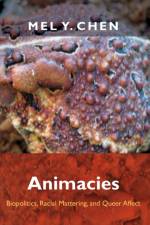
Mel Y. Chen draws on studies of sexuality, race, and affect to consider how matter that is considered insensate, immobile, deathly, or otherwise "wrong," animates cultural life in important ways.
In the fourth and final volume of A History of Iranian Cinema, Hamid Naficy looks at the extraordinary efflorescence in Iranian film and other visual media since the Islamic Revolution.
The Fierce Urgency of Now offers an impassioned call to take the practices of musical improvisation often associated with jazz performance as a model for social-justice activism.
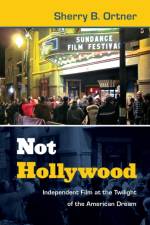
The pioneering anthropologist Sherry B. Ortner explores the culture and practices of independent filmmaking in the U.S., arguing that during the past three decades, independent cinema has provided vital cultural critique.
Where most models of democratic ethics have focused on either care for the self or care for others, Ella Myers advocates an ethical approach to politics based on a collaborative care for the world.
In Dying Modern, renowned literary critic Diana Fuss argues that as death has been increasingly shunted off-stage, out of the public eye, poets have taken up the task of reckoning with dying, loss, absence, and grief.
Documents how activism oscillates between the potential for new social arrangements and the questions that arise once the activists' goals have been accomplished
At once a memoir, a call to support the Boycott, Divestment and Sanctions movement, and an argument for queer solidarity across borders, this book tells the story of how novelist and activist Sarah Schulman's became aware of how issues of the Israeli occupation of Palestine were tied to her own gay and lesbian politics.
Abonner på vårt nyhetsbrev og få rabatter og inspirasjon til din neste leseopplevelse.
Ved å abonnere godtar du vår personvernerklæring.