


Gjør som tusenvis av andre bokelskere
Abonner på vårt nyhetsbrev og få rabatter og inspirasjon til din neste leseopplevelse.
Ved å abonnere godtar du vår personvernerklæring.Du kan når som helst melde deg av våre nyhetsbrev.

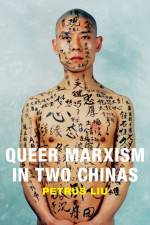
In Queer Marxism in Two Chinas Petrus Liu demonstrates how queer Marxist critics in China use queer theory as a non-liberal alternative to Western models of queer emancipation, and in doing so, he revises current understandings of what queer theory is, does, and can be.
In this primer on the history of money, Bill Maurer explores the implications of how technology is changing how we use money and argues that understanding and considering how we would like to pay gives us insight into determining how we would like to live.
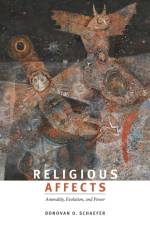
Making a case for the use of affect theory in religious studies, Donovan O. Schaefer challenges the notion that religion is inextricably linked to language and cognition, contending instead that religion is primarily driven by affect and that non-human animals have the capacity to practice religion.
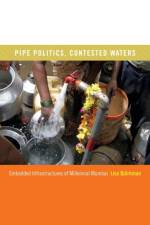
In Pipe Politics, Contested Waters, Lisa Bjoerkman explores why water is chronically unavailable in Mumbai, India's economic and financial capital. She attributes water shortage to economic reforms that allowed urban development to ignore the water infrastructure, which means that in Mumbai, politics is often about water.
In Islam and Secularity Nilufer Goele examines the transforming relationship between Islam and Western secular modernity and the impact of the Muslim presence in Europe. She demonstrates that Islam and secularism are mutually constitutive, constantly changing, and that the presence of Islam unsettles dominant narratives of Western modernism.
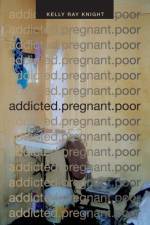
In this ethnography of addicted, pregnant, and poor women living in daily-rent hotels in San Francisco, Kelly Ray Knight examines the myriad struggles these women face, as well as their encounters with social and medical institutions. She asks: what kinds of futures are possible for these women?
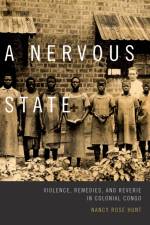
Nancy Rose Hunt tells the affective history of the convergence of biopolitics and colonial violence in the Belgian Congo. By showing how the shifts and interactions between the biopolitical state and the nervous state drove the colonial government's actions toward the Congolese, Hunt provides a new model for theorizing colonialism.
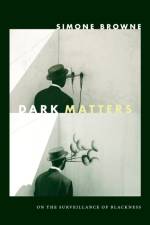
Simone Browne shows how racial ideologies and the long history of policing black bodies under transatlantic slavery structure contemporary surveillance technologies and practices. Analyzing a wide array of archival and contemporary texts, she demonstrates how surveillance reifies boundaries, borders, and bodies around racial lines.
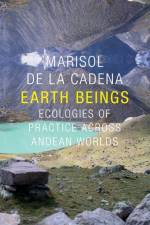
Conversing with Mariano and Nazario Turpo, father and son, Marisol de la Cadena explores the entanglements and partial connections between indigenous and non-indigenous worlds, and the ways in which indigenous knowing both include and exceed modern and non-modern practices.
Michelle Murphy examines the ways in which efforts at population control since World War II have tied reproduction to neoliberal capitalism, showing how data collection practices have been used to quantify the value of a human life in terms of its ability to improve the nation-state's gross domestic product.
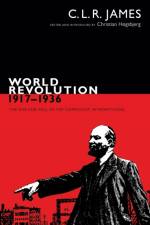
Originally published in 1937, C. L. R. James's World Revolution is a pioneering Marxist analysis of the revolutionary history in the interwar period, the fundamental conflict between Trotsky and Stalin, and the ideological contestations within the Communist International and its role in the Soviet Union and international revolution.
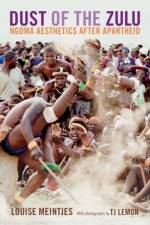
Louise Meintjes traces the history and the political and aesthetic significance of ngoma, a competitive form of dance and music that emerged out of the legacies of colonialism and apartheid in South Africa, showing how it embodies Zulu masculinity and the expanse of South Africa's violent history.
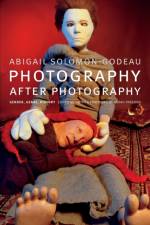
In essays analyzing the photography of luminaries such as Cindy Sherman, Robert Mapplethorpe, and Susan Meiselas, pioneering feminist art critic Abigail Solomon-Godeau extends her politically engaged and theoretically sophisticated inquiry into the historical and cultural circuits of power as they shape and inform the practice, criticism, and historiography of photography.
Mark Rifkin explores how Indigenous experiences with time and the dominance of settler colonial conceptions of temporality have affected Native peoplehood and sovereignty, thereby rethinking the very terms by which history is created and organized around time by.
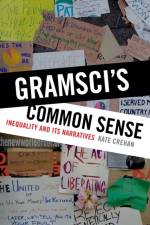
Kate Crehan applies Antonio Gramsci's concepts of subalternity, intellectuals, and common sense to offer new ways to understand the many forms that structural inequality can take and the relationships between the experience of inequality, exploitation, and oppression as well as the construction of political narratives.
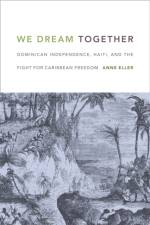
In this thorough social and political history Anne Eller breaks with dominant narratives of the history of the Dominican Republic and its relationship with Haiti by tracing the complicated history of its independence between 1822 and 1865, showing how the Dominican Republic's political roots are deeply entwined with Haiti's.
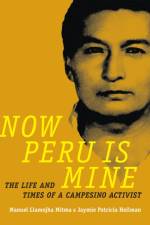
Now Peru is Mine is the account of the life of Manuel Llamojha Mitma, one of Peru's most creative and inspiring indigenous political activists. His compelling life story covers nearly eight decades, providing a window into many key developments in Peru's tumultuous twentieth-century history and political mobilization in Cold War Latin America.
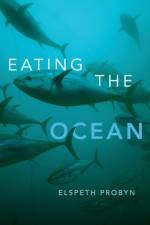
Moving away from a simplified food politics that is largely land based, Elspeth Probyn looks at food politics from an ocean-centric perspective by tracing the global movement of several marine species to explore the complex and entangled relationship between humans and fish.
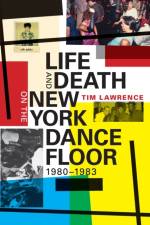
In Life and Death on the New York Dance Floor Tim Lawrence examines the city's party, dance, music, and art culture between 1980 and 1983, tracing the rise, apex, and fall of this inventive, vibrant, and tumultuous scene.
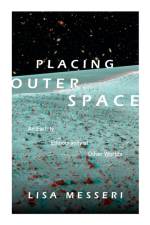
Lisa Messeri traces how planetary scientists-whether working in the Utah desert, a Chilean observatory, or the labs of MIT-transform celestial bodies into places in order to understand the universe as densely inhabited by planets, in turn telling us more about Earth, ourselves, and our place in the cosmos.
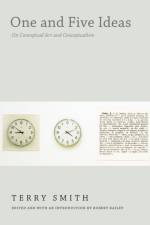
The eminent critic, historian, and former member of the Art & Language collective Terry Smith explores the artistic, philosophical, political, and geographical dimensions of conceptual art and conceptualism while offering a theory of contemporary art.
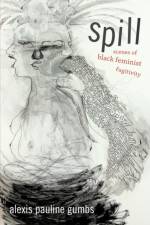
In Spill poet, independent scholar, and activist Alexis Pauline Gumbs presents a commanding collection of poetry inspired by Black feminist literary critic Hortense Spillers depicting scenes of fugitive Black women and girls seeking freedom from gendered violence and racism.
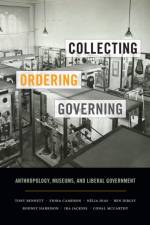
In Collecting, Ordering, Governing a diverse team of international scholars explore the relationships between anthropological fieldwork, museum collecting and display, and practices of social governance of metropolitan, settler, and colonized populations in the early twentieth-century in Australia, Britain, France, New Zealand, and the United States.
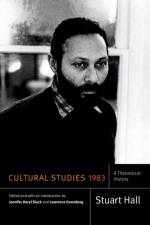
Unavailable until now, these eight lectures delivered by Stuart Hall in 1983 at the University of Illinois introduced North American audiences to the intellectual history of British cultural studies while simultaneously presenting Hall's original engagements with the theoretical positions that contributed to the formation of cultural studies.
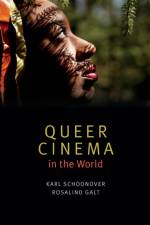
Offering a new theory of queer world cinema, Karl Schoonover and Rosalind Galt explore how it intersects with shifting ideals of global politics and cinema aesthetics to demonstrate its potential to disturb dominant modes of world making and to forge spaces of queer belonging.
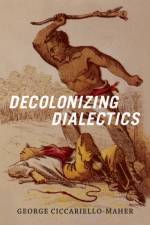
George Ciccariello-Maher brings the work of Georges Sorel, Frantz Fanon, and Enrique Dussel together with contemporary Venezuelan politics to formulate a decolonized dialectics that is suited to the struggle against the legacies of slavery and colonialism while also breaking the impasse between dialectics and postcolonial theory.
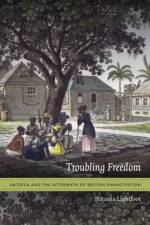
Natasha Lightfoot tells the story of how Antigua's newly freed black working people struggled to realize freedom, prior to and in the decades following their emancipation in 1834. Their continued efforts in the face of oppression complicate common definitions of freedom and narratives about newly freed slaves in the Caribbean.
Using a theoretical framework built on Lacan and Foucault, Licia Fiol-Matta traces the careers of four iconic female Puerto Rican singers to explore how their voices, performance style, physical appearance, and subject matter of their songs challenged social and cultural norms.
Sean Cubitt offers a large scale rethinking of theories of mediation by describing the ecological footprint of media. He investigates the energy, material, and space needed to create, operate, and dispose of electronic devices, and shows how changing how we use media is the only solution to planetary devastation.
Drawing on memoir, history, and theory, Eli Clare complicates the understanding of cure, seeing it as an ideology that serves contradictory purposes-from saving lives to social control-while critiquing cure rhetoric and the drive to cure disabled people through an insistence of the value of disability.
Abonner på vårt nyhetsbrev og få rabatter og inspirasjon til din neste leseopplevelse.
Ved å abonnere godtar du vår personvernerklæring.