


















Gjør som tusenvis av andre bokelskere
Abonner på vårt nyhetsbrev og få rabatter og inspirasjon til din neste leseopplevelse.
Ved å abonnere godtar du vår personvernerklæring.Du kan når som helst melde deg av våre nyhetsbrev.

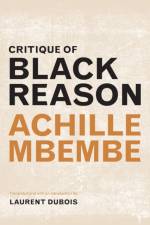
Eminent critic Achille Mbembe reevaluates history and racism, offering a capacious genealogy of the category of Blackness-from the Atlantic slave trade to the present-to show how the conjoining of the biological fiction of race with definitions of Blackness have been and continue to be used to uphold oppression.
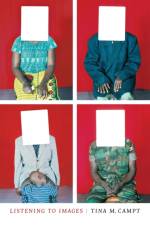
Tina M. Campt explores a way of listening to photography by engaging with lost archives of state identification photographs of Afro-diasporan people taken between the late 1800s and the present, showing how to hear the quiet refusal emanating from these photos originally intended to dehumanize and police their subjects.
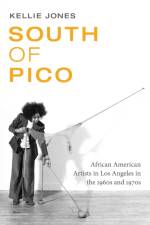
Kellie Jones traces how the artists in L.A.'s black communities during the 1960s and 70s created a vibrant, productive, and engaged activist arts scene in the face of structural racism through the production of art works that spoke to African American migration and L.A.'s racial politics.
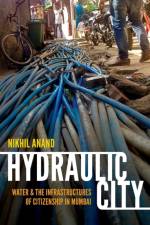
Nikhil Anand explores the politics of Mumbai's water infrastructure to demonstrate how citizenship and the rights through which to make demands on the state for public services emerges through the relations between residents, plumbers, politicians, engineers, and the 3000 miles of pipe that bind them.
Flyboy 2 provides a panoramic view of the last thirty years of Greg Tate's influential cultural criticism of contemporary Black music, art, literature, film, and politics. These essays, interviews, and reviews cover everything from Miles Davis, Ice Cube, and Suzan Lori Parks to Afro-futurism, Kara Walker, and Amiri Baraka.
Offering a new queer theorization of melodrama, Jonathan Goldberg explores the ways melodramatic film and literature provide an aesthetics of impossibility and how melodrama as a whole provides queer ways to promote identifications that exceed the bounds of the identity categories that regulate and constrain social life.
Lisa Yoneyama argues that the efforts intensifying since the 1990s to bring justice to the victims of Japanese military and colonial violence have generated what she calls a "transborder redress culture" that has the potential to bring powerful challenging perspectives on American exceptionalism, militarized security, justice, sovereignty, forgiveness, and decolonization.
In this moving memoir Jane Lazarre, a white Jewish mother, describes her experience being married to an African American man and raising two sons as she learns, from family experience, teaching, and her studies, about the realities of racism in America.
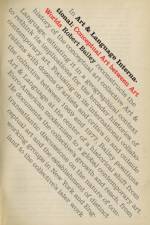
Robert Bailey reconstructs the history of conceptual art collective Art & Language to show how its international collaborations with dozens of artists and critics between 1969 and 1977 laid the foundation for global contemporary art, all while highlighting how conceptual art exceeds the visual to impact the philosophical and political.
In Plastic Bodies Emilia Sanabria examines how women's use of sex hormones in Bahia, Brazil for menstrual suppression shapes social relations, having become central to contemporary understandings of the body, class, gender, sex, personhood, modernity, and Brazilian national identity.
In The Sublime Perversion of Capital Gavin Walker examines the Japanese debate about capitalism between the 1920s and 1950s, using it as a "prehistory" to consider current problems of uneven economic development and contemporary topics in Marxist theory and historiography.
In Undoing Monogamy Angela Willey analyzes the contemporary science of monogamy, demanding a critical reorientation toward the understanding of monogamy and non-monogamy in the natural sciences, social sciences, and humanities.
In The Value of Comparison Peter van der Veer highlights anthropology's continuing ability to gain insights on the whole through the comparative study of the particular and unique while critiquing the quantitative social sciences for their sweeping generalizations.
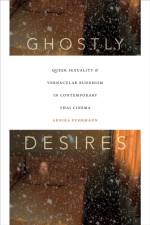
In Ghostly Desires Arnika Fuhrmann examines post-1997 Thai cinema and video art to show how vernacular Buddhist values, stories, and images combine with sexual politics in figuring in current struggles over gender, sexuality, personhood, and collective life.
My Life with Things is Elizabeth Chin's meditation on her relationship with consumer goods and a critical statement on the politics and method of anthropology in which she uses everyday items to intimately examine the ways consumption resonates with personal and social meaning.
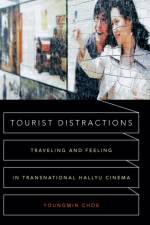
In Tourist Distractions Youngmin Choe uses Korean hallyu cinema as a lens to examine the importance of tourist films and film tourism in creating transnational bonds throughout East Asia and how they help Korea negotiate its twentieth-century history with the neoliberal present.
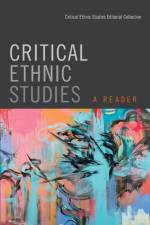
Building on the possibilities opened up by Ethnic Studies, this volume promotes open dialogue, discussion, and debate regarding Critical Ethnic Studies' expansive, politically complex, and intellectually rich concerns on topics ranging from multiculturalism and the neoliberal university to the militarized security state.
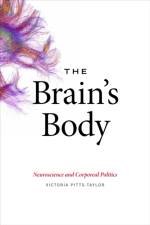
In The Brain's Body Victoria Pitts-Taylor applies feminist and critical theory to recent developments in neuroscience and new materialist social thought to demonstrate how the brain interacts with and is impacted by power, social structures, and inequality.
David H. Price uses information from CIA, FBI, and military records to map the connections between academia and the strategic use of anthropological research to further the goals of the U.S. military and outline the major influence the American security state has had on the field of anthropology.
In this wide-ranging and probing book Erin Manning develops the concept of the minor gesture to rethink common assumptions about human agency, the ways we experience the everyday world, and the possibilities for new political praxis.
In Alien Capital Iyko Day retheorizes the history and logic of settler colonialism by examining its intersection with Asian racialization and capitalism, showing how the conflation of Asian immigrants to Canada and the United states with the abstract dimensions of capital became settler colonialism's defining feature.
In this set of essays that cover the period from 1992 to 2012, Kobena Mercer uses a diasporic model of criticism to analyze the cross-cultural aesthetic practice of African American and black British artists and to show how their refiguring of visual representations of blackness transform perceptions of race.
In White Innocence Gloria Wekker explores a central paradox of Dutch life-the passionate denial of racial discrimination and colonial violence coexisting alongside aggressive racism and xenophobia-to show how the narrative of Dutch racial exceptionalism elides the Netherland's colonial past and safeguards white privilege.
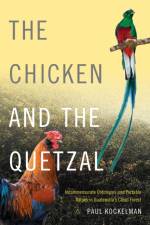
In The Chicken and the Quetzal Paul Kockelman tells the cultural history of a village in Guatemala's highland cloud forests and its relation to conservation movements and eco-tourism to create a theoretical framework for understanding the entanglement of values as they are created, interpreted, and reconfigured.
In Bioinsecurities Neel Ahuja shows how twentieth-century U.S. imperial expansion was dependent on controlling the spread of disease through the transformation of humans, animals, bacteria, and viruses into living theaters of warfare and securitization.
In this ethnography of the Cancha mega-market in Cochabama, Bolivia, Daniel M. Goldstein examines what it means for the market's poorest vendors to maintain personal safety and economic stability by navigating systems of informality and illegality and how this dynamic is representative of the neoliberal modern city.
In Sexual States Jyoti Puri uses the example of the recent efforts to decriminalize homosexuality in India to show how the regulation of sexuality is fundamentally tied to the creation and enduring existence of the Indian state.
Minh-ha T. Pham examines the phenomenal rise and influence of elite Asian personal style superbloggers such as Susie Bubble and Bryanboy. Situating blogging within the historical context of gendered racial fashion work and global consumer capitalism, Pham analyzes how race, class, gender, and sexuality affect bloggers' work, opportunities, and rewards.
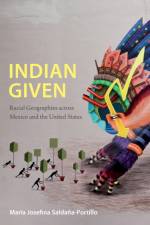
In Indian Given Maria Josefina Saldana-Portillo provides a sweeping historical and comparative analysis of racial ideologies in Mexico and the United States from 1550 to the present to show how indigenous peoples provided the condition of possibility for the emergence of each nation.
Abonner på vårt nyhetsbrev og få rabatter og inspirasjon til din neste leseopplevelse.
Ved å abonnere godtar du vår personvernerklæring.