






















Gjør som tusenvis av andre bokelskere
Abonner på vårt nyhetsbrev og få rabatter og inspirasjon til din neste leseopplevelse.
Ved å abonnere godtar du vår personvernerklæring.Du kan når som helst melde deg av våre nyhetsbrev.

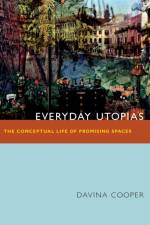
Everyday Utopias explores how everyday utopias-sites enacting commonplace activities in egalitarian, democratic, or emancipatory ways-contribute to a transformative politics through the concepts they put into practice and inspire.
Contending that the music is not a knowable entity but a spectrum of dynamic practices that elude definition, Alexandra T. Vazquez models a new way of writing about music and the meanings assigned to it.
A leading Latin Americanist exhorts scholars to reclaim the indigenous subjectivities still perceived by many as "not modern" and excluded from the production, distribution, and organization of knowledge.
Natasha Eaton theorizes the relationship between art and empire through analysis of the interconnected visual cultures of British and Mughal empires in eighteenth- and nineteenth-century India.
Cinema of Actuality analyzes Japanese avant-garde filmmakers' struggle to radicalize cinema in light of the intensifying politics of spectacle and a rapidly changing media environment, one that was increasingly dominated by television.
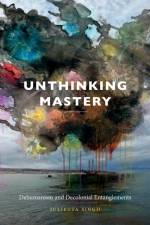
Julietta Singh challenges the drive toward the mastery over self and others by showing how the forms of self-mastery advocated by anticolonial thinkers like Fanon and Gandhi unintentionally reproduced colonial logic, thereby leading her to argue for a more productive human subjectivity that is not centered on concepts of mastery.
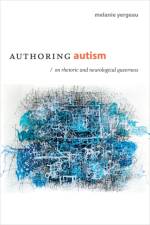
Challenging the academic and cultural stereotypes that do not acknowledge the rhetorical capabilities of autistic people, Melanie Yergeau shows how autistics both embrace and reject the rhetorical, thereby queering the lines of rhetoric, humanity, agency, and the very essence of rhetoric itself.
In Black and Blur-the first volume in his consent not to be a single being trilogy-Fred Moten engages in a capacious consideration of the place and force of blackness in African diaspora arts, politics, and life, exploring a wide range of thinkers, musicians, and artists.
Paul Rabinow continues his explorations of "a philosophic anthropology of the contemporary" by examining the work of German painter Gerhard Richter. Defining the contemporary as a moving ratio in which the modern becomes historical, Rabinow uses Richter's work to illustrate how meaning is created within the contemporary.
Monique Moultrie explores the impact of faith-based sexual ministries on black women's sexual agency to trace how these women navigate sexuality, religious authority, and their spiritual walk with God.
Clare Hemmings examines the significance of the anarchist activist and thinker Emma Goldman for contemporary feminist politics, showing how the contradictory and ambivalent aspects of Goldman's thought for feminism can be used to open new avenues for theorizing gender, sexuality, and race.
Jennifer Terry traces how biomedical logics entangle Americans in a perpetual state of war, in which new forms of wounding necessitate the continual development of treatment and prosthetic technologies while the military justifies violence and military occupation as necessary conditions for advancing medical knowledge.
Drawing on ethnographic fieldwork and his experience trading derivatives, Edward LiPuma theorizes the profound social dimensions of derivatives markets and the processes, rituals, mentalities, and belief systems that drive them.
Didier Debaise brings Alfred North Whitehead's philosophies of nature to bear on the Anthropocene, creating a new theory of nature that does not recognize a divide between the human and nonhuman, a theory in which all organisms have the power to unleash potential into the world.
Kristen Ghodsee examines the legacies of twentieth-century communism on the contemporary political landscape twenty-five years after the Berlin Wall fell, reflecting on the lived experience of postsocialism and how many ordinary men and women across Eastern Europe suffered from the massive social and economic upheavals in their lives after 1989.
Juxtaposing contemporary art against familiar features of the Web such as emoticons, Kris Cohen explores how one can be connected to people and places online while simultaneously being alone and isolated. This phenomenon lies in the space between populations built through data collection, and publics created by interacting with others.
In The End of Japanese Cinema Alexander Zahlten traces the evolution of a new form of holistic media studies-media ecology-through historical overview and analysis of Japanese film and industry from the 1960s to the 2000s.
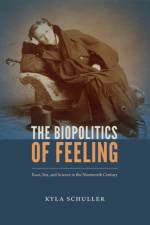
Kyla Schuller unearths the forgotten, multiethnic sciences of impressibility-the capacity to be affected-to expose the powerful workings of sentimental biopower in the nineteenth-century United States, uncovering a vast apparatus of sensory regulation that aimed to shape the evolution of the national population.
Inderpal Grewal traces the changing relations between the US state and its citizens in an era she calls advanced neoliberalism, under which everyday life is militarized, humanitarianism serves imperial aims, and white Christian men become exceptional citizens tasked with protecting the nation from racialized others.
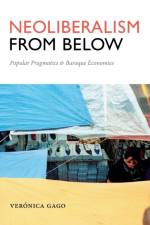
Veronica Gago provides a new theory of neoliberalism by examining how Latin American neoliberalism is propelled not just from above by international finance, corporations, and government, but by the activities of migrant workers, vendors, sweatshop workers, and other marginalized groups in and around the La Salada market in Buenos Aires.
Extending decolonial theory into greater conversation with race, sexuality, and Indigenous studies, Macarena Gomez-Barris traces the political, aesthetic, and performative practices of South American indigenous activists, intellectuals, and artists that emerge in opposition to the ruinous effects of extractive capital.
Danny Hoffman uses the ruins of four iconic modernist buildings in Monrovia, Liberia as a way to explore the relationship between the built environment and political imagination, showing how these former symbols of modernist nation building transformed into representations of the challenges that Monrovia's residents face.
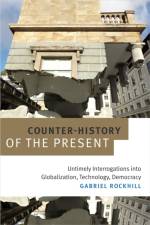
Gabriel Rockhill examines the widespread understanding that we are living in an era of globalization that is bound by economic and technological networks and an unquestionable faith in democracy, replacing it with a counter-history that accounts for the diversity of lived experience and offers new ways to imagine the future.
James R. Barrett rethinks the boundaries of American working-class history by investigating the ways in which working-class people's personal lives intersected with their activism and religious, racial, ethnic, and class identities.
The eminent anthropologists Richard and Sally Price look back at their first years living among the Saamaka maroons in Suriname in the late 1960s, retelling the evolution of their personal lives and careers, relationships with the Saamaka, and the field of anthropology.
William Schaefer traces how early twentieth century photographic practices in Shanghai provided artists, writers, and intellectuals a forum within which to debate culture, ethnicity, history, and the very nature of images, thereby showing how artists and writers used such practices to make visible the shadows of modernity in Shanghai.
Eric Plemons explores the ways in which facial feminization surgery is changing the ways in which trans- women are not only perceived of as women, but in the ways it is altering the project of surgical sex reassignment and the understandings of what sex means.
Margaret Randall explores the Cuban Revolution's impact on the outside world, tracing Cuba's international outreach in healthcare, disaster relief, education, literature, art, liberation struggles, and sports to show how this outreach is a fundamental characteristic of the Revolution and of Cuban society.
Attiya Ahmad examines the practice of conversion to Islam by South Asian migrant domestic workers in the Arabian Peninsula and Persian Gulf region and how these women's conversions stem from an ongoing process rooted in their everyday experiences as migrant workers rather than a clean break from their preexisting lives.
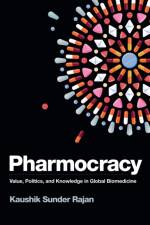
Kaushik Sunder Rajan traces the structure and operation of what he calls pharmocracy-a concept explaining the global hegemony of the multinational pharmaceutical industry. He outlines pharmocracy's logic in two case studies from contemporary India to demonstrate the stakes of its intersection with health, politics, democracy, and global capital.
Abonner på vårt nyhetsbrev og få rabatter og inspirasjon til din neste leseopplevelse.
Ved å abonnere godtar du vår personvernerklæring.