











Gjør som tusenvis av andre bokelskere
Abonner på vårt nyhetsbrev og få rabatter og inspirasjon til din neste leseopplevelse.
Ved å abonnere godtar du vår personvernerklæring.Du kan når som helst melde deg av våre nyhetsbrev.

Tony Allen is the autobiography of legendary Nigerian drummer Tony Allen, the rhythmic engine of Fela Kuti's Afrobeat.
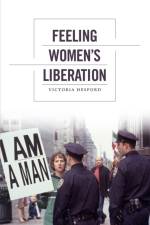
Revisiting the rhetoric about and from within the women's liberation movement of the 1960s and 1970s, Victoria Hesford argues that contemporary accounts of the movement obscure its diversity.
Surveying histories of Korea written during the twentieth century, Henry H. Em examines how the project of national sovereignty shaped the work of Korean historians and their representations of the country's past.
David Grubbs explores the ephemeral nature of improvised music in Now that the audience is assembled, a prose poem that in its depiction of a fictional musical performance challenges common understandings of how and where music is composed, performed, and experienced.
A Primer for Teaching Environmental History is a guide for college and high school teachers who are teaching environmental history for the first time, for experienced teachers who want to reinvigorate their courses, for those who are training future teachers to prepare their own syllabi, and for teachers who want to incorporate environmental history into their world history courses.
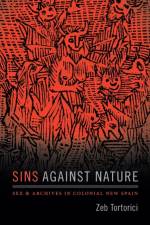
Drawing on over 300 prosecutions of sex acts in colonial New Spain between 1530 and 1821, Zeb Tortorici shows how courts used the concept "against nature" to try those accused of sodomy, bestiality, and other sex acts, thereby demonstrating how the archive influences understandings of bodies, desires, and social categories.
Examining human rights discourse from the French Revolution to the present, Alexandre Lefebvre turns common assumptions about human rights-that its main purpose is to enable, protect, and care for those in need-on their heads, showing how the value of human rights lies in its support of ethical self-care.
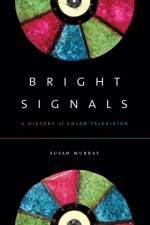
Susan Murray traces four decades of technological, cultural, and aesthetic debates about the possibility, use, and meaning of color television within the broader history of twentieth-century visual culture.
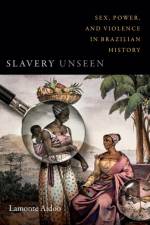
Lamonte Aidoo upends dominant narratives of Brazilian national identity by showing how the myth of racial democracy is based on interracial and same-sex sexual violence between slave owners and their slaves that operated as a mechanism of perpetuating slavery and heteronormative white patriarchy.
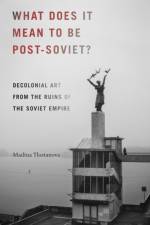
Madina Tlostanova traces how contemporary post-Soviet art mediates the post-Soviet human condition through analyses of art and through interviews with artists and writers, showing the important role that radical art plays in building new modes of thought and a decolonial future.
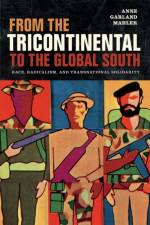
Anne Garland Mahler traces the history and intellectual legacy of the understudied global justice movement called the Tricontinental and calls for a revival of the Tricontinental's politics as a means to strengthen racial justice and anti-neoliberal struggles in the twenty-first-century.
Following Senegalese toxicologists as they struggle to keep equipment, labs, and projects operating, Noemi Tousignant explores the impact of insufficient investments in scientific capacity in postcolonial Africa.
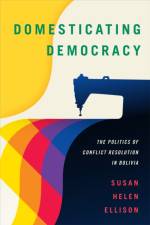
In Domesticating Democracy Susan Helen Ellison offers an ethnography of Alternate Dispute Resolution (ADR) organizations in El Alto, Bolivia, showing that by helping residents cope with their interpersonal disputes and economic troubles how they change the ways Bolivians interact with the state and global capitalism, making them into self-reliant citizens.
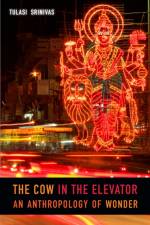
Tulasi Srinivas uses the concept of wonder-feelings of amazement at being overcome by the unexpected and sublime-to examine how residents of Banglore, India pursue wonder by practicing Hindu religious rituals as a way to accept and resist neoliberal capitalism.
Calvin L. Warren intervenes in Afro-pessimism, Heideggerian metaphysics, and black humanist philosophy, illustrating how blacks embody a metaphysical nothing while showing how this nothingness destabilizes whiteness, makes blacks a target of violence, and explains why humanism has failed to achieve equality for blacks.
Leticia Alvarado explores how Latino artists and cultural producers have developed and deployed an irreverent aesthetics of abjection to resist assimilation and disrupt respectability politics.
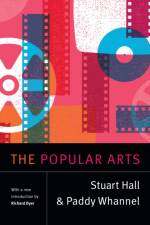
First appearing in 1964, and long since out of print, Stuart Hall and Paddy Whannel's landmark book The Popular Arts takes seriously the importance of studying popular culture, thereby opening up an almost unprecedented field of analysis of everything from film, pulp crime novels, and jazz to television and advertising.
Lyndon K. Gill foregrounds a queer presence in foundational elements of Trinidad and Tobago's national imaginary-Carnival masquerade design, Calypso musicianship, and queer HIV/AIDS activism-to show how same-sex desire provides the means for the nation's queer population to develop survival and community building strategies.
Magdalena J. Zaborowska uses James Baldwin's house in the south of France as a lens through which to reconstruct his biography and to explore the politics and poetics of blackness, queerness, and domesticity in his complex and underappreciated later works.
In Cooking Data Crystal Biruk offers an ethnographic account of research into the demographics of HIV and AIDS in Malawi in which she rethinks how quantitative health data is produced by showing how data production is inevitably entangled with the lives of those who produce it.
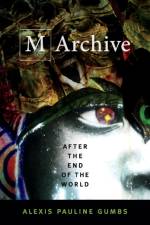
Engaging with the work of M. Jacqui Alexander and Black feminist thought more generally, Alexis Pauline Gumbs's M Archive is a series of prose poems that speculatively documents the survival of Black people following a worldwide cataclysm while examining the possibilities of being that exceed the human.
Originally published in China in 2009 and appearing in English for the first time, Liu Zhenyun's award-winning Someone to Talk To follows two men living seventy years apart who in their loneliness and struggle to find meaningful personal connections highlight the contours of everyday life in pre- and post-Mao China.
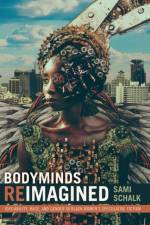
Bridging black feminist theory with disability studies, Sami Schalk traces how black women's speculative fiction complicates the understanding of bodyminds in the context of race, gender, and (dis)ability, showing how the genre's exploration of bodyminds that exist outside of the present open up new social and ethical possibilities.
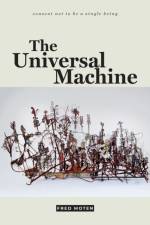
In the concluding volume to his landmark trilogy consent not to be a single being Fred Moten uses the work of Emmanuel Levinas, Hannah Arendt, and Franz Fanon to explore the relationship between blackness and phenomenology, theorizing blackness as a way of being in the world that evades regulation.
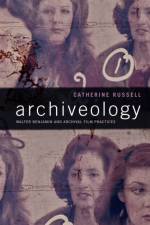
Catherine Russell uses the work of Walter Benjamin to explore how the practice of archiveology-the reuse, recycling, appropriation, and borrowing of archival sounds and images-by filmmakers provides ways to imagine the past and the future.
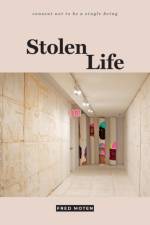
In Stolen Life-the second volume in his landmark trilogy consent not to be a single being-Fred Moten engages with the work of thinkers ranging from Kant to Saidiya Hartman, undertaking an expansive exploration of blackness as it relates to black life and the collective refusal of social death.
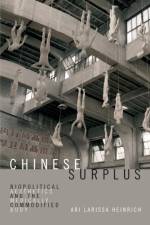
Ari Larissa Heinrich examines transnational Chinese aesthetic production-from the earliest appearance of Frankenstein in China to the more recent phenomenon of "cadaver art"- to demonstrate how representations of the medically commodified body can illuminate the effects of biopolitical violence and postcolonialism in contemporary life.
In Diaspora's Homeland Shelly Chan provides a broad historical study of how the mass migration of more than twenty million Chinese overseas influenced China's politics, economics, and culture and helped establish China as a nation-state within a global system.
Michael J. Shapiro formulates a new politics of aesthetics by analyzing the experience of the sublime as rendered by a number of artistic and cultural texts that deal with race, terrorism, nuclear proliferation, and industrialism, showing how the sublime's disruptive effects provides the opportunity for a new oppositional politics.
Abonner på vårt nyhetsbrev og få rabatter og inspirasjon til din neste leseopplevelse.
Ved å abonnere godtar du vår personvernerklæring.