






Gjør som tusenvis av andre bokelskere
Abonner på vårt nyhetsbrev og få rabatter og inspirasjon til din neste leseopplevelse.
Ved å abonnere godtar du vår personvernerklæring.Du kan når som helst melde deg av våre nyhetsbrev.

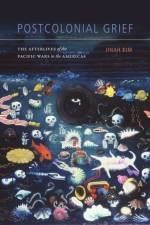
Jinah Kim explores Asian and Asian American texts from 1945 to the present that mourn the loss of those killed by U.S. empire building and militarism in the Pacific, showing how the refusal to heal from imperial violence may help generate a transformative antiracist and decolonial politics.
Esther Newton-a pioneer figure in gay and lesbian studies-tells the compelling and disarming story of her struggle to write, teach, and find love, all while coming to terms with her lesbian identity during one of the worst periods of homophobic persecution in the twentieth century.
The second volume of the landmark two-volume collection of Stuart Hall's most important and influential essays, Identity and Diaspora draws from Hall's later career, in which he investigated questions of colonialism, empire, and race.
Toby Beauchamp positions surveillance as central to the understanding of transgender politics to show how contemporary security practices extend into everyday gendered lives.
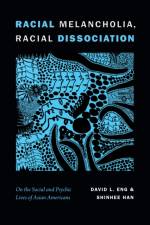
David L. Eng and Shinhee Han draw on psychoanalytic case histories from the mid-1990s to the present to explore how first- and second-generation Asian American young adults deal with difficulties such as depression, suicide, and coming out within the larger social context of race, immigration, and sexuality.
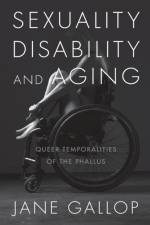
Jane Gallop explores how disability and aging are commonly understood to undermine one's sense of self and challenges narratives that register the decline of bodily potential and ability as nothing but an experience of loss.
Jessica A. Krug traces the history and meaning of Kisama-a seventeenth-century fugitive slave community located in present-day Angola-by showing how it operated as a inspirational global symbol of resistance for fugitives on both sides of the Atlantic.
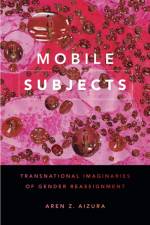
Aren Z. Aizura examines transgender narratives about traveling for gender reassignment from 1952 to the present, showing how transgender fantasies about reinvention and mobility are racialized as white and often rely on violent colonial global divisions.
Stephen Best offers a bold reappraisal of the critical assumptions that undergird black studies' use of the slave past as an explanatory prism for understanding the black political present, thereby opening the circuits between past and present and charting a queer future for black study.
Megan H. Glick considers how twentieth-century conversations surrounding nonhuman life have impacted a broad range of attitudes toward forms of human difference such as race, sexuality, and health, showing how efforts to define a universal humanity create the means with which to reinforce various forms of social inequality.
In Jezebel Unhinged Tamura Lomax traces the historical and contemporary use of the jezebel trope in the black church and in black popular culture, showing how it disciplines black women and girls and preserves gender hierarchy, black patriarchy, and heteronormativity in black families, communities, cultures, and institutions.
Amit S. Rai shows how urban South Asians employ low-cost technological workarounds and hacks known as jugaad to solve problems, navigate, and resist India's neoliberal ecologies.
J. Lorand Matory casts an Afro-Atlantic eye on European social theory to show how Marx's and Freud's conceptions of the fetish illuminate and misrepresent the nature of Africa's gods while demonstrating that Afro-Atlantic gods have their own social logic that is no less rational than European social theories.
Exiles within Exiles is a biography of the Brazilian revolutionary and social activist Herbert Daniel, whose life and political commitment shaped contemporary debates about social justice, gay rights, and HIV/AIDS.
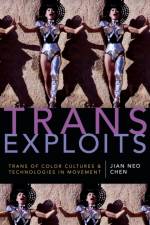
Jian Neo Chen examines how contemporary trans of color artists are tracking and resisting their displacement and social marginalization through new forms of cultural expression, performance, and activism.
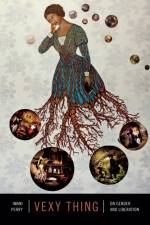
Imani Perry recenters patriarchy to contemporary discussions of feminism through a social and literary analysis of cultural artifacts-ranging from nineteenth-century slavery court cases and historical vignettes to literature and contemporary art-from the Enlightenment to the present.
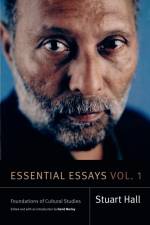
The first volume of the landmark two-volume collection of Stuart Hall's most important and influential essays, Foundations of Cultural Studies focuses on the first half of Hall's career, when he wrestled with questions of culture, class, representation, and politics.
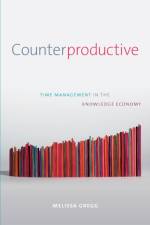
Melissa Gregg explores the obsession with using productivity as the primary measure of most workers' sense of value and success in the workplace, showing how it isolates workers from each other while erasing their collective efforts to define work limits.
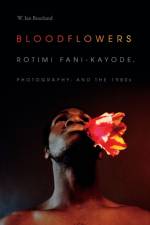
W. Ian Bourland examines the photography of Rotimi Fani-Kayode (1955-1989), whose art is a touchstone for cultural debates surrounding questions of gender and queerness, race and diaspora, aesthetics and politics, and the enduring legacy of slavery and colonialism.
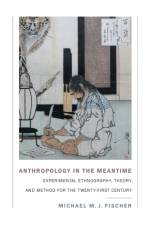
Providing a history of experimental methods and frameworks in anthropology from the 1920s to the present, Michael M. J. Fischer draws on his real world, multi-causal, multi-scale, and multi-locale research to rebuild theory for the twenty-first century.
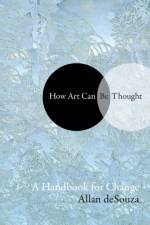
Allan deSouza examines the popular terminology through which art is discussed, valued, and taught, showing how pedagogical language and practices within art schools can adapt to a politicized and rapidly changing world, as well as to the demands of contemporary art within a global industry.
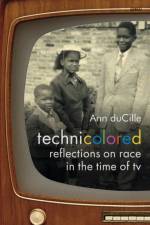
Black feminist critic Ann duCille combines cultural critique with personal reflections on growing up with TV as a child in the Boston suburbs to examine how televisual representations of African Americans-ranging from I Love Lucy to How to Get Away with Murder-have changed over the last sixty years.
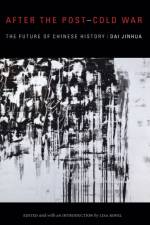
Dai Jinhua interrogates history, memory, and the future of China as a global economic power in relation to its Cold War past to show how the recent erasure of the country's socialist history signifies socialism's failure and forecloses the imagining of a future beyond that of globalized capitalism.
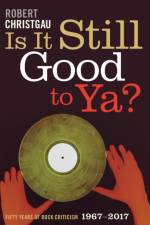
Encompassing a career spanning six decades, Is It Still Good to Ya? sums up the career of legendary rock critic and longtime Village Voice stalwart Robert Christgau, whose album and concert reviews, essays, and reflections on his career tackle the whole of pop music, from Louis Armstrong to M.I.A..
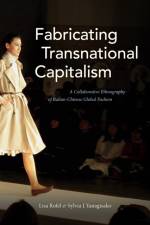
This collaborative ethnography of Italian-Chinese fashion ventures offers a new methodology for understanding transnational capitalism in a global era.
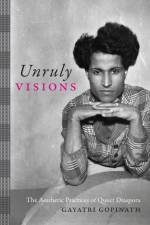
Gayatri Gopinath traces the interrelation of affect, aesthetics, and diaspora through an exploration of a wide range of contemporary queer visual cultural forms by South Asian, Middle Eastern, African, Australian, and Latinx artists such as Tracey Moffatt, Akram Zaatari, and Allan deSouza.
Examining singers Marian Anderson, Billie Holiday, and Jimmy Scott as well as vocal synthesis technology, Nina Sun Eidsheim traces the ways in which the voice and its qualities are socially produced and how listeners assign a series of racialized and gendered set of assumptions to a singing voice.
Reina Lewis analyzes Muslim modest clothing as fashion and shows how young Muslim women (with a focus on Britain, North America, and Turkey) are part of an emergent transnational youth subculture who use fashion to negotiate religion, identity, ethnicity, and mainstream consumer culture.
Fabiana Li examines the politics surrounding the rapid growth of mining in the Peruvian Andes, arguing that anti-mining protests are not only about mining's negative environmental impacts, but about the legitimization of contested forms of knowledge.
Abonner på vårt nyhetsbrev og få rabatter og inspirasjon til din neste leseopplevelse.
Ved å abonnere godtar du vår personvernerklæring.