

















Gjør som tusenvis av andre bokelskere
Abonner på vårt nyhetsbrev og få rabatter og inspirasjon til din neste leseopplevelse.
Ved å abonnere godtar du vår personvernerklæring.Du kan når som helst melde deg av våre nyhetsbrev.

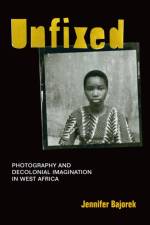
Jennifer Bajorek traces the relationship between photography and decolonial politics in Francophone west Africa in the years immediately leading up to and following independence from French colonial rule in 1960, showing how photography both reflected and actively contributed to social and political change.
Sakari Tamminen traces the ways in which the mandates of 1992's Convention on Biological Diversity-hailed as the key symbol of a common vision for saving Earth's biodiversity-contribute less to biodiversity conservation than to individual nations using genetic resources for economic and cultural gain.
Ana Maria Reyes examines how the polarizing art of Beatriz Gonzalez disrupted Cold War aesthetic discourses and the politics of class and modernization in 1960s Colombia.
Conceptualizing anthropology as a mode of practical and transformative inquiry, Anand Pandian stages an ethnographic encounter with the field in an effort to grasp its impact on the world and its potential for addressing and offering solutions to the profound crises of the present.
Nandita Sharma traces the development of the categories of migrants and natives from the nineteenth century to the present to theorize how the idea of people's rights being tied to geographical notions of belonging came to be.
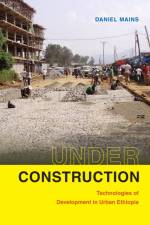
Daniel Mains explores the intersection of infrastructural development and governance in contemporary Ethiopia by examining the conflicts surrounding the construction of specific infrastructural technologies and how that construction impacts the daily lives of Ethiopians.
Tiffany Lethabo King uses the shoal-an offshore geologic formation that is neither land nor sea-as metaphor, mode of critique, and methodology to theorize the encounter between Black studies and Native studies and its potential to create new epistemologies, forms of practice, and lines of critical inquiry.
Brenda R. Weber examines how the mediation of Mormonism through film, TV, blogs, YouTube videos, and memoirs functions as a means to understand conversations surrounding gender, sexuality, spirituality, capitalism, justice, and individualism in the United States.
Priya Jaikumar examines seven decades of films shot on location in India to show how attending to filmed space reveals alternative timelines and histories of cinema as well as the myriad ways cinema constructs India as a place.
Leah Zani considers how the people and landscape of Laos have been shaped and haunted by the physical remains of unexploded ordnance from the CIA's Secret War.
Leigh Claire La Berge shows how socially engaged art responds to and critiques what she calls decommodified labor-the slow diminishment of wages alongside an increase of demands of work-as a way to work toward social justice and economic equality.
Davina Cooper explores the unexpected contribution a legal drama of withdrawal-as exemplified by some conservative Christians who deny people inclusion, goods, and services to LGBTQ individuals-might make to conceptualizing a more socially just, participative state.
Jairus Victor Grove offers an ecological theorization of geopolitics in which he contends that contemporary global crises are better understood when considered within the larger history of geopolitical practice, showing how political violence is the principal force behind climate change, mass extinction, slavery, genocide, extractive capitalism, and other catastrophes.
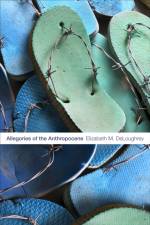
Elizabeth M. DeLoughrey traces how indigenous and postcolonial peoples in the Caribbean and Pacific Islands grapple with the enormity of colonialism and anthropogenic climate change through art, poetry, and literature by using allegorical narratives.
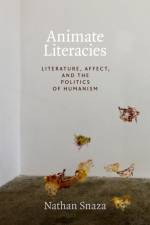
Nathan Snaza proposes a new theory of literature and literacy in which he outlines how literacy operates at the interface of humans, nonhuman animals, and objects and has been used as a means to define the human in ways that marginalize others.
Theri Alyce Pickens examines the speculative and science fiction of Octavia Butler, Nalo Hopkinson, and Tananarive Due to rethink the relationship between race and disability, thereby unsettling the common theorization that they are mutually constitutive.
Eliza Steinbock traces how cinema offers alternative ways to understand gender transitions through a specific aesthetics of change, thereby opening up new means to understand transgender ontologies and epistemologies.
Dominic Boyer examines the politics of wind power and how it is shaped by myriad factors-from the legacies of settler colonialism and indigenous resistance to state bureaucracy and corporate investment-while outlining the fundamental impact of energy and fuel on political power.
Charles Piot follows a visa broker-known as a "fixer"-in the West African nation of Togo as he helps his clients apply for the U.S. Diversity Visa Lottery program.
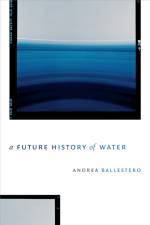
Focusing on Costa Rica and Brazil, Andrea Ballestero examines the legal, political, economic, and bureaucratic history of water in the context of the efforts to classify it as a human right, showing how seemingly small scale devices such as formulas and lists play large role in determining water's status.
Natalie Loveless examines the institutionalization of artistic research-creation-a scholarly activity that considers art practices as research methods in their own right-and its significance to North American higher education.
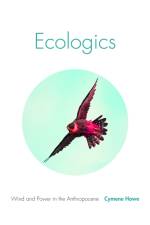
Cymene Howe traces the complex relationships between humans, nonhuman beings and objects, and geophysical forces that shaped the Marena Renovables project in Oaxaca, Mexico, which had it been completed, would have been Latin America's largest wind power installation.
Reveals how unmarried Jewish women are explicitly valued as reproductive resources in Israel, whether they are encouraged to donate eggs for married Jewish women when undergoing their own fertility treatments, privileged as surrogate mothers in Israel's surrogacy legislation, or encouraged to reproduce autonomously via reproductive technologies.
Eva Haifa Giraud contends that recent theory that foregrounds the ways that human existence is entangled with other nonhuman life and the natural world often undermine successful action and calls for new modes of activist organizing and theoretical critique.
Thomas Grisaffi traces the political ascent and transformation of the Movement toward Socialism (MAS) from an agricultural union of coca growers into Bolivia's ruling party, showing how the realities of international politics hindered MAS leader Evo Morales from scaling up the party's form of grassroots democracy to the national level.
Rosalind Fredericks traces the volatile trash politics in Dakar, Senegal, to examine urban citizenship in the context of urban austerity and democratic politics, showing how labor is a key component of infrastructural systems and how Dakar's residents use infrastructures as a vital tool for forging collective identifies and mobilizing political action.
Kristen Ghodsee recuperates the lost history of feminist activism from the so-called Second World, showing how women from state socialist Bulgaria and socialist-leaning Zambia created networks and alliances that challenged American women's leadership of the global women's movement.
Naomi Schiller explores how community television in Venezuela created openings for the urban poor to embrace the state as a collective process with the potential for creating positive social change.
Colin Milburn examines the relationships between video games, hackers, and science fiction, showing how games provide models of social and political engagement, critique, and resistance while offering a vital space for players and hacktivists to challenge centralized power and experiment with alternative futures.
Damon R. Young tracks the emergence of new forms of sexuality in French and American cinema from the 1950s to the present, showing how cinema transformed narratives of sexuality and how women and queers were both agents and objects of that transformation.
Abonner på vårt nyhetsbrev og få rabatter og inspirasjon til din neste leseopplevelse.
Ved å abonnere godtar du vår personvernerklæring.