








Gjør som tusenvis av andre bokelskere
Abonner på vårt nyhetsbrev og få rabatter og inspirasjon til din neste leseopplevelse.
Ved å abonnere godtar du vår personvernerklæring.Du kan når som helst melde deg av våre nyhetsbrev.

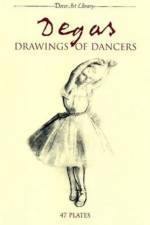
Among the best known and most immediately recognizable images in art history are the superb studies and portraits of ballet dancers by Edgar Degas (1834-1917). One of the most popular of nineteenth-century artists, Degas was fascinated by movement, especially that of dancers. His highly trained eye enabled him to capture the dancer's grace and power as well as subtleties and nuances of pose and execution, making his pictures as true in fact as they are in spirit.This original compilation includes 41 full-page and six half-page black-and-white Degas drawings of dancers. Some are finished works, others are sketches or studies for future works. Singly, in pairs, and in groups, the dancers appear on stage, in the classroom, and at rehearsals--pirouetting, executing grand battements and portes de bras, practicing at the barre, and adjusting their costumes in moments of repose.Art enthusiasts and balletomanes who prize Degas's pictures of dancers will delight in the sublime beauty and mastery of expression of these images. This inexpensive edition allows lovers of art and the dance to savor these enchanting, beautifully reproduced drawings.Dover (1999) original compilation from various sources.
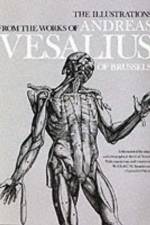
The works of Andreas Vesalius (1514-1564) have long been regarded among the great treasures of the Renaissance. Published as medical books while he was teaching anatomy and dissection at the University of Padua, they include the Tabulae Sex (1538), intended as an aid to students; the magnificently illustrated De Humani Corporis Fabrica (1543), and the companion volume, the Epitome (1543). Individually, these books are milestones in the history of medicine. They also offer one of the most magnificent collections of anatomical drawings ever published. The plates were executed with such vitality and originality that they have been attributed to the most talented illustrators of the sixteenth century, not to mention Vesalius himself. Many of the drawings, in fact, were products of Titian's famous atelier. For this edition of the Vesalius illustrations, Dover has combined the best existing plates and text. The illustrations have been reproduced from the sumptuous (1934) Munich edition of Vesalius titled Icones Anatomicae. The Munich plates were struck for the most part from the original wood blocks then in the collection of the Library of the University of Munich. These priceless art objects were destroyed in the bombing of Munich during World War II. Aside from the original copies of the woodcuts (of which only a few complete sets are known), the Munich restrikes are the best representations of the Vesalian anatomical drawings, for they preserve much of the freshness and richness of the 1543 edition. The text of this Dover edition has been faithfully reproduced from an edition of Vesalius published by World Publishing Company in 1950. The editors, distinguished authorities on sixteenth-century medicine, have provided a very comprehensive history of Vesalius, his career, and excellent explanations of the legends surrounding the illustrators, artists, and publishers involved with the production of his books. No other source will provide the general reader, bibliophile, art historian, artist, or historian of science and medicine with such complete data on Vesalius and his fabulous anatomical illustrations. Unabridged republication of the (1950) English edition published by the World Publishing Company. 93 plates reproduced from the (1934) Munich edition titled Icones Anatomicae, published jointly by the New York Academy of Medicine and the Library of the University of Munich. 3 additional plates of preliminary sketches for the original title page of the De Humani Corporis Fabrica. List of Plates.
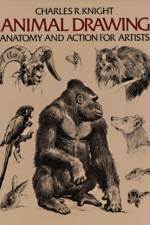
A master of animal portraiture presents an extensive course in creating lifelike drawings of wild and domestic creatures. Subjects include animal musculature, bone structure, psychology, movements, habits, and habitats. 123 illustrations.
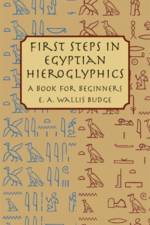
Anyone curious about hieroglyphics will appreciate this classic primer. This practical grammar comprises lists of frequently used signs and determinatives, a vocabulary of about 500 words, a series of 31 texts and extracts (with interlinear transliteration and word-for-word translation), and a few untransliterated and untranslated texts (with glossary), to be worked out independently.
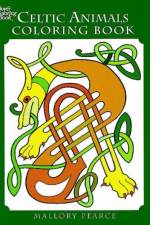
Add your own hues to 43 colorable vignettes depicting stylized birds, fish, serpents, mythological creatures, and other fabulous fauna. For artists, craftspeople, and coloring book enthusiasts of every age.
In this collection of seven of his most popular stories each tale reflects both the author's intimate familiarity with Paris and the provinces in the Belle Epoque, as well as a nonjudgmental humanism that is one of Guy de Maupassant's most attractive writing qualities.
Treasury of 5 shorter works includes title piece plus "The Battle of the Books, A Meditation Upon a Broom-Stick, A Discourse Concerning the Mechanical Operation of the Spirit" and "The Abolishing of Christianity in England."
One of the glories of Elizabethan drama: Marlowe's powerful retelling of the story of the learned German doctor who sells his soul to the devil in exchange for knowledge and power. Footnotes.
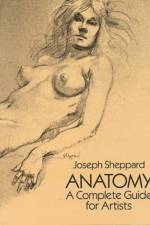
In this superb guidebook, a skilled practitioner of figure drawing demonstrates how to achieve mastery of anatomy through careful, knowledgeable articulation of the muscles and bones lying beneath the skin. Joseph Sheppard's concise instructions have been carefully integrated with over 250 halftone illustrations and over 180 line drawings to lead artists one step at a time through the techniques required in rendering human anatomy convincingly.The opening chapter of the book presents the special techniques involved in mastering human proportion.The chapters that follow each deal with a separate part of the body: the arm, hand, leg, foot, torso, head, and neck (with special coverage of facial features and expressions) and the complete figure.Each of these chapters follows a basic format that combines drawings of the featured body portion from many different angles, coverage of the specific bones and muscles involved, a table of muscle origins and insertions, and coverage of surface anatomy and depictions of the body part in a variety of positions. >
Extraordinary document (1608) on witchcraft and demonology offers striking insight into early 17th century mind. Serious discussions of witches' powers, poisons, crimes, more. Rare limited edition.
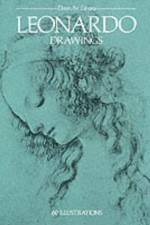
Although Leonardo da Vinci was one of the greatest artists who ever lived, his career was marked by an unusually large number of uncompleted projects and by finished works that rapidly deteriorated. Nevertheless, his influence is undoubted, and his claim to greatness rests chiefly on his drawings, which have been carefully preserved in such locations as Windsor Castle, the Louvre, the Uffizi Gallery, and the British Museum.This collection, excellently reproduced in black-and-white, is representative of Leonardo's various achievements in many drawing media. Among the selections are drawings of plants, landscapes, animals, battles, weapons, and the human face and figure, as well as studies for later paintings or sculpture: a full compositional study for The Adoration of the Magi, a study for the angel's head in The Virgin of the Rocks, studies of horses for the Sforza monument, studies for The Last Supper, studies for The Battle of Anghiari, and an early cartoon for The Madonna with St. Anne.Dover (1980) original publication.
The designs in Celtic illuminated manuscripts represent a distinctive fusion of native Irish, Germanic, and Near Eastern motifs. Graphic artist Ed Sibbett has brilliantly captured the intricacy and beauty of this original art tradition in 37 drawings based on illustrations in the Book of Durrow, the Gospels of St. Willibrord, and the illustrious Book of Kells. Among the motifs are the characteristic Celtic interlacings, geometric-animal combinations, and decorative initials, plus powerful ornaments and symbolic abstractions of animals and people. A portrait of St. Matthew appears as a centerspread, not backed up, that may be taken out and framed. Captions identify the source of each picture and explain the iconography. Original Dover (1979) publication.
Noted magician and magic authority offers 72 tricks that work automatically through nature of card deck. No sleight of hand needed. Often spectacular. 42 illustrations.
83 moving works: "The Weavers, Peasant War, War, Death," and others. "To see the beautiful examples of her work reproduced...is to sit at the feet of a great modern master." -- "School Arts."
Philosophic, less formalistic approach to analytical mechanics offers model of clear, scholarly exposition at graduate level with coverage of basics, calculus of variations, principle of virtual work, equations of motion, more.
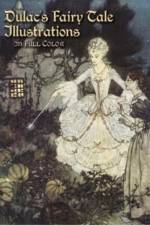
These 55 masterworks by one of the most influential -- and most prolific -- illustrators of children's books during the early 20th century include exquisite images for "The Sleeping Beauty," "Cinderella," "The Snow Queen," "The Real Princess," and other beguiling tales. An invaluable treasury for lovers of fine art; a delight for fairy-tale enthusiasts.
Abonner på vårt nyhetsbrev og få rabatter og inspirasjon til din neste leseopplevelse.
Ved å abonnere godtar du vår personvernerklæring.