








Gjør som tusenvis av andre bokelskere
Abonner på vårt nyhetsbrev og få rabatter og inspirasjon til din neste leseopplevelse.
Ved å abonnere godtar du vår personvernerklæring.Du kan når som helst melde deg av våre nyhetsbrev.

This handbook focuses on the key issues that continue to hinder the formal development of cryptocurrencies as a mainstream financial asset. It primarily examines reputationally damaging events, particularly those related to illicit behavior. The goal of the handbook is to determine whether some of these events could be mitigated by improved or at least coordinated international regulation. The handbook will be useful for specialist technical audiences such as legal, accounting and financial practices. It will also be beneficial for upper level masters and research students in economics, law, accounting, taxation, investment and portfolio management.
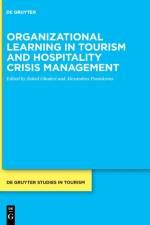
We live in an uncertain world characterized by the occurrence of unexpected incidents in different corners of the globe which can have widespread adverse consequences. It is therefore vital to be prepared for, and attempt to prevent or mitigate the negative effects of such crises through crisis management tools and organizational learning practices. According to the current literature, the tourism and hospitality industry has been exposed to dramatic impacts from human-induced crises and natural disasters during past decades. The repercussions are manifested in the form of business failure, economic losses, tarnished destination image, physical damage to infrastructure and facilities, psychological effects, and other undesirable outcomes. Many of these crisis events are recurrent and their effects can be averted or ameliorated through practicing organizational learning and engaging in preparation activities. However, limited attempts have been made by industry players to detect early warning signals, learn from crises and prepare for the next ones. Despite the important contributions in terms of ''lessons learned'' from historical analyses, they usually provide little information on how tourism organizations facing the crisis attempted to manage it proactively and what they did reactively (Paraskevas and Quek, 2019). Comprehensive sources in this field is thus necessary to fill this gap. Few research studies are available to discuss organizational learning in the process of tourism crisis management. A comprehensive collection of book chapters concentrating on both theory and practice will shed some light on this issue and propose recommendations for future investigation. Hence, the aim of this publication is to discover various aspects of organizational learning in tourism and hospitality crisis management and discuss future prospects. The book will be the main resource for future research in the field of tourism crisis management and organizational learning. There would be several reasons for such demand. First, this subject is relatively new in the hospitality and tourism field, covering many critical aspects of organizational learning in tourism crisis management. This novelty and in-depth discussions of practical lessons across the globe could be of great interest to both academics and practitioners alike. In recent years, many tourism and hospitality firms have applied the essence of crisis management and organizational learning in their contingency planning and crisis management frameworks. Tourism and hospitality managers have fully realized the importance of learning from previous crises and thus applied these learning strategies in their preparation programs. Therefore, they would be very eager more than before to use this material and recommend it to colleagues, employees, etc. Another potential demand would be academics, students and researchers in the both fields of organizational learning and tourism crisis management. Most universities and tourism institutions either directly or indirectly have developed new curriculums on tourism crisis management at Masters and PhD levels with special focus on organizational learning and preparation. This book will be of great interest for these people as previous resources are relatively outdated and furthermore, they did not cover the subject of organizational learning in details.
This volume presents theoretical and empirical research on universities and their entrepreneurial ecosystems to better grasp the connections between universities and their surrounding environments and their engagement with sustainability. The book provides a better understanding of the entrepreneurial characteristics of universities. It examines the ways in which universities'' collaboration and participation in an ecosystem support business and industry transformation. It also investigates how universities function within the university/industry/government/third sector relationship nexus. The book enables the systematisation of the literature while simultaneously builds theory, empirically testing existing theories, and contributes towards a future research agenda geared towards sustainability. The book gathers contributions from varied geographical contexts providing an international perspective.
The Second Edition of The China Paradox is updated to take account of events and trends since 2017. This will create significant and lively new material, including primary research by the author. However, the basic arguments presented in the First Edition have stood the test of time and have been borne out by recent developments. The new material in the Second Edition serves to reinforce and extend the core themes in the First Edition.
Im 15. Jahrhundert war das lateinische Epos an italienischen Fürstenhöfen zu einem bedeutenden, in der Forschung jedoch bislang wenig erschlossenen Mittel der Herrschaftsinszenierung avanciert. Nördlich der Alpen wurde in weiterer Folge erstmals Kaiser Maximilian I. Gegenstand von breit angelegten epischen Darstellungen. Die Arbeit untersucht die Strategien und Wirkweisen dieser Heroisierungen. Sie zeigt auf, wie Maximilians episches Heldentum einerseits antiken Idealen entsprach und von einer langen Gattungstradition geprägt war, andererseits an seine Person sowie an zeitspezifische Erfordernisse angepasst wurde. Die Epen werden in ihrem Verhältnis zu antiken und spätmittelalterlichen Vorläufern kontextualisiert, sodass die Spezifika der Maximiliansheroik sichtbar werden. Die dabei gewonnen Erkenntnisse ergänzen nicht nur die Forschung zu Maximilians ,Ruhmeswerk' und zur Frühzeit des transalpinen Humanismus, sondern leisten auch einen Beitrag zum Wandel von Heroisierungsmustern in der Geschichte des klassischen Epos. In ihrem adaptierbaren methodischen Zugang liefert die Arbeit darüber hinaus ein neues Instrumentarium für die Analyse epischer Heroisierungen überhaupt.
No detailed description available for "VOPROSY EKONOMIKI 10/1981 OKTIJABR' VE".
Keine ausführliche Beschreibung für "ARCHIV F. TIERERNÄHRUNG BD. 10 ARCHT 1960" verfügbar.
Keine ausführliche Beschreibung für "ARCHIV F. TIERERNÄHRUNG HEFT 1-6 ARCHT 1965" verfügbar.
Abonner på vårt nyhetsbrev og få rabatter og inspirasjon til din neste leseopplevelse.
Ved å abonnere godtar du vår personvernerklæring.