







Gjør som tusenvis av andre bokelskere
Abonner på vårt nyhetsbrev og få rabatter og inspirasjon til din neste leseopplevelse.
Ved å abonnere godtar du vår personvernerklæring.Du kan når som helst melde deg av våre nyhetsbrev.

Even though important developments within 20th and 21st century philosophy have widened the scope of epistemology, this has not yet resulted in a systematic meta-epistemological debate about epistemology's aims, methods, and criteria of success. Ideas such as the methodology of reflective equilibrium, the proposal to "e;naturalize"e; epistemology, constructivist impulses fuelling the "e;sociology of scientific knowledge"e;, pragmatist calls for taking into account the practical point of epistemic evaluations, as well as feminist criticism of the abstract and individualist assumptions built into traditional epistemology are widely discussed, but they have not typically resulted in the call for, let alone the construction of, a suitable meta-epistemological framework.This book motivates and elaborates such a new meta-epistemology. It provides a pragmatist, social and functionalist account of epistemic states that offers the conceptual space for revised or even replaced epistemic concepts. This is what it means to "e;refurbish epistemology"e;: The book assesses conceptual tools in relation to epistemology's functionally defined conceptual space, responsive to both intra-epistemic considerations and political and moral values.
The ?Natural Problem of Consciousness? is the problem of understanding why there are presently conscious beings at all. Given a non-reductive naturalist framework taking consciousness as an ontologically subjective biological phenomenon, how can we rationally explain the fact that the actual world has turned out to be one where there are presently living beings that can feel, rather than having developed as a zombie-world in which there would be no conscious experiences of any kind? This book introduces the Natural Problem by relating it to central problems in the philosophy of mind (metaphysical mind-body problem, Hard Problem of consciousness) and emphasizing the distinctive interest of its diachronic dimension. Ranging from philosophy to biology and neuroscience, it offers a thorough analysis aimed at better understanding what could explain why phenomenal consciousness has been preserved throughout evolution by natural selection. This is an original, engaging, and thought provoking philosophical study of a neglected but fundamental question regarding the nature and origin of consciousness.
Im Zentrum des Bandes steht die Frage nach der Rolle des Hörens in modernen Wissenskulturen. Lange galt die Moderne als primär visuelles Zeitalter. Die Sound Studies haben in den letzten Jahren jedoch in vielfacher Hinsicht gezeigt, dass auch dem Hören zentrale Bedeutung in der Moderne zukommt. Der Schwerpunkt lag dabei jedoch zumeist auf den kulturellen Variationsformen des Hörens und zeitlich auf dem 20. und frühen 21. Jahrhundert. Demgegenüber verlängert dieser Band die historische Perspektive bis zurück in die Frühe Neuzeit und legt den Schwerpunkt auf die Frage nach dem epistemischen Status des Hörens in der Moderne. Er folgt dabei einem weiten Wissensbegriff und untersucht 1) welche Arten von Wissen über das Hören sich historisch rekonstruieren lassen und 2) welche Funktionen das Hören selbst im Prozess der Wissensproduktion und -kommunikation hatte, welche Formen des auditiven Wissens sich also innerhalb der Wissenschaften, der darstellenden Künste, der Musik, der Literatur und der Politik beschreiben lassen. Dadurch trägt der Band zur Historisierung von zentralen Begriffen und Annahmen der Sound Studies bei und problematisiert die Hypothese einer Hegemonie des Visuellen in der Moderne.
This text challenges existing writing on 'Abd al-Qadir al-Jaza'iri which divides his life into two juxtaposed phases separated by narratives of conversion: from Francophobia to Francophilia, from militarism to pacifism, from activism to quietism, from Islamism to pluralism, from politics to religion. This work's interdisciplinary approach demonstrates that these narratives cannot be sustained in light of the evidence. Rather, they can be shown to originate in specific historical, cultural, and methodological tendencies within western societies and academies. Drawing on primary materials including archival documents and selections from his own writing, it constructively critiques his reception in the literature while advancing a continuous and contextualised account of his life and ideas. These include the relating of his ethico-religious and jurisprudential concerns to his political decision-making, and a resituating of his mystical writings within a definite moral, epistemological, and political context. By problematising these interpretive issues, this thesis aims at opening new avenues for understanding even as it offers its own solutions. In so doing, this study contributes to discussions on Sufism, political Islam, and east-west relations.
In his articles Stefan Reif's articles have dealt with Jewish biblical exegesis and the close analysis of the evolution of Jewish prayer texts. Some fourteen of these that appeared in various collective volumes are here made more easily available, together with a major new study of Numbers 13, an introduction and extensive indexes. Reif attempts to establish whether there is any linguistic, literary and exegetical value in the traditional Jewish interpretation of the Hebrew Bible for the modern scientific approach to such texts and whether such an approach itself is always free of theological bias. He demonstrates how Jewish liturgical texts may illuminate religious teachings about wisdom, history, peace, forgiveness, and divine metaphors. Also clarified in these essays are notions of David, Greek and Hebrew, divine metaphors, and the liturgical use of the Hebrew Bible.
The essays deal with developments during the period from the liquidation of the Judean state to the conquests of Alexander the Great. This was a critical time in the Near East and the Mediterranean world in general. It marked the end of the great Semitic empires until the rise of Islam in the seventh century A.D.,decisive changes in religion, with appeal to a creator-deity in Deutero-Isaiah, Babylonian Marduk cult, and Zoroastrianism.For the survivors of the Babylonian conquest in a post-collapse society the issue of continuity, with different groups claiming continuity with the past and possession of the traditions, there developed a situation favourable to the emergence of sects. The most pressing question, however, was what to do faced with the overwhelming power of empire, first Babylonian, then Persian. Finally, with the extinction of the native dynasty and the entire apparatus of a nation-state, the temple became the focus and emblem of group identity.
The series Jewish Thought, Philosophy and Religion aims to present a wide spectrum of studies and texts related to Jewish thought, philosophy and religion - from antiquity to the present. It seeks to highlight the multiplicity of approaches within Judaism and to shed light on the interaction between Jewish and non-Jewish thought. The series includes monographs, collected essays, and editions of sources submitted to or produced by staff and visiting fellows of the Maimonides Centre for Advanced Studies, as well as by scholars of the Institute for Jewish Philosophy and Religion at the University of Hamburg. JTPR is edited on behalf of the Maimonides Centre for Advanced Studies at the University of Hamburg. Further book series of the Maimonides Centre for Advanced Studies are Studies and Texts in Scepticism and the Yearbook of the Maimonides Centre for Advances Studies. The Yearbook 2016 was published as volume 1 of the series Jewish Thought, Philosophy, and Religion. From 2017 onwards, the Yearbook is published as a separate series.
Die Zuruckweisung, mit der viele fruhneuzeitliche Autoren der aristotelischen Naturphilosophie begegnen, geht haufig mit einer emphatischen Aufnahme der hellenistischen Philosophie einher. Vor diesem Hintergrund fragt die vorliegende Untersuchung nach den prinzipiellen Unterschieden zwischen Aristoteles und seinen hellenistischen Nachfolgern. Ausgangspunkt ist die fur die aristotelische Philosophie zentrale Analyse des Phanomens der Bewegung.
Meaning (significance) and nature are this book¿s principal topics. They seem an odd couple, like raisins and numbers, though they elide when meanings of a global sort¿ideologies and religions, for example¿promote ontologies that subordinate nature. Setting one against the other makes reality contentious. It signifies workmates and a coal face to miners, gluons to physicists, prayer and redemption to priests. Are there many realities, or many perspectives on one? The answer I prefer is the comprehensive naturalism anticipated by Aristotle and Spinoza: "natura naturans, natura naturata." Nature naturing is an array of mutually conditioning material processes in spacetime. Each structure or event¿storm clouds forming, nature natured¿is self-differentiating, self-stabilizing, and sometimes self-disassembling; each alters or transforms a pre-existing state of affairs. This surmise anticipated discoveries and analyses to which neither thinker had access, though physics and biology confirm their hypothesis beyond reasonable doubt. Hence the question this book considers: Is reality divided:nature vrs. lived experience? Or is experience, with all its meanings and values, the complex expression of natural processes?
The significance of Plato's literary style to the content of his ideas is perhaps one of the central problems in the study of Plato and Ancient Philosophy as a whole. As Samuel Scolnicov points out in this collection, many other philosophers have employed literary techniques to express their ideas, just as many literary authors have exemplified philosophical ideas in their narratives, but for no other philosopher does the mode of expression play such a vital role in their thought as it does for Plato. And yet, even after two thousand years there is still no consensus about why Plato expresses his ideas in this distinctive style. Selected from the first Latin American Area meeting of the International Plato Society (www.platosociety.org) in Brazil in 2012, the following collection of essays presents some of the most recent scholarship from around the world on the wide range of issues related to Plato's dialogue form. The essays can be divided into three categories. The first addresses general questions concerning Plato's literary style. The second concerns the relation of his style to other genres and traditions in Ancient Greece. And the third examines Plato's characters and his purpose in using them.
The new series of 'Studies on Ethics and Science' complements the Yearbook for Ethics and Science edited since 1995 by the Institute for Science and Ethics in Bonn and published by de Gruyter. The monographs and collected volumes in the series cover the same subjects as the Yearbook, namely outstanding and innovative contributions to the investigation of ethical questions connected with modern science and its development. Particular interest is directed towards ethical questions in medicine and the biological sciences.
In der komplett uberarbeiteten und deutlich erweiterten zweiten Auflage des nun zweibandigenBuches werden die Sarkome, Mischtumoren und andere seltene mesenchymale Tumoren des weiblichen Genitale und retroperitonealen Beckenraumes dargestellt. Die genitalen Sarkome und malignen Mischtumoren sind aufgrund erheblicher diagnostischer Probleme mehrheitlich ein Zufallsbefund. Neben nur wenigen aussagekraftigen Studien existieren keine definierten Therapiestandards und Leitlinien. Wegen der schwierigen differentialdiagnostischen Abgrenzung und therapeutischen Unsicherheiten wurden auch die mesenchymalen Tumoren mit auffalligen klinischen Eigenschaften sowie einem unsicherem malignen Potential und gutartige Mischtumoren in die Publikation aufgenommen. Fur jede Entitat erfolgt eine detaillierte Besprechung zur Epidemiologie, Atiologie und Pathogenese. Auf die makro- und mikroskopische Charakterisierung, die Prognose, die klinische und bildgebende Diagnostik sowie Differenzialdiagnose wird besonderer Wert gelegt. Der Fertilitat und Schwangerschaft ist ein eigenstandiges Kapitel in Band 2 gewidmet. Die klar formulierten Therapieempfehlungen beziehen sich jeweils auf die auf das Organ begrenzte sowie auf fortgeschrittene, rezidivierte und metastasierte Tumoren. Die Moglichkeiten der Operation, der Bestrahlung, der neoadjuvanten, adjuvanten, sowie palliativen Hormon- und Chemotherapie und Empfehlungen zur Nachsorge werden umfassend und kritisch dargestellt. Das Buch, mit einer Vielzahl an hochwertigen vierfarbigen Abbildungen und einem umfassenden aktuellen Literaturverzeichnis, soll fur den klinisch und ambulant tatigen Gynakologen und Onkologen ein Leitfaden zur Entscheidungsfindung sein und kann gleichfalls fur den Pathologen von Nutzen sein. Das reprasentative aussagekraftige Bildmaterial ist auch das Resultat einer umfassenden Mithilfe durch zahlreiche Gynakologen aus ganz Deutschland. Fur die aufgefuhrten Tumorgruppen existiert gegenwartig keine anderweitige zusammenfassende Monographie. Ebenfalls erhaltlich:Sarkome des weiblichen GenitaleBand 1: Glattmuskulare und stromale Tumoren ISBN 978-3-11-025317-7e-ISBN 978-3-11-025318-4
Obwohl die Grundlegung zur Metaphysik der Sitten zu den am haufigsten interpretierten philosophischen Werken uberhaupt zahlt, sind ihre zentralen Theoreme nach wie vor dunkel geblieben. Neben der Deduktion des kategorischen Imperativs gilt dies besonders fur das Theoriestuck zum Zweck an sich selbst. Die Arbeit geht der Frage nach dem Gehalt, der systematischen Funktion sowie den weit verzweigten Bezugen dieses Theoriestucks nach und tut dies oft in Form einer mikroskopischen Analyse. Gerade dieser mikroskopische Blick fuhrt zu dem uberraschenden Befund, dass einige zum Teil seit Jahrzehnten vertretene Interpretationsthesen und Lehrmeinungen einer grundsatzlichen Revision bedurfen. Dies gilt sowohl fur die Form als auch den Gehalt des Zwecks an sich selbst- aber auch fur das Verhaltnis zur Deduktion des kategorischen Imperativs. Die Untersuchung zum Zusammenhang mit der Deduktion fuhrt auch zu in der Forschung vielleicht bisweilen gesehenen, aber bisher nicht hinreichend explizit gemachten Einsichten in die Deduktion selbst. So vertritt Kant dort die transzendentalen Freiheit des Willens uberhaupt, was prima facie in direktem Widerspruch zur These der Analytizitat von Freiheit und Sittlichkeit steht.
The computational approach of this book is aimed at simulating the human ability to understand various kinds of phrases with a novel metaphoric component. That is, interpretations of metaphor as literal paraphrases are based on literal meanings of the metaphorically used words. This method distinguishes itself from statistical approaches, which in general do not account for novel usages, and from efforts directed at metaphor constrained to one type of phrase or to a single topic domain. The more interesting and novel metaphors appear to be based on concepts generally represented as nouns, since such concepts can be understood from a variety of perspectives. The core of the process of interpreting nominal concepts is to represent them in such a way that readers or hearers can infer which aspect(s) of the nominal concept is likely to be intended to be applied to its interpretation. These aspects are defined in terms of verbal and adjectival predicates. A section on the representation and processing of part-sentence verbal metaphor will therefore also serve as preparation for the representation of salient aspects of metaphorically used nouns. As the ability to process metaphorically used verbs and nouns facilitates the interpretation of more complex tropes, computational analysis of two other kinds of metaphorically based expressions are outlined: metaphoric compound nouns, such as "e;idea factory"e; and, together with the representation of inferences, modified metaphoric idioms, such as "e;Put the cat back into the bag"e;.
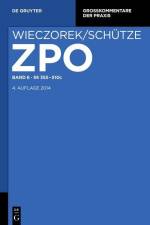
Die Kommentierung umfasst neben der Zivilprozessordnung auch die relevanten Nebengesetze (wie EGZPO, GVG, KapMuG und MediationsG) sowie das europäische und internationale Zivilprozessrecht. Selbstverständlich sind alle relevanten Gesetzesänderungen sowie die neuesten Entwicklungen in Rechtsprechung und Lehre berücksichtigt.
Die Reihe Studien zur deutschen Literatur prasentiert herausragende Untersuchungen zur deutschsprachigen Literatur von der Fruhen Neuzeit bis zur Gegenwart. Offen besonders auch fur komparatistische, kulturwissenschaftliche und wissensgeschichtliche Fragestellungen, bietet sie ein traditionsreiches Forum fur innovative literaturwissenschaftliche Forschung. Alle eingesandten Manuskripte werden doppelt begutachtet. Informationen zum Bewerbungsverfahren und zu Druckkostenzuschussen erhalten Sie beim Verlag. Wenden Sie sich dazu bitte an den zustandigen Lektor Marcus Bohm (marcus.boehm [ at ] degruyter.com).
This study attempts to elucidate a possible meeting point of the traditions of Eastern and Western metaphysical thinking. In discussing Whitehead's and Aurobindo's views on being and becoming, it seeks the possibility of a better engagement between the East and the West in the light of the philosophical insights. It is an initiation into the Sitz im Leben of Whitehead's philosophy and his general thought pattern. It carries a perceptive analysis to show the clear primacy of Becoming or Process in Whitehead that extends even to the Divine. It also highlights Aurobindo as a unique Indian Philosopher, who articulated Indian thought in Western categories. He was able to integrate the evolutionary theory of the West with the Indian understanding of becoming. The relationship between God and Creativity and Sachchidananda and the Supermind is studied within the context of Enlightenment and Modernity and the way of doing philosophy in the West and in the East.
In der Reihe werden herausragende monographische Untersuchungen und Sammelbande zu allen Aspekten der Philosophie Kants veroffentlicht, ebenso zum systematischen Verhaltnis seiner Philosophie zu anderen philosophischen Ansatzen in Geschichte und Gegenwart. Veroffentlicht werden Studien, die einen innovativen Charakter haben und ausdruckliche Desiderate der Forschung erfullen. Die Publikationen reprasentieren damit den aktuellsten Stand der Forschung.
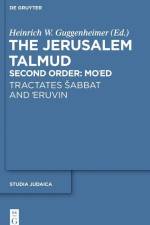
This volume of the Jerusalem Talmud publishes the first twotractates of the Second Order, sabbat and 'Eruvin. These tractates deal with discussion of all regulations regarding Shabbat, the weekly day of rest, including the activities prohibited on Shabbat. The tractate 'Eruvin covers questions of definition of what is allowed to do on Shabbat. The Second Order is the last one to be published in Heinrich W. Guggenheimer's edition of the Jerusalem Talmud.
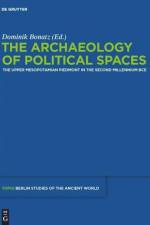
This book, consisting of 12 contributions, amalgamates the most recent results from archaeological research in the Upper Mesopotamian piedmont. Under the growing influence of expanding territorial states which had become established during the 2nd millennium BC, this region experienced a substantial change in social and political life during that time. The discussion is centered around settlement shapes, developments in the material culture, as well as written documents that attest to this change. In summary, this book emphasizes the significant roll of archaeological research in the reconstruction of models concerning the formation and transformation of political space in the ancient world.
Die Kommentierung umfasst neben der Zivilprozessordnung auch die relevanten Nebengesetze (wie EGZPO, GVG, KapMuG und MediationsG) sowie das europäische und internationale Zivilprozessrecht. Selbstverständlich sind alle relevanten Gesetzesänderungen sowie die neuesten Entwicklungen in Rechtsprechung und Lehre berücksichtigt.e berücksichtigt.
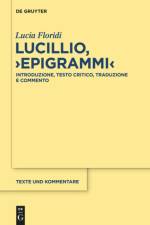
This is the first modern commentary devoted exclusively to the epigrams of Lucillius, a prolific Neronian poet who, in spite of being one of the most significant representatives of the Greek satirical epigram, has primarily been studied not for his own value, but for the influence he had on Martial. About 140 epigrams of his survive, mostly in book XI of the Anthology. The volume contains an extensive introduction, a new critical text and translation, and a full literary and philological commentary. While the body of the commentary focuses on the particular, providing literary readings of individual epigrams and a line-by-line linguistic, philological, and stylistic analysis, the introduction deals with Lucillius's identity, the tradition of the text, style, themes, metrics, and cultural setting, and additionally investigates the origins and development of Greek skoptic epigram. Particular attention is paid to the way in which Lucillius engages with the conventions of the genre, often overturning the reader's expectations. In this way, the work explores the paradox inherent to the fact that a poetic form that was by its nature eulogistic (inscriptional epigrams were born in order to record, and thus celebrate, the dedication of an object or the death of a man) ultimately became the genre of mockery and abuse.
The book defends that there is both teleological order (design) and chance in non-living and in living systems of nature including man. This is done by giving exact definitions of different types of order and teleological order on the one hand and of different types of chance on the other. For their compatibility it is important to notice that any definition of chance presupposes some kind of order relative to that we can speak of chance. Thus also in evolution which is some growth of some order and for which a detailed definition is given in chpt.13 chance and degrees of freedom play an essential role.A further purpose of the book is to show that both the existing order and the existing chance in nature are compatible with a global teleological plan which is God's providence. However concerning the execution of God's plan not everything is done or caused by himself but ?God created things in such a way that they themselves can create something? (Gödel, MAX PHIL). A reason for that is that God is neither all-causing nor all-willing although he is almighty. This is connected with the result of chpts.15 and 16 that also human freedom and evil are compatible with God's providence.
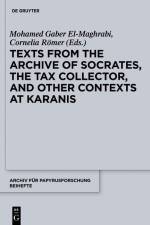
This volume of Papyri contains a selection of 25 pieces which were excavated in the village of Karanis in the north-eastern Fayum (Egypt) by American archaeologists between 1924 and 1926. Many of the texts published here come from the archive of a well known figure in the village life of Karanis in the 2nd century AD: Socrates, son of Sarapion, was a tax collector here for many years, serving the Roman Empire collecting taxes due in money and in kind. Besides his successful economic activities - Socrates certainly belonged to the upper stratum of society in Karanis - the tax collector was a lover of Greek literature; for sure, he did not venture into high philosophy and the like, but he read Homer, comedies, and tried to be up to date about mythology in plays. Half of the new texts published here are literary, mostly from Socrates' library; other texts were found in the immediate neighbourhood of where Socrates lived, such as a surgical treatise about remedies of shoulder dislocations, which perhaps belonged to a doctor. The other half of the papyrus texts in this volume are documents that can shed new light on the activities of the tax collector, or of other inhabitants of Karanis. Altogether they give us a vivid picture of village life in Graeco/Roman Egypt in the 2nd century AD.
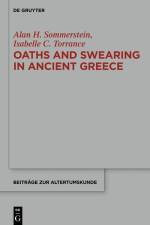
The oath was an institution of fundamental importance across a wide range of social interactions throughout the ancient Greek world, making a crucial contribution to social stability and harmony; yet there has been no comprehensive, dedicated scholarly study of the subject for over a century. This volume of a two-volume study explores the nature of oaths as Greeks perceived it, the ways in which they were used (and sometimes abused) in Greek life and literature, and their inherent binding power.
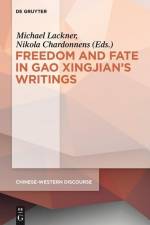
Like artists, important writers defy unequivocal interpretations. Gao Xingjian, winner of the Nobel Prize in literature, is a cosmopolitan writer, deeply rooted in the Chinese past while influenced by paragons of Western Modernity. The present volume is less interested in a general discussion on the multitude of aspects in Gao's works and even less in controversies concerning their aesthetic value than in obtaining a response to the crucial issues of freedom and fate from a clearly defined angle. The very nature of the answer to the question of freedom and fate within Gao Xingjian's works can be called a polyphonic one: there are affirmative as well as skeptical voices. But polyphony, as embodied by Gao, is an even more multifaceted phenomenon. Most important for our contention is the fact that Gao Xingjian's aesthetic experience embodies prose, theater, painting, and film. Taken together, they form a Gesamtkunstwerk whose diversity of voices characterizes every single one of them.
Questions concerning mobility and migration as well as subsistence strategies of past societies have always been of major importance in archaeological research. The West Eurasian steppes in the Eneolithic, the Early Bronze and the Iron Age were largely inhabited by cultural communities believed to show an elevated level of spatial mobility, often linked to their subsistence economy. In this volume, questions concerning the mobility and potential migration as well as the diet and economy of the West Eurasian steppes communities during the 4th, the 3rd and the 1st Millennia BC are approached by applying isotope analysis, specifically 87Sr/86Sr, I 18O, I 15N and I 13C analyses. Adapting a combination of different isotopic systems to a study area of vast spatial and chronological dimension allowed a wide variety of questions to be answered and establishes the beginning of a database of biogeochemical data for the West Eurasian steppes. Besides the characterisation of mobility and subsistence patterns of the archaeological communities under discussion, attempts to identify possible Early Bronze Age migrations from the steppes to the steppe-like plains in parts of Eastern Europe were made, alongside an evaluation of the applicability of isotope analysis to this context.
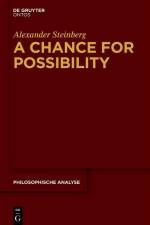
A Chance for Possibility defends the view that the objective modal realm is tripartite: truths about possible worlds supervene on modal truths, which in turn supervene on truths about objective chances.An understanding of supervenience in terms of grounding is developed which ? unlike the standard modal characterization ? allows the question of what modal truths supervene on to have a non-trivial answer. Relying on this understanding, a negative result is established: modal truths do not supervene on truths about possible worlds, whether possible worlds are conceived of as Lewisian concreta or as abstract objects of some kind. Instead, a conception of pleonastic possible worlds is developed that reverses the direction of supervenience. On the basis of linguistic considerations concerning our use of natural language 'might' and 'might have' sentences, Steinberg finally argues that truths about objective chances are able to provide a supervenience base for modal truths.A Chance for Possibility is an investigation in analytic metaphysics, drawing on related work in the philosophy of logic and language as well as linguistics. It provides a detailed case study for the fruitful use of a notion of grounding in the clarification and evaluation of longstanding philosophical issues.
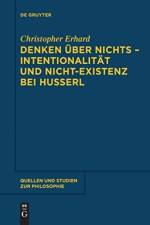
Seit Parmenides gehort die Frage, wie man auf etwas intentional gerichtet sein kann, das nicht existiert, zu den Ratseln der Philosophie. Gema einer Lesart besteht das Ratsel darin, ob Intentionalitat eine Relation ist. Ist dem aber so und gehort es zur Natur einer Relation, nur zwischen Existierendem bestehen zu konnen, wie kann es dann eine intentionale Relation"e; zwischen einer Entitat und einer Non Entitat geben? Muss man, wie etwa Meinong, einen eigenen Status fur jedes intentionale Objekt einfuhren? Oder sollte man eher die Idee aufgeben, Intentionalitat sei eine Relation? In diesem Buch wird das Problem der Nicht Existenz im Kontext dieser Fragen verortet und zum Ausgangspunkt einer Untersuchung von Husserls Phanomenologie bewusster Intentionalitat gemacht. So werden z. B. Husserls Deutung von Urteilen uber Nicht-Seiendes als Urteile unter Assumption"e; und seine Analyse der freien Phantasie untersucht. Husserl wird insgesamt als Nicht Relationalist gedeutet, der sich als systematisch anschlussfahig an zeitgenossische nicht relationale Theorien erweist.
Die Reihe bietet ein Publikationsforum fur innovative Arbeiten zu allen Themengebieten der analytischen Philosophie. Die Bande in dieser Reihe erscheinen in deutscher oder englischer Sprache.
Abonner på vårt nyhetsbrev og få rabatter og inspirasjon til din neste leseopplevelse.
Ved å abonnere godtar du vår personvernerklæring.