











Gjør som tusenvis av andre bokelskere
Abonner på vårt nyhetsbrev og få rabatter og inspirasjon til din neste leseopplevelse.
Ved å abonnere godtar du vår personvernerklæring.Du kan når som helst melde deg av våre nyhetsbrev.

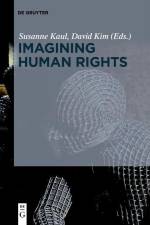
Why is it that human rights are considered inviolable norms of justice at local and global scales although the number of their violations has steadily increased in modern history? On the surface, this paradox seems to be reducible to a straightforward discrepancy between idealism and reality in humanitarian affairs, but Imagining Human Rights complicates the picture by offering interdisciplinary perspectives on the imaginary status of human rights. By that the contributors mean not merely subject to imagination, open to interpretation or far too abstract, but also formative of a social imaginary with emphatic identifications and shared values. From a variety of disciplinary perspectives, they explore critical ways of engaging in rigorous interdisciplinary conversations about the origin and language of human rights, personal dignity, redistributive justice, and international solidarity. Together, they show how and why a careful examination of the intersection between disciplinary investigations is essential for imagining human rights at large. Examples range from the legitimacy of land ownership rights and the inadequacy of human faculty to make sense of mass violence in visual representation to the stewardship of human rights promoters and the genealogy of human rights.
This book provides a translation of the complete poems and fu of Cao Zhi (192-232), one of China's most famous poets. Cao Zhi lived during a tumultuous age, a time of intrepid figures and of bold and violent acts that have captured the Chinese imagination across the centuries. His father Cao Cao (155-220) became the most powerful leader in a divided empire, and on his death, Cao Zhi's elder brother Cao Pi (187-226) engineered the abdication of the last Han emperor, establishing himself as the founding emperor of the Wei Dynasty (220-265). Although Cao Zhi wanted to play an active role in government and military matters, he was not allowed to do so, and he is remembered as a writer. The Poetry of Cao Zhi contains in its body one hundred twenty-eight pieces of poetry and fu. The extant editions of Cao Zhi's writings differ in the number of pieces they contain and present many textual variants. The translations in this volume are based on a valuable edition of Cao's works by Ding Yan (1794-1875), and are supplemented by robust annotations, a brief biography of Cao Zhi, and an introduction to the poetry by the translator.
This book is a timely response to a rather urgent call to seek an updated methodology in rereading and reappraising early Chinese texts in light of newly discovered early writings. For a long time, the concept of authorship in the formation and transmission of early Chinese texts has been misunderstood. The nominal author who should mainly function as a guide to text formation and interpretation is considered retrospectively as the originator and writer of the text. This book illustrates that although some notions about the text as the author's property began to appear in some Eastern Han texts, a strict correlation between the author and the text results from later conceptions of literary history. Before the modern era, there existed a conceptual gap between an author and a writer. A pre-modern Chinese text could have had both an author and a writer, or even multiple authors and multiple writers. This work is the first study addressing these issues by more systematically emphasizing the connection of the text, the author, and the religious and sociopolitical settings in which these issues were embedded. It is expected to constitute a palpable contribution to Chinese studies and the discipline of philology in general
Yan Zhitui (531-590s) was a courtier and cultural luminary who lived a colourful life during one of the most chaotic periods, known as the Northern and Southern Dynasties, in Chinese history. Beginning his career in the southern Liang court, he was taken captive to the north after the Liang capital fell, and served several northern dynasties. Today he remains one of the best-known medieval writers for his book-length "e;family instructions"e; (jiaxun), the earliest surviving and the most influential of its kind. Completed in his last years, the work resembles a long letter addressed to his sons, in which he discusses a wide range of topics from family relations and remarriage to religious faith, philology, cultural arts, and codes of conduct in public and private life. It is filled with vivid details of contemporary social life, and with the author's keen observations of the mores of north and south China. This is a new, complete translation into English, with critical notes and introduction, and based on recent scholarship, of Yan Zhitui's Family Instructions, and of all of his extant literary works, including his self-annotated poetic autobiography and a never-before-translated fragmentary rhapsody, as well as of his biographies in dynastic histories.
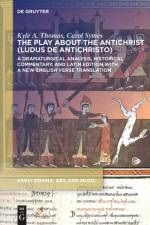
The Play about the Antichrist (Ludus de Antichristo) was composed around 1160 at the imperial Bavarian abbey of Tegernsee, at a critical point in the power-struggle between the papacy and Emperor Frederick Barbarossa. This new translation and commentary reveals this drama to be strikingly representative of the role that theatrical performance played in shaping contemporary politics, diplomacy, and public opinion. It also shows how drama functioned as an integral component of the educational curricula of elite monastic institutions like Tegernsee, where political administrators and diplomats were trained, and how performance served as a common, connective lingua franca among monasteries in twelfth-century Bavaria. In this new translation, Carol Symes provides the first full and faithful rendering of the play's dynamic language, maintaining the meter, rhyme scheme, and stage directions of the Latin original and restoring the liturgical elements embedded in the text. Kyle A. Thomas, whose fully-staged production tested the theatricality of this translation, provides a new historical and dramaturgical analysis of the play's rich interpretive and performative possibilities.
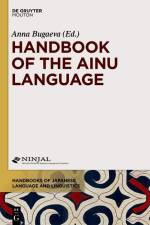
The volume is aimed at preserving invaluable knowledge about Ainu, a language-isolate previously spoken in Hokkaido, Sakhalin, and Kurils, which is now on the verge of extinction. Ainu was not a written language, but it possesses a huge documented stock of oral literature, yet is significantly under-described in terms of grammar. It is the only non-Japonic language of Japan and is typologically different not only from Japanese but also from other Northeast Asian languages. Revolving around but not confined to its head-marking and polysynthetic character, Ainu manifests many typologically interesting phenomena, related in particular to the combinability of various voice markers and noun incorporation. Other interesting features of Ainu include vowel co-occurrence restrictions, a mixed system of expressing grammatical relations, which includes the elements of a rare tripartite alignment, nominal classification distinguishing common and locative nouns, elaborate possessive classes, verbal number, a rich four-term evidential system, and undergrammaticalized aspect, which are all explained in the volume. This handbook, the result of unprecedented cooperation of the leading experts of Ainu, will definitely help to increase the clarity of our understanding of Ainu and in a long-term perspective may provide answers to problems of human prehistory as well as open the field of Ainu studies to the world and attract many new students. Table of Contents Masayoshi Shibatani and Taro KageyamaPreface Masayoshi Shibatani and Taro KageyamaIntroduction to the Handbook of Japanese Language and Linguistics Contributors Anna BugaevaIntroduction I Overview of Ainu studies Anna Bugaeva1. Ainu: A head-marking language of the Pacific Rim Juha Janhunen2. Ainu ethnic origins Tomomi Sato3. Major old documents of Ainu and some problems in the historical study of Ainu Alfred F. Majewicz4. Ainu language Western records José Andrés Alonso de la Fuente5. The Ainu language through time Alexander Vovin6. Ainu elements in early Japonic Hidetoshi Shiraishi and Itsuji Tangiku7. Language contact in the north Hiroshi Nakagawa and Mika Fukazawa8. Hokkaido Ainu dialects: Towards a classification of Ainu dialects Itsuji Tangiku9. Differences between Karafuto and Hokkaido Ainu dialects Shiho Endo10. Ainu oral literature Osami Okuda11. Meter in Ainu oral literature Tetsuhito Ono12. The history and current status of the Ainu language revival movement II Typologically interesting characteristics of the Ainu language Hidetoshi Shiraishi13. Phonetics and phonology Hiroshi Nakagawa14. Parts of Speech - with a focus on the classification of nouns Anna Bugaeva and Miki Kobayashi15. Verbal valency Tomomi Sato16. Noun incorporation Hiroshi Nakagawa17. Verbal number Yasushige Takahashi18. Aspect and evidentiality Yoshimi Yoshikawa19. Existential aspectual forms in the Saru and Chitose dialects of Ainu III Appendices: Sample texts Anna Bugaeva20. An uwepeker "Retar Katak, Kunne Katak" and kamuy yukar "Amamecikappo" narrated in the Chitose Hokkaido Ainu dialect by Ito Oda Elia dal Corso21. "Meko Oyasi", a Sakhalin Ainu ucaskuma narrated by Haru Fujiyama Subject index
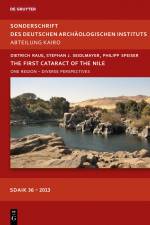
Cross-disciplinary studies in cultural history require regions with unusually favorable conditions of preservation as well as relevance to the disciplines and cultures involved. The first cataract of the Nile offers precisely such a combination, and this work employs a diverse set of academic perspectives to present a diachronic picture of its cultural and geographic history over a period of more than 5,000 years.
The study delves into the rise of Arabic as an imperial language in the 7th and 8th centuries. It combines insights from papyrological, epigraphic and numismatic evidence to correlate early Islamic scribal practices with broader strategies of imperial governance in a trans-regional perspective. Drawing from formal features, the study explores the social connotations which characterized the scribal practices of the early Islamic imperial chanceries.
The book is about strong axioms of infi nity in set theory (also known as large cardinal axioms), and the ongoing search for natural models of these axioms. Assuming the Ultrapower Axiom, a combinatorial principle conjectured to hold in all such natural models, we solve various classical problems in set theory (for example, the Generalized Continuum Hypothesis) and uncover a theory of large cardinals that is much clearer than the one that can be developed using only the standard axioms.
Efficient, simple, and empirically grounded, Lucien Tesnière¿s principles of structural syntax have remained to this day very popular among linguists. Far beyond the field of syntax itself, the Elements of Structural Syntax have found lasting echo in all branches of linguistics. This volume offers a contemporary appraisal of Tesnière¿s legacy.
This book explores how philanthropy is perceived and practiced in a predominantly Muslim society. It is the first academic quantification of philanthropic giving and volunteering using a representative sample of the Egyptian population, providing the reader with a quantitative and qualitative analysis of the state of philanthropy in Egypt. The book discusses traditional and religious philanthropic mechanisms and provides a thorough explanation of the waqf system, how it is perceived today, and how it could support innovation. Furthermore, as a solid direct product of the research embodied in the creation of a community foundation, it discusses reviving and modernizing the concept of waqf, thus elaborating an example of how academic studies may be employed to create proto-types for learning and calculated action.
Abonner på vårt nyhetsbrev og få rabatter og inspirasjon til din neste leseopplevelse.
Ved å abonnere godtar du vår personvernerklæring.