








Gjør som tusenvis av andre bokelskere
Abonner på vårt nyhetsbrev og få rabatter og inspirasjon til din neste leseopplevelse.
Ved å abonnere godtar du vår personvernerklæring.Du kan når som helst melde deg av våre nyhetsbrev.

Keine ausführliche Beschreibung für "RECHTSPR. OBERL. GEB. CIVILRECHT BD. 44 MUGROGC" verfügbar.
Keine ausführliche Beschreibung für "Das bayrische Heimatrecht mit dem einschlägigen Rechte der Verehelichung und des Aufenthalts" verfügbar.
Keine ausführliche Beschreibung für "BRINKMANN: GEDICHTE BDCH. 1 BRINKG" verfügbar.
Keine ausführliche Beschreibung für "Danzig, vom 26. bis 29. August 1903" verfügbar.
This volume will be the first full-length exploration in any language of the details of the history of the Japanese language written by experts in the different subfields of linguistics. Overall, while including factual and background information, the volume will focus on presenting original research of lasting value. This includes presenting the latest research on better studied topics, such as segmental phonology, accent or focus constructions, as well as both introducing areas of study which have traditionally been underrepresented, such as syntax or kanbun materials, and showing how they contribute to a fuller understanding of all of the history of Japanese. Chapter titles IntroductionPart I: Individual Periods of the Japanese LanguageSection 1: Prehistory and ReconstructionChapter 1: Comparison with other languages (John Whitman, NINJAL)Chapter 2: Reconstruction based on external sources: Ainu, Chinese dynastic histories, and Korean chronicles (Alexander Vovin, University of Hawai'i at Manoa)Chapter 3: Reconstruction from the standpoint of Ryukyuan (Thomas Pellard, CNRS)Chapter 4: (Morpho)phonological reconstruction (Teruhiro Hayata)Chapter 5: Morpho(phono)logical reconstruction (Bjarke Frellesvig, University of Oxford)Chapter 6: Towards the accentual reconstruction of Japanese (Akiko Matsumori, NINJAL)Section II: Old JapaneseChapter 7: Word order and alignment (Yuko Yanagida, University of Tsukuba)Chapter 8: What mokkan can tell us about Old and pre-Old Japanese (Takashi Inukai, Aichi Prefectural University)Chapter 9: Eastern Old Japanese (Kerri Russell)Section III: Early Middle Japanese Chapter 10: Morphosyntax (Yoshiyuki Takayama, Fukui University)Chapter 11: Varieties of kakarimusubi in Early Middle Japanese (Charles Quinn, The Ohio State University)Chapter 12: Linguistic variation (Takuya Okimori)Section IV: Late Middle JapaneseChapter 13: The morphosyntax of Late Middle Japanese (Hirofumi Aoki, Kyushu University)Chapter 14: Late Middle Japanese phonology, based on Korean materials (Sven Osterkamp, Bochum University)Chapter 15: Phonology, based on Christian materials (Masayuki Toyoshima)Section V: Modern JapanChapter 16: The social context of materials on Early Modern Japanese (Michinao Morohoshi, Kokugakuin University)Chapter 17: Meiji language, including what sound recordings can tell us (Yasuyuki Shimizu)Chapter 18: Syntactic influence of European languages on Japanese (Satoshi Kinsui, Osaka University)Part II: Materials and WritingSection VI: WritingChapter 19: Old and Early Middle Japanese writing (James Unger, The Ohio State University)Chapter 20: The continued use of kanji in writing Japanese (Shinji Konno, Seisen University)Chapter 21: History of indigenous innovations in kanji and kanji usage [particularly: kokuji and wasei kango] (Yoshihiko Inui) Chapter 22: From hentai kanbun to sorobun (Tsutomu Yada)Section VII: Kanbun-based MaterialsChapter 23: Kunten texts of Buddhist provenance (Masayuki Tsukimoto, Tokyo University)Chapter 24: Kunten Texts of Secular Chinese Provenance (Teiji Kosukegawa)Chapter 25: Vernacularized written Chinese (waka kanbun) (Shingo Yamamoto, Shirayuri Women's University)Chapter 26: Early modern kanbun and kanbun kundoku (Fumitoshi Saito, Nagoya University)Chapter 27: A comparison of glossing traditions in Japan and Korea (John Whitman, NINJAL)Chapter 28: Influence of kanbun-kundoku on Japanese (Valerio Alberizzi, Waseda University)Part III: Broader Changes over TimeSection VIII: Lexis/PragmaticsChapter 29: History of basic vocabulary (John Bentley, University of Northern Illinois)Chapter 30: History of Sino-Japanese vocabulary (Seiya Abe and Akihiro Okajima)Chapter 31: The history of mimetics in Japanese (Masahiro Ono, Meiji University)Chapter 32: The history of honorifics and polite language (Yukiko Moriyama, Doshisha University)Chapter 33: History of demonstratives and pronouns (Tomoko Okazaki)Chapter 34: History of yakuwarigo (Satoshi Kinsui, Osaka University)Chapter 35: 'Subject-Object Merger' and 'Subject-Object Opposition' as the speaker's stance: 'Subjective Construal' as 'a fashion of speaking' for Japanese speakers (Yoshihiko Ikegami, University of Tokyo)Section IX: PhonologyChapter 36: Syllable structure, phonological typology, and outstanding issues in the chronology of sound changes (Bjarke Frellesvig, Sven Osterkamp and John WhitmanChapter 37: Sino-Japanese (Marc Miyake)Chapter 38: Development of accent, based on historical sources, Heian period onwards: The formation of Ibuki-jima accent (Makoto Yanaike, Keio University)Chapter 39: The Ramsey hypothesis (Elisabeth De Boer)Section X: SyntaxChapter 40: Generative diachronic syntax of Japanese (John Whitman, NINJAL)Chapter 41: On the merger of the conclusive/adnominal distinction (Satoshi Kinsui, Osaka University)Chapter 42: Development of case marking (Takashi Nomura, University of Tokyo)Chapter 43: Loss of Wh movement (Akira Watanabe, University of Tokyo)Chapter 44: Development of delimiter/semantic particles (Tomohide Kinuhata)Chapter 45: Electronic corpora as a tool for investigating syntactic change (Yasuhiro Kondo, Aoyama Gakuin/NINJAL)Part IV: The History of Research on JapanChapter 46: Early Japanese dictionaries (Shoju Ikeda, Hokkaido University)Chapter 47: The great dictionary of Japanese: Vocabulario ... (Toru Maruyama, Nanzan University)Chapter 48: Pre-Meiji research on Japanese (Toru Kuginuki)Chapter 49: Meiji period research on Japanese (Isao Santo)
How can we invent new certain knowledge in a methodical manner? This question stands at the heart of Salomon Maimon's theory of invention. Chikurel argues that Maimon's contribution to the ars inveniendi tradition lies in the methods of invention which he prescribes for mathematics. Influenced by Proclus' commentary on Elements, these methods are applied on examples taken from Euclid's Elements and Data. Centering around methodical invention and scientific genius, Maimon's philosophy is unique in an era glorifying the artistic genius, known as Geniezeit. Invention, primarily defined as constructing syllogisms, has implications on the notion of being given in intuition as well as in symbolic cognition. Chikurel introduces Maimon's notion of analysis in the broader sense, grounded not only on the principle of contradiction but on intuition as well. In philosophy, ampliative analysis is based on Maimon's logical term of analysis of the object, a term that has yet to be discussed in Maimonian scholarship. Following its introduction, a new version of the question quid juris? arises. In mathematics, Chikurel demonstrates how this conception of analysis originates from practices of Greek geometrical analysis.
Classicizing Christian poetry has largely been neglected by literary scholars, but has recently been receiving growing attention, especially the poetry written in Latin. One of the objectives of this volume is to redress the balance by allowing more space to discussions of Greek Christian poetry. The contributions collected here ask how Christian poets engage with (and are conscious of) the double reliance of their poetry on two separate systems: on the one hand, the classical poetic models and, on the other, the various genres and sub-genres of Christian prose. Keeping in mind the different settings of the Greek-speaking East and the Latin-speaking West, the contributions seek to understand the impact of historical setting on genre, the influence of the paideia shared by authors and audiences, and the continued relevance of traditional categories of literary genre. While our immediate focus is genre, most of the contributions also engage with the ideological ramifications of the transposition of Christian themes into classicizing literature. This volume offers important and original case studies on the reception and appropriation of the classical past and its literary forms by Christian poetry.
El presente volumen reúne una serie de trabajos que indagan en el impacto del conocimiento compartido en la estructura lingüística. La interacción entre el conocimiento de fondo y la estructuración lingüística se presenta como un camino de doble dirección, o un viaje de ida y vuelta: por un lado, la información conocida condiciona la forma lingüística; por otro, la forma lingüística impone un determinado escenario informativo. El libro justifica la necesidad de abordar esta interacción de manera transversal: desde la historia de la lengua hasta la resolución de tautologías, desde la creación de estructuras gramaticales hasta la manera en la que nos comportamos en la conversación, desde el triunfo de unas formas lingüísticas sobre otras hasta la explotación de determinados mecanismos por parte de discursos persuasivos o de propaganda. Asimismo, la perspectiva iberorrománica del trabajo permite contemplar el fenómeno desde una óptica más general.
We are still looking for a satisfactory definition of what makes an individual being a human individual. The understanding of human beings in terms of organism does not seem to be satisfactory, because of its reductionistic flavor. It satisfies our need for autonomy and benefits our lives thanks to its medical applications, but it disappoints our needs for conscious and free, self-determination. For similar reasons, i.e. because of its anti-libertarian tone, an organicistic understanding of the relationship between individual and society has also been rejected, although no truly satisfactory alternative for harmonizing individual and social wellness has been put forth. Thus, a reassessment of the very concepts of individual and organism is needed. In this book, the authors present a specific line of thought which started with Leibniz' concept of monad in 17th century, continued through Kant and Hegel, and as a result reached the first Eastern country to attempt to assimilate, as well as confront, with Western philosophy and sciences, i.e. Japan. The line of thought we are tracing has gone on to become one the main voices in current debates in the philosophy of biology, as well as philosophical anthropology, and social philosophy. As a whole, the volume offers a both historical, and systematic account of one specific understanding of individuals and their environment, which tries to put together its natural embedding, as well as its dialectical nature. Such a historical, systematic map will also allow to better evaluate how life sciences impact our view of our individual lives, of human activities, of institutions, politics, and, finally, of humankind in general.
To understand many of our everyday joint actions we need a theory of skillful joint action. In everyday contexts we do numerous things together. Philosophers of collective intentionality have wondered how we can distinguish parallel cases from cases where we act together. Often their theories argue in favor of one characteristic, feature, or function, that differentiates the two. This feature then distinguishes parallel actions from joint action. The approach in this book is different. Three claims are developed: (1) There are several functions that help human agents coordinate and act together. (2) This entails that joint action should be understood through these different, interrelated, types of coordination. (3) A multidimensional conceptual space, with three levels of control and coordination, will allow us to connect these different forms of coordination and their interdependencies. This allows us to understand the jointness of an action in a more differentiated and encompassing way. This approach has ramifications for several distinctions that are typically understood to be binary, including those between action and mere bodily movement, joint action and parallel action, and action together and not together.
This study raises that difficult and complicated question on a broad front, taking into account the expressions and attitudes of a wide variety of Greek, Roman, Jewish, and early Christian sources, including Herodotus, Polybius, Cicero, Philo, and Paul. It approaches the topic of ethnicity through the lenses of the ancients themselves rather than through the imposition of modern categories, labels, and frameworks. A central issue guides the course of the work: did ancient writers reflect upon collective identity as determined by common origins and lineage or by shared traditions and culture?
Mere decades after the dissolution of Yugoslavia, the promise of European democracy seems to be out of joint. What has become of the once-shared memory of victory over fascism? Historical revisionism and nationalist propaganda in the post-Yugoslav context have tried to eradicate the legacy of partisan and socialist struggles, while Yugonostalgia commodifies the partisan/socialist past. It is against these dominant ¿archives¿ that this book launches the partisan counter-archive, highlighting the symbolic power of artistic works that echo and envision partisan legacy and rupture. It comprises a body of works that emerged either during the people's liberation struggle or in later socialist periods, tracing a counter-archival surplus and revolutionary remainder that invents alternative protocols of remembrance and commemoration. The book covers rich (counter-)archival material ¿ from partisan poems, graphic works and photography, to monuments and films ¿ and ends by describing the recent revisionist un-doing of the partisan past. It contributes to the Yugoslav politico-aesthetical ¿history of the oppressed¿ as an alternative journey to the partisan past that retrieves revolutionary resources from the past for the present.
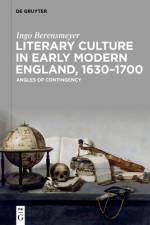
This book explores literary culture in England between 1630 and 1700, focusing on connections between material, epistemic, and political conditions of literary writing and reading. In a number of case studies and close readings, it presents the seventeenth century as a period of change that saw a fundamental shift towards a new cultural configuration: neoclassicism. This shift affected a wide array of social practices and institutions, from poetry to politics and from epistemology to civility.¿
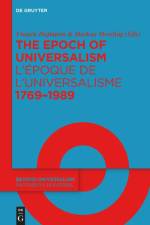
2019 witnessed the 30th anniversary of the German reunification. But the remembrance of the fall of the Berlin Wall coincided with another event of global importance that caught much less attention: the 250th anniversary of Napoleon Bonaparte¿s birth. There is an undeniable historical and philosophical dimension to this coincidence. Napoleon¿s appearance on the scene of world history seems to embody European universalism (soon thereafter in the form of a ¿modern¿ imperial project); whilst scholars such as Francis Fukuyama saw in the events of 1989 its historical fulfilment. Today, we see more clearly that the fall of the Berlin Wall stands for an epistemic earthquake, which generated a world that can no longer be grasped through universal concepts. Here, we deal with the idea of Europe and of its relation to the world itself. Picking up on this contingency of world history with an ironic wink, the volume analyses in retrospect the epoch of European universalism. It focusses on its dialectics, polemically addressing and remembering both 1769 and 1989. L¿année 2019 a été marquée par le 30e anniversaire de la réunification de l¿Allemagne, éclipsant un autre événement d¿envergure mondiale : le 250e anniversaire de Napoléon Bonaparte. La dimension philosophico-historique de cette coïncidence ne peut pourtant pas être négligée : si l¿arrivée de Bonaparte sur la scène de l¿histoire mondiale semble incarner l¿avènement de l¿universalisme européen (bientôt amené à prendre sa forme « moderne » et impériale), certains penseurs ont suggéré, avec Francis Fukuyama, que « 1989 » marquait son accomplissement historique. Aujourd¿hui, il apparaît au contraire que la chute du mur de Berlin a été un véritable tremblement de terre épistémique, et rendu inopérants les concepts universels. Dans le monde d¿après, c¿est à l¿idée d¿Europe et à sa relation au monde que nous avons affaire. Revenant par un geste ironique sur cette contingence historique, le présent volume se veut une analyse rétrospective de l¿époque de l¿universalisme, dans toute la dialectique que les commémorations de 1769/1989 ont fait surgir.
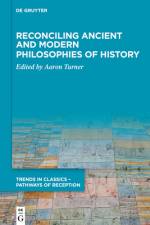
The distinction between ancient and modern modes of historical thought is characterized by the growing complexity of the discipline of history in modernity. Consequently, the epistemological and methodological standard of ancient historiography is typically held as inferior against the modern ideal. This book serves to address this apparent deficit. Its scope is three-fold. Firstly, it aims at encountering ancient modes of historical and historiographical thought within the province of their own horizon. Secondly, this book considers the possibility of a dialogue between ancient and modern philosophies of history concerning the influence of ancient historical thought on the development of modern philosophy of history and the utility of modern philosophy of history in the interpretation of ancient historiography. Thirdly, this book explores the continuities and discontinuities in historical method and thought from antiquity to modernity. Ultimately, this volume demonstrates the necessity of re-evaluating our assumptions about the relation of ancient and modern historical thought and lays the groundwork for a more fruitful dialogue in the future.
This important collection of more than twenty original essays by prominent Kant scholars covers the multiple aspects of Kant's teaching in relation to his published works. With the Academy edition's continuing publication of Kant's lectures, the role of his lecturing activity has been drawing more and more deserved attention. Several of Kant's lectures on metaphysics, logic, ethics, anthropology, theology, and pedagogy have been translated into English, and important studies have appeared in many languages. But why study the lectures? When they are read in light of Kant's published writings, the lectures offer a new perspective of Kant's philosophical development, clarify points in the published texts, consider topics there unexamined, and depict the intellectual background in richer detail. And the lectures are often more accessible to readers than the published works.This book discusses all areas of Kant's lecturing activity. Some essays even analyze in detail the content of Kant's courses and the role of textbooks written by key authors such as Baumgarten, helping us understand Kant's thought in its intellectual and historical contexts. Contributors: Huaping Lu-Adler; Henny Blomme ; Robert Clewis; Alix Cohen; Corey Dyck; Faustino Fabbianelli; Norbert Fischer; Courtney Fugate; Paul Guyer; Robert Louden; Antonio Moretto; Steve Naragon; Christian Onof; Stephen Palmquist; Riccardo Pozzo; Frederick Rauscher; Dennis Schulting; Oliver Sensen; Susan Shell; Werner Stark; John Zammito; Gunter Zoller
Technology is increasingly subject of attention from philosophers. Philosophical reflection on technology exhibits a wide and at times bewildering array of approaches and modes of thought. This volume brings to light the development of three schools in the philosophy of technology. Based on thorough introductions to Karl Marx', Martin Heidegger's and John Dewey's thought about technology, the volume offers an in-depth account of the way thinkers in the critical, the phenomenological and the pragmatic schools have respond to issues and challenges raised by the works of the founders of these schools. Technologies in almost any aspect of human life is potentially subject of philosophical treatment. To offer a focused demonstration of key arguments and insights, the presentation of each school is concluded with a contribution to discussions of educational technologies. In addition to philosophers seeking a valuable and clear structuring of a still burgeoning field, the volume is of interest to those working with educational philosophy and value sensitive design.
Abonner på vårt nyhetsbrev og få rabatter og inspirasjon til din neste leseopplevelse.
Ved å abonnere godtar du vår personvernerklæring.