




















Gjør som tusenvis av andre bokelskere
Abonner på vårt nyhetsbrev og få rabatter og inspirasjon til din neste leseopplevelse.
Ved å abonnere godtar du vår personvernerklæring.Du kan når som helst melde deg av våre nyhetsbrev.

" The House of Mount St. Agnes, which lieth outside the walls of the town of Zwolle, and on the eastern side thereof, had its origin and completion in this way.The place used to be called in the vulgar tongue Mount Nemel and lieth not far from Zwolle, but one may traverse the distance in the space of an hour. Now there were in the State of Zwolle certain faithful men who had been turned wholly to God by Master Gerard Groote. These men had builded them an house, in a suburb belonging to the city, near an ancient Convent of Béguines, and here they served God humbly and with devotion. Amongst these the chief was John of Ummen, a man dedicated to God, and greatly beloved by Gerard; and with him there abode likewise Wychmann Rurinch, Reyner, son of Leo of Renen, and two or three others that were well disposed. Moreover, a certain Clerk that dwelt in those parts named Wittecoep, had joined himself to them and lived among them devoutly. There was also the mother of John of Ummen, named Regeland, a widow of ripe age, who ministered to the necessities of these servants of God, giving good heed to the care of the house as a faithful Martha. Most gladly would she listen to the Word of God, and, like Mary, was never sated with the sweetness of the Holy Scriptures that were read."
Tras considerar el devenir histórico y contemplar el mundo viviente con anhelosa solicitud, las emociones más melancólicas de indignación desconsolada han oprimido mi espíritu y lamento verme obligada a confesar tanto que la Naturaleza ha establecido una gran diferencia entre un hombre y otro como que la civilización que hasta ahora ha habido en el mundo ha sido muy parcial. He repasado varios libros sobre educación y he observado pacientemente la conducta de los padres y la administración de las escuelas. ¿Cuál ha sido el resultado? La profunda convicción de que la educación descuidada de mis semejantes es la gran fuente de la calamidad que deploro y de que a las mujeres, en particular, se las hace débiles y despreciables por una variedad de causas concurrentes, originadas en una conclusión precipitada. La conducta y los modales de las mujeres, de hecho, prueban con claridad que sus mentes no se encuentran en un estado saludable, porque al igual que las flores plantadas en una tierra demasiado rica, la fortaleza y provecho se sacrifican a la belleza, y las hojas suntuosas, tras haber resultado placenteras a una mirada exigente, se marchitan y abandonan en el tallo mucho antes del tiempo en que tendrían que llegar a su sazón. Atribuyo una de las causas de este florecimiento estéril a un sistema de educación falso, organizado mediante los libros que sobre el tema han escrito hombres que, al considerar a las mujeres más como tales que como criaturas humanas, se han mostrado más dispuestos a hacer de ellas damas seductoras que esposas afectuosas y madres racionales; y este homenaje engañoso ha distorsionado tanto la comprensión del sexo, que las mujeres civilizadas de nuestro siglo, con unas pocas excepciones, solo desean fervientemente inspirar amor, cuando debieran abrigar una ambición más noble y exigir respeto por su capacidad y sus virtudes.
DON ÍÑIGO Seas, Motril, bien venido.MOTRIL ¿Esa es, Señor, tu alegría? Con cara de hipocondría a recibirme has salido. Cuando vengo de Sevilla a verte recién casado, ¿te hallo tan desazonado? ¿Has dado librea amarilla? Que tu semblante la copia. ¿Triste ya, casado ayer? ¿No te agradó tu mujer? ¿Has caído ya en que es propia? ¿Has dado en guerra civil? ¿Echas menos lo soltero? ¡Te ha salido el dote güero?DON ÍÑIGO No me be casado, Motril; que es la congoja en que peno. MOTRIL ¡Jesús! Pues ¿quién te curó de una boda que te dio, estando tú sano y bueno?
8 a. m. Instalado en el tren con premura. (Un tren largo aquí y que nada será perdido en la pampa, dentro de poco). Buenos Aires, Mendoza, Santiago, cordillera inclusive, con derroche de cumbres, laderas y demás componentes obligatorios. Va hacer mucho calor y tierra de esa que, ha poco, aventaba cascos de caballos indios. Entretanto cruzan por andenes y pasadizos algunos remolinos de provincianos: héroes que vuelven d haber conquistado la capital. Arrinconarse y mirarlos con el merecido respeto. Sombreros grises, martingalas, guantes color patito, tez mate y pelo lacio. Sube a mi vagón una pareja que he encontrado en la agencia donde compré mi boleto. Recuerdo que en aquella ocasión miré a la mujer como se mira una belleza de cinematógrafo a cuya patria no se irá. Ahora, la coincidencia de nuestro encuentro me parece significativa. Me pregunto: ¿es un peligro? Respondo con un nuevo interrogante: ¿no es siempre un peligro vivir?
1.En el nomne del Padre, que fizo toda cosa, Et de don Ihesuchristo,fijo de la Gloriosa, Et del Spiritu Sancto,que egual dellos posa, De un confessor sancto quiero fer una prosa.2.Quiero fer una prosa en roman paladino En qual suele el pueblo fablar a su veçino, Ca non so tan letrado por fer otro latino, Bien valdrá,commo creo,un vaso de bon vino.3.Quiero que lo sepades luego de la primera Cuya es la ystoria, metervos en carrera: Es de Sancto Domingo,toda bien verdadera, El que diçen de Silos,que salva la frontera.4.En el nonne de Dios,que nombramos primero, Suyo sea el preçio,yo seré su obrero, Galardón del laçerio yo em él lo espero, Que por poco serviçio da galardón larguero.5.Sennor Sancto Domingo,dizlo la escriptura, Natural fue de Cannas,non de bassa natura, Lealmente fué fecho a toda derechura, De todo muy derecho,sin nulla depresura.
DON ISIDRO, en la mesa, examinando un libro de cuentas, DOÑA TRINIDAD, en el centro, sentada; junto a ella, DON NICOMEDES, sentado como en visita, LUENGO, en pie.ISIDRO.- (Dando un gran suspiro, cierra el libro de cuentas.) Si Dios no hace un milagro, no hay salvación para mi casa.TRINIDAD.- (Afligida.) ¡Jesús nos valga!LUENGO.- Querido don Isidro, ánimo. Una retirada honrosa, como dijo el otro, vale tanto como ganar la batalla.NICOMEDES.- Justo. El valor es plata, la prudencia oro. ¿Que no puede usted vencer? Pues se retira en buen orden, y...LUENGO.- Y acepta el traspaso que le propuse.TRINIDAD.- ¡Traspasar, rendirse cobardemente! ¡Ay, si viene la miseria no es decoroso que nos entreguemos a ella sin lucha!ISIDRO.- (Con gran abatimiento.) ¡Luchar! ¡Qué bonito para dicho! Pero, en fin, luchemos, alma, luchemos. (Reanimándose.) Cierto que aún podríamos... Luengo querido, don Nicomedes, yo veo un medio de salir a flote, con paciencia, y tiempo por delante... pero necesito del concurso de los buenos amigos...LUENGO.- Don Isidro de mi alma, doña Trinidad, bien saben que les quiero como un hijo... ¡Ah, si yo tuviera capital, ya estaba usted salvado! Pero es público y notorio que mis corretajes no me dan más que lo comido por lo servido. El amigo don Nicomedes, a quien hablé esta mañana de parte de usted, ha tenido la bondad de venir conmigo para manifestarles...
Un quídam Caporal italïano, de patria perusino, a lo que entiendo, de ingenio griego y de valor romano, llevado de un capricho reverendo, le vino en voluntad de ir a Parnaso, por huir de la Corte el vario estruendo. Solo y a pie partióse, y paso a paso llegó donde compró una mula antigua, de color parda y tartamudo paso. Nunca a medroso pareció estantigua mayor, ni menos buena para carga, grande en los huesos y en la fuerza exigua, corta de vista, aunque de cola larga, estrecha en los ijares, y en el cuero más dura que lo son los de una adarga. Era de ingenio cabalmente entero: caía en cualquier cosa fácilmente, así en abril como en el mes de enero. En fin, sobre ella el poetón valiente llegó al Parnaso, y fue del rubio Apolo agasajado con serena frente.
Cierto astrólogo me dijo una vez que el signo zodiacal que presidía la casa de mi nacimiento indicaba, entre otros accidentes, temerarios peligros en viajes de mar, y yo sonreí con dulzura porque no creía en la influencia de los astros; de manera que al iniciar mi viaje hacia Panamá ni por un momento se me ocurrió que me aguardaban aventuras tan tremendas como las que me permitirían compaginar la presente crónica, que, sumada a los informes telegráficos del corresponsal del "Times" en Honolulú, constituye una de las más sorprendentísimas historias que la Geología haya podido desear para completar sus estudios sobre las dislocaciones que se producen en el fondo del océano Pacífico. Tuve el presentimiento de la desgracia el día 23 de setiembre a las 16 horas, momento en que permanecía recostado en la hamaca del primer puente del buque "Blue Star", mirando caer la tarde sobre el puerto de Antofagasta.
" Passing over Ickleworth Bridge and rounding up the heavily-shadowed river of our narrow valley, I perceived a commotion as of bathers in a certain bright space immediately underneath the vicar's terrace-garden steps. My astonishment was considerable when it became evident to me that the vicar himself was disporting in the water, which, reaching no higher than his waist, disclosed him in the ordinary habiliments of his cloth. I knew my friend to be one of the most absent-minded of men, and my first effort to explain the phenomenon of his appearance there, suggested that he might have walked in, the victim of a fit of abstraction, and that he had not yet fully comprehended his plight; but this idea was dispersed when I beheld the very portly lady, his partner in joy and adversity, standing immersed, and perfectly attired, some short distance nearer to the bank. As I advanced along the bank opposed to them, I was further amazed to hear them discoursing quite equably together, so that it was impossible to say on the face of it whether a catastrophe had occurred, or the great heat of a cloudless summer day had tempted an eccentric couple to seek for coolness in the directest fashion, without absolute disregard to propriety. I made a point of listening for the accentuation of the 'my dear' which was being interchanged, but the key-note to the harmony existing between husband and wife was neither excessively unctuous, nor shrewd, and the connubial shuttlecock was so well kept up on both sides that I chose to await the issue rather than speculate on the origin of this strange exhibition. I therefore, as I could not be accused of an outrage to modesty, permitted myself to maintain what might be invidiously termed a satyr-like watch from behind a forward flinging willow, whose business in life was to look at its image in a brown depth, branches, trunk, and roots. The sole indication of discomfort displayed by the pair was that the lady's hand worked somewhat fretfully to keep her dress from ballooning and puffing out of all proportion round about her person, while the vicar, who stood without his hat, employed a spongy handkerchief from time to time in tempering the ardours of a vertical sun. If you will consent to imagine a bald blackbird, his neck being shrunk in apprehensively, as you may see him in the first rolling of the thunder, you will gather an image of my friend's appearance...."
" One of the strangest examples of the degree to which ordinary life is undervalued is the example of popular literature, the vast mass of which we contentedly describe as vulgar. The boy's novelette may be ignorant in a literary sense, which is only like saying that a modern novel is ignorant in the chemical sense, or the economic sense, or the astronomical sense; but it is not vulgar intrinsicallyit is the actual centre of a million flaming imaginations. In former centuries the educated class ignored the ruck of vulgar literature. They ignored, and therefore did not, properly speaking, despise it. Simple ignorance and indifference does not inflate the character with pride. A man does not walk down the street giving a haughty twirl to his moustaches at the thought of his superiority to some variety of deep-sea fishes. The old scholars left the whole under-world of popular compositions in a similar darkness."
" Comedy is a game played to throw reflections upon social life, and it deals with human nature in the drawing-room of civilized men and women, where we have no dust of the struggling outer world, no mire, no violent crashes, to make the correctness of the representation convincing. Credulity is not wooed through the impressionable senses; nor have we recourse to the small circular glow of the watchmaker's eye to raise in bright relief minutest grains of evidence for the routing of incredulity. The Comic Spirit conceives a definite situation for a number of characters, and rejects all accessories in the exclusive pursuit of them and their speech. For being a spirit, he hunts the spirit in men; vision and ardour constitute his merit; he has not a thought of persuading you to believe in him. Follow and you will see. But there is a question of the value of a run at his heels. Now the world is possessed of a certain big book, the biggest book on earth; that might indeed be called the Book of Earth; whose title is the Book of Egoism, and it is a book full of the world's wisdom. So full of it, and of such dimensions is this book, in which the generations have written ever since they took to writing, that to be profitable to us the Book needs a powerful compression."
" Now we had been five days in the boats, and in all this time made no discovering of land. Then upon the morning of the sixth day came there a cry from the bo'sun, who had the command of the lifeboat, that there was something which might be land afar upon our larboard bow; but it was very low lying, and none could tell whether it was land or but a morning cloud. Yet, because there was the beginning of hope within our hearts, we pulled wearily towards it, and thus, in about an hour, discovered it to be indeed the coast of some flat country.Then, it might be a little after the hour of midday, we had come so close to it that we could distinguish with ease what manner of land lay beyond the shore, and thus we found it to be of an abominable flatness, desolate beyond all that I could have imagined. Here and there it appeared to be covered with clumps of queer vegetation; though whether they were small trees or great bushes, I had no means of telling; but this I know, that they were like unto nothing which ever I had set eyes upon before.So much as this I gathered as we pulled slowly along the coast, seeking an opening whereby we could pass inward to the land; but a weary time passed or ere we came upon that which we sought. Yet, in the end, we found ita slimybanked creek, which proved to be the estuary of a great river, though we spoke of it always as a creek. Into this we entered, and proceeded at no great pace upwards along its winding course; and as we made forward, we scanned the low banks upon each side, perchance there might be some spot where we could make to land; but we found nonethe banks being composed of a vile mud which gave us no encouragement to venture rashly upon them."
" It will hardly be denied that there is one lingering doubt in many, who recognise unavoidable self-defence in the instant parry of the English sword, and who have no great love for the sweeping sabre of Sadowa and Sedan. That doubt is the doubt whether Russia, as compared with Prussia, is sufficiently decent and democratic to be the ally of liberal and civilised powers. I take first, therefore, this matter of civilisation.It is vital in a discussion like this, that we should make sure we are going by meanings and not by mere words. It is not necessary in any argument to settle what a word means or ought to mean. But it is necessary in every argument to settle what we propose to mean by the word. So long as our opponent understands what is the thing of which we are talking, it does not matter to the argument whether the word is or is not the one he would have chosen. A soldier does not say "We were ordered to go to Mechlin; but I would rather go to Malines." He may discuss the etymology and archæology of the difference on the march; but the point is that he knows where to go. So long as we know what a given word is to mean in a given discussion, it does not even matter if it means something else in some other and quite distinct discussion. We have a perfect right to say that the width of a window comes to four feet; even if we instantly and cheerfully change the subject to the larger mammals; and say that an elephant has four feet. The identity of the words does not matter, because there is no doubt at all about the meanings; because nobody is likely to think of an elephant as four foot long, or of a window as having tusks and a curly trunk."
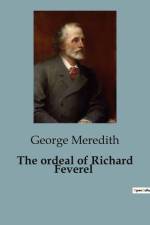
Title: "The Ordeal of Richard Feverel" by George Meredith - A Profound Exploration of Love, Morality, and Social Expectations in Victorian England.In "The Ordeal of Richard Feverel," celebrated English novelist George Meredith delves into the intricate dynamics of love, familial ties, and societal norms. Noted for his penetrating societal critiques in works like "The Egoist," Meredith's debut novel continues to tackle these themes with profound depth and sensitivity.The story centers around Richard Feverel, a young man subjected to his father's rigorous 'System' of education aimed at creating the perfect gentleman. However, Richard's burgeoning romantic feelings towards a local farmer's daughter challenge the 'System', resulting in a dramatic collision between personal desire and societal expectations.Meredith's insightful commentary on Victorian societal norms, moral values, and the complexities of romantic love presents a rich tapestry of human emotions and experiences. His nuanced portrayal of Richard's struggles provides a compelling exploration of the human condition and the often tumultuous path to maturity."The Ordeal of Richard Feverel" is an insightful exploration of Victorian society and the complexities of love and morality. With its thought-provoking themes, complex characters, and engaging narrative, it is a must-read for fans of classic literature and historical narratives.Keywords: George Meredith, The Ordeal of Richard Feverel, Victorian England, love, morality, societal norms, familial ties, The Egoist, Victorian societal critique, The Ordeal of Richard Feverel, Victorian literature, classic English novels, societal norms, love and morality, historical fiction, Victorian societal critique, debut novel, The Egoist, exploration of human condition, path to maturity, complex characters, classic literature, historical narratives.
Abonner på vårt nyhetsbrev og få rabatter og inspirasjon til din neste leseopplevelse.
Ved å abonnere godtar du vår personvernerklæring.