







Gjør som tusenvis av andre bokelskere
Abonner på vårt nyhetsbrev og få rabatter og inspirasjon til din neste leseopplevelse.
Ved å abonnere godtar du vår personvernerklæring.Du kan når som helst melde deg av våre nyhetsbrev.

In his Inquiry, the early 19th-century Quaker philosopher Jonathan Dymond investigates the centuries-old question of whether war is compatible with the teachings of Christianity. Examining the question through both the lenses of Christian tradition and secular philosophy, Dymond argues that war is thoroughly incompatible with Christianity in its preceding causes, present reality, and following consequences. Much of the tract is dedicated to refuting the arguments of his opponents, such as claims that certain passages of the Bible sanction war or that the moral commandments of Christianity can be superseded on a case-to-case basis on utilitarian grounds of ¿expediency.¿ Dymond¿s Inquiry was later cited by his fellow Christian pacifist Leo Tolstoy in The Kingdom of God Is Within You, further advancing Dymond¿s argument that it is the duty of a Christian ¿mildly and temperately, yet firmly, to refuse to serve¿ in the military.
"Theodore Roosevelt - An Autobiography" is a landmark text in the canon of classic American literature. This comprehensive account of Roosevelt's life makes it a must-read for individuals interested in Theodore Roosevelt books and those fascinated by the lives of impactful American historical figures.Penned by Roosevelt himself, the autobiography offers an intimate look into his life, from his childhood to his presidency. It documents his transformation from a sickly child into a passionate conservationist, a fearless soldier, and a respected statesman. As such, this text is a valuable addition to the library of inspirational autobiographies.In the autobiography, Roosevelt shares his philosophies on life, politics, and the moral obligations of citizens and leaders. His experiences provide a captivating account of American political history, and his insights into his presidency give a unique perspective into American presidential memoirs.Roosevelt's enthusiasm for the outdoors, his pivotal role in conservation, and his adventures, such as the Rough Rider campaign and African safaris, offer a compelling narrative for fans of adventure and nature stories. His staunch dedication to "the strenuous life," his philosophy of personal responsibility, and his commitment to civic duty are vividly showcased throughout the text, making it an important reference for those interested in leadership and personal development narratives."Theodore Roosevelt - An Autobiography" stands as a testament to Roosevelt's indomitable spirit, his love for his country, and his relentless pursuit of justice and fairness. This autobiography continues to inspire readers with its reflection of Roosevelt's extraordinary life and his profound impact on American history.
All¿s Well That Ends Well was not popular during Shakespeare¿s time, and is still considered to be a play without renown even today. It¿s also one of the three ¿problem plays,¿ in that it deals with controversial social issues. Although it remains unloved by the public, productions have featured star-studded casts, including actresses like Dame Judi Dench and Claudie Blakley.Helena, daughter of a skilled doctor and adopted child of the Countess of Rousillon, is in love with Bertram, the Countess¿s son. Helena cures the King of France and is rewarded with a husband of her choice, so she selects Bertram. He contests the legitimacy of their marriage, and insists on demanding that she complete two tasks before he can consider their marriage legitimate: She must wear his family ring, and provide him an heir.This Standard Ebooks edition is based on William George Clark and William Aldis Wright¿s 1887 Victoria edition, which is taken from the Globe edition.
"Jane Eyre," written by the brilliant British author Charlotte Brontë, is a celebrated work in classic British literature. Considered a significant piece in Charlotte Brontë books, the novel narrates the life of the eponymous Jane Eyre from childhood to adulthood.Jane, an orphan, faces adversity early in her life but demonstrates a spirit of resilience and determination. Her journey from a harsh upbringing to independence and eventual happiness provides a compelling narrative for fans of Victorian-era narratives and inspirational stories for women.As a governess for the mysterious Mr. Rochester at Thornfield Hall, Jane experiences a complex blend of love, secrecy, and revelation. The unconventional love story between Jane and Rochester makes the novel an unforgettable piece of romantic Victorian literature.The novel is not merely a love story; it also delves deep into issues of class, gender, and morality. Jane Eyre's constant struggle for equality and her strong sense of morality, seen in her refusal to compromise her principles, sets the novel as a key text in feminist literature and Victorian morality tales.With its gothic elements and supernatural occurrences, "Jane Eyre" is also appealing to fans of gothic literature. The suspenseful narrative, combined with the atmospheric settings, adds a layer of intrigue and mystery to the plot."Jane Eyre" is a timeless classic with its profound exploration of a woman's search for equality, freedom, and love. Its progressive narrative, rich characterization, and exploration of social issues continue to resonate with readers, cementing its status as one of the most influential works of English literature.
Frédéric Joseph Fiévée était un écrivain et journaliste français du XVIIIe siècle. Né en 1761 à Paris, il était issu d'une famille modeste et a connu une carrière prolifique dans le domaine littéraire et journalistique.Fiévée était un homme politique engagé, soutenant les idées révolutionnaires de son époque. En 1789, il devient député suppléant du tiers état aux États généraux, puis élu député à la Convention en 1792. Cependant, il se retrouve en désaccord avec la radicalisation de la Révolution française et prend ses distances avec le mouvement politique.En tant qu'écrivain, Fiévée était un auteur prolifique, écrivant des pièces de théâtre, des romans et des essais. Il est notamment connu pour son roman épistolaire "Lettres à Émilie sur la mythologie" publié en 1802, qui traite de sujets mythologiques et philosophiques.Fiévée était également un journaliste influent, collaborant à divers journaux et périodiques de son époque. Il était notamment associé au journal "Le Publiciste" où il défendait ses idées politiques et littéraires.En raison de son désaccord avec la Révolution, Fiévée est contraint à l'exil pendant une période, vivant en Suisse puis en Angleterre. Il revient en France après la chute de Napoléon Bonaparte et continue d'écrire jusqu'à sa mort en 1839.Bien que Fiévée ne soit pas aussi célèbre que certains de ses contemporains, il a laissé une empreinte importante dans la littérature et le journalisme de son époque, et son travail continue d'être étudié et apprécié par les chercheurs et les amateurs de littérature du XVIIIe siècle.
An Antarctic Mystery follows Mr. Jeorling, a wealthy American naturalist whose research has led him to the remote Kerguelen Islands, located in the southern Indian Ocean. Jeorling begins his adventure on the Halbrane after being admitted aboard by the reluctant captain Len Guy, who believes the events in The Narrative of Arthur Gordon Pym to be true. In that novel, Pym persuades Len Guy¿s brother, William Guy, to lead a voyage to the Antarctic. But the expedition ends in failure when William Guy, his crew, and his ship, the Jane, disappear under mysterious circumstances. Captain Len Guy convinces Jeorling to aid in the search for his brother, and the two embark on an expedition south to the Antarctic in search of the previous voyage¿s survivors.Despite the fact that Jules Verne¿s work was published over fifty years after Pym, the events in the novel take place only one year after the disappearance of the Jane.
"Fusées" est un recueil de poèmes en prose écrit par Charles Baudelaire, publié pour la première fois en 1867, après sa mort. Ce recueil fait partie des ¿uvres posthumes de l'auteur et a été édité par ses amis et éditeurs, en respectant la volonté de Baudelaire de les rassembler sous ce titre évocateur.Les "Fusées" sont une série de textes courts et denses, dans lesquels Baudelaire explore une grande variété de sujets, allant de la poésie et de la littérature à la philosophie, en passant par l'art, la musique, la société et la nature. Ces poèmes en prose reflètent la sensibilité esthétique et intellectuelle de Baudelaire, ainsi que son talent pour capturer l'essence de la vie urbaine et des expériences humaines.Le titre "Fusées" évoque l'idée d'une montée rapide et fulgurante, comme une fusée qui s'élève dans le ciel. Cette image suggère la brièveté et l'intensité des textes de Baudelaire, qui frappent souvent le lecteur par leur concision et leur puissance évocatrice.Le recueil "Fusées" est emblématique de l'esthétique baudelairienne, caractérisée par l'exploration des aspects sombres et mystérieux de la vie moderne, ainsi que par une langue riche et suggestive. Les poèmes en prose de Baudelaire ont influencé de nombreux écrivains et poètes ultérieurs, et ils restent aujourd'hui une partie importante du patrimoine littéraire français.
"Gamiani, ou Deux Nuits d'excès" est une ¿uvre érotique du poète et dramaturge français Alfred de Musset. Écrite en 1833, elle a été publiée de manière anonyme et attribuée à tort à l'écrivain italien Nicolas-Edme Rétif de la Bretonne.L'histoire est racontée par un narrateur anonyme qui rencontre une mystérieuse femme nommée Gamiani. Cette dernière lui raconte ses expériences sexuelles les plus intimes et scandaleuses au cours de deux nuits. Gamiani décrit en détail ses relations avec deux autres femmes, Fanny et Alcide.Les échanges entre le narrateur et Gamiani explorent des thèmes érotiques, tels que la passion, la luxure et le désir, et sont explicitement sexuels. L'¿uvre est considérée comme pornographique et a été controversée depuis sa publication."Gamiani" a été écrite à une époque où les ¿uvres érotiques étaient souvent publiées de manière anonyme, et Musset n'a jamais revendiqué la paternité de cette ¿uvre. Bien que son style d'écriture soit reconnaissable, "Gamiani" reste l'une des ¿uvres les plus controversées et méconnues d'Alfred de Musset.
"Fortunio" est une nouvelle de Théophile Gautier, parue pour la première fois en 1838.L'histoire se déroule à Paris au XIXe siècle et met en scène le personnage éponyme, Fortunio, un jeune homme séduisant et mystérieux. Fortunio est le secrétaire du vieil et riche comte de Savignon. Ce dernier est amoureux d'une jeune et charmante femme nommée Angela. Cependant, Angela est mariée à un homme plus âgé, le comte de Flavigny, qui la néglige et la maltraite.Fortunio, épris d'Angela, découvre qu'elle souffre de la froideur de son mari et il décide de l'aider à retrouver la joie de vivre. Grâce à ses charmes et à ses talents de séducteur, Fortunio réussit à gagner le c¿ur d'Angela. Cependant, leur relation est compliquée par les circonstances sociales et les intrigues amoureuses.La nouvelle explore les thèmes de l'amour, de la passion, du désir, et des dilemmes moraux. Théophile Gautier offre un récit captivant sur les émotions humaines, les jeux de séduction et les conséquences de l'amour interdit."Fortunio" est une nouvelle romantique qui a été très appréciée pour sa poésie, son style élégant et ses descriptions évocatrices de la vie parisienne du XIXe siècle.
"Slavery is terrible for men, but it is far more terrible for women," Harriet Jacobs wrote in 1861. Under the pen name Linda Brent, she published one of the few personal slave narratives written by a woman. Jacobs was a slave in North Carolina and made several failed attempts to escape before successfully making her way North. The book chronicles her life as a slave, her escape and hiding, and finally her reunion with her children.
Allan Quatermain, the sequel to King Solomon¿s Mines, was first serialized in Longman¿s Magazine in the U.K. and subsequently published as a novel in 1887. In it we see the eponymous hero reunited with his companions to travel to Africa on a dangerous and adventuresome quest to try to find a legendary tribe of white-skinned people, the Zu-Vendi. Having discovered their remote and isolated country, Quatermain and his crew become embroiled in its internal affairs, culminating in a bitter and violent civil war.
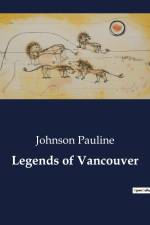
Pauline Johnson was born on the Six Nations Indian Reserve in Ontario to a Mohawk father and an English mother. Legends of Vancouver was originally published around 1910 as a series of newspaper articles based on stories related by Johnson's friend, Chief Joe Capilano of the Squamish people. It is the first collection of native legends retold by a native artist and has become a classic of Canadian literature.
"Gamiani, ou Deux Nuits d'excès" est une ¿uvre érotique du poète et dramaturge français Alfred de Musset. Écrite en 1833, elle a été publiée de manière anonyme et attribuée à tort à l'écrivain italien Nicolas-Edme Rétif de la Bretonne.L'histoire est racontée par un narrateur anonyme qui rencontre une mystérieuse femme nommée Gamiani. Cette dernière lui raconte ses expériences sexuelles les plus intimes et scandaleuses au cours de deux nuits. Gamiani décrit en détail ses relations avec deux autres femmes, Fanny et Alcide.Les échanges entre le narrateur et Gamiani explorent des thèmes érotiques, tels que la passion, la luxure et le désir, et sont explicitement sexuels. L'¿uvre est considérée comme pornographique et a été controversée depuis sa publication."Gamiani" a été écrite à une époque où les ¿uvres érotiques étaient souvent publiées de manière anonyme, et Musset n'a jamais revendiqué la paternité de cette ¿uvre. Bien que son style d'écriture soit reconnaissable, "Gamiani" reste l'une des ¿uvres les plus controversées et méconnues d'Alfred de Musset.
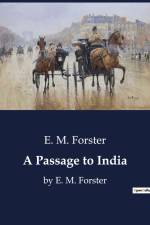
The setting of A Passage to India is the British Raj, at a time of racial tension heightened by the burgeoning Indian independence movement. Adela Quested, a young British subject, is visiting India to decide whether to marry a suitor who works there as a city magistrate. During her visit, a local physician, Aziz, is accused of assaulting her. His trial brings tensions between the British rulers and their Indian subjects to a head.The novel is a complex exploration of colonialism, written at a time when the popular portrayal of the Indian continent was of mystery and savagery. Forster humanized the Indian people for his at-home British audience, highlighting the damage that colonialism caused not just to interpersonal relationships, but to society at large. On the other hand, some modern scholars view the failure of the human relationships in the book as suggesting a fundamental ¿otherness¿ between the two cultures: a gulf across which the disparate cultures can only see each other¿s shadows. In any case, the novel generated¿and continues to generate¿an abundant amount of critical analysis.A Passage to India is the last novel Forster published in his lifetime, and it frequently appears in ¿best-of¿ lists of literature: The Modern Library selected it as one of its 100 great works of the 20th century, Time magazine included it in its ¿All Time 100 Novels¿ list, and it won the 1924 James Tait Black Memorial Prize for fiction.
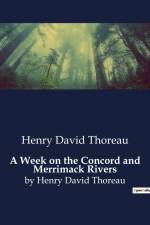
In 1839, Thoreau and his brother took a small boat upriver and back. Some years later, while in his cabin at Walden Pond, he gathered his notes from that journey and other writings from his journals, and composed this, his first book.Like the rivers it describes, the book meanders through varying territories and climates. He writes of the natural surroundings they encounter and of the history of the region, but also takes long and remarkable detours through topics like friendship, history, a comparison of Christianity and Hinduism, Vedic literature, government and conscience, Thoreaüs philosophy of literature, monuments and graveyards, poetry (in particular Ossian, Chaucer, and certain minor Greek poets), and the satires of Aulus Persius Flaccus. Thoreau also includes several poems of his own.Thoreau had the first edition of this book published at his own expense, and at first it struggled to find an audience. ¿I have now a library of nearly 900 volumes,¿ he remarked at one point, ¿over 700 of which I wrote myself.¿
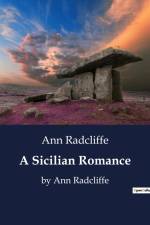
A Sicilian Romance begins when a tourist meets a local monk at the crumbling ruins of the castle Mazzini. The monk invites her to the monastery to view a manuscript that records the mysterious happenings that occurred hundreds of years ago in the once-great castle. The manuscript tells of the plight of two sisters, Julia and Emilia Mazzini, who, after the return of their tyrannical father, witness supernatural phenomena around the castle¿s neglected southern wing.Radcliffe was viewed as the greatest writer of the Gothic literary style by most early 19th century critics and literary historians despite Horace Walpole seemingly ¿inventing¿ the genre in The Castle of Otranto. A Sicilian Romance was first published anonymously in 1790, making it the second of her published works.
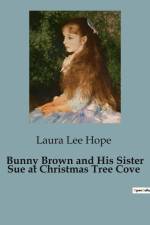
" In "Bunny Brown and His Sister Sue at Christmas Tree Cove" by Laura Lee Hope, join the lovable siblings Bunny Brown and his sister Sue on a heartwarming holiday adventure. This enchanting tale follows Bunny and Sue as they explore Christmas Tree Cove, a magical place where they discover the true spirit of Christmas.As Bunny and Sue arrive at Christmas Tree Cove, they are captivated by the beauty of the winter wonderland and the joyous atmosphere that surrounds them. Together, they embark on a series of delightful escapades, from sleigh rides through snow-covered landscapes to decorating Christmas trees and spreading cheer to others.Laura Lee Hope's storytelling captures the essence of the holiday season, celebrating the warmth of family, the joy of giving, and the power of togetherness. Through Bunny and Sue's experiences, readers learn valuable lessons about kindness, gratitude, and the true meaning of Christmas.Join Bunny Brown and his sister Sue as they immerse themselves in the magic of Christmas Tree Cove, spreading joy and creating cherished memories that will last a lifetime." Keywords: Bunny Brown, Sue, Christmas Tree Cove, holiday adventure, winter wonderland, joy, family, giving, togetherness, kindness.
A Strange Manuscript Found in a Copper Cylinder is perhaps James De Mille¿s most popular book; sadly, De Mille didn¿t get to see this novel grow in popularity, as it was first serialized posthumously, in Harper¿s Weekly. De Mille had written the novel before the ¿lost world¿ genre had become saturated, meaning many of the ideas were fresh and original for the time in which it was written. But, since he didn¿t succeed in publishing it during his lifetime, by the time the novel was made public other authors like H. Rider Haggard had made the ideas and plot clichéd.The novel itself tells the tale of a shipwrecked sailor, Adam More, who passes through a mysterious underground passage into a hidden land deep in the Antarctic, kept warm by a hidden volcano. The land is populated by an ancient civilization whose views on life and wealth are the polar opposite of those held in British society of the time¿they view death and poverty as the highest religious and social achievements. As More adventures through the strange land, he encounters fantastic dinosaurs, lovelorn princesses, and the classic kind of adventure that foreshadows the pulp novels of the next century.
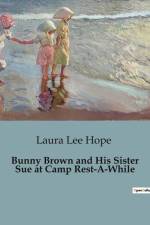
" In "Bunny Brown and His Sister Sue at Camp Rest-A-While" by unknown author, join the adventurous siblings Bunny Brown and his sister Sue as they embark on an exciting camping adventure at Camp Rest-A-While. This delightful tale follows Bunny and Sue's experiences in the great outdoors, filled with friendship, exploration, and valuable life lessons.As Bunny and Sue arrive at Camp Rest-A-While, they immerse themselves in the beauty of nature, encountering new friends and engaging in a variety of outdoor activities. From hiking trails to roasting marshmallows around the campfire, the siblings embrace the wonders of the camping experience and learn important skills such as teamwork, independence, and appreciation for the environment.The story captures the essence of the camping experience, offering young readers a glimpse into the joys of outdoor exploration, the excitement of making new friends, and the thrill of discovering one's own capabilities. Throughout their adventures, Bunny and Sue learn the value of friendship, the importance of perseverance, and the rewards of stepping out of their comfort zones.Join Bunny Brown and his sister Sue as they embark on an unforgettable camping journey, filled with laughter, discovery, and the magic of the great outdoors."
¿Bunny¿ Manders is drawn to fill the void left by A. J. Raffles¿ absence at the end of The Black Mask with untold stories of the past adventures. These tales are perhaps ones that Bunny is most ashamed of, but among the regrets lie threads of future happiness.The public popularity of Raffles, fuelled by stage and film adaptations in the intervening years, lead to this continuation of his saga in 1905. A Thief in the Night, with the exception of the last two stories, is set in the same period as the events of The Amateur Cracksman.
Alice Adams is Booth Tarkington¿s second novel to win a Pulitzer Prize, just three years after his novel The Magnificent Ambersons won it. The novel tells the story of Alice, a Midwestern girl who grows up in a lower-middle-class family just after World War I. Alice meets a wealthy young man and tries to win his affection, despite her lower-class upbringing.Alice Adams was twice adapted for film, with the second adaptation starring Katherine Hepburn and earning a nomination for the Academy Award for Best Picture.
After London presents a version of England many generations after an apocalyptic event has drastically depopulated the country, leaving nature to take back the land and human survivors to scrape what they can from their surroundings. Petty kings and corrupt republics rule from the region around the lake that has formed in the middle of the country. Wild men hide in the woods. Society has regressed to a way of life similar to the medieval age.The novel is told in two parts. The first details what¿s known of the fall of civilization, while the second part follows the son of a baron as he sets off to explore beyond the kingdom he was born into. Nature, civilization, violence, poverty, exploitation, and exploration are major themes.Richard Jefferies wrote the novel toward the end of his life. It combines the nature writing he is traditionally known for, with a fantastical science fiction setting, making it an early example of post-apocalyptic fiction. The surreal exploration of the former site of London bears a striking resemblance to the aftermath of a nuclear explosion, decades before the atomic bomb was created.After London was an inspiration for William Morris, who said ¿absurd hopes curled around my heart as I read it.¿ Morris would go on to reference the pastoralism present in After London in his utopian novel News From Nowhere.
On hearing the title A Voyage to Arcturus, one might picture an astronaut strapping themselves into a rocket and flying into space for a swashbuckling adventure. Nothing could be further from what this book actually is.Voyage is in fact a fascinating, bizarre, bewildering, and thought-provoking sort of acid-fueled Pilgrim¿s Progress: a philosophical allegory told through the frame of a psychedelic gender-bending journey to an alien planet.After a terrifying séance, the protagonist, Maskull, is offered the chance of an adventure on a different world. He agrees, and the reader follows him on his blood-soaked path through lands representing different philosophies and ways of life as he searches for the world¿s godhead, Surtur. Or is it Crystalman?Voyage features fiction wildly ahead of its time, and is hardly classifiable as either science fiction or fantasy; one might even say that the book is better approached as a philosophical work than a straightforward narrative. It¿s not a book for a reader seeking simple fiction, but rather for a reader seeking a thoughtful, imaginative, and totally unexpected exploration of philosophy and of life.Decades ahead of its time, Voyage was praised by contemporaries like C. S. Lewis and J. R. R. Tolkien, and by modern authors like Clive Barker and Alan Moore. Many modern reviewers consider it a masterpiece of 20th century fiction and the work of an underappreciated genius. A century later it boasts a significant cult following, having inspired movies, plays, albums, and even operas, as well as a modern sequel by famous literary critic Harold Bloom¿the only work of fiction he ever wrote.
Lewis Carroll's "Alice's Adventures in Wonderland" is an iconic work in classic British literature. Carroll's unique blend of whimsy, absurdity, and clever wordplay have made it one of the most widely read and loved Lewis Carroll books.In this fantastical narrative, readers follow Alice, a young girl who falls down a rabbit hole into Wonderland, a realm of outlandish characters and nonsensical rules. The novel's vibrant and imaginative setting and characters have established it as a quintessential fantasy adventure story.Alice's encounters with the Cheshire Cat, the Mad Hatter, the Queen of Hearts, and other remarkable characters present a wide array of memorable episodes, all bound together by Alice's exploration of this strange world. As such, the novel stands as an enduring favorite among children's adventure tales."Alice's Adventures in Wonderland" also offers depth beyond its surface absurdity. Carroll's play with logic, language, and societal norms through the lens of Alice's experiences provides a sharp and humorous critique, a characteristic feature of Victorian social satire.In addition, the narrative stands as an interesting exploration of childhood and its fleeting nature, making it a thoughtful addition to coming-of-age stories. Alice's transformation from a naive child to a more self-assured individual capable of standing up to the Queen mirrors the trials and triumphs inherent in growing up.From the infamous 'drink me' potion to the final chaotic trial, Carroll's "Alice's Adventures in Wonderland" serves up a delightful and thought-provoking exploration of identity, curiosity, and the bounds of reality. The novel remains a cherished classic, fascinating readers with its fantastic landscapes, its eccentric characters, and its imaginative and witty narrative.
Ailing, neurotic, and bored with the world, the nobleman Des Esseintes retreats to a secluded cottage in the French countryside. Determined to shun all contact with other people¿demanding that even his live-in domestics must wear face-covering robes in his presence¿he throws himself into an all-out celebration of the ultimate in artificial and unnatural pleasure. Surrendering to religious and profane literature, morbid paintings, overwhelming perfumes, expensive liquor, grotesque flowers, and reminiscences of his depraved past brings him unsurpassable pleasure, but his mental and physical condition may not be able to keep up.When Huysmans wrote Against the Grain, he did so to move away from the creative restrictions he felt the Naturalist school of literature imposed on him. According to him, ¿it limited itself to depicting common existence, and struggled, under the pretext of being true to life, to create characters who would be as close as possible to the average run of mankind.¿ Instead, he dedicated Naturalism¿s attention to detail to just one extraordinary, perverse individual, Des Esseintes¿fully expecting the resulting work to fail critically and commercially.That the novel would become a scandalous success, and would define Decadence as a movement and ideology, was far beyond his expectations. Oscar Wilde was a well-known admirer of the novel, and drew heavily from it to write The Picture of Dorian Gray. During his trial in 1895, Wilde all but confirmed that the ¿poisonous French novel¿ in his work refers to Against the Grain.This Standard Ebooks edition is based on the first unabridged English edition, which was translated anonymously and published by Groves & Michaux in 1926. It reinstates passages that were considered too obscene in previous editions, and includes a preface Huysmans wrote twenty years after the first publication of the book.
Basil March jumps at the chance to leave his boring job to become the founding editor of a new magazine. But this also means that he must leave comfortable Boston for the confusion and chaos of 1890s New York. As March and his wife try to find a decent place to live, he also struggles to find contributors and readers. The Marches are quickly drawn into the tangled lives of their fellow New Yorkers: a bitter German socialist who lost his hand fighting for the Union in the Civil War, a colonel nostalgic for slavery, Bohemian artists, increasingly desperate workers on strike, a slick publicist, a starchy society family, and a wealthy farmer-turned-speculator who hurts those he loves most.Born in Ohio, William Dean Howells was a highly successful magazine editor before he became a full-time writer. He believed that this midlife novel, which draws on his own family¿s experiences moving from Boston to New York, was his ¿most vital work.¿ Mark Twain, whom Howells helped early in his career, called A Hazard of New Fortunes ¿the exactest & truest portrayal of New York and New York life ever written ¿ a great book.¿
Abonner på vårt nyhetsbrev og få rabatter og inspirasjon til din neste leseopplevelse.
Ved å abonnere godtar du vår personvernerklæring.