




























Gjør som tusenvis av andre bokelskere
Abonner på vårt nyhetsbrev og få rabatter og inspirasjon til din neste leseopplevelse.
Ved å abonnere godtar du vår personvernerklæring.Du kan når som helst melde deg av våre nyhetsbrev.

«Eh bien, disait Richard, en brossant son habit de livrée, c'est donc après-demain que cette belle provinciale arrive?¿Vraiment oui, répondit mademoiselle Julie, madame vient de m'ordonner d'aller visiter l'appartement qu'elle lui destine, pour savoir s'il n'y manque rien de ce qui peut être commode à sa belle-s¿ur; je crois qu'on aurait bien pu se dispenser de faire meubler à neuf tout ce corps-de-logis; madame de Saverny, accoutumée aux grands fauteuils de son vieux château, ne s'apercevra peut-être pas de tous les frais que madame a faits pour décorer son appartement à la dernière mode.¿ C'est donc une vieille femme?¿Point du tout, elle a tout au plus vingt-deux ans; M. le comte est son aîné de plus de dix années, et madame la comtesse a bien au moins sept ou huit ans de plus que sa belle-s¿ur, puisqu'elle en avoue quatre.¿Et cette parente a-t- elle un mari, des enfants, une gouvernante? Faudra-t-il servir tout ce monde-là?¿Grace au ciel, elle est veuve; et je pense qu'elle est riche, car son mari était, je crois, aussi vieux que son château; et l'on n'épouse guère un vieillard que pour sa fortune.¿Qui nous amène-t-elle ici?¿Tout ce qu'il faut pour s'y établir, des gens, des chevaux; enfin, jusqu'à sa nourrice.¿Ah! c'est un peu trop fort. Je sais ce que c'est que ces grosses campagnardes, qui se croient le droit de commander à toute la maison, parce qu'elles ont nourri leur maîtresse; ce sont de vieilles rapporteuses qui, sous prétexte de prendre les intérêts de leur cher nourrisson, vont leur raconter tout ce qui se dit ou se fait dans les antichambres; Lapierre est bien libre de se mettre au service de celle-là; quant à moi, je ne compte pas lui donner un verre d'eau.¿Ah! tout cet embarras ne sera pas éternel, Madame s'en lassera bientôt, surtout s'il est vrai que madame de Saverny soit aussi belle qu'on l'assure; ne savez-vous pas, Richard, que deux jolies femmes n'ont jamais demeuré bien long-temps ensemble?» Les remarques philosophiques de mademoiselle Julie furent interrompues par le retour du carrosse de madame de Nangis.
Ce volume n'est pas consacré au seul système d'Avicenne, mais à la description de toute une partie du mouvement philosophique qui s'est produit en Orient entre l'hégire et la mort d'Avicenne, mouvement où le système de ce philosophe apparaît comme un point culminant. A côté des sectes et des écoles dont il est question dans ce livre, s'en trouvent d'autres qui en sont restées exclues: les écoles théologiques; les sectes politiques et mystiques. La théologie n'y est présente qu'au début comme point de départ, et, dans le courant de l'exposition, sous forme de métaphysique. De la politique, il est traité sommairement dans les passages où est dessiné le cadre historique dans lequel se sont mus nos héros; il est aussi parlé un peu, en divers endroits, de la politique comme d'une science distincte faisant partie de la philosophie, selon la tradition grecque. Quant à la mystique, souvent nos auteurs nous conduiront jusqu'à son seuil; mais nous refuserons de nous y engager, et quoique forcés d'en dire quelques mots pour achever la métaphysique, nous ne l'étudierons pas comme système indépendant.
First published in 1914, the story centers on Ingeborg who grows up being pushed around by her father, the Bishop. In the first moment she is ever alone and left to her own devices, she decides to take a trip to Switzerland. She is alone for only a few hours, however, and then the next overpowering man comes into her life, a German pastor. Through no effort or even desire of her own she somehow becomes his wife and begins yet another journey in pursuit of control of her life. Includes 8 illustrations by Arthur Litle.
This first novel of Maria S. Cummins was first published in 1854. It was an immediate best-seller selling 20,000 copies in twenty days and 65,000 copies in five months. The Lamplighter tells the story of Gertrude Flint, an orphan rescued by a old lamplighter and in the process learns the principles of domesticity and becomes a self-reliant, independent woman.
First published in 1864, The Doctor's Wife uses the concept of the serialized sensation novel to create stories within stories within stories. A reworking of Madame Bovary, the heroine is Isabel Sleaford who is married to an adoring, if boring, physician. He does not share Isabel¿s taste for literature, but she is content until she meets her intellectual equal in the author of her favorite book of verse. As Isabel's life begins to take on complications worthy of her literary heroes, she begins to find what it is like to grow into a mature woman.
First published in 1872, the story is that of Olivia who, as the curtain opens, has been locked in a room, threatened, and is frantic to escape. She sees her chance, and her escape takes her to the smallest of the Channel Islands named Sark. There she and lives peacefully, under an assumed identity, until she has an accident and is in need of a doctor. Dr Martin Dobree comes from the neighboring island to help her and is instantly taken with her. Thus unfolds various circumstances that delve into Olivia's past and what will become of her future.
This is an early book (1886) by Wiggin, author of Rebecca of Sunnybrook Farm. It tells of a lovely, fair haired girl born on Christmas day to the Bird family and thus named Carol. The story carries a tinge of sadness for a Christmas story, but it is a wonderful example of the true meaning of Christmas. In charming Kate Wiggins style, she also brings humor and sometimes hilarity to the telling of the tale.
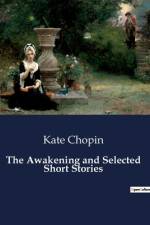
Written in 1899, Chopin shocked readers by creating the passionate main character of Edna Pontellier. Pentellier, a wife and mother of two sons living in conventional Creole society, rejects these roles and decides to live selfishly. The scandal created by the book haunted Kate Chopin for the rest of her life: she did not produce any new works during the last five years of her life.
Originally published in 1849, Shirley is the only of Charlotte Brontë¿s novels to be set in a historical period before the novel was written. It takes place in Yorkshire during 1811¿1812 in the midst of an industrial depression resulting from the Napoleonic wars. The story revolves around two heroines, Caroline Helstone and Shirley Keeldar, and their relationships with the Moore brothers.
First published in 1904, The Adventures of Elizabeth in Rügen is a travel journal written in the same style as the author's other autobiographical works Elizabeth and Her German Garden and The Solitary Summer. Elizabeth's a goal is to ride her coach around Rügen, Germany's largest island and a popular tourist destination. Von Arnim records her journey with enlightening and always witty observations.
Originally published in October 1919, Night and Day is Virginia Woolf's second novel. It contrasts the daily lives of four major characters while examining the relationships between love, marriage, happiness, and success.
First published in 1905, Princess Priscilla's Fortnight was no doubt written as a true-to-life fairy tale for Von Arnim's children. It tells the story of Priscilla, a hugely popular German princess, who grows tired of her lavish and pampered life. Through the instruction of her mentor, Herr Fritzing, she learns there is a wide and varied world outside the castle walls and yearns to escape.
First published in 1897, That Affair Next Door is another fascinating study in human motivations intertwined with bits and pieces of circumstantial evidence that at first make very little sense. True to Green¿s style, she calls up and explains each motivation, each piece of evidence with mathematical precision until the mystery unravels and the perpetrator is punished in a most fitting fashion.
The year is 1880. Marguerite is an artist and former slave who is hired to paint a wedding portrait for a wealthy family. She soon finds that the family has close ties to her past from which she has constantly fled. Instead of fleeing again, she stays to paint a portrait of her former family, and in so doing she begins to understand the difficult choices her loved ones were driven to make. Read first chapter.
A short novel first published in 1688, Oroonoko centers around the tragic love of its hero, an enslaved African, and the author's own experiences in Suriname in the 1660s. Behn was the first professional female dramatist, as well as one of the first English novelists, male or female.
Considered the first novel by a female African-American, Our Nig was ignored upon first publication in 1859 and lost for more than 100 years. The novel achieved national attention when it was rediscovered and reprinted in 1983. Our Nig tells the story of Frado growing up as an indentured servant in the antebellum northern United States. Like Our Nig number of novels and other works of fiction of the period were in some part based on real-life events, including Fanny Fern's Ruth Hall; Louisa May Alcott's Little Women; or even Hannah Webster Foster's The Coquette.
The first novel by Fanny Fern, otherwise known as Sara Payson Willis, is a semi-autobiographical tale of a talented writer who loses her husband and is forced to support herself and two young children in the mid 1800s. Fern writes with biting social commentary on the subject of traditional assumptions of a woman's place in society.
First published anonymously in 1860, the narrator of this novel (who remains unnamed) is an orphan who is sent to live with her aunt. During the journey, the narrator and her companion, Mr. Rutledge, are injured in a train wreck and are thus moved to a nearby parsonage to recuperate before continuing the journey. At the parsonage, part of a large estate called Rutledge, the narrator enjoys the kindness and caring of Mr. Rutledge and the parsonage¿s occupants. When the narrator finally makes it to her aunt's house, she is caught in the flippant social whirl and to a certain degree comes to enjoy it. Drama and tragedy ensue before our narrator determines where her place place of real joy and love should be.
Roast Beef, Medium: The Business Adventures of Emma McChesney was first published in 1913. It chronicles the adventures of perhaps the only a successful traveling saleswoman in literary history, a stellar employee of T. A. Buck¿s Featherloom Petticoats. Emma is the divorced mother of a 17-year-old son Jock, who also makes a few appearances. The title refers to the only consistently good road food, in Emma's opinion: roast beef. The illustrated edition contains 27 illustrations by James Montgomery Flagg.
This selection of short stories includes The Garden Party and Other Stories, Bliss and Other Stories, and In a German Pension. Some of these stories are set in Europe and others set in Mansfield's native New Zealand such as "The Garden Party", "Her First Ball", and "Prelude".
Toute la ligne de rues qui conduisait du mont Janicule au Forum était envahie par cette masse de dés¿uvrés que créent les grands centres de civilisation. Ce jourlà, l'oisiveté romaine s'était éveillée avec l'espérance d'une distraction; elle comptait sur l'arrivée d'un immense convoi de prisonniers.Les maîtres du monde avaient trouvé une nouvelle nation à réduire: ce coin de terre tout couvert de magiques forêts, et que protégeaient des dieux inconnus, était enfin soumis; on allait voir ce peuple de l'Armorique, si merveilleux par sa force, si étrange dans ses m¿urs, dans son culte, et c'était courbé sous la domination romaine qu'il allait apparaître!Aussi, ce jourlà, tous les instincts du grand peuple étaientils agités; toutes ses curiosités avaient été mises en mouvement! il trouvait à la fois un triomphe pour son orgueil, un spectacle pour ses loisirs. Parfois cependant, dans cette foule qu'amassait une même pensée, on entendait surgir quelques mots de regret; c'étaient les plus pauvres qui, au milieu de la joie publique, s'attristaient de n'avoir pas quelques milliers de sesterces peur acheter un Armoricain!Vers la quatrième heure (dix heures du matin), les promeneurs se rangèrent sur deux haies: le cortége de prisonniers commençait à passer sous la porte Aurélia et à traverser les rues de la ville.
This collection of short stories was first published in 1920. It includes several stories originally published in magazines and the last three are from her first book of short stories, The Troll Garden.
Abonner på vårt nyhetsbrev og få rabatter og inspirasjon til din neste leseopplevelse.
Ved å abonnere godtar du vår personvernerklæring.