






Gjør som tusenvis av andre bokelskere
Abonner på vårt nyhetsbrev og få rabatter og inspirasjon til din neste leseopplevelse.
Ved å abonnere godtar du vår personvernerklæring.Du kan når som helst melde deg av våre nyhetsbrev.

P. G. Wodehouse¿s short stories are often set in the salons and townhouses of England, but he also wrote about golf, returning again and again to one of his favorite sports.Set against a background of the unique and often quirky world of golf in the early 1920s, Wodehouse produced a great collection of stories chronicling the loves and lives of golf fanatics. Starting around 1919 he wrote these golf stories regularly for both American and English magazines, and published two collections: The Clicking of Cuthbert (1922) and The Heart of a Goof (1926). He continued to write golf stories until the mid 1960s.Most of these stories are narrated by The Oldest Member, a talkative type who frames most of the stories by trapping other members of the club into listening to his ¿words of wisdom.¿The stories in this collection are ordered by the date they first appeared in magazine form, and are mostly from the English editions¿the main difference from the U.S. editions being the names and locations of the golf clubs.
Although known for her later experiments with style and structure, Virginia Woolf set out in her early novels to master the traditional form. Her second novel, Night and Day, presents itself as a seemingly conventional marriage plot, complete with love triangles, broken engagements, and unrequited affections. Beneath these conventional trappings, however, the book¿s deeper concerns are resolutely subversive. The main characters¿a quartet of friends and would-be lovers¿come together, pull apart, and struggle to reconcile socially-prescribed norms of love and marriage with their own beliefs and ambitions.
Othello was written in 1603 and first performed in 1604. The underlying story is based on ¿A Moorish Captain,¿ one of the stories in Cinthiös Gli Hecatommithi, written in 1565.Othello is a Moorish black general in Venice, known for his military prowess. He elopes with Desdemona, a noble Venetian lady, who is the daughter of Brabantio, a senator. When Othello promotes Cassio to be his lieutenant over Iago, his ensign, the evil Iago gets his revenge by alleging an affair between Cassio and Desdemona, sowing doubt in the mind of Othello.This Standard Ebooks edition is based on William George Clark and William Aldis Wright¿s 1887 Victoria edition, which is taken from the Globe edition.
Gladiator, first published in 1930, tells the story of Hugo Danner, who is given superhuman speed, endurance, strength, and intelligence by his father as an experiment in creating a better human. We follow Hugo throughout his life viewed from his perspective, from childhood, when Hugo first discovers he¿s different from others, to adulthood, as Hugo tries to find a positive outlet for his abilities around the time of the first World War.Gladiator has been made into a 1938 comedy movie, and is thought to be the inspiration for the Superman comic books¿though this has not been confirmed.
First published in 1823, these memoirs were written by the first lady-in-waiting to Queen Marie Antoinette of France. Madame Campan became close to the Queen during her 18 years in service. Her memoirs divulge details of the daily life at the royal court as well as recount the events of the Revolution from the royal family's perspective.
Progress and Poverty, first published in 1879, was American political economist Henry George¿s most popular book. It explores why the economy of the mid-to-late 1800s had seen a simultaneous economic growth and growth in poverty. The book¿s appeal was in its balance of moral and economic arguments, challenging the popular notion that the poor, through uncontrolled population growth, were responsible for their own woes. Inspired by his years living in San Francisco and his own experience with privation, George argues instead that poverty had grown due to the increasing speculation and monopolization of land, as landowners had captured the increases in growth, investment, and productivity through the rising cost of rent.To solve this, George proposes the complete taxation of the unimproved value of land, thus returning the value of land, created through location, to the community. This solution would incentivize individuals to use the land they own productively and remove the tendency to speculate upon land¿s increasing value. George¿s argument was profoundly liberal, as individuals retain the right to own land and enjoy the profits generated from production upon it.Progress and Poverty was hugely popular in the 1890s, being outsold only by the Bible. It inspired the Single Tax Movement, and influenced a wide range of intellectuals and policymakers in the early 1900s including Leo Tolstoy, Albert Einstein, and Winston Churchill.
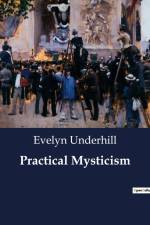
Surprisingly timeless and under the guise of ¿Christian Mysticism,¿ Underhill describes in 1914 what could rightly be called ¿secular mindfulness¿ today. Evelyn Underhill doesn¿t use much Christian terminology, instead preferring to use words that may be considered ¿new age.¿ If one can get past the terminology, the ¿Practical Mysticism¿ allows anyone to explore the mystical aspects of their own worldview without necessarily betraying their prior deeply-held beliefs.Practical Mysticism is not a guidebook for mystical practice, though it does provide some tips along the way. What it does give is an introduction and apology for the sufficiently motivated; those that see (or want to see) the world in a different way.
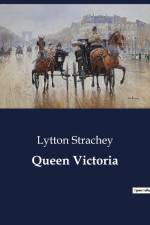
The publication of Lytton Strachey¿s Eminent Victorians in 1918 was a tremendous success. In it, Strachey looked at four iconic figures of the Victorian Age and punctured the hagiographical illusions surrounding them. It seems only fitting that he should follow up in 1921 with a similarly unsentimental but fair biography of the person at the pinnacle of that era, Queen Victoria herself.Thoroughly researched, with his references documented in hundreds of footnotes, Strachey looks at the life of the young woman who, when she was born, was by no means certain to become the British monarch. He also spends considerable time on her consort, Prince Albert, who, in Strachey¿s telling, develops from a careless youth to becoming a truly remarkable and effective figure in British society, while continuing to be generally perceived as an outsider.Strachey¿s sardonic and witty style makes this account of Queen Victoria and Prince Albert an entertaining and very informative read.
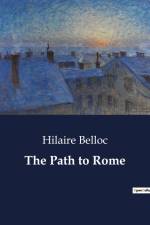
The Path to Rome is British-French writer and historian Hilaire Belloc¿s first travelogue. It describes the pilgrimage he took to Rome as the result of a vow he made while visiting his hometown of Toul, in Lorraine, France. In his own copy of the book, dated May 29, 1904, he notes: ¿I wrote this book for the glory of God.¿Belloc walked ¿two and a half hundred leagues¿ to Rome, over twenty-two days, and arrived in time to hear Mass on the Feast of Saints Peter and Paul. As he walks, he quickly discovers the difficulty of keeping every vow he made before starting, as the days are long, the mountains steep, and his finances stressed. But the book is far more than a simple travelogue; alongside the narrative of the journey, Belloc wanders into topics as varied as the art of writing, life in the military, his Catholic faith, the middle class, literary criticism, music, poetry, and more. His unique politics and personality shine in his many digressions and asides.The Path to Rome sold very well, and many critics have viewed it as the book that made Belloc¿s name. His great friend G. K. Chesterton said of it in The World: ¿The Path to Rome is the product of the actual and genuine buoyancy and thoughtlessness of a rich intellect. ¿¿
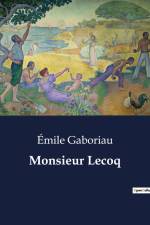
The last Lecoq novel goes back to the beginning, to Monsieur Lecoq¿s first case, the case that began his reputation as a master of detection, master of disguise, and master of detail. The case begins simply: Lecoq and several other policemen come upon a crime as it¿s being committed. Three men are dead and the killer is in custody. But who is he? Lecoq and his companion officer spend months trying to figure it out, to no avail. Lecoq finally goes to visit his old mentor in order to gain some insight.The scene then changes to some fifty years previous; in the aftermath of Waterloo, some noblemen return from exile. One of them insults the character of a local who has acted honorably on the nobleman¿s behalf, and the remainder of the novel is devoted to how those few minutes end up unravelling the lives of everyone present, and many who aren¿t.Gaboriau again demonstrates his ability to mix detective mystery and Dickensian drama, and foreshadows the style of the first two novels of his more famous English cousin in detection.
Greenmantle is the second of John Buchan¿s novels to feature Richard Hannay, a Scottish intelligence office in the British army, and as such is the sequel to The Thirty-Nine Steps.The book gives the account of Hannay and his associate¿s separate journeys through war-torn Europe to Constantinople to thwart an uprising that is poised to throw the Middle East, India, and North Africa into disarray, changing the course of the war.The book was popular when first published and although it has never been made into a film, the director Alfred Hitchcock was said to prefer Greenmantle to The Thirty-Nine Steps, and considered filming it on several occasions.
Our American Cousin is a three-act play written by English playwright Tom Taylor. The play opened in London in 1858 but quickly made its way to the U.S. and premiered at Laura Keene¿s Theatre in New York City later that year. It remained popular in the U.S. and England for the next several decades. Its most notable claim to fame, however, is that it was the play U.S. President Abraham Lincoln was watching on April 14, 1865 when he was assassinated by John Wilkes Booth, who used his knowledge of the script to shoot Lincoln during a more raucous scene.The play is a classic Victorian farce with a whole range of stereotyped characters, business, and many entrances and exits. The plot features a boorish but honest American cousin who travels to the aristocratic English countryside to claim his inheritance, and then quickly becomes swept up in the family¿s affairs. An inevitable rescue of the family¿s fortunes and of the various damsels in distress ensues.Our American Cousin was originally written as a farce for an English audience, with the laughs coming mostly at the expense of the naive American character. But after it moved to the U.S. it was eventually recast as a comedy where English caricatures like the pompous Lord Dundreary soon became the primary source of hilarity. This early version, published in 1869, contains fewer of that character¿s nonsensical adages, which soon came to be known as ¿Dundrearyisms,¿ and for which the play eventually gained much of its popular appeal.
Francisco de Quevedo holds the status of a man-of-letters in the same pantheon as Cervantes; but despite that, Pablo de Segovia is his only novel. Quevedo had circulated the manuscript privately for several years before it was published in 1626 without his permission. The novel is partly a satire of contemporary Spanish life, and a caricature of the various social strata Pablo encounters and emulates.Pablo himself is a low-born person who aspires to become a gentleman, but despite his best efforts he repeatedly fails and is eventually forced to become a ¿sharper,¿ or rogue. His failures give Quevedo an avenue to expound on his belief that attempting to break past your social class can only lead to disorder; and that despite one¿s best efforts, bettering oneself is largely impossible. Pablös stumbling from misfortune to misfortune is a farce that helped cement Quevedös reputation as a literary giant.
Moonfleet is a small village near the sea in the south of England, where village legend tells of the notorious Colonel John ¿Blackbeard¿ Mohune who is buried in a family crypt under the church. He is said to have stolen and hidden a diamond from King Charles I. His ghost is said to wander at night looking for the diamond, and the mysterious lights in the churchyard are attributed to his activities.One night a bad storm floods the village. While attending the Sunday service at church, John Trenchard¿an orphan who lives with his aunt¿hears strange sounds from the crypt below. Investigating, he soon finds himself in a smuggler¿s hideout, where he discovers a locket in a coffin that holds a piece of paper inscribed with Bible verses.John soon finds himself swept up in a smuggling venture planned by Elzevir Block, the smugglers¿ leader, and inadvertently finds out that the verses from Blackbeard¿s locket contain a code that will reveal the location of the famous diamond.Moonfleet was hugely popular in its day and was even sometimes studied in schools. Adaptations to screen, radio, and theater continue today.
Lyrical Ballads is a collection of poems by William Wordsworth and his friend and contemporary Samuel Taylor Coleridge. A hugely influential work, Lyrical Ballads is generally acknowledged to have started the Romantic movement in English literature¿a period marked by a departure from the stiff and unapproachable poetry of earlier times, and by a focus on readable, relatable verse written in everyday language. Many of Wordsworth¿s poems focus on the natural world and the down-to-earth people of the country, another far departure from the rational and dry literature of old. Romanticism was one of the largest sea changes in modern English literature, and Lyrical Ballads was its catalyst.This ebook edition is based on the 1805 edition of Lyrical Ballads, and features the famous poems The Rime of the Ancient Mariner, ¿Tintern Abbey,¿ ¿Expostulation and Reply,¿ ¿Lucy Gray,¿ and many others.
The third and final book of Henryk Sienkiewicz¿s Trilogy takes a closer and more intimate look at one of the series¿ protagonists: Pan Michael Volodyovski.The Polish Commonwealth has been through intense periods of war, and the peace that follows leaves one of its greatest heroes, Pan Michael, finally free to marry his beloved Panna Anusia. But in a twist of fate, she falls ill and dies, leaving Michael despairing of life¿to the point of him joining a monastery. His friends, shocked at the loss of the great knight which has now left the Commonwealth unprotected, hatch a plan to bring him back to his true calling.As with many of the characters in the Trilogy, Michael is fictional but based heavily on historical record: his character¿s exploits and circumstances owe a lot to the real Polish knight Jerzy Wöodyjowski, who was also in Jan Sobieski¿s cavalry.Pan Michael was, like the other books in the Trilogy, initially serialized in Sienkiewicz¿s newspaper S¿owo, before being collected into a novel five years later in 1893. The book, and the Trilogy as a whole, was very well received, and allowed Sienkiewicz to resign his editorial post to focus on his novels.The novel was the first of the Trilogy to be filmed (as 1969¿s Colonel Wolodyjowski), and it was also later converted into a successful television series in Poland. This edition is based on the 1893 translation by Jeremiah Curtin.
Edward Lear began his career as an ornithological illustrator, becoming one of the first major artists to draw birds from living models. During this period he was employed to paint the birds from the private menagerie owned by Edward Stanley, the 13th Earl of Derby and one of Lear¿s closest friends. In 1837, Lear¿s health started to decline. His deteriorating eyesight and failing lungs forced him to abandon the detailed painting required for depicting birds, and, with the help of the earl, he moved to Rome where he established himself as a poet of literary nonsense.While Lear was visiting the Earl of Derby, he wrote poems and drew silly sketches to entertain the earl¿s children. In 1846, he collected together his pile of limericks and illustrations and published his first poetical book, titled A Book of Nonsense and dedicated to the Earl of Derby and his children. He decided to publish under the pseudonym Derry down Derry, but after he started making plans for more books, he republished under his real name.His next book, Nonsense Songs, Stories, Botany, and Alphabets wasn¿t published until 24 years later, in 1870. Lear then released More Nonsense, which contains more limericks, in 1872, and Laughable Lyrics in 1877. This final book in the series contains many of Lear¿s most famous fantastical creatures, such as the Quangle Wangle. The influence of Lear¿s poetry in the twentieth-century can be seen in styles like the surrealism movement and the theater of the absurd.
In Liberalism, L. T. Hobhouse explains the philosophy of what he calls ¿liberal socialism.¿ Liberalism, as Hobhouse defines it, is the freedom from coercion. Crucially, this means freedom not only from government coercion, but from all forms of coercion, including economic coercion. It¿s important that everyone is free to grow and develop their own individuality within society, but the government has the ultimate responsibility to ensure that one individual¿s freedom is not used to limit the freedom of another.The socialist aspect of the philosophy is the belief that people are not purely self-serving and are capable of voluntarily exercising restraint when needed in order to help society flourish. Viewed through this lens, liberty and equality are not in competition, but rather go hand in hand. In a liberal socialist society, ¿any common life based on the avoidable suffering even of one of those who partake in it is a life not of harmony, but of discord.¿Tracing the history of the idea of liberalism, from pre-liberal societies, to the philosophies forged in the French and American revolutions, to the concept of socialism expounded by John Stuart Mill, Hobhouse defends the progress of liberalism, while asking what the future of liberalism should look like.
Suffolk returns from France bringing the new Queen of England, Margaret of Anjou, and a peace treaty. The Duke of Gloucester discovers that the French forces are allowed to keep the territories of Anjou and Maine in a trade for Margaret; he foresees that England will lose what little control remains over France. Because Gloucester heavily influences King Henry VI¿s decisions and is highly respected amongst his peers, he is seen as a major target.Cardinal Beaufort, Gloucester¿s main rival, mentions to Buckingham and Somerset his interest in removing Gloucester. The Duke of York sees Gloucester¿s death as an opportunity to grab the English throne for himself. The French are also in favor of removing Gloucester from power. For Queen Margaret and the Duke of Suffolk to manipulate the king and help France, Henry¿s most loyal advisor must not stand in their way.This Standard Ebooks edition is based on William George Clark and William Aldis Wright¿s 1887 Victoria edition, which is taken from the Globe edition.
Little Fuzzy is a science fiction novel set on the planet Zarathustra, a world rich in natural resources being exploited by a huge chartered company from Earth. Jack Holloway is a free-lance sunstone miner working on the outskirts of civilization when he encounters a small, fuzzy animal which turns out to be remarkably intelligent. He soon begins to suspect that ¿Little Fuzzy¿ and his family are more than just clever animals, but in fact a new sapient alien species. Such a proposition is directly opposed to the interests of the chartered Zarathustra Company, and conflict ensues.Published in 1962, Little Fuzzy rapidly gained popularity due to the charming nature of the little aliens and the well-handled tensions of the plot. It is today considered to be a classic of the genre, though perhaps considered to fall into the category of juvenile fiction. It was followed by a sequel, Fuzzy Sapiens in 1964.
The first anthology of short stories by Jack London, Lost Face tells seven stories about the Klondike gold rush. In ¿Lost Face,¿ the fur thief Subienkow faces gruesome torture and execution by a tribe of Indians, armed with only his wits. ¿Trust¿ is a story about the dangers of the Yukon River. Jack London¿s best known short story, ¿To Build a Fire,¿ tells the story of a nameless man and his dog attempting to survive in the frozen Northern Territory. In ¿That Spot,¿ the eponymous Spot is a very unusual Yukon sled dog. ¿Flush of Gold¿ is a love story set against the harsh backdrop of the Yukon. ¿The Passing of Marcus O¿Brien¿ deals the tale of the fair-but-tough Judge Marcus O¿Brien in the settlement of Red Cow. ¿The Wit of Porportuk¿ tells the tale of El-Soo and Porportuk, two Indians among the white settlers.
Les Corriveau s¿étaient légué leur terre de père en fils depuis plusieurs générations. Cette belle ferme qui ondulait au loin, défrichée par cette longue lignée de terriens était bien leur ¿uvre. Ils l¿avaient foulée de leurs pieds laborieux, arrosée et fécondée de leur sueur, remuée de leurs bras robustes. Aussi la connaissaient-ils dans tous ses vallons et ses monticules, dans tous ses plis et replis. Ils connaissaient la qualité du sol de tous ses champs. Cette science, apprise par les enfants, qui suivaient leur père, était ensuite transmise à leurs descendants. C¿était la plus vieille terre de la paroisse, que leur ancêtre Louis Corriveau avait en quelque sorte fondée, quand il était venu s¿y établir, il y a bientôt deux siècles. On ne pouvait pas parler des Corriveau sans penser à cette ferme, que tous enviaient. Elle vallonnait sans un plissement, sans une ride, embellie ici d¿un bosquet d¿arbres séculaires qüon avait laissés pour servir d¿abri aux bestiaux, là par un joli ruisseau qui arrosait ses bords fertiles. Et le soir lorsque les douze vaches rentraient en procession lente du riche pâturage, l¿haleine imprégnée de trèfle et de foin où se mêlait la senteur robuste de leur corps tiède, elles embaumaient l¿air.
In the midst of the French Revolution, Pierre, a young firebrand, convinces a group of rabble to rise up against the local duc. Coming across the carriage of the duc¿s daughter on their march, Pierre assaults her, is run over by the carriage, and disappears. Looking to punish someone for the uprising, the duc has Pierre¿s father hanged.Years later, Pierre has changed his name, gathered some wealth, and ingratiated himself with the duc (who does not know him). Pierre has plans to avenge his father¿s death against both the duc and his daughter, and he has enlisted the aid of Chauvelin, the Scarlet Pimpernel¿s avowed enemy. The Pimpernel will have all he can handle if he is to foil Pierre¿s plans.Although published a few years after El Dorado, this sixth published book in the series is set prior to it in the timeline.
La constitution de l'Albanie indépendante était si peu prévue par l'opinion publique que beaucoup d'esprits se demandent si elle n'est pas seulement une de ces inventions diplomatiques, telles qu'il en jaillit parfois dans les conférences internationales, quand on ne sait comment résoudre une difficulté; disons le mot, elle a été une surprise. Aussi chacun se demande: les Albanais sont-ils autre chose qu'un souvenir historique et presque archéologique? Ces hommes, que nous ne connaissons guère que par l'histoire de la conquête turque, subsistent-ils donc encore? Forment-ils une nation? Si celle-ci existe, comment l'ignorait-on? Si elle n'existe pas, qu'est-ce que cet État nouveau? On le délimite; mais, dans ces limites, que va-t-il se passer? Est-ce un foyer d'anarchie que l'on prépare ou que l'on attise? Est-ce un terrain de chasse que l'on borne pour l'Autriche et pour l'Italie? Cet État est à quelques heures de Venise et personne n'y pénètre; on y envoie un prince, mais il ne sait par quel bout commencer son nouveau travail. Que se passe-t-il donc derrière la ligne de ces rivages inhospitaliers et que nous réserve cette nouvelle forme de la question d'Orient? Telles sont assurément quelques-unes des questions que tous se posent et dont chacun parle d'autant mieux qu'il n'y est point allé voir. Dans les pages qui vont suivre, j'ai essayé seulement de donner une image fidèle des régions les plus importantes et les plus populeuses de l'Albanie autonome.
Lord Jim was first published as a serial in Blackwood¿s Magazine between October 1899 and November 1900. The first edition of the complete book was published by William Blackwood and Sons in 1900. The story begins when the young British seaman Jim, one of the crew of the steamer Patna, abandons the ship while it¿s in distress. The resulting censure prevents Jim from finding stable employment, until a captain named Marlow suggests he find his future in Patusan, a small village on a remote island in the South Seas. There he¿s able to earn the respect of the islanders and is dubbed ¿Lord Jim.¿The abandoning of the Patna by its crew is said to have been based on the real-life abandoning of the S.S. Jeddah in 1880. Lord Jim explores issues of colonialism, dreams of heroism, guilt, failure, and redemption. The book is remarkable for its unusual nested narrative structure, in which Captain Marlow and a number of other characters provide multiple perspectives of the protagonist. The gradual build-up of their richly described viewpoints imparts glimpses of Jim¿s inner life, yet ultimately leaves him unknowable.
Captain Hugh Drummond, D.S.O., M.C., is back from the war, and is bored. Seeking adventure, he places a newspaper advert with services offered in exchange for excitement, and a reply from a woman needing help piques his interest. What follows is a back and forth engagement with a shadowy criminal cabal determined to cause mayhem for the British establishment¿and to profit from it. Luckily for Britain, ¿Bulldog¿ Drummond is up for the fight.Bulldog Drummond was the first book of ten by H. C. McNeile (writing under the pen name of ¿Sapper¿) to deal with the eponymous hero; a series that was later expanded to nineteen novels and many further plays, films and short stories by later authors. The novel was an immediate success, with its combination of gentlemanly daring and high melodrama striking a chord with the public of the time. Drummond¿s appeal to the modern audience has faded: he¿s a character of his time, with views that reflect the British Empire¿s thinking of the 1920s. His influence, however, lives on in later men of adventure, including James Bond and Biggles.
Abonner på vårt nyhetsbrev og få rabatter og inspirasjon til din neste leseopplevelse.
Ved å abonnere godtar du vår personvernerklæring.