







Gjør som tusenvis av andre bokelskere
Abonner på vårt nyhetsbrev og få rabatter og inspirasjon til din neste leseopplevelse.
Ved å abonnere godtar du vår personvernerklæring.Du kan når som helst melde deg av våre nyhetsbrev.

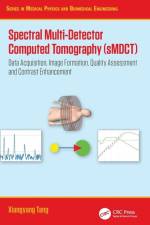
X-ray computed tomography (CT) has been one of the most popular diagnostic imaging modalities for decades in the clinic for saving patients' life or improving their quality of life. This book is an introductory "one-stop shop" for technological and clinical topics in multi-detector Computed Tomography (MDCT).
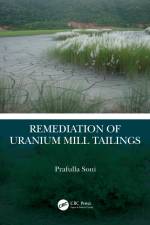
The book covers issues pertaining to uranium tailings with special reference to consolidation of radioactivity including systematic ecological strategy for consolidation of radionuclides in Uranium tailings. It discusses sustainable consolidation of radioactivity and migration of unextracted uranium from tailing piles to plants and atmosphere.
Drug counterfeiting detection is very important for the safety of patients globally. Counterfeit detection devices have been used for qualitative and quantitative assessment to differentiate counterfeit medications from the relevant product. This volume focuses on current technological approaches to detect counterfeited pharmaceuticals.
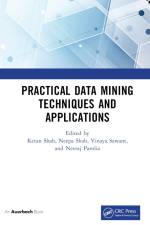
Data mining techniques and algorithms are extensively used to build real-world applications. A practical approach can be applied to data mining techniques to build applications. Once deployed, an application enables the developers to work on the users' goals and mold the algorithms with respect to users' perspectives.Practical Data Mining Techniques and Applications focuses on various concepts related to data mining and how these techniques can be used to develop and deploy applications. The book provides a systematic composition of fundamental concepts of data mining blended with practical applications. The aim of this book is to provide access to practical data mining applications and techniques to help readers gain an understanding of data mining in practice. Readers also learn how relevant techniques and algorithms are applied to solve problems and to provide solutions to real-world applications in different domains. This book can help academicians to extend their knowledge of the field as well as their understanding of applications based on different techniques to gain greater insight. It can also help researchers with real-world applications by diving deeper into the domain. Computing science students, application developers, and business professionals may also benefit from this examination of applied data science techniques.By highlighting an overall picture of the field, introducing various mining techniques, and focusing on different applications and research directions using these methods, this book can motivate discussions among academics, researchers, professionals, and students to exchange and develop their views regarding the dynamic field that is data mining.
This book provides an integrative overview of Internet-of-Things (IoT) and Cloud Computing to be used for the various futuristic and intelligent applications. It includes a broad and integrated perspective on the collaboration, security, growth of cloud infrastructure and real-time data monitoring.
Some of the hottest topics today involve cryptocurrency, and FinTech. With all these trends, businesses need to become better informed. This book provides an easy-to-read, yet comprehensive, view of cryptocurrency in the U.S. and international markets, as well as the key issues, technologies, applications, challenges, and trends.
Starting with the basics, Concrete Materials and Technology: A Practical Guide examines the production and chemistry of cement, as well as the different types and their applications. Quality control processes and numerous methods for testing are presented and explained in detail.
This book explores the advancements and future challenges in biomedical application developments using breakthrough technologies like AI, IoT, and Signal Processing. It will also contribute to biosensors, MEMS, and related research.
Aircraft Performance: An Engineering Approach, Second Edition introduces flight performance analysis techniques of fixed-wing air vehicles, particularly heavier-than-air aircraft. It covers maximum speed, absolute ceiling, rate of climb, range, endurance, turn performance, and takeoff run.
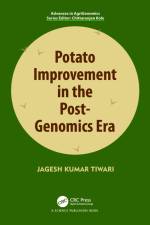
The book delves into post-genomics advances in potato improvement since the potato genome sequencing in 2011. It includes recent developments in the field of potato genetic resources, genes and SNP markers discovery, and the progress in next-generation breeding applying various omics technologies and modern sequencing tools. It covers cutting-edge technologies in potato - a global perspective, genome sequencing and resequencing of various cultivated and wild species, potato germplasm management and characterization, prebreeding genomics, genome mapping and gene cloning, markers discovery, marker-assisted selection, transgenics, microRNAs, transcriptomics, proteomics, metabolomics, phenomics, next-generation potato breeding technologies including genome editing and genomic selection and bioinformatics applications in the post-genomics era in potato. As genome editing and genomic selection have become emerging tools in crop improvement including potato, several research works have been demonstrated and applied world over. This book concentrates on genomics-aided characterization of germplasm and markers discovery to accelerate potato breeding. Further, various omics technologies strengthen our understanding ondiscovery of new genes/proteins/metabolites and key traits based on high-throughput phenotyping involved in various biotic and abiotic stresses in potato crop. The book is a useful source of information related to genomics-led research and development of this crop. It will serve as a valuable resource for potato researchers working in the area of molecular biology and would be beneficial for college students, PhD scholars, scientists, academicians, farmers and policy makers.
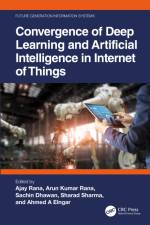
This book covers advances and applications of smart technologies including the Internet of Things (IoT), artificial intelligence, and deep learning in areas such as manufacturing, production, renewable energy, and healthcare. It also covers wearable and implantable biomedical devices for healthcare monitoring, smart surveillance, and monitoring applications such as the use of an autonomous drone for disaster management and rescue operations. It will serve as an ideal reference text for senior undergraduate, graduate students, and academic researchers in the areas such as electrical engineering, electronics and communications engineering, computer engineering, and information technology. Covers concepts, theories, and applications of artificial intelligence and deep learning, from the perspective of the Internet of Things. Discusses powers predictive analysis, predictive maintenance, and automated processes for making manufacturing plants more efficient, profitable, and safe. Explores the importance of blockchain technology in the Internet of Things security issues. Discusses key deep learning concepts including trust management, identity management, security threats, access control, and privacy. Showcases the importance of intelligent algorithms for cloud-based Internet of Things applications.This text emphasizes the importance of innovation and improving the profitability of manufacturing plants using smart technologies such as artificial intelligence, deep learning, and the Internet of Things. It furtherdiscusses applications of smart technologies in diverse sectors such as agriculture, smart home, production, manufacturing, transport, and healthcare.
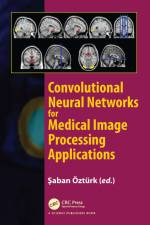
The rise in living standards increases the expectation of people in almost every field. At the forefront is health. Over the past few centuries, there have been major developments in healthcare. Medical device technology and developments in artificial intelligence (AI) are among the most important ones. The improving technology and our ability to harness the technology effectively by means such as AI have led to unprecedented advances, resulting in early diagnosis of diseases. AI algorithms enable the fast and early evaluation of images from medical devices to maximize the benefits. While developments in the field of AI were quickly adapted to the field of health, in some cases this contributed to the formation of innovative artificial intelligence algorithms. Today, the most effective artificial intelligence method is accepted as deep learning. Convolutional neural network (CNN) architectures are deep learning algorithms used for image processing. This book contains applications of CNN methods. The content is quite extensive, including the application of different CNN methods to various medical image processing problems. Readers will be able to analyze the effects of CNN methods presented in the book in medical applications.
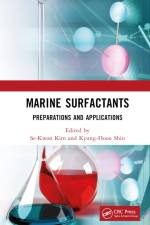
This book explores the development of novel marine biosurfactants. The book also covers the utilization of marine surfactants for biological and biomedical, and environmental applications. Marine Surfactants: Preparations and Applications aims to examine every aspect of marine derived surfactants.The first part of the book discusses the isolation of marine surfactants from various organisms include marine bacteria, algae, cyanobacteria and so on. The editors also examine the cultivation of marine microorganisms and the harvesting of other natural biological resources from the sea. The next part of the book discusses the application marine surfactants, including oil spill removal in the sea, bioremediation of polluted water and soil, treatments for breast cancer, restoration of marine environments, nanoparticles synthesis, and development of different kinds of emulsifiers. With contributions from world-renowned experts in the field, this book will be an essential resource in understanding and developing various marine-derived surfactants. This book is intended for researchers and marine biotechnologists as well as medical practitioners working on a vast range of industrial and medical applications using marine materials. It would also be useful for students looking to understand the utilization of marine derived surfactants.
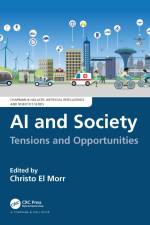
AI's impact on human societies is and will be drastic in so many ways. AI is being adopted and implemented around the world, and government and universities are investing in AI studies, research, and development. However, very little research exists about the impact of AI on our lives. This book will address this gap; it will gather reflections from around the world to assess the impact of AI on different aspects of society as well as propose ways in which we can address this impact and the research agendas needed.
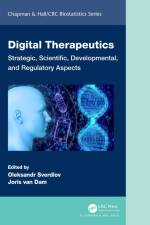
One of the hallmarks of the 21st century medicine is the emergence of digital therapeutics (DTx)-evidence-based, clinically validated digital technologies to prevent, diagnose, treat, and manage various diseases and medical conditions. DTx solutions have been gaining interest from patients, investors, healthcare providers, health authorities, and other stakeholders because of the potential of DTx to deliver equitable, massively scalable, personalized and transformative treatments for different unmet medical needs.Digital Therapeutics: Scientific, Statistical, Clinical, and Regulatory Aspects is an unparalleled summary of the current scientific, statistical, developmental, and regulatory aspects of DTx which is poised to become the fastest growing area of the biopharmaceutical and digital medicine product development. This edited volume intends to provide a systematic exposition to digital therapeutics through 19 peer-reviewed chapters written by subject matter experts in this emerging field.This edited volume is an invaluable resource for business leaders and researchers working in public health, healthcare, digital health, information technology, and biopharmaceutical industries. It will be also useful for regulatory scientists involved in the review of DTx products, and for faculty and students involved in an interdisciplinary research on digital health and digital medicine.Key Features:Provides the taxonomy of the concepts and a navigation tool for the field of DTx.Covers important strategic aspects of the DTx industry, thereby helping investors, developers, and regulators gain a better appreciation of the potential value of DTx.Expounds on many existing and emerging state-of-the art scientific and technological tools, as well as data privacy, ethical and regulatory considerations for DTx product development.Presents several case studies of successful development of some of the most remarkable DTx products.Provides some perspectives and forward-looking statements on the future of digital medicine.
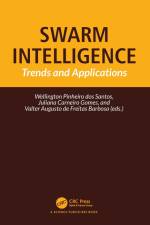
This book presents the fundamentals of swarm intelligence, from classic algorithms to emerging techniques. It presents comprehensive theoretical foundations and examples using the main Computational Intelligence methods in programming languages such as Python, Java and MATLAB(R). Real-world applications are also presented in areas as diverse as Medicine, Biology and industrial applications.The book is organized into two parts. The first part provides an introduction to swarming algorithms and hybrid techniques. In the second part, real world applications of swarm intelligence are presented to illustrate how swarm algorithms can be used in applications of optimization and pattern recognition, reviewing the principal methods and methodologies in swarm intelligence.
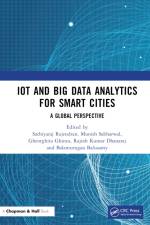
The book IoT and Big Data Analytics (IoT-BDA) for Smart Cities - A Global Perspective, emphasizes the challenges, architectural models, and intelligent frameworks with smart decisionmaking systems using Big Data and IoT with case studies. The book illustrates the benefits of Big Data and IoT methods in framing smart systems for smart applications. The text is a coordinated amalgamation of research contributions and industrial applications in the field of smart cities.Features:Provides the necessity of convergence of Big Data Analytics and IoT techniques in smart city applicationChallenges and Roles of IoT and Big Data in Smart City applicationsProvides Big Data-IoT intelligent smart systems in a global perspectiveProvides a predictive framework that can handle the traffic on abnormal days, such as weekends and festival holidaysGives various solutions and ideas for smart traffic development in smart citiesGives a brief idea of the available algorithms/techniques of Big Data and IoT and guides in developing a solution for smart city applicationsThis book is primarily aimed at IT professionals. Undergraduates, graduates, and researchers in the area of computer science and information technology will also find this book useful.
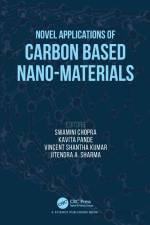
"e;There's plenty of room at the bottom"e; - Richard Feynman's legendary sentence has practically teleported the world into the age of Nano-technology over the last couple of decades. As nano-materials started drawing extensive attention, the use of nano-technology has opened many possibilities for humans. Carbon based nano-materials are an example of such prominent class of materials, which have an enormous potential to fit a wide range of applications, ranging from the energy sector to aircraft and automotive sector to bio-medical sector, etc. The book Novel Applications of Carbon Based Nano-Materials summarizes state-of-the-art studies focusing on various applications of carbon allotropes, considering the energy and environmental benefits and the socio-economic impact of the developed systems, all at the same time.
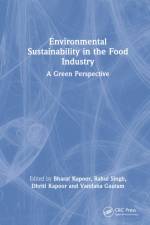
Criticisms facing the food processing industry include adverse ecological impacts like decline in biodiversity, environmental degradation, water pollution, eutrophication, greenhouse gas emissions, and the loss of agricultural land. Environmental Sustainability in the Food Industry: A Green Perspective delves into the effect of food processing on the environment, human health, nutrition, energy efficiency, nanotechnology in food industry, and the maintenance of ecological sustainability. The book presents eco-friendly approaches to reducing the impacts of food processing on the environment and to promoting sustainable development. The focus of this text is how to implement green practices in the food industry to reduce the negative impacts of food processing on the ecosystem, as well as to improve food quality for better human health and nutrition. The text also explains the food industry's focus on sustainable aspects in resource conservation and reduction of energy consumption. Key Features:Describes the contribution of the food industry sector on human health and nutrition Covers eco-friendly approaches to reducing negative impacts of food processing on the environment Discusses the uses of advanced techniques such as nanotechnology, non-thermal techniques, and more to improve food processingThe book highlights details related to the food industry and environmental issues. It is a great resource for students, researchers, and professionals alike, as well as anyone with an interest in green paths to food quality and nutrition.
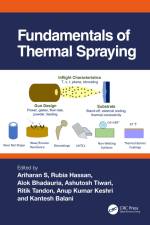
This book discusses the concepts and uses of thermal spraying including starting powder, spraying parameters, diagnostics, coating deposition, evolved microstructure and resulting properties complemented with several case studies to associate the learnings with applied concepts. The major parts of the instrumentation, the spraying gun, which is the fundamental aspect of different thermal spraying conditions are also discussed. Solved examples, numerical problems and descriptive questions are included for self-assessment at the end of every chapter. The book:Discusses all aspects from starting powder, spraying parameters, diagnostics and coating deposition;Explores schematics to highlight the conceptual notes;Includes multiple case studies from domains including aerospace, biomedical, manufacturing, wettability and others to highlight the practical application of thermally sprayed coatings;Covers classification of thermal spray techniques; andContains solved example, numerical problems and descriptive questions for self-assessment.This book is aimed at senior undergraduates and graduates in materials science and engineering.
Legal Analytics: The Future of Analytics in Law navigates the crisscrossing of intelligent technology and the legal field in building up a new landscape of transformation. Legal automation navigation is multidimensional, wherein it intends to construct streamline communication, approval, and management of legal tasks. The evolving environment of technology has emphasized the need for better automation in the legal field from time to time, although legal scholars took long to embrace information revolution of the legal field. Describes the historical development of law and automation. Analyzes the challenges and opportunities in law and automation. Studies the current research and development in the convergence of law, artificial intelligence, and legal analytics. Explores the recent emerging trends and technologies that are used by various legal systems globally for crime prediction and prevention. Examines the applicability of legal analytics in forensic investigation. Investigates the impact of legal analytics tools and techniques in judicial decision making. Analyzes deep learning techniques and their scope in accelerating legal analytics in developed and developing countries. Provides an in-depth analysis of implementation, challenges, and issues in society related to legal analytics.This book is primarily aimed at graduates and postgraduates in law and technology, computer science, and information technology. Legal practitioners and academicians will also find this book helpful.a a a a a
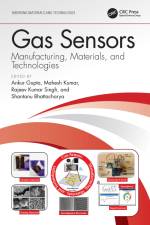
This book covers the whole range of gas sensing aspects starting from basics, synthesis, processing, characterization, and application developments. All sub-topics within the domain of gas sensors such as active materials, novel nanomaterials, working mechanisms, fabrication techniques, computational approach, and development of microsensors, and latest advancements such as the Internet of Things (IoT) in gas sensors, and nanogenerators, are explained as well. Related manufacturing sections and proposed direction of future research are also reviewed.Features:Covers detailed state-of-the-art specific chemiresistive sensing materials.Presents novel nanomaterial platforms and concepts for resistive gas sensing.Reviews pertinent aspects of smart sensors and IoT sensing.Explains nanotechnology-enabled experimental findings, and future directions of smart gas sensing technology.Explores implication of latest advancements such as IoT in gas sensors, and nanogenerators.This book is aimed at academic researchers and professionals in sensors and actuators, nanotechnology, and materials science.
Antimicrobial resistance has existed in nature long before the discovery of antibiotics. The mechanisms of resistance are prevalent among the bacterial population. Over a period of time and facilitated by indiscriminate usage of antibiotics, these mechanisms are transferred from one type of bacteria to another, including the pathogenic ones. In addition, the rate of discovery of novel antimicrobials is much slower than the rate of evolution of antimicrobial resistance. Therefore, there is a need for alternative strategies to control antimicrobial resistance to save lives. In this book, the novel strategies to combat antimicrobial resistance are described, emphasizing collaborative measures of control. We describe the concerted efforts undertaken by global communities to combat antimicrobial resistance in detail. The most efficient strategy could be a behavioral change towards indiscriminate consumption, usage, and prescription of antibiotics.
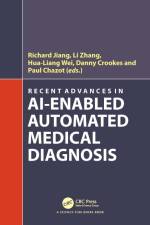
Developments in deep learning in the past decade have led to phenomenal growth in AI-based automated medical diagnosis, opening a door to a new era of both medical research and medical industry. It is a golden age for researchers involved in the development and application of advanced machine learning techniques for medical and clinical problems. This book captures the most recent important advances in this cross-disciplinary topic and brings the latest advances to a wide audience including experts, researchers, students, industry developers and medical services.
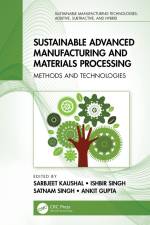
This book encapsulates and highlights the most recent innovations, breakthroughs, and comparisons of advanced sustainable manufacturing and material processing techniques for high-performance materials applications with a focus on sustainability and using conventional available methods.Sustainable Advanced Manufacturing and Materials Processing: Methods and Technologies addresses the various sustainable manufacturing and materials processing techniques for advanced materials. It discusses advancements in conventional and non-conventional techniques used in casting, joining, drilling, surface engineering, sintering, and composite manufacturing. The book focuses on a wide range of manufacturing techniques and materials processing technologies along with their benefits, limitations, and sustainability quotient. The conventional and advanced processes are compared in parallel to understand the need for advanced methods in manufacturing technology.This book is helpful to academic scholars and commercial manufacturers in giving them a first-hand source of information on sustainable manufacturing and material processing technology.
Abonner på vårt nyhetsbrev og få rabatter og inspirasjon til din neste leseopplevelse.
Ved å abonnere godtar du vår personvernerklæring.